 Aishwarya Balamukundan
The agentic PLM experience coming to Autodesk Fusion Manage is designed to bring product context, people, decisions, and next actions into the flow of work, while trusted product data and governance operate underneath.
Most manufacturers understand why PLM matters. They’re just not convinced it has to be this hard.
The promise of PLM has always been compelling: better control, greater visibility, and more informed decision-making. But for many organizations, realizing that value has required significant work upfront—defining processes, configuring workflows, training users, and ensuring the system stays current.
In other words, teams often have to learn how to operate PLM before they can fully benefit from it.
But what if PLM adapted more naturally to the way people already work?
What if teams could gain the control and traceability they need without spending so much time operating the system behind it?
That’s the idea behind a more invisible PLM experience. Not that PLM or the governance it provides goes away. The product data, business logic, permissions, and traceability remain underneath. What recedes is the burden on people to constantly manage the system to benefit from it.
The best PLM experience may ultimately be one that people barely notice.
The work rarely happens in one system
Product development does not follow a neat, linear workflow.
A supplier issue arrives in email. An engineer raises a design concern in chat. A sourcing question comes up during a meeting. The work moves across people and systems long before anyone thinks about how it should be recorded in PLM.
Traditional PLM systems often capture that information after the work has already happened somewhere else. Someone has to gather the relevant context, update the appropriate records, and start the required process. That takes time and creates opportunities for important context to get lost along the way.
People shouldn’t have to constantly translate their work into PLM just to keep product context and processes up to date.
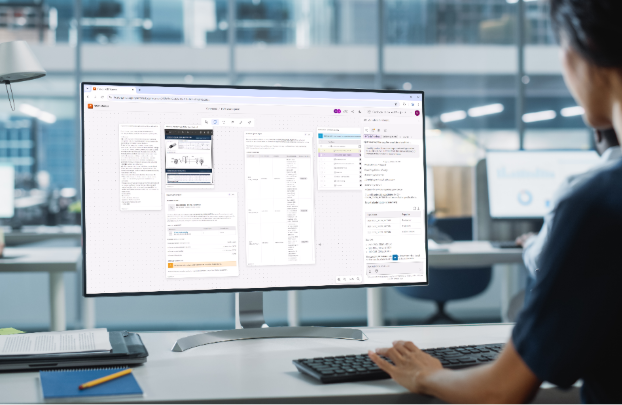
The agentic PLM experience coming to Autodesk Fusion Manage is intended to flip that model. Instead of asking people to translate a business problem into a predefined process, it will bring relevant product context, people, decisions, and potential next actions together in an AI-driven canvas, while Fusion continues to provide the governed product data, business logic, permissions, and traceability underneath.
People can focus on the problem. The platform can support the structure needed to resolve it.
Start with the problem, not the process
Nobody begins the day wanting to complete a workflow. People want to understand what is happening, make a sound decision, and keep the product moving forward. The process matters, but it should support that work rather than become the work.
This is the idea behind the agentic PLM experience coming to Fusion. It’s being designed around how teams solve problems, not simply how systems record them.
Consider a project manager who receives an email about a price increase for a critical component. The immediate concern is not which form to open. It is whether the change threatens a product launch.
The team needs to know where the component is used, whether approved alternatives exist, who should evaluate them, and how a change could affect cost or schedule.
Finding those answers today may require searching through emails, specifications, bills of materials, supplier records, project plans, and conversations scattered across several systems. Even after the information is found, someone still needs to assemble the full picture and coordinate the response.
An agentic PLM experience can help surface that context, organize the issue around the affected products, and guide what happens next. People still review the information, apply their expertise, and make consequential decisions. What changes is how much effort they spend getting to the point where they can act.
PLM should work where people work
If product decisions happen across many tools, PLM needs to meet teams there. Asking people to manually recreate every interaction inside PLM adds another layer of work…
Asking people to manually recreate every interaction inside PLM adds another layer of work. It also creates an incomplete product record because some decisions will inevitably remain buried in an inbox or conversation.
The agentic PLM experience is intended to join the tools teams already use, including email, chat, and enterprise systems. The goal is to connect unstructured conversations with structured product data so teams can act with the context behind a decision still intact.
This does not mean governance disappears. Fusion remains the trusted PLM foundation. Product data, business rules, permissions, and change history remain controlled. Human review and approval remain part of consequential decisions.
The difference is that governance becomes easier to live with. Instead of forcing people to leave their work, reconstruct the context, and operate a separate system, PLM can become part of the way the work already moves.
Less administration creates more capacity
Reducing the administrative burden of PLM also creates capacity. Engineers, project managers, procurement teams, and manufacturing teams all spend time searching for information, tracing decisions, chasing approvals, and coordinating next steps.
That work is necessary, but much of the effort surrounding it comes from fragmented information and manual coordination.
When AI can help surface the right context, connect the right people, and support next steps, teams can spend less time managing the process and more time applying their expertise to the decisions that move products forward.
Adoption should begin where the friction is highest
PLM adoption does not need to begin with an enterprise-wide transformation. A better starting point may be one persistent problem: a design review that relies on email attachments, a BOM managed through spreadsheets, or an engineering change that is difficult to trace.
Instead of asking, “How do we redesign every process around PLM?” manufacturers can ask: Where is disconnected information creating the most risk, delay, or unnecessary work?
Starting with a recognizable problem creates a clearer path to value and gives teams an opportunity to expand PLM based on demonstrated benefits. Fusion is designed to support this progression, allowing organizations to start with what they need and scale as their processes and product complexity evolve.
The future of PLM is less visible
The future of PLM is not another application demanding more attention. It’s an intelligent layer that helps people understand an issue, find the relevant information, involve the right people, and determine what should happen next, while trusted product data and governance continue to operate underneath.
People spend less time operating PLM and more time making the decisions that move products forward. Organizations get the control and traceability they need without adding unnecessary friction to the work.
The power remains, but the burden recedes.
Not because PLM matters less, but because it becomes less visible.
Frequently asked questions
What is an agentic PLM experience?
What does “invisible PLM” mean?
How is agentic PLM different from traditional PLM?
What types of problems can agentic PLM solve?
Engineering change management
Supplier disruptions
BOM management
Product launch coordination
Design review processes
Requirements management
Cross-functional collaboration
Compliance and traceability challenges
In each case, the goal is to help teams find relevant information faster and coordinate responses more efficiently.
Who benefits most from an agentic PLM experience?
Is the future of PLM more automation?
DISCLAIMER: The capabilities described here are forward-looking and currently in development. Features, functionality, and timing are subject to change. These statements are not intended to be a promise or guarantee of future delivery of products, services, or features but merely reflect our current plans, which may change. Purchasing decisions should not be made based on reliance on these statements.