 Emily Suzuki
 Heather Miller
Plastic Fischer is on a mission to help prevent plastic pollution with innovative, floating river barriers called TrashBooms to catch waste before it reaches the ocean. Designed with Autodesk Fusion, the team can adapt each barrier to local river conditions, test designs digitally, and collaborate with engineers and manufacturers across Germany and India. Already deployed at more than 70 sites in India and Indonesia, TrashBooms have helped keep 3.4 million kilograms (3,400 metric tons) of plastic out of the ocean while creating stable jobs in local communities.
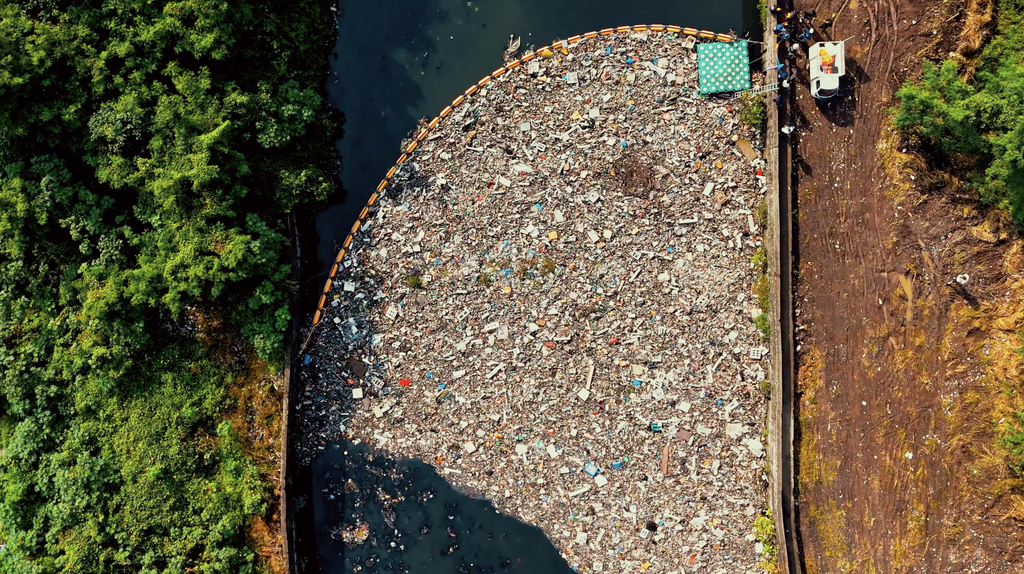
Out in the Indian Ocean, powerful currents have created a sprawling area of plastics and microplastics known as the Indian Ocean garbage patch. And part of its source begins thousands of miles away from it.
Every day discarded plastic makes its way into rivers and ultimately pollutes the ocean. But what if the most effective way to tackle ocean plastic pollution isn’t to clean it up once it’s there, but to stop it from getting there in the first place? That’s what Plastic Fischer is aiming to do.
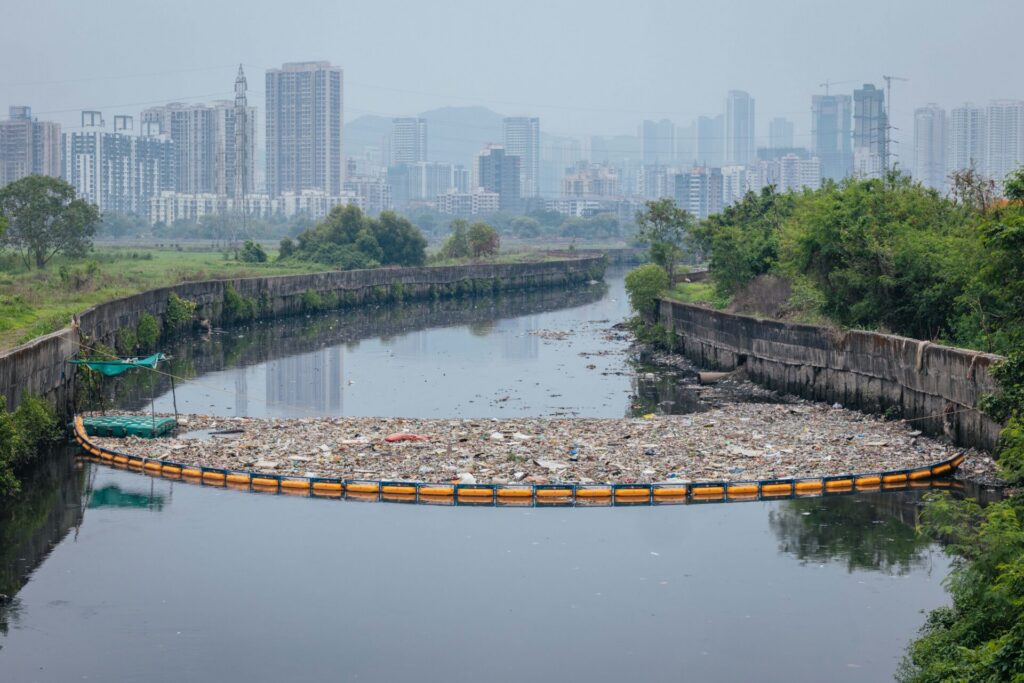
Plastic Fischer intercepts it at the source using floating river barriers called TrashBooms.
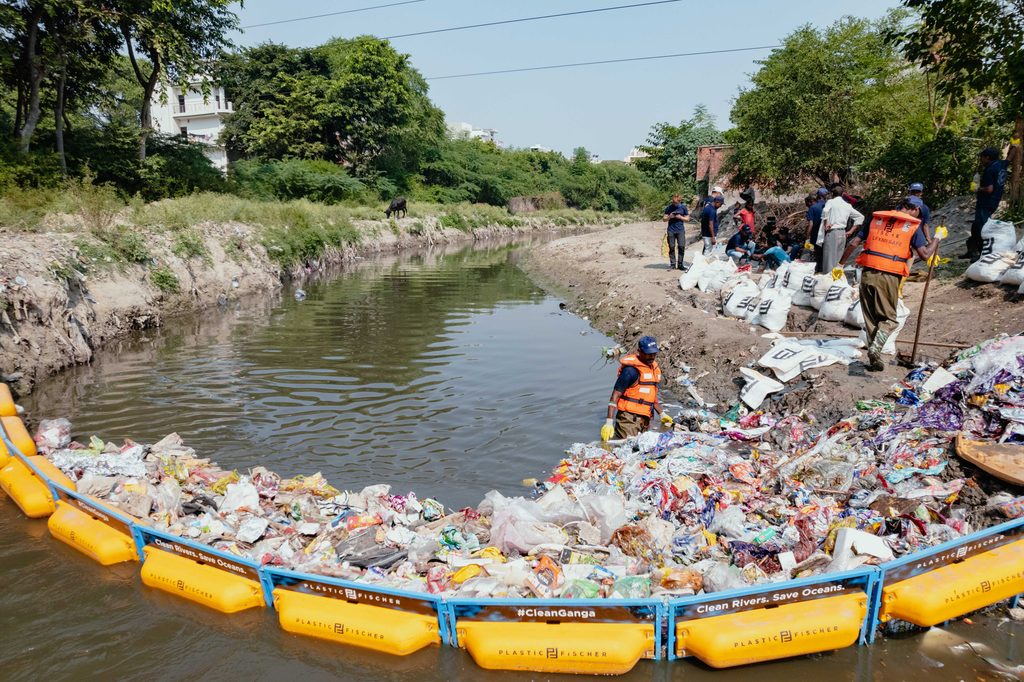
So far, they’ve deployed them in more than 70 locations in India and Indonesia. And they’ve already helped prevent 3.4 million kilograms (3,400 metric tons) of plastic from reaching the ocean. To put it into perspective, that’s roughly equivalent to 170 million empty half-liter plastic bottles.
For Aviel Itzhak, Plastic Fischer’s chief technology officer, the mission is deeply personal. After leaving his previous career as a navy engineer and spending more than a year traveling through India, he was struck by both the country’s beauty and the overwhelming amount of plastic pollution.
“It’s such a beautiful country with so much culture and diversity,” he says. “But the plastic was heartbreaking to see in rivers and moving towards the ocean. There was plastic everywhere.”
That experience ultimately led him to join Plastic Fischer in 2021, bringing his mechanical engineering background to a company determined to create an accessible, scalable solution to river and ocean pollution.
A new idea to solve a massive environmental challenge
At the heart of Plastic Fischer’s operations is the TrashBoom, a modular floating barrier designed to intercept plastic and other debris as it moves downstream. Installed across waterways and anchored to riverbanks or drainage walls, each TrashBoom uses buoyant floating elements and a barrier screen to capture waste while allowing water to continue flowing. Plastic accumulates along the barrier, and locally employed teams collect it regularly before it can travel farther downstream.
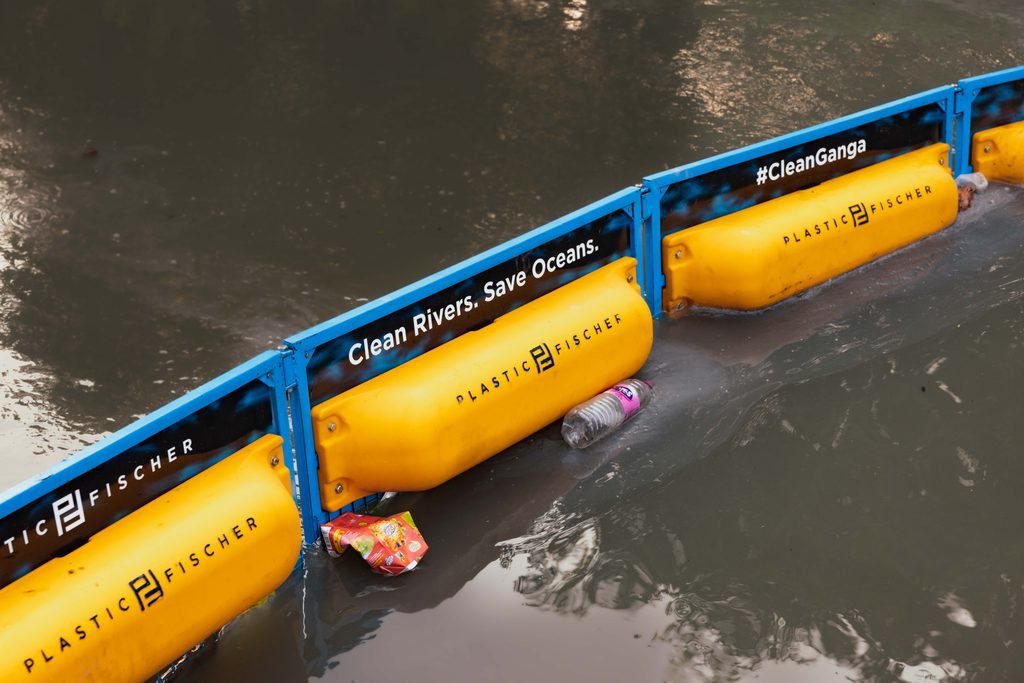
The captured waste is transported to material recovery facilities, where it is dried, weighed, sorted, and processed. Recyclable materials can be directed into recycling streams, while non-recyclable materials are transported to processing partners for co-processing. Plastic Fischer digitally tracks the collected material to document its journey and demonstrates measurable results to project partners.
“We designed our own floaters to provide the buoyancy and durability needed to withstand challenging river conditions and UV exposure,” Itzhak says. “We have even started experimenting with making some of them from recycled materials, which is a first step toward bringing circularity into our projects.”
Plastic Fischer’s impact also goes beyond removing plastic from rivers. They’re creating economic opportunities and improving livelihoods in the communities where they operate. In India, many of their employees previously worked as informal waste pickers, earning low and unpredictable incomes from selling recyclables. Today, Plastic Fischer offers stable, full-time employment, fair wages, health insurance, and training in safe waste handling.
Designing a solution with impact
Since 2021, Plastic Fischer has used Autodesk Fusion to develop its technology. Fusion enables engineers to create detailed 3D models, evaluate structural performance, generate manufacturing drawings, and visualize finished installations.
For a relatively small engineering team across Germany and India, cloud-based collaboration with Fusion is particularly valuable. Engineers can access shared projects, review designs, and coordinate changes remotely, whether they’re using a PC or a Mac.
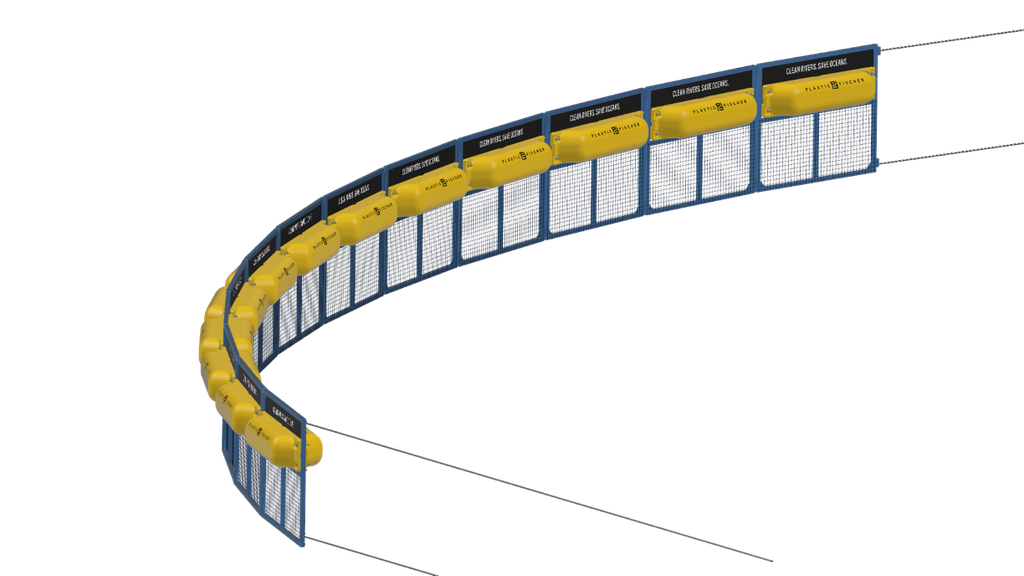
“I think Fusion is the only software or tool that really allows us to work seamlessly on the same projects without any complications,” Itzhak says. “I really like that it’s cloud-based and everything can be basically used by everyone. It’s very easy to create projects, work on them together, and share relevant drawings or designs with our producers or manufacturers.”
The team is also leaning on Autodesk Assistant for designs and problem-solving.
“Autodesk Assistant in Fusion can help identify your issue really quickly and provide you with a way to solve it,” Itzhak says. “That saves a lot of time. When we bring in a new engineer, training time is much shorter because the software itself helps them learn as they work.”
Customizing one TrashBoom at a time
No two waterways present exactly the same challenges. River widths, current speeds, tidal fluctuations, debris volumes, and access for waste collection can vary dramatically between sites. Each TrashBoom installation is adapted to the conditions where it will be installed.
In Mumbai, Plastic Fischer is collaborating with The Ocean Cleanup, an international nonprofit on a mission to stop ocean plastic pollution. Together, the organizations aim to keep plastic from entering the sea through Mumbai’s waterways. The new barriers installed at Malad and Trombay in May-June 2026 are the first result of this collaboration.
For Plastic Fischer’s engineering team, one of the biggest challenges in Mumbai is the city’s combination of heavily polluted drains and substantial tidal variation.
“One of the things that is unique about Mumbai is the very drastic changes in water level because it’s very close to the ocean and there are a lot of tide effects,” Itzhak says.
Plastic Fischer used Fusion to develop new, larger barrier designs for higher loads and to customize existing technology with a new tidal compensator mechanism. Mounted along the drainage walls, this mechanism allows the connected boom system to move vertically as water levels rise and fall. The design incorporates sliding components that help the system respond to changing tides and flow direction, while maintaining its ability to intercept floating waste.
Using Fusion’s simulation tools, Itzhak could apply anticipated loads and constraints to components, visualize stress concentrations, and determine whether the design met the required safety factors.
“Plastic Fischer is able to keep plastic out of rivers across India and Indonesia thanks to the many trusted organizations and partners that support us in our mission,” Itzhak says. “To scale that impact, we depend on new partnerships, and we welcome organizations that share our goal and believe, as we do, that their actions can make a difference.”