Category: Advanced Manufacturing
-
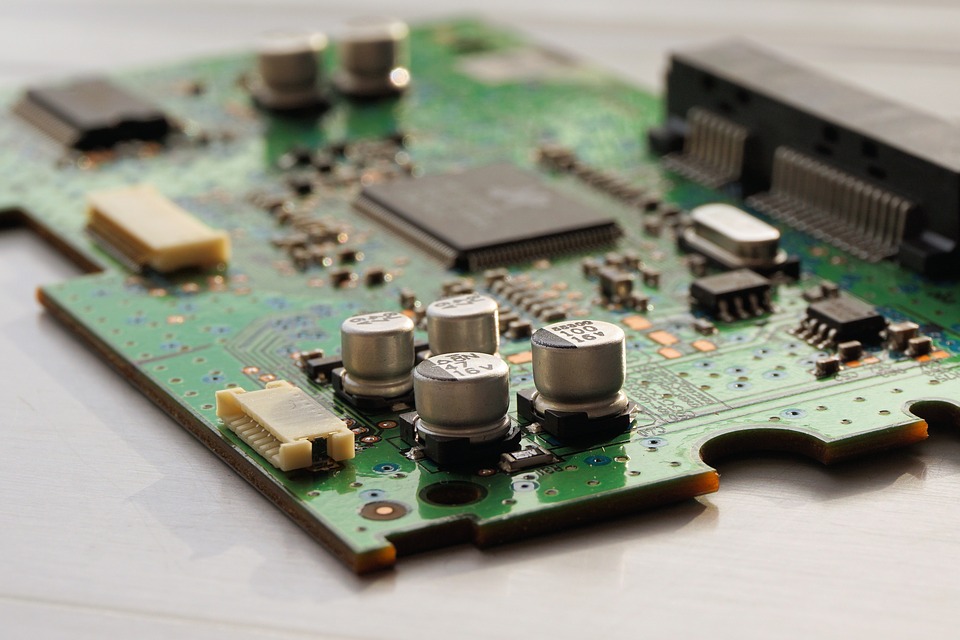
3D Printed Circuit Boards: Additive Manufacturing with Electronics
Image Source Additive manufacturing isn’t only limited to parts manufacturing, rather it is beginning to transform how electronics engineers manufacture circuits. When examining the realms of additive manufacturing within the constraints of electronics, there are 2 distinct production methods. There are 2inkjet-stylele printing techniques used to produce circuit boards. Typically, this method involves a printhead…
Advanced Manufacturing
-
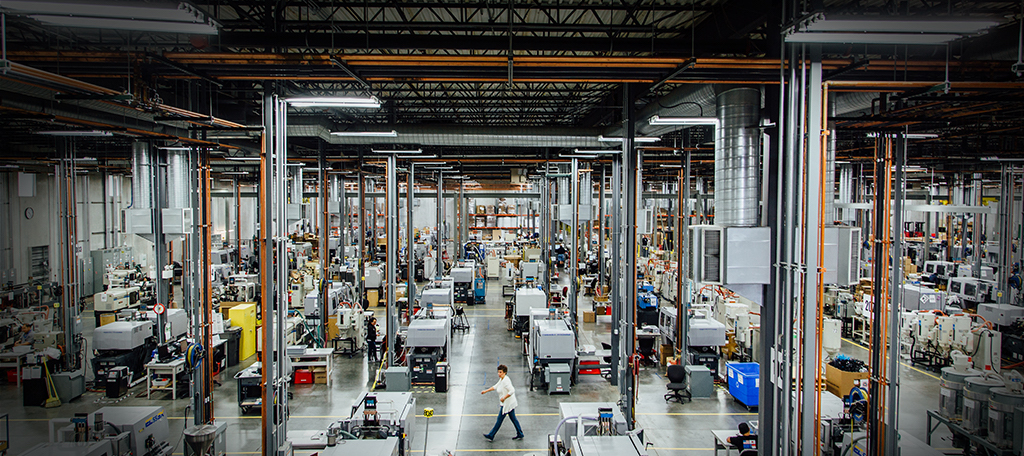
Overcoming Designing for Manufacturability with Additive Manufacturing
Design for manufacturability is a proactive process used to maximize the design of components for the intended manufacturing process. Let’s take a look at how we can use this process can be improved or eliminated with the use of additive techniques. Looking over the typical manufacturing processes of machining, casting, injection molding, and forming, we…
Advanced Manufacturing
-
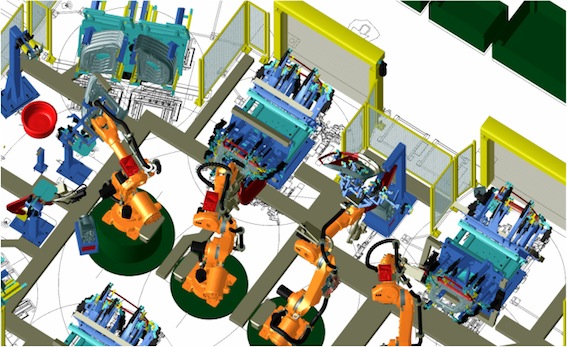
Understanding the Concept of a Digital Twin in Manufacturing
Image Source: Wikipedia The concept of a digital twin in manufacturing is one that has grown out of increasing connectivity. It’s a concept that allows manufacturers to monitor a product’s performance in real time using a digital model that responds identically to the real world product. As Industry 4.0 continues to drive forward the manufacturing…
Advanced Manufacturing
-
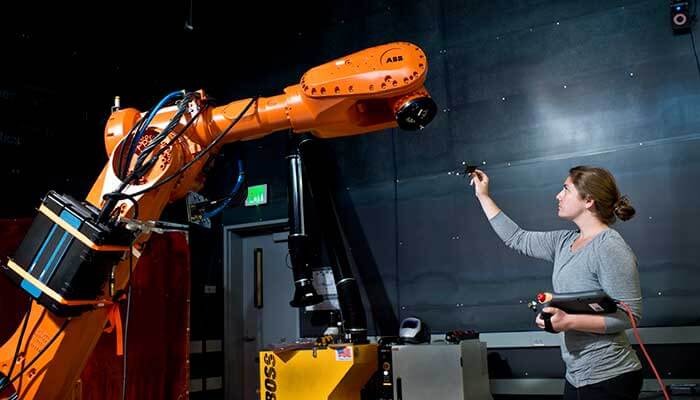
3 Advances Changing the Future of Artificial Intelligence in Manufacturing
Today’s factories are easy to envision as futuristic-seeming hives of automation, where industrial robots mimic the movements and, seemingly, the intentionality of human workers. Today’s robots are not only working faster and more reliably than their human counterparts but also performing tasks beyond human capability altogether, such as microscopically precise assembly. But many of those robots…
Advanced Manufacturing
-
The Manufacturing Industry is About to Get A Lot More Competitive
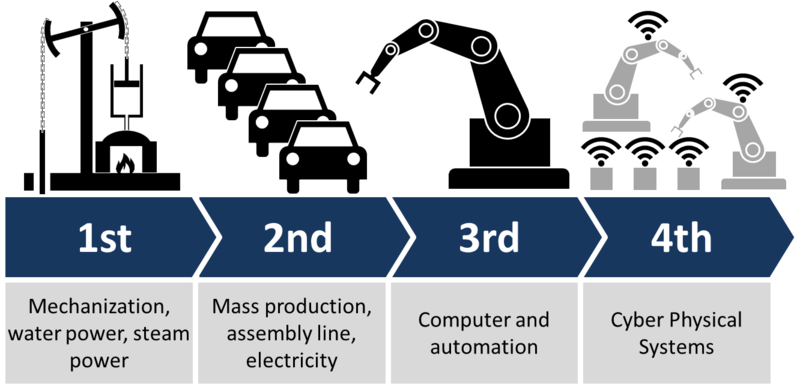
Image Source: Wikimedia The global manufacturing industry is looking to the future now more than ever. Manufacturing specific technologies are advancing at a rapid rate bringing on Industry 4.0 making the time for innovation now. This idea of a connected manufacturing environment has been around for many years, but it seems that constant innovation in recent…
Advanced Manufacturing
-
Here are the Jobs that Could Solve the Manufacturing Skills Gap
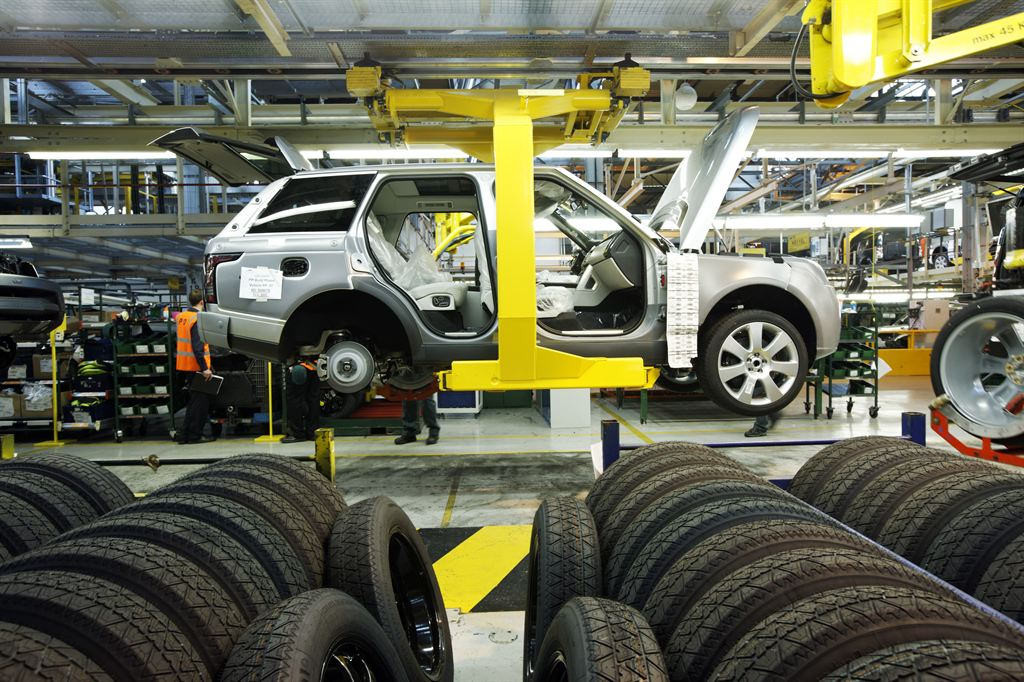
Image Source: Flickr The manufacturing skills gap is a very real problem facing the US manufacturing sector and industries abroad. Smart factories and robotics have become a key aspect of the fourth industrial revolution, set to bring about Industry 4.0, but humans are still and will continue to be a big part of the picture.…
Advanced Manufacturing
-
The Future of CAM
CAM is the future, so it becomes unequivocally important to discuss the future of CAM. Let’s take a look at the ways in which CAM is changing in order to accommodate the future of manufacturing How CAM is Evolving The industry just 5 years ago involved a lot of stress between disciplines. Engineers designed and…
Advanced Manufacturing
-
Breaking Down the Wall between Design and Manufacturing
Product design has evolved over the years to include much more than just designing a 3D model. Controlling part revisions, collaboration, analysis, light weighting, drawings and more are now just some of the tasks in product design. Tools for product design have become better with increased functionality and interoperability with each other. Unfortunately, for many…
Advanced Manufacturing
-
Liquid Rapid Prototyping Might Bring More Speed to the 3D Printing Industry
Additive manufacturing has taken off in recent years, but two main barriers to entry still remain. Start up cost for purchasing machines is one major hurdle for smaller manufacturers, however, this hurdle is slowly coming down. The far more hindering barrier to additive adoption is that of speed. For most mass manufacturing applications, additive manufacturing…
Advanced Manufacturing
-
The Joining of Two Industries: Milling and 3D printing
3D printing and Milling accomplish the same things: creating a part from a base material – except they work in completely opposite ways. While you likely understand the basic concepts of each, combining the two is proving to be highly beneficial to each side. In a more traditional sense, 3D printing and milling work together…
Advanced Manufacturing
-
Inspection for Additive Manufacturing
Inspection for Additive Manufacturing Composite materials are increasingly used to create products with significant advantages over traditional alternatives, but simply replicating an existing design in a new material squanders the potential. Composite materials are anisotropic, meaning that the properties are not the same in all directions and axes, and this provides enormous flexibility to optimize…
Advanced Manufacturing
-
Combining Additive and Subtractive Techniques for Hybrid Manufacturing
For many years, additive manufacturing seemed like it was going to be the future of all manufacturing industries. Most of this can be chocked up to hype around the new technology. In reality, the future of additive lies in a hybrid manufacturing system, one that combines additive and subtractive techniques for ultimate optimization. When we…
Advanced Manufacturing
-
How the Tool Helix Affects Manufacturing
Cutting forces on an end mill have axial and radial components that affect how it functions. The radial component often leads to vibrations and the axial component affects the force of the mill against the holder. These components are varied by changing the helix angle on a tool, and different angles are better for different…
Advanced Manufacturing
-
What Materials are Used to Lightweight Cars?
Car manufacturers are constantly pushing to create the lightest cars possible to increase speed and power. So, what materials are most common when an automotive designer needs to cut weight? The goal in lightweighting a car is to increase performance and efficiency while maintaining safety and comfort. Roughly speaking, when a car’s weight is decreased…
Advanced Manufacturing
-
How Manufacturing has Changed in the last 15 Years
Manufacturing is an industry that sees constant growth and change, but in the past 15 years, the industry has made drastic shifts that will forever shape its future. The manufacturing industry affects nearly every facet of everyday life, and companies are constantly seeking ways to optimize processes and decrease costs. While this tends to be…
Advanced Manufacturing