 Hailey Wheeler
Learn what packaging design software is, how 3D packaging design works, and what features packaging teams should evaluate when choosing a packaging design solution.
Elevate your design and manufacturing processes with Autodesk Fusion
Introduction: Packaging design software has evolved
A decade ago, many packaging projects started and ended with a 2D dieline.
Today, packaging teams must consider product protection, manufacturing efficiency, e-commerce shipping requirements, sustainability targets, regulatory compliance, and customer experience, all before production begins. As packaging becomes more complex, organizations are increasingly adopting packaging design software that connects structural design, visualization, engineering, and manufacturing into a single workflow.
This guide explains what packaging design software is, what it does, and what organizations should evaluate when choosing a solution.
What is packaging designs software?
Packaging design software is a category of tools used to create, visualize, test, and prepare packaging for production.
Unlike traditional graphic design applications that focus primarily on labels and artwork, packaging design software helps teams design the physical structure of packaging and understand how it will perform in the real world.
Depending on the platform, it may support:
- Structural packaging design
- 3D packaging modeling
- Package visualization and rendering
- Material selection
- Engineering validation
- Prototype development
- Manufacturing preparation
The goal is to help teams make better packaging decisions before investing in tooling, production, or large-scale manufacturing runs.
Types of packaging design software
One reason buyers struggle to evaluate packaging software is that not all solutions solve the same problem.
Graphic packaging design software
These tools focus on:
- Labels
- Branding
- Artwork
- Package graphics
- Print layouts
They help marketing and creative teams develop visual elements but often provide limited support for structural engineering or performance validation.
Structural packaging design software
Structural packaging platforms focus on:
- Cartons
- Corrugated packaging
- Inserts
- Protective packaging
- Folding structures
These solutions help engineers and packaging designers develop packaging that protects products while minimizing material use and manufacturing complexity.
3D packaging design software
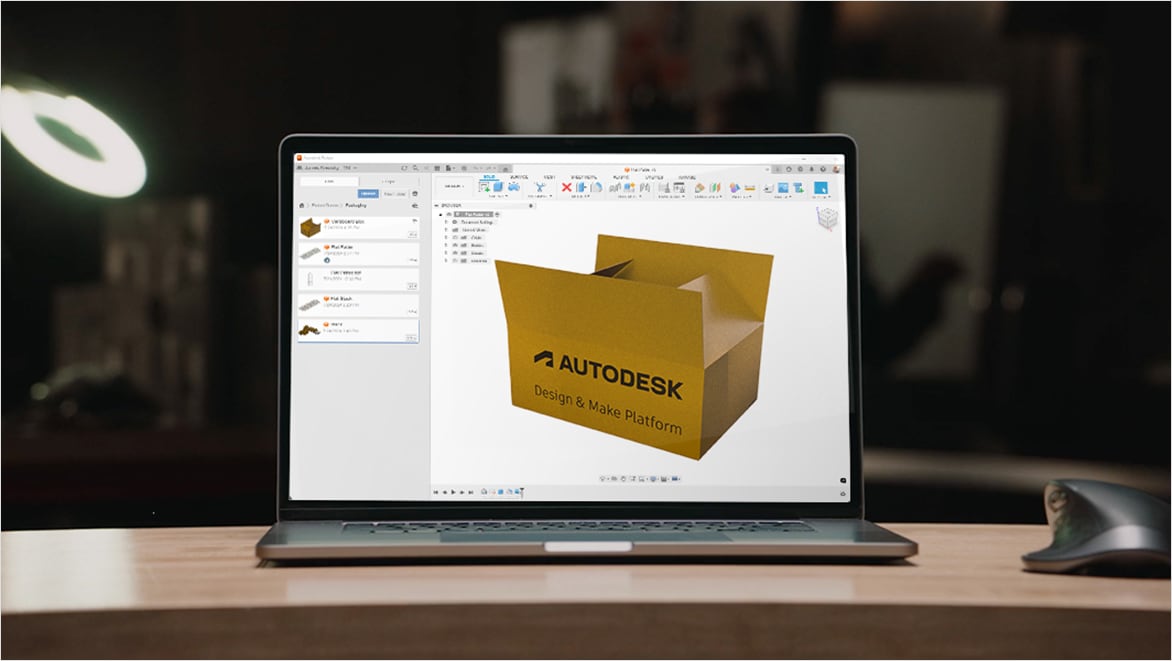
3D packaging design software combines structural design with visualization and engineering workflows.
Instead of working only from flat drawings, teams can evaluate packaging as a complete digital model before production begins.
What is 3D packaging design?
3D packaging design is the process of creating a digital model of a package that accurately represents how it will exist in the real world.
Rather than viewing packaging as a flat dieline, teams can visualize:
- Fully assembled packaging
- Product fit and clearance
- Packaging components
- Inserts and protective structures
- Shelf presentation
- Customer unboxing experiences
This provides significantly more context than traditional 2D workflows.
Why 3D packaging desing matters
Many packaging problems don’t become obvious until assembly or production. Examples include:
- Product fit issues
- Interference between components
- Assembly challenges
- Material waste
- Over-designed structures
3D modeling helps teams identify these issues earlier when changes are far less expensive.
Features to look for in packaging design software
Not all packaging software offers the same capabilities. When evaluating solutions, consider the following features.
Parametric design
Parametric modeling allows packaging dimensions and features to update automatically when changes are made.
This reduces manual rework and makes iteration significantly faster.
Visualization and rendering
Photorealistic rendering capabilities help teams review packaging appearance, communicate design intent, and gather feedback before manufacturing.
Design configurations
Many organizations manage multiple package sizes or product families.
Configuration capabilities allow designers to manage multiple packaging variants from a common design framework.
Manufacturing outputs
Look for software that supports:
- Flat patterns
- CNC data
- Production documentation
- Manufacturing-ready geometry
These capabilities help reduce errors during the transition from design to production.
How packaging design software supports sustainability
Packaging sustainability is increasingly becoming a design requirement rather than a marketing initiative.
Software helps teams evaluate tradeoffs earlier by making it easier to compare material usage, package sizes, and manufacturing approaches before production begins.
Packaging teams can use digital workflows to:
- Reduce material consumption
- Minimize packaging volume
- Improve shipping efficiency
- Evaluate alternative materials
- Reduce packaging waste
The earlier these decisions are made, the greater the potential impact.
How Autodesk Fusion supports packaging design workflows
Autodesk Fusion provides packaging teams with a connected environment for structural design, modeling, visualization, and manufacturing preparation.
Packaging teams can use Fusion to:
- Create parametric packaging structures
- Develop packaging concepts in 3D
- Manage packaging variations
- Generate flat patterns for production
- Prepare manufacturing-ready geometry
- Create physical prototypes using connected manufacturing workflows
Because design and manufacturing preparation occur within the same environment, teams can move from concept to prototype with fewer disconnected steps.
How to choose packaging design software
When evaluating software, ask the following questions:
- Does it support structural packaging design or only graphics?
- Can packaging be modeled in 3D?
- Does the software support parametric updates?
- Can multiple package variants be managed efficiently?
- Does it support manufacturing outputs and prototyping?
- Can it integrate with existing product design workflows?
- Will it scale as packaging requirements become more complex?
The best solution is not necessarily the one with the most features. It’s the one that supports the entire packaging workflow, from concept through production.