 Heather Miller
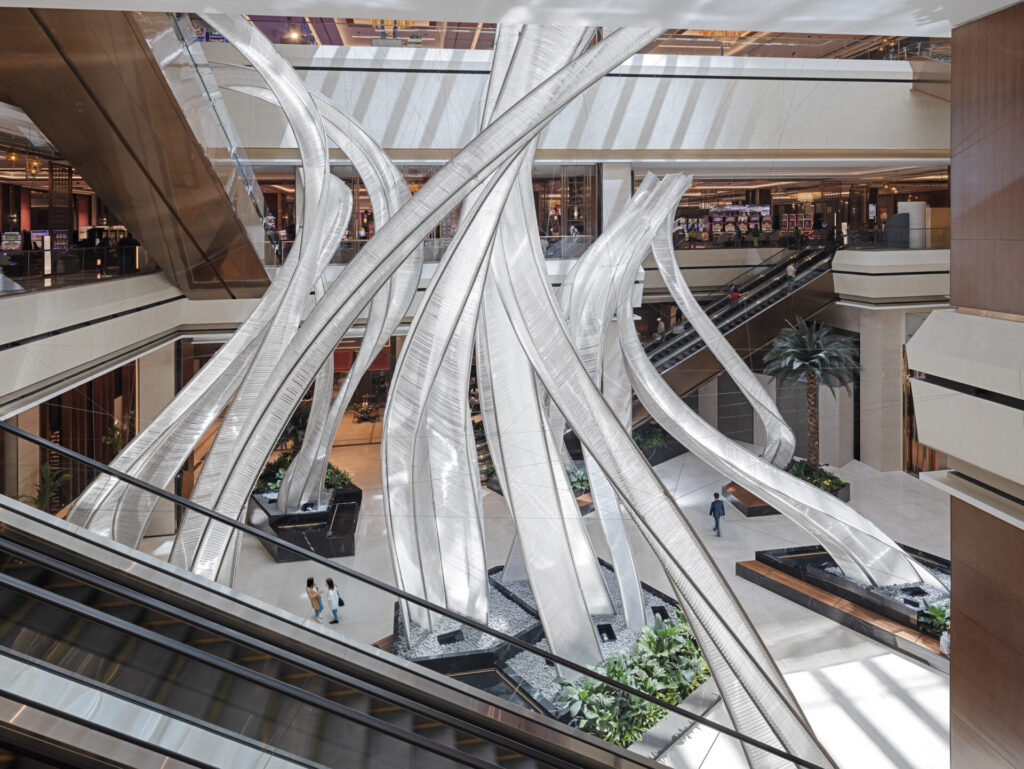
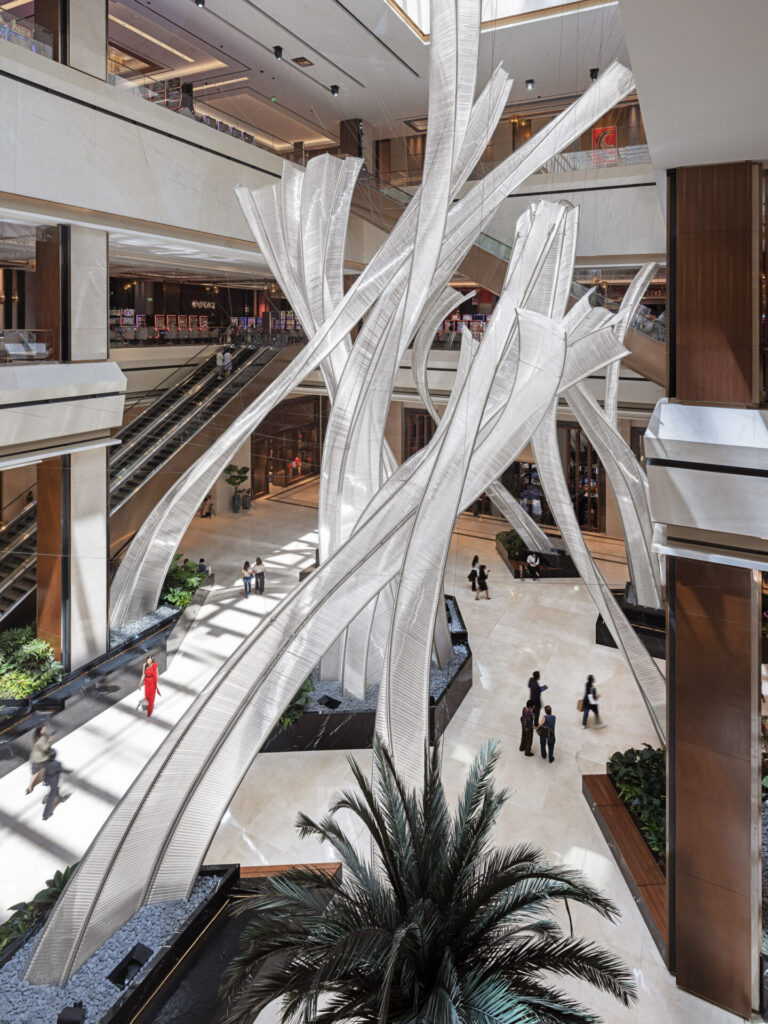
The jaw-dropping Mangrove glass sculpture is one for the books—quite literally. It was recently named the world’s largest glass tube installation by the definitive recordkeepers at the Guinness Book of World Records. Soaring eight stories throughout the Solaire Resort atrium in Manila, Philippines, it weighs over 13 metric tons and contains more than 16,000 thousand individual glass tubes, all cut and woven by hand.
Elevate your design and manufacturing processes with Autodesk Fusion
Inspired by the atrium light shining down from above and the root system of the mangrove tree, designer Nikolas Weinstein didn’t set out to break records. He simply wanted visitors to be a part of a sculptural “urban oasis” experience, and it grew from there.
“The idea became environmental,” Weinstein says. “Instead of just looking at something in the middle of the space, like a piece on a podium, I was really interested in making something where you could move through it, above it, and around it. Even with all the modeling and preparation, the first time you see it upends expectation. It’s a beast.”
Designing, manufacturing, and installing this massive architectural element was no small feat. With Autodesk Fusion, the team at Nikolas Weinstein Studios was able to make Mangrove a reality.
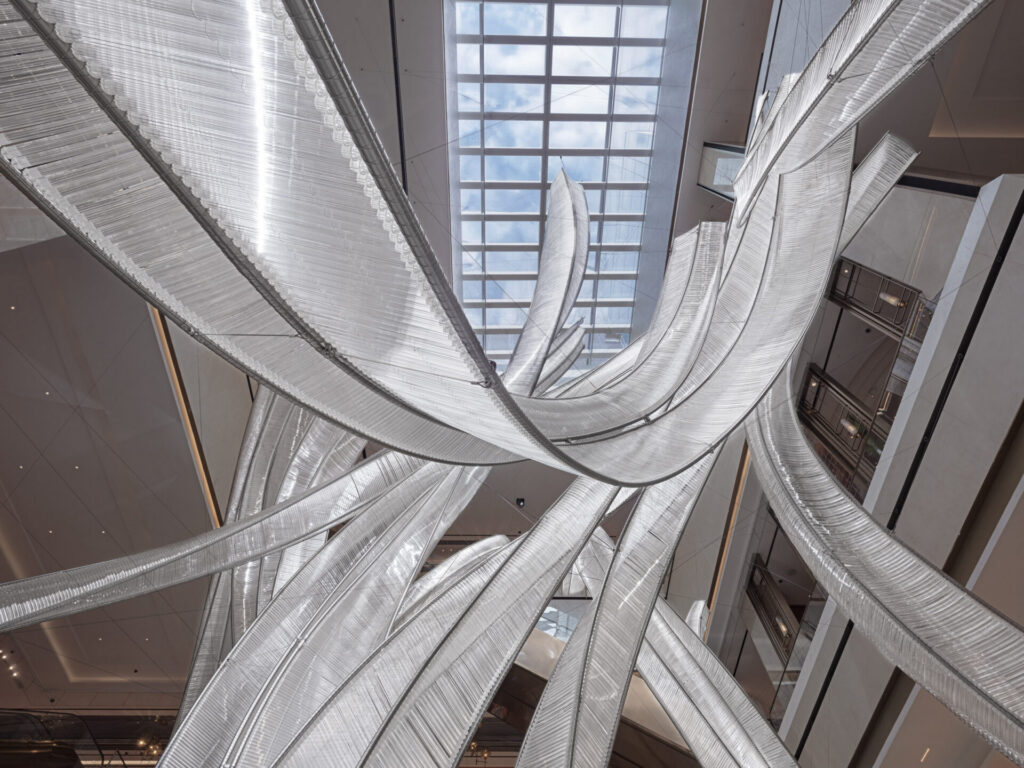
“Fusion acts as a hub where we can do ‘a little of everything,’ whether it’s CAD, CAM, sheet metal design, FEA, or material calculations all in the same model,” Weinstein says. “I firmly believe that the people who are designing things should be the ones making them. With Fusion, we’re able to do that.”
Rapid prototyping with seamless collaboration
Fusion was central to the Mangrove project. But what made its use remarkable was not just parametric modeling, which was certainly important in and of itself. Fusion also fundamentally changed how the team worked together. For all of Nikolas Weinstein Studio’s (NWS) projects, they closely collaborate with the global firm Arup to validate their designs, and Mangrove was no exception.
During creation of a family of custom cable tensioning hardware, the NWS team was engaged in rapid iteration in tandem with Arup engineers. As the load requirements were developed by Arup, NWS was able to rapidly test and scale the hardware with Fusion’s built-in FEA suite, populate new fasteners via the McMaster insert tool, 3D print the design and test it to generate feedback for Arup all in the same day.
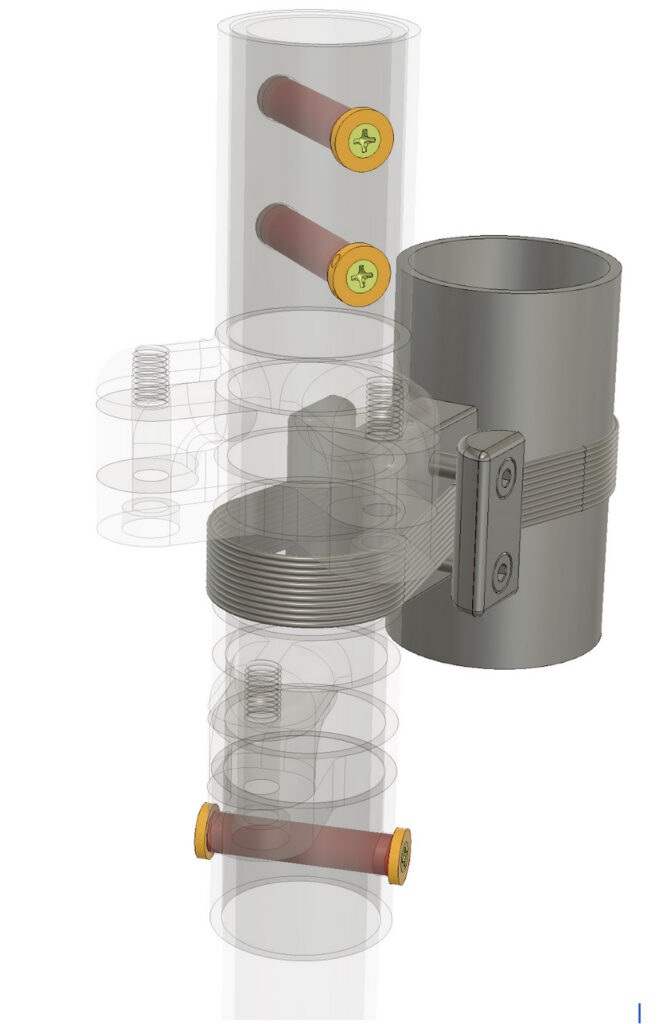
“We could easily work with our structural engineers at Arup, and within hours—not days or weeks—we’d redesign a component, print or machine it, physically test it, run FEA analysis, and send updated proposals back,” says Jonah Burns, manufacturing engineer, NWS. “Sometimes we’d go through multiple iterations before lunch.”
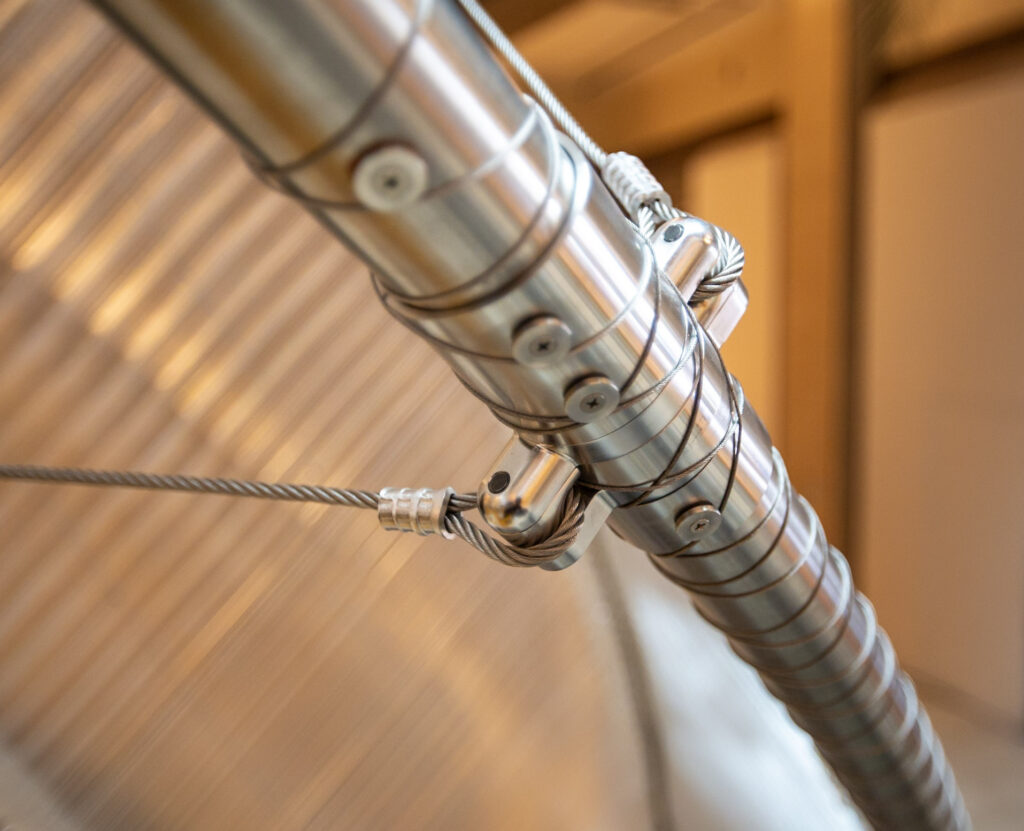
Fusion also effectively enabled non-local collaboration. “I’d design something in New York, and someone in our San Francisco shop could immediately open it, switch to the CAM workspace, and cut it on the CNC there,” he says. “San Francisco has welding and metalworking capabilities we don’t have in New York, so we could instantly distribute work geographically while staying synchronized.”
“For Mangrove, we built a parametric welding jig generator where we could take two angles (clocking and lean), and Fusion would produce a unique, labeled fixture. What would have been 53 tedious custom designs boiled down to ‘tweaking a lowest common parametric denominator.’”
—Jonah Burns, Manufacturing Engineer, Nicolas Weinstein Studios
Addressing challenges on site
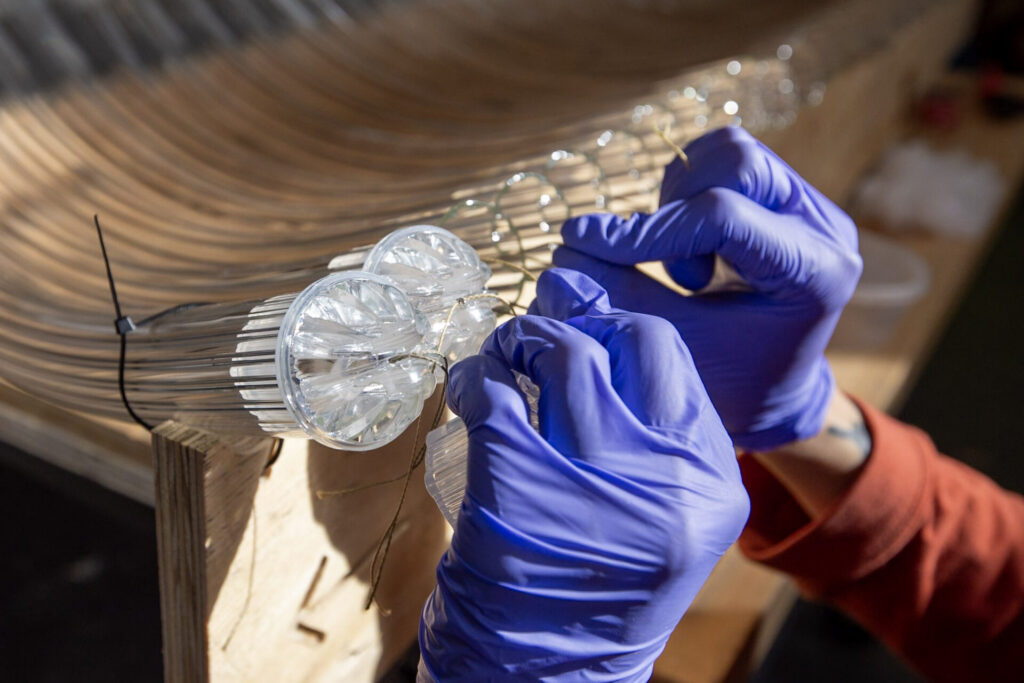
All of Mangrove was assembled in the U.S. in modular sections, and then shipped to Manila in five, 40-foot shipping containers. More than 40 local contractors were taught how to meticulously weave together the sculpture sections with the supporting cables and custom anchors. With a bespoke piece and installation like Mangrove, it’s a first for everyone and comes with its own share of surprises on site, too.
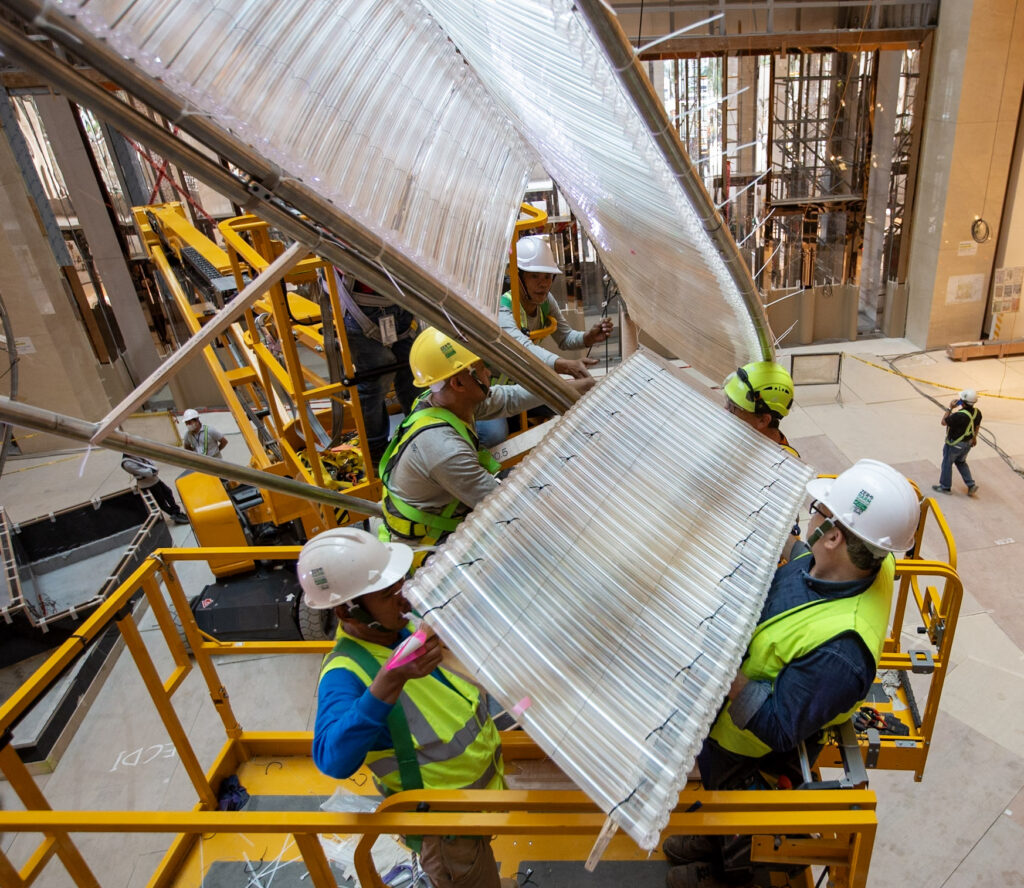
Custom wrenches were designed on the fly with Fusion when they realized standard tools wouldn’t fit in some of the confined spaces. When insufficient cable tension adjustment was discovered, the team quickly designed retrofit elbows, shared files remotely with collaborators and local machinists, and fabricated custom installation tools within days.
“Taking the time to develop an accurate ‘digital twin’ in Fusion was invaluable for this kind of on-the-fly adaptation,” Burns says. “You may not be sure how it will come in handy, but you can be sure it will.”
Looking ahead
Throughout his 27-year career, Weinstein has always been an early adopter of technology and keeps an open mind. Since he started the Mangrove project in 2020 through the installation last summer and all the other designs in between, Fusion has grown right along with him and the studio team.
“In just the last five years, we’ve completely reinvented how we iterate,” Weinstein says. “Fusion allows us to imagine a machine that incorporates off-the-shelf parts with custom machined assemblies. Now we can make unicorn machines that do just what we want really quickly. It’s a dream that opens doors, a different way of working.”