 Shannon McGarry
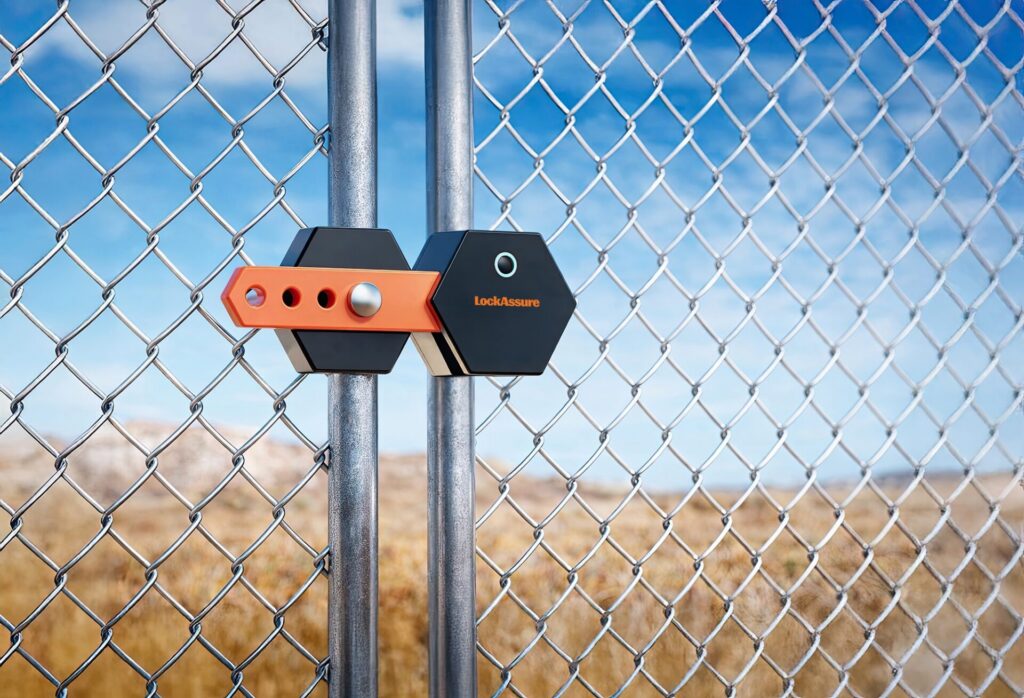
With a lifelong passion for inventing and a disciplined, problem-first design process, Alexander Simone’s journey with makeXnow led to the creation of LockAssure—a smart lock designed for the security realities of construction sites.
Elevate your design and manufacturing processes with Autodesk Fusion
For Alexander Simone, inventing was never a phase or a career experiment—it’s the throughline of his life. Long before co-founding his own product design company makeXnow or working with the startup LockAssure, Simone knew his path.
“Even when I was a kid, I always knew deep down that I wanted to be an inventor,” Simone says.
Simone studied, experimented, and learned by doing, spending countless hours prototyping and teaching himself how products get made. That hands-on approach accelerated during college when he gained access to a makerspace packed with tools most students never touched. With 3D printers, fabrication equipment, and near-constant access, Simone wasn’t just learning design theory. He was learning how design decisions play out in physical form.
Those experiences shaped his early product work, including a consumer product he took through dozens of prototypes and eventually onto Shark Tank. The project went beyond a successful example of landing an investment. It became something more valuable: a crash course in manufacturability, iteration, and the limits of fixing decisions late in the product development process.
Building makeXnow around real outcomes
After years spent refining a single product, Simone made a deliberate shift. He wanted a business that could generate revenue immediately without compromising his core identity as an inventor. That idea became makeXnow, a product development studio built around a simple principle to help clients ship successful products, not just design them.
“Our goal is to help our clients ship viable products that make an impact,” Simone says. “We only work with products that we believe will be successful. Our favorite clients are the ones who care more about the problem they’re solving than the idea they walked in with. I always say ‘marry the problem, not the solution.’”
For makeXnow, Autodesk Fusion is key to their design process. Co-founder Anton Shvydkyi made the move to Fusion from SolidWorks for its flexibility and comprehensive feature set.
“I switched from SolidWorks because it didn’t have a freeform workspace for organic modeling,” Shvydkyi says. “Fusion combines features from several programs into one, and it’s also the easiest to get started with.”
He also notes Fusion’s community aspect as key benefit of the platform
“The vibrant community of makers and engineering professionals are always ready to help,” Shvydkyi says. “Whenever you have a question or feature idea, there’s already a forum post on the Fusion website where people are already discussing it.”
With a problem-first mindset and the right tools at their disposal, makeXnow was ready to move fast and with confidence when the right client came along.
Elevate your design and manufacturing processes with Autodesk Fusion
A problem worth solving
When the founders of what would become LockAssure first approached makeXnow, they didn’t arrive with a polished product. They arrived with a sketch, and a deep understanding of a problem that’s been plaguing construction sites for generations.
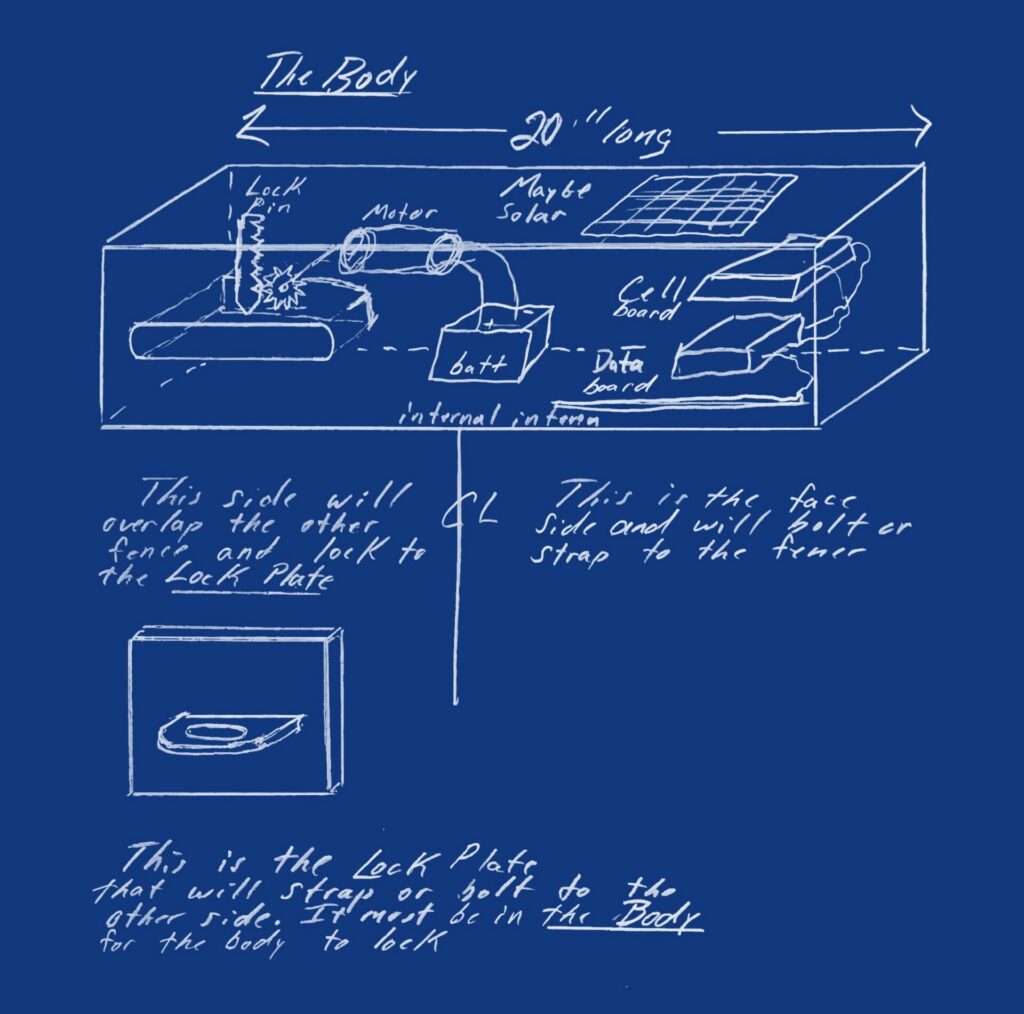
Construction sites rely on chains and padlocks that haven’t meaningfully changed in decades. The consequences are expensive and sometimes dangerous. Gates are left unlocked. Access codes can be changed without notice. Supervisors don’t know whether sites are secure at night, and crews show up unable to enter job sites. In some cases, workers resort to cutting locks just to keep projects moving.
“When workers arrive in the morning, there could be dozens of people standing outside the gate and they can’t get in,” Simone says. “On a large enough site, that can translate to tens of thousands of dollars burned per hour with no progress.”
The initial concept, a heavy metal box, looked nothing like the final product and that was the point. With a focus on outcomes rather than attachment to a form factor, the design was free to evolve, and that made all the difference.
“They cared more about the problem they were trying to solve than the idea itself,” Simone says.
Iterating to a final product
From the first sketch onward, LockAssure went through extensive iteration. Early concepts were tested, rejected, reshaped, and tested again. The product changed dramatically as they reviewed assumptions, incorporated feedback from people working on real job sites, and refined the mechanics of the lock itself.
“The product they came to us with and what we ended up making is completely different,” Simone says.
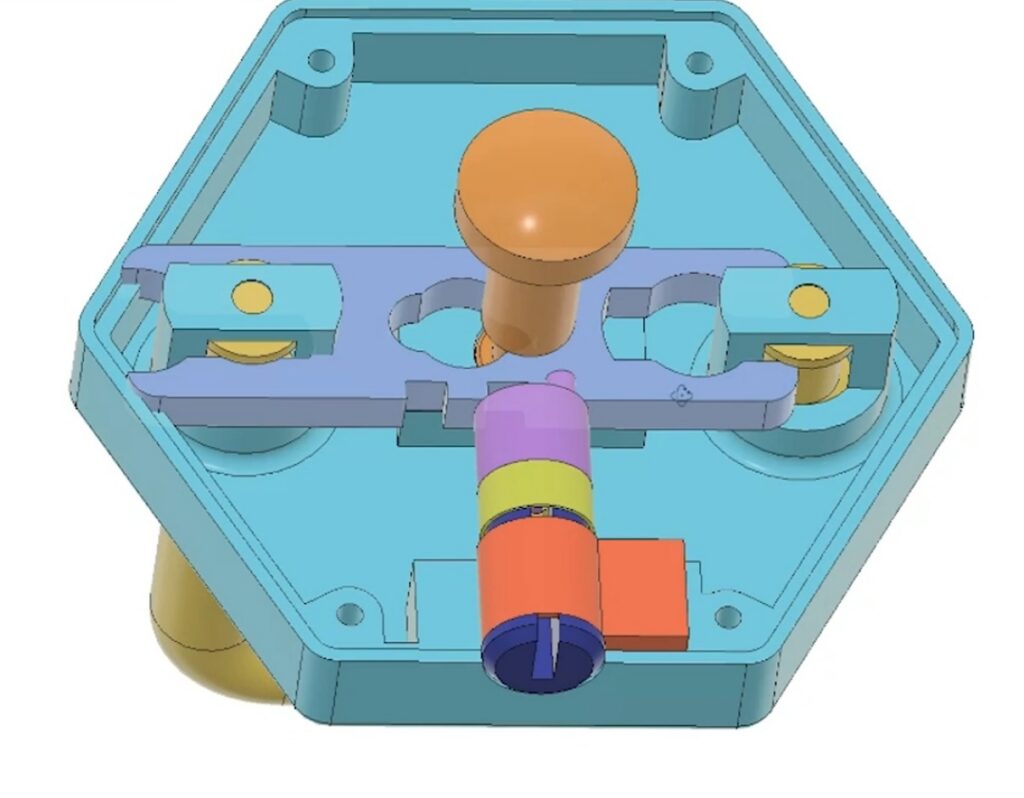
Throughout the process, Fusion served as the backbone for design, iteration, prototyping, and collaboration. “Fusion’s push/pull capabilities in combination with the various joint features helped us iterate very quickly on prototypes for HexLock 1,” Shvydkyi says. “It’s an environment where we can evaluate ideas quickly and make changes without friction.”
“A big moment was when we moved from a bike lock shape to our hexagon design, giving our lock its signature look,” Simone adds. “We also realized we could reduce cost and improve usability by implementing a simple pin mechanism rather than having the metal bar fully inserted into both halves of the lock.”
As the concept matured, those same models flowed downstream to manufacturing partners, reducing friction between design intent and real-world production. By the time LockAssure reached manufacturing readiness, it was no longer an incremental improvement on a padlock. It was a new solution shaped directly by the realities of the job site.
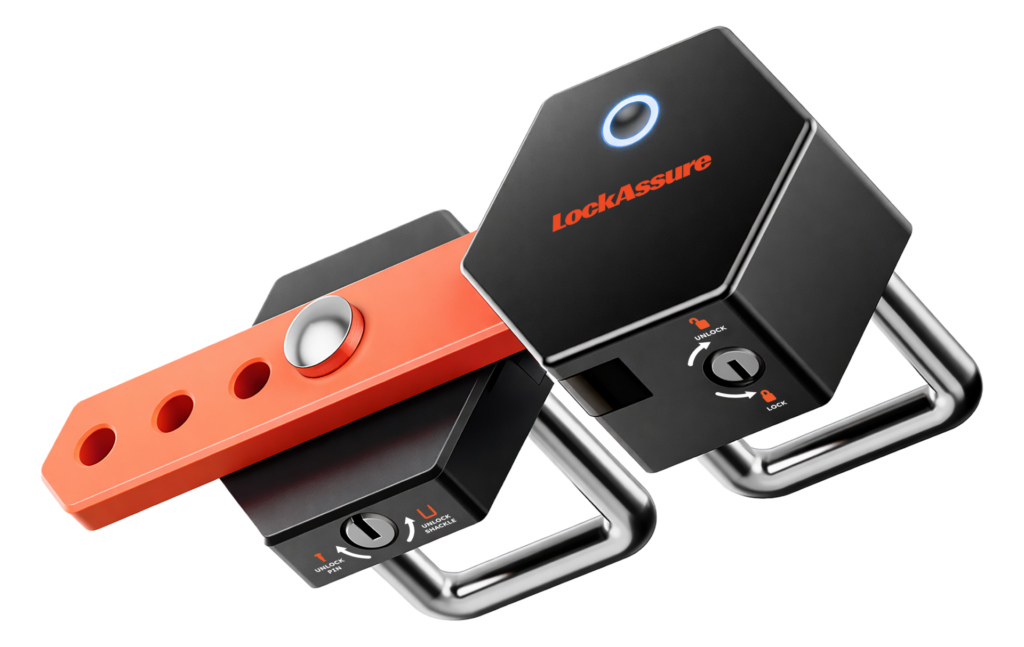
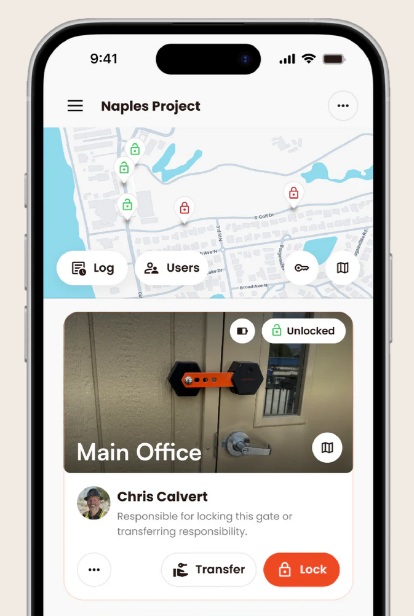
Their simple yet ingenious design decision paired with the advanced monitoring and access controls on the LockAssure app make ‘faking’ nearly impossible. Any breach or lapse in security is completely traceable, and there is always a single point of accountability. Today, LockAssure is moving through production with purchase orders already in place, a milestone that validates both the product and the process behind it.
“The inability to ‘fake’ our lock is one thing that really sets us apart from the competition,” Simone says. “With traditional smart locks, you could easily imitate a locked gate by connecting both parts and setting it aside. The smart app will show it as ‘locked.’ Our lock’s components prevent this by tethering directly to each side of the gate.”
Philosophy on product development
For Simone, LockAssure isn’t just another project. It’s proof that a disciplined, problem-first approach can turn early sketches into scalable products.
“That’s the hallmark of a product development company,” Simone says. “Helping clients actually ship.”
Simone and Shvydkyi transitioned from service providers into partners, taking equity in the company and helping guide it toward manufacturing.
From a lifelong desire to invent, to a business model and workflow, and ultimately a product designed to solve a costly, overlooked problem, the throughline is clear. Fusion didn’t just support the design of LockAssure, it supported a way of thinking that turns ideas into products that actually make it in the world.
“I’ve never seen a better product market fit,” Simone says. “I have no doubt in my mind that we will be the number one name in construction site locks.”