 Shannon McGarry
This post is also available in:
Discover poka yoke and its powerful mistake proofing examples in manufacturing. Learn how poka yoke techniques prevent errors, improve quality, and boost efficiency with real-world examples and best practices.

Elevate your design and manufacturing processes with Autodesk Fusion
What is poka yoke? Definition and importance
Poka Yoke (often spelled poke a yoke) is “a Japanese term which translates to mistake-proofing, that can be any mechanism or device that helps an operator to avoid mistakes.”
Although Poka Yoke is a lean manufacturing tool coined by Shigeo Shingo in the 1960s, it is also present in our everyday lives, and it remains a cornerstone of mistake proofing in manufacturing today.
To help you understand this concept, here are twenty examples of error-proofing in our daily life, poka-yoke examples in manufacturing and beyond, preventing us from making spelling errors or sustaining injuries.
Poka yoke examples: How mistake proofing is applied
Practical poka yoke examples abound in manufacturing and beyond, illustrating how simple yet effective design changes can significantly reduce errors:
- Contact method: This involves physical features that ensure correct assembly, such as uniquely shaped parts or keyways that only fit one way, preventing incorrect orientation.
- Fixed-value method: This example often appears in screw assembly, where a container holds exactly the number of screws needed to complete a task, making it obvious when any steps are missed.
- Motion-step method: This technique enforces the correct sequence of operations, often through sensors or mechanical guides that detect skipped or out-of-order steps.
Other examples include color-coded parts to quickly verify correct assembly, sensors to confirm part presence, and alarms that notify operators if a defect or omission occurs.
Poka yoke mistake proofing examples and their benefits
Poka yoke mistake proofing examples highlight how these systems detect and mitigate errors, often functioning in two ways:
Control-Based Devices: These devices stop a manufacturing process automatically if a defect or mistake is detected—such as a conveyor halting if a part is missing—ensuring errors cannot proceed downstream.
Warning-Based Devices: These generate alerts—visual or audible—when errors occur, like indicator lights signaling an incorrect component installation, relying on operator intervention to correct the mistake.
Benefits of implementing poka yoke mistake proofing systems include enhanced product quality, minimized rework, reduced safety risks, and better operator guidance—making processes more foolproof and efficient. Let’s take a look at some real-life examples:
Poka yoke examples
1. Outlet in the sink, to prevent overflow
Many sinks have a hole on the top, right below the pipe. This hole is a protective mechanism, preventing water from overflowing if the drain blocks or if you don’t close the tap.
2. Household appliances, not working with an open door
You can not operate most household appliances until the door closes. Sometimes the door locks while the machine is working, in some other cases, if you open the door, it stops working immediately.
The mechanism preventing machines from running with an open door is an example of a control function that prevents the process from starting until the required conditions are met.
3. Dialysis machines air bubble detector
Dialysis machines perform the function of the kidneys and are usually for patients with chronic kidney disorders. It has an efficient air bubble detector which works as a safety device for the machine to operate, in order to ensure that no air bubble passes to the patient’s body.
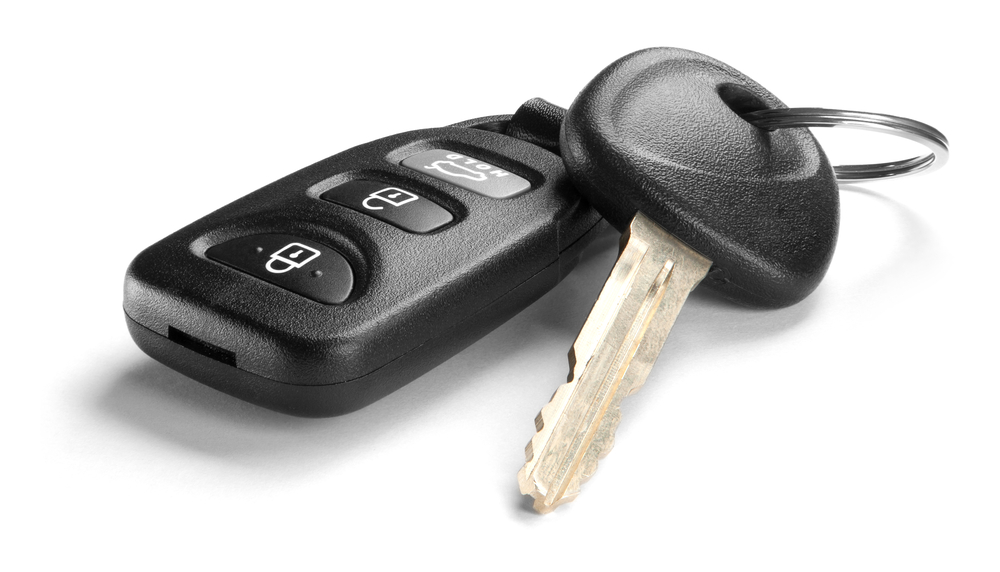
4. Car keys
Cars come with many safety measures. Usually, you’re not able to remove the car keys if the transmission is in an unsafe mode. As technology keeps advancing, so do the safety mechanisms developed in order to keep the driver and passengers as safe as possible. Auto braking, traffic alerts, radar systems, autopilots, and parking sensors are some of the features that you can easily find in a car.
5. Spell checking and dictionaries
Computers and phones include spell-checking tools, which alert us to spelling and grammatical errors. This is probably one of the most common error-proofing systems in our everyday lives.
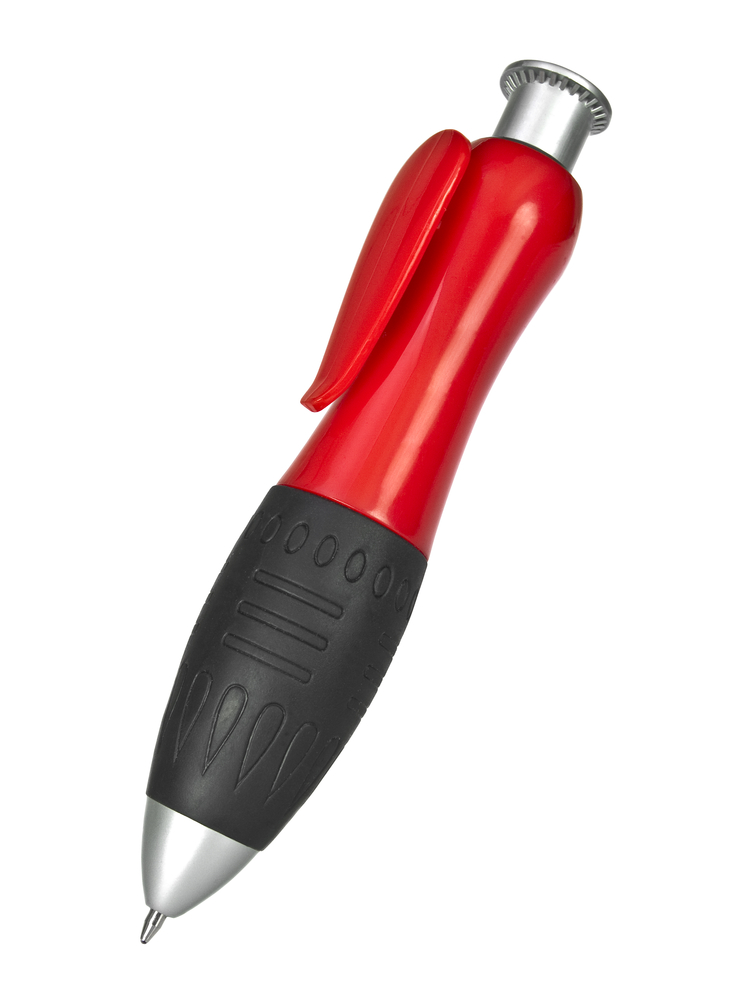
6. Pen with a retractable tip
Some pens function in such a way that you cannot clip them to your pocket with the tip still out. This prevents the tip of the pen from shredding your pockets.
7. Energy activated by a key card
In some hotel rooms, energy consumption is controlled by a key card-activated time switch placed inside the room. These switches activate by placing your key card in a specific holder. Once you leave the room and take the key card with you, energy automatically switches off.

8. USB plugs and other cables
Some cables and connectors fit into their respective slots with precision and accuracy and you can only insert them into the right outlet, in one orientation. Some even have pins that match an exact number of holes in an exact place.
This is probably one of the most classic methods of error-proofing, since it prevents people from connecting the wrong cables, in the wrong places.
9. Lane-keeping assist
Even though you must be paying your full attention to the street while driving, most streets have a Lane-keeping assist system. With a different texture, it works to keep you in your lane by nudging the wheels of your car as a reminder that you are getting away from your route.
10. Seatbelt pre-tensioners
Most car seatbelts retract forcefully to adjust occupants into a safer seating position when the airbags deploy. It happens due to a seatbelt pre-tensioner, a mechanism that “uses an explosive charge to drive a concealed piston when sensors detect the signature abrupt deceleration of an accident”.
11. Treadmill safety keys
Most treadmills have a safety key for security reasons. The safety key generally clips on the walker’s clothes, stopping the treadmill if the walker slips. There are many different types of treadmill safety keys, but they all do the same: They break the power circuit, forcing the motor to stop.
12. Lawnmower safety bar on the handle
Lawnmowers can cause severe injuries or even death in case of improper use. Since 1978, lawn mowers are required to have specific safety features to prevent accidents, such as a lever, attached to the handle. To start the mower, the lever needs to be held down and once the pressure is released, the machine goes off.
13. Elevator doors
Elevator doors usually have a safety sensor that detects the presence of a person, preventing the doors from closing.
14. Leak-proof lids on mugs and water bottles
Many recipients, mugs, or bottles already have a leak-prof lid that prevents your drink from spilling. The liquid only gets out of the recipient if you press a specific point of the lid.
15. Upside-down sauce bottles
Some sauce bottles stand upside down. On one hand, it makes it easier for the liquid to drip until it is closer to the lid. This model of bottle lets the water out first, allowing the user to easily squeeze out the sauce.
The six steps to implement effective poka yoke systems
Implementing poka yoke effectively requires careful evaluation and planning:
- Identify the problem: Observe processes for recurring errors or quality defects.
- Determine root causes: Use problem-solving tools like “5 Whys” to uncover why errors occur.
- Redesign to prevent errors: Modify processes or parts to remove error opportunities.
- Incorporate controls and alerts: Add devices or signals that stop or warn about errors.
- Validate solutions: Test to ensure poka yoke features reliably work under all conditions.
- Expand deployment: Roll out successful mistake proofing across other processes for continuous improvement.
Why poka yoke matters for your manufacturing and assembly processes
Integrating poka yoke into manufacturing or assembly processes ensures error prevention is built into the workflow, saving time, reducing costs, and raising product reliability. By studying proven poka yoke examples and implementing poka yoke mistake proofing examples tailored to specific needs, companies can achieve ongoing quality improvements and operational excellence.
If you want to know more about lean manufacturing and how Autodesk Fusion manufacturing software can help you to improve your processes, sign up now and find out how we can help.