 Trevor English
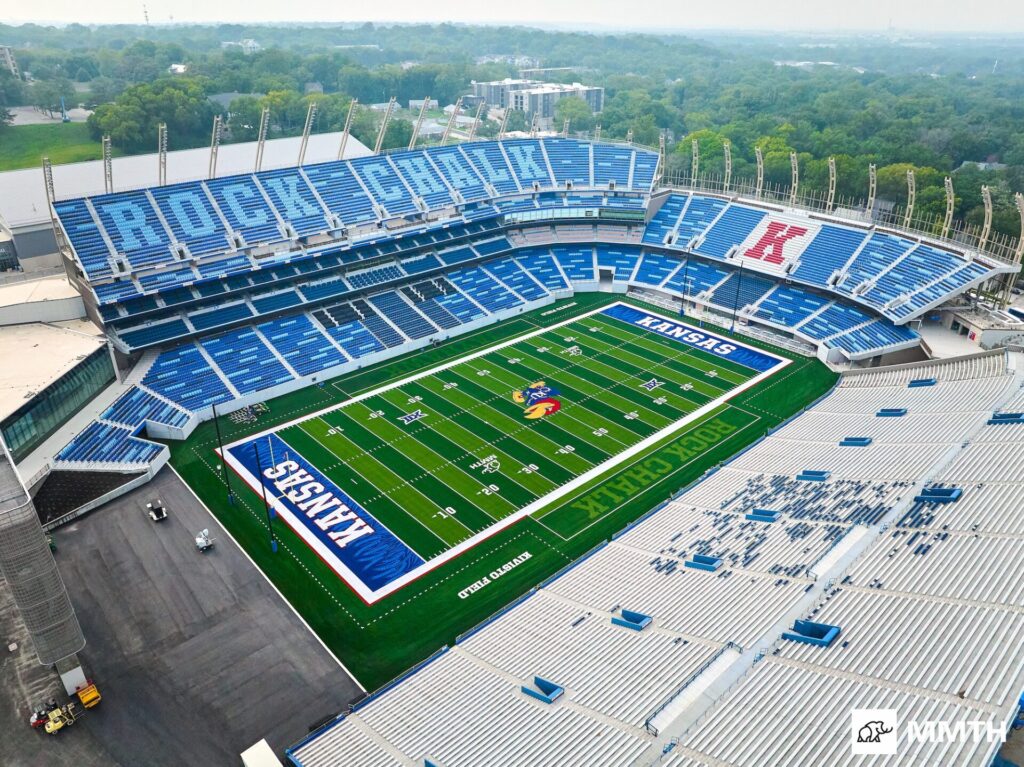
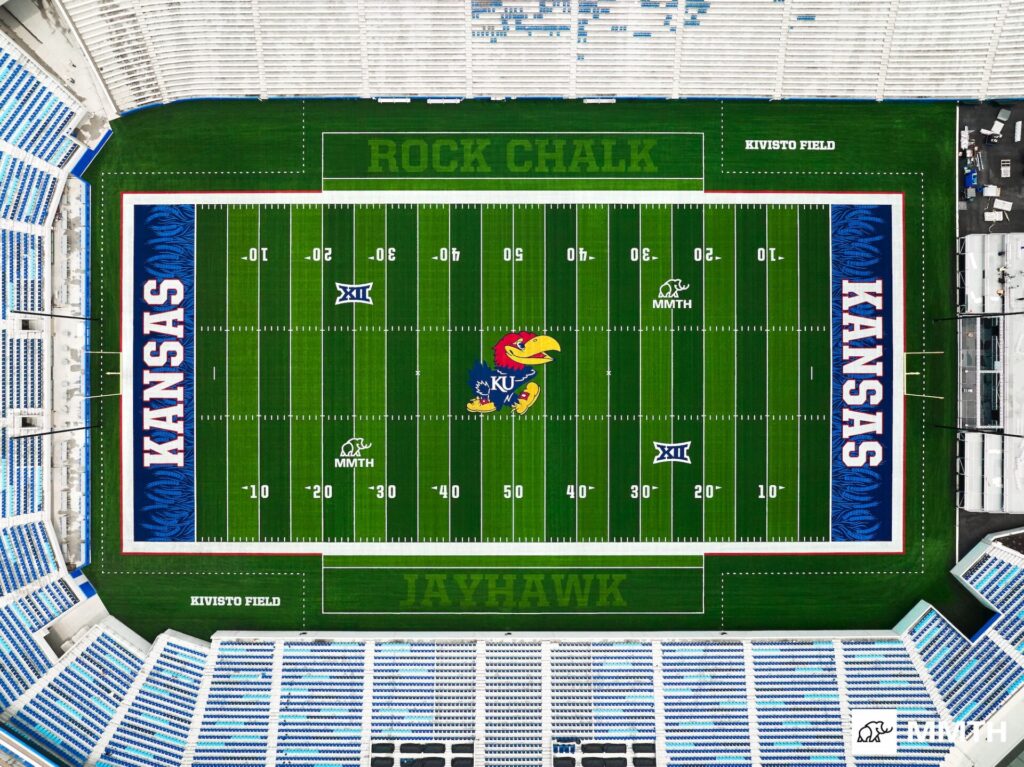
MMTH, a design firm specializing in sports stadiums, fields, and facilities, has always been driven by a singular vision: to create exceptional sports facilities that bring communities together. Notable projects include Kansas University’s Kivisto Field. On one of their latest projects, Silver Lake High School’s sports complex in Kansas, they showcased their innovation in designing stormwater control systems, which they modeled using a combination of Civil 3D and InfoDrainage.
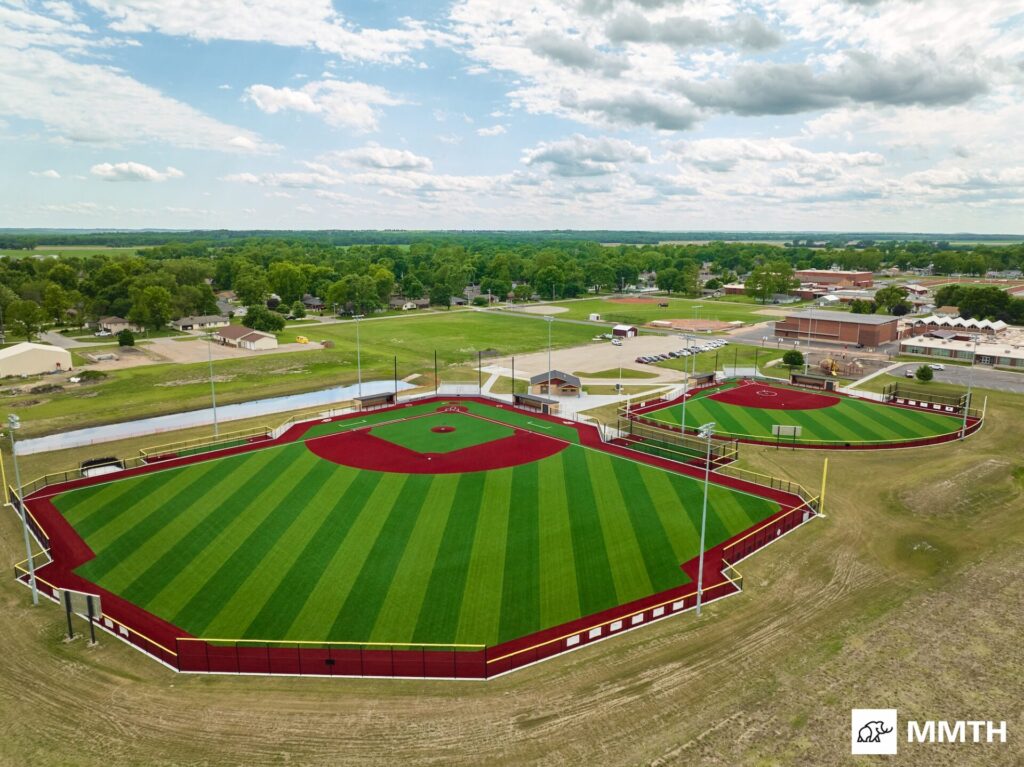
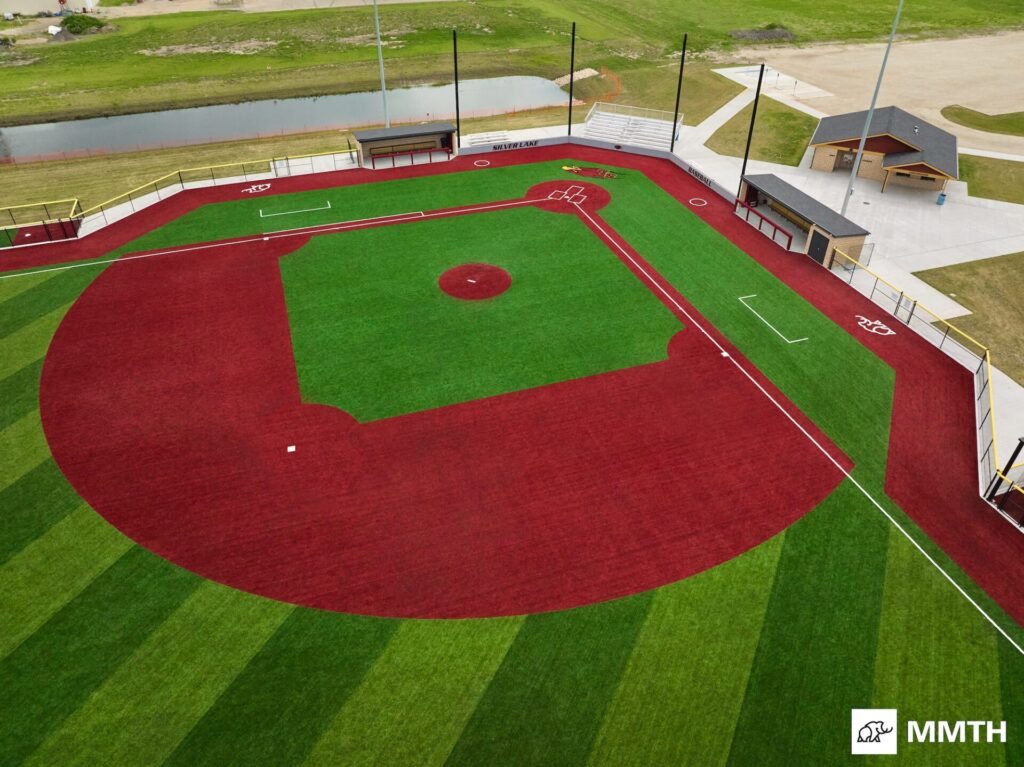
Situated on a former farm field, Silver Lake High School’s new sports complex involved transforming the land into a state-of-the-art facility that includes baseball fields, softball fields, detention basins, parking, and a concession station. These are all aspects that we know and love about our local sports complexes, but sports fields themselves actually present some interesting hydraulic behaviors that need to be taken into account, and which require coordination across multiple disciplines, including site drainage and hydraulic analysis.
“We build sports,” says Shawn Grisamore, VP of Construction Development for MMTH. “We’re a sports construction company that aims to provide our clients with unparalleled project experiences that match their passion and enthusiasm for sports excellence.”
Committed sports fans themselves, MMTH likes to take on difficult challenges. They pride themselves on being able to take projects from planning to design to construction fully in house – on budget and on time, often with accelerated timelines. They meet these sometimes-difficult deadlines by building software workflows that work in lock step, preferring solutions that can support them through all phases of a project.
“If we can control more pieces of the project to give the client a better experience, we’re going to do that,” Grisamore continues. “We have many integrated teams that work together in lock step, and we need solutions that enable that integration, which is what Autodesk and TopCon help us do. We need products that allow us to execute at top speed and efficiency.”
Like many civil engineering firms, they rely heavily on Civil 3D, which their Autodesk channel partner TopCon Solutions provides for them, along with a specialized Topcon/MAGNET ribbon within AutoCAD, Civil 3D, and Revit that helps them maximize their import/export capabilities.
By leveraging Autodesk’s Civil 3D for site design and InfoDrainage for hydraulic modeling, they can begin engineering while they are still finishing development work, ensuring a swift transition from design to construction.
Using turf as a stormwater control
The project site was initially a flat farm field that required extensive land preparation. MMTH’s in-house engineering and design team took on the challenge, utilizing Civil 3D for drainage networks and sheet set management. Once the team of civil designers was done with the initial site work, those same designers switched to InfoDrainage for work further on the drainage plan. The key note about this workflow is who exactly was doing the work: civil designers – not hydraulic modelers. As digital transformation reshapes workflows and new software solutions further their integrations, just like Civil 3D and InfoDrainage have, it makes it easier for the silos between disciplines to break down, leading to more efficient workflows with the teams you have.
InfoDrainage played a crucial role in mapping inundation and pulling in surfaces to map overflows. This capability was particularly important for complying with regulatory reporting requirements, as is common with most drainage projects. However, what might sound like traditional site development work right now, actually is only the gateway to a rather fascinating discussion about the hydrology of sports fields themselves.
You might not think it, but sports fields present unique hydrological challenges. One of the standout features of the Silver Lake project was the installation of a synthetic turf field, modeled as stormwater control systems in InfoDrainage. At first glance, synthetic turf may seem to make a field less permeable than natural grass, but in reality it heightens permeability while still functioning much like a natural surface, with the added benefit of preventing pooling. This naturally increases the demand for runoff storage, but they were able to create an underground storage system of rock, modeled as a detention basin in InfoDrainage.
In essence, synthetic turf give engineers more control over the outflow on the field, while also providing filtration of stormwater before it hits the watercourse. Thus, synthetic turf fields, something Mammoth recommends for many projects, need to be designed and analyzed like stormwater controls, something InfoDrainage allowed the team to do.
Seth Soto, Civil Engineering Manager at MMTH, elaborated on this innovative approach: “By installing turf, we’re able to get storage from under the field. We model the field as a pond in InfoDrainage and tweak the porosity to effectively get hydraulics. This makes it really easy to model these unique scenarios. Generally speaking, with this design, we are able to store a 100-year event under the turf.”
The synthetic turf fields provide significant environmental benefits too, MMTH notes, including improved water quality. “There’s a water savings with synthetic turf as well,” adds Soto. “In places where the water table is falling and there’s a shortage, you’re saving significant amounts of water through the use of synthetic turf. You’re also saving pollutants from running off into drinking water and causing pollution to the surrounding region.”
While most drainage designers probably won’t be using synthetic turf fields in their next urban drainage design project as stormwater controls, MMTH rests easy knowing that InfoDrainage can effectively models the hydrology of this hydraulic niche, and ensures they meet the necessary watercourse requirements for the site.
Ensuring compliance and quality
InfoDrainage and Civil 3D’s combined capabilities allowed them to model both quantity and quality and were instrumental in ensuring compliance with regulatory reporting requirements for the project. MMTH’s team modeled pre- and post-development runoff with hydrographs, ensuring that the pond tied out to stormwater along the street and met existing flow tolerances.
How do regulators approach synthetic turf? Most agencies recognize synthetic turf fields as a permitted Best Management Practice (BMP), awarding points for their use in stormwater management. Who knew that synthetic turf had so many benefits in the hydraulic behavior of sports complexes?
After design and analysis, the project moved on to the construction phase. Thanks to MMTH’s fully in-house team, they had that piece covered as well.
TopCon’s role in streamlining construction
The successful execution of the Silver Lake project was made possible through the integration of TopCon’s solutions into MMTH’s workflow. As a trusted Autodesk channel partner, TopCon provides tools for the construction phase, ensuring precision and efficiency. From 3D machine control to model building, TopCon’s technology complemented Autodesk’s design software, creating a robust and cohesive system that MMTH could rely on.
The construction team utilizes TopCon for 3D machine control, streamlining their processes and bringing model building in-house. “TopCon’s exchange ribbon in Civil 3D allows us to export TP3 files seamlessly,” says Soto. “Instead of having to go through different teams to fix the model, having the full suite of solutions in-house enables us to do everything efficiently. This has saved us a ton of money and streamlined our processes.”
A testament to innovation and collaboration
The Silver Lake High School sports complex project is a testament to MMTH’s expertise and the power of Autodesk InfoDrainage, Civil 3D, and TopCon solutions. By leveraging Civil 3D and InfoDrainage for design and drainage analysis and TopCon for construction, MMTH successfully delivered a high-quality, environmentally compliant sports complex on time and within budget.
Their integrated approach and commitment to client satisfaction continue to set them apart in the industry. As firms like MMTH continue to embrace holistic solutions and workflows, within the Autodesk ecosystem of products and partners, they’re able to accelerate their digital transformation journey, doing more with less, and leaving clients satisfied time and time again.
Bring your drainage and civil workflows together
See how integrated tools like InfoDrainage and Civil 3D can help your team design, analyze, and deliver projects more efficiently – just like MMTH:
- Not sure whether to use Civil 3D’s new drainage tools or InfoDrainage? Our expert employees have the answers.
- Start an InfoDrainage free trial.
- Check out our content around Civil 3D integrations.