 Casey Chaisson
Did you miss Autodesk University 2025 in Nashville? Don’t worry, we’ve curated a list of the best water sessions available on demand through AU online.

AU 2025 featured a strong lineup of water-focused content, with sessions on digital transformation spanning drainage design, hydraulic modeling, and asset management. For utilities and civil engineers alike, the event offered a mix of technical instruction, customer case studies, and workflow demonstrations to help teams design more efficiently, improve accuracy, and deliver more resilient infrastructure.
In this post, we’ve highlighted some of the most valuable on-demand sessions, covering everything from Civil 3D and InfoDrainage integration to integrated 1D/2D catchment modeling workflows using InfoWorks ICM to city-scale asset management best practices with Info360 Asset.
Drainage design
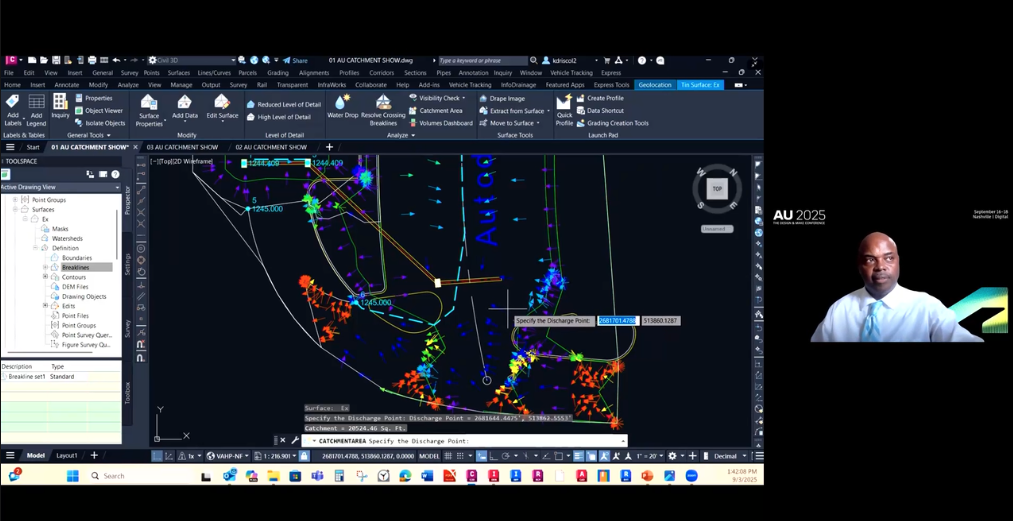
Mastering Catchment Creation in Civil 3D for Powerful Hydrology Simulations in InfoDrainage
Kenneth L. Driscol Sr. from GRAITEC demonstrates how new Civil 3D capabilities can automatically generate catchments from surface models and seamlessly transfer data into InfoDrainage for advanced hydrologic analysis and drainage network design to improve accuracy and accelerate project delivery.
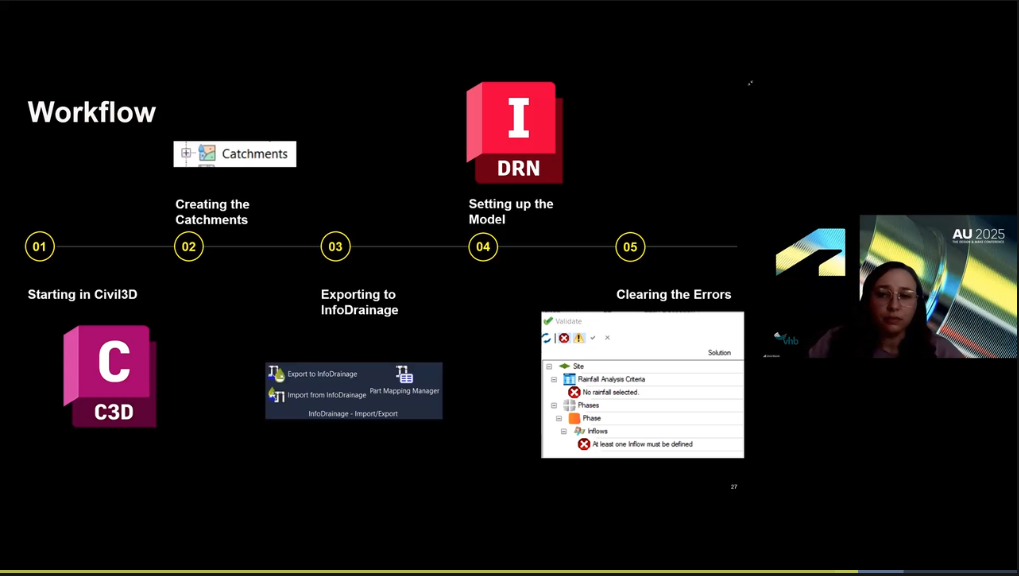
Flow with the Pros to Understand Civil 3D and InfoDrainage Integration
Consulting engineers from VHB, Jenna Woyner and Jess Ewing, demonstrate the Civil 3D catchments tool and its integration with InfoDrainage for a comprehensive and powerful workflow. This session teaches the fundamental steps for setting up catchments and importing data into InfoDrainage, as well as strategies to improve workflow efficiency.
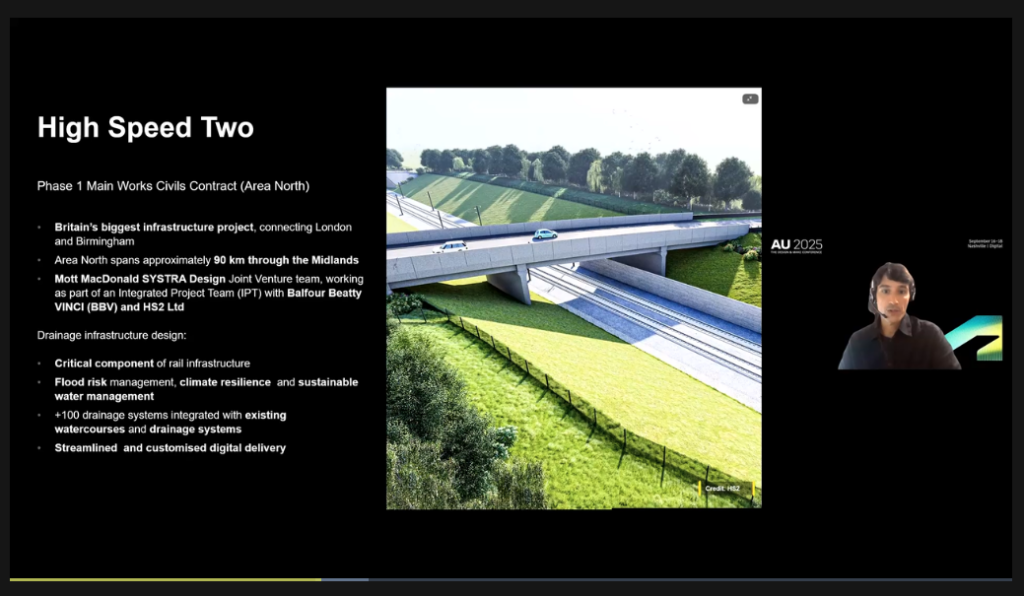
Smarter Drainage Design for a Resilient Future (Without Drowning in Data)
Pablo Souto from Mott MacDonald shares how evolving environmental regulations and growing climate resilience requirements are changing the way drainage systems are designed on major infrastructure projects. Drawing on real-world examples from the UK, he demonstrates how teams are using InfoDrainage to improve design efficiency, support sustainable drainage strategies (SuDS), and better integrate hydraulic modeling into large, complex infrastructure programs.
Hydraulic modeling
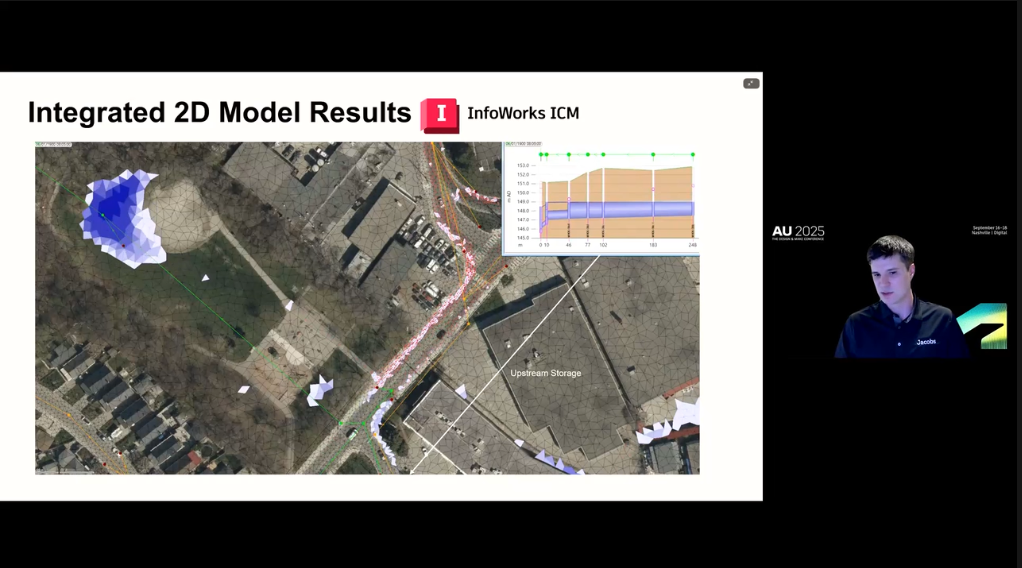
2D Or Not 2D: That Is the Question
Eric Kohnen of Jacobs presents a case study from the City of Toronto that demonstrates how integrating a targeted 2D surface model within an existing 1D InfoWorks ICM model can improve stormwater design outcomes. Using a dense suburban neighborhood prone to flooding, he shows how the approach helped optimize the size and location of a planned storage facility, reduce overland flooding risk, and ultimately achieve a 35% reduction in construction costs.
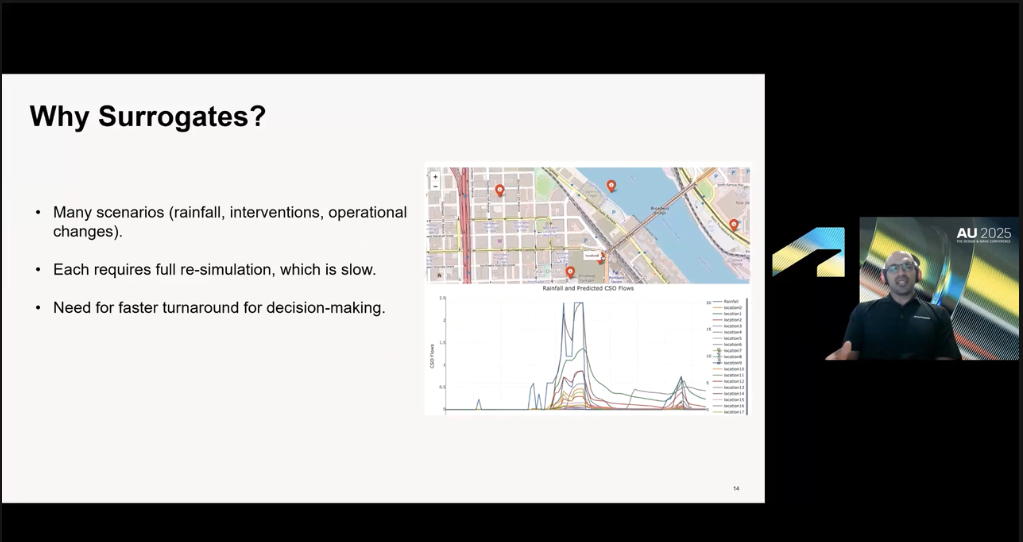
Democratizing Machine-Learning Catchment Modeling: From Simulation to Surrogates
Samer Muhandes of Autodesk explores how artificial intelligence can make advanced hydraulic modeling more accessible by using machine learning surrogates trained on InfoWorks ICM simulations. He demonstrates how these models can rapidly predict system performance and support scenario testing, stakeholder engagement, and operational decision-making, while maintaining the hydraulic rigor that engineers rely on for critical infrastructure planning.
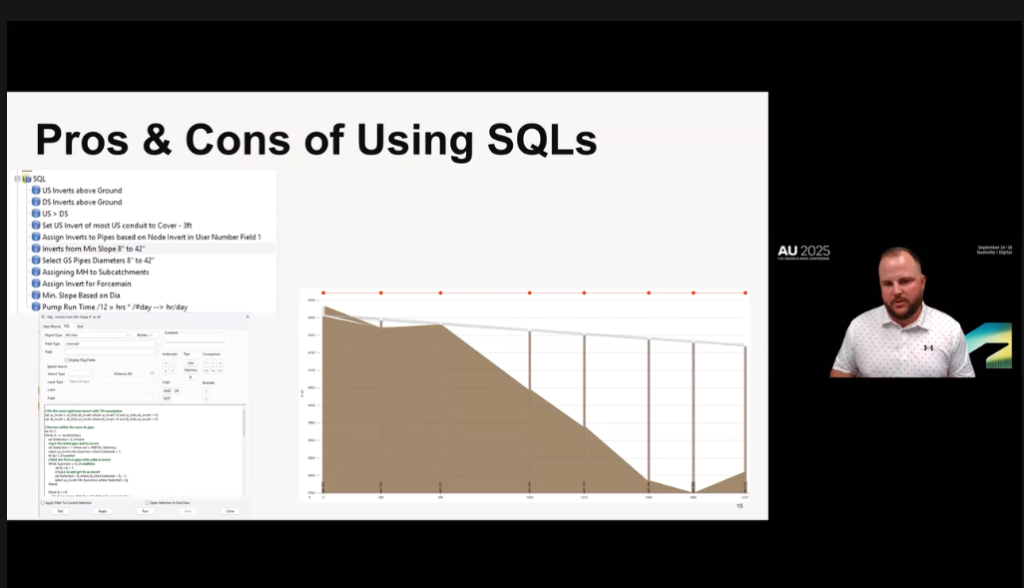
Building Catchment Models in InfoWorks ICM with Speed
Brock Jones of Kimley-Horn demonstrates how automation is helping engineering teams build large-scale sanitary sewer models faster and more efficiently. Through the use of custom Ruby scripts and SQL queries within InfoWorks ICM, he showcases innovative approaches to streamlining model development, improving data analysis, and accelerating the evaluation of system performance, allowing engineers to focus more time on solving complex infrastructure challenges.
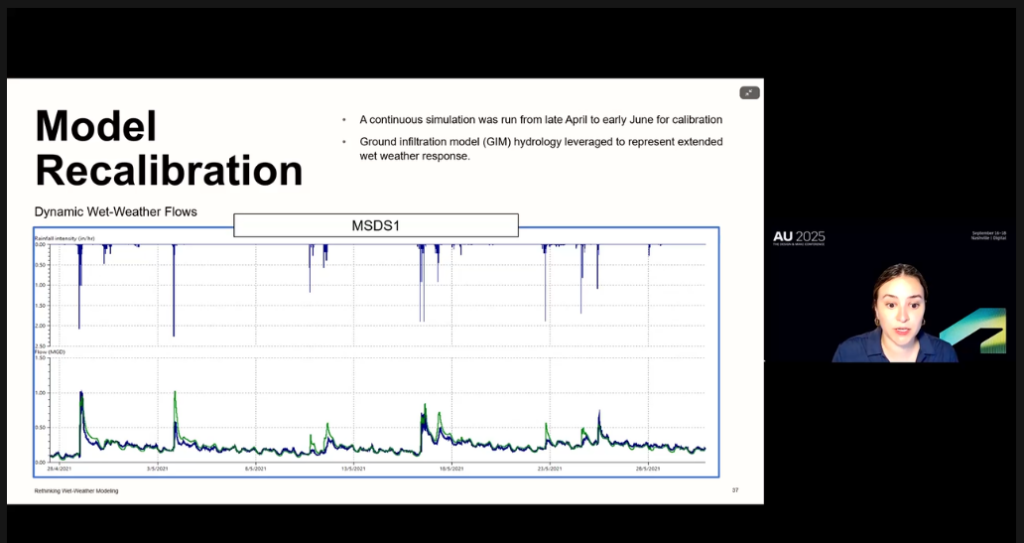
Rethinking Wet Weather Modeling: Applying GIM Hydrology to Sanitary Sewer Systems for Long-Term Infiltration
Nick Dons of the Trinity River Authority of Texas and Daniela S. Lopez from
RJN Group present a case study that challenges traditional hydraulic modeling practices by applying groundwater infiltration modeling to separated sanitary sewer systems. They share how extended-duration simulations in InfoWorks ICM helped better predict multi-week wet weather impacts, providing more accurate insights for treatment plant sizing, storage planning, and operational decision-making.
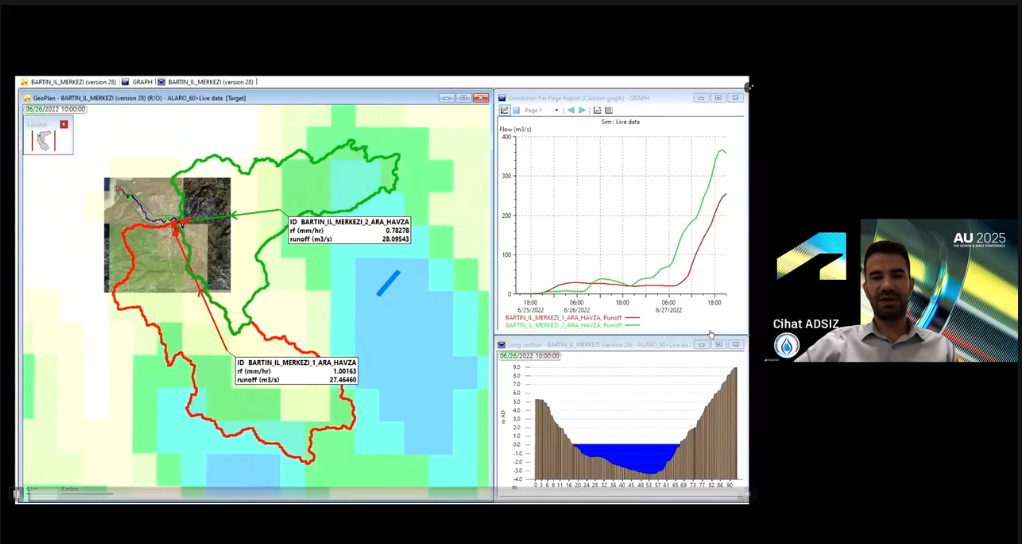
From Data to Safety: Predicting Floods, Protecting Lives
Özgüray Aydın, Cihat Adsız, and Dr. Tunay Çarpar showcase how Türkiye’s National Flood Forecast and Early Warning System is using InfoWorks ICM, AI, GIS, and real-time data to predict flood events up to 72 hours in advance. Through a national-scale case study, they demonstrate how advanced forecasting technologies are helping agencies shift from reactive emergency response to proactive risk management, improving resilience and protecting communities from the growing impacts of extreme weather.
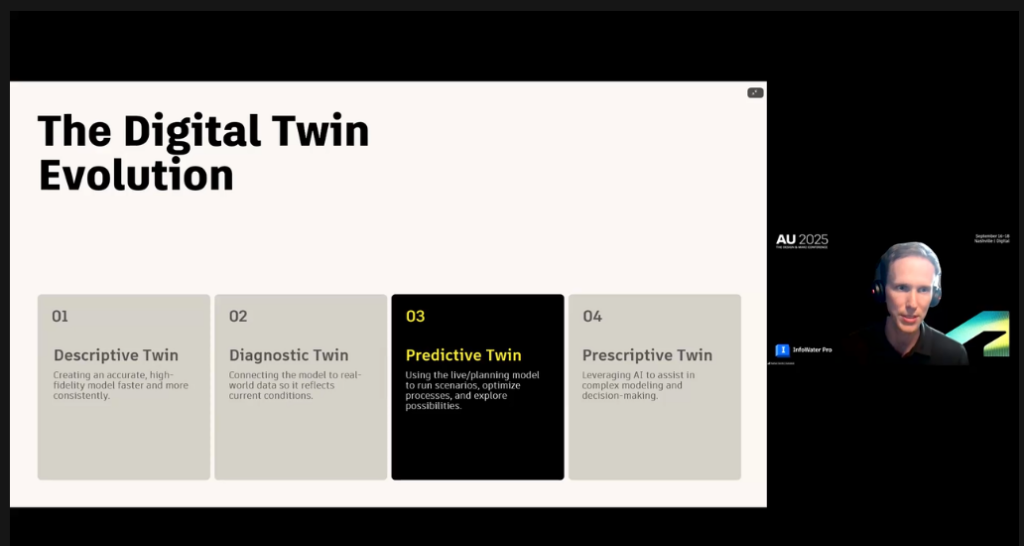
Unlock the Power of AI-Enhanced Scripting for Hydraulic Modeling in InfoWorks ICM and InfoWorks WS Pro
Nathan Gerdts of Autodesk explores how AI is lowering the barrier to automation by making scripting more accessible to hydraulic modelers, regardless of their programming experience. He demonstrates how teams can use AI-assisted scripting and the latest InfoWorks ICM and InfoWorks WS Pro capabilities to automate repetitive tasks, standardize workflows, and build shared tools that improve productivity across projects.
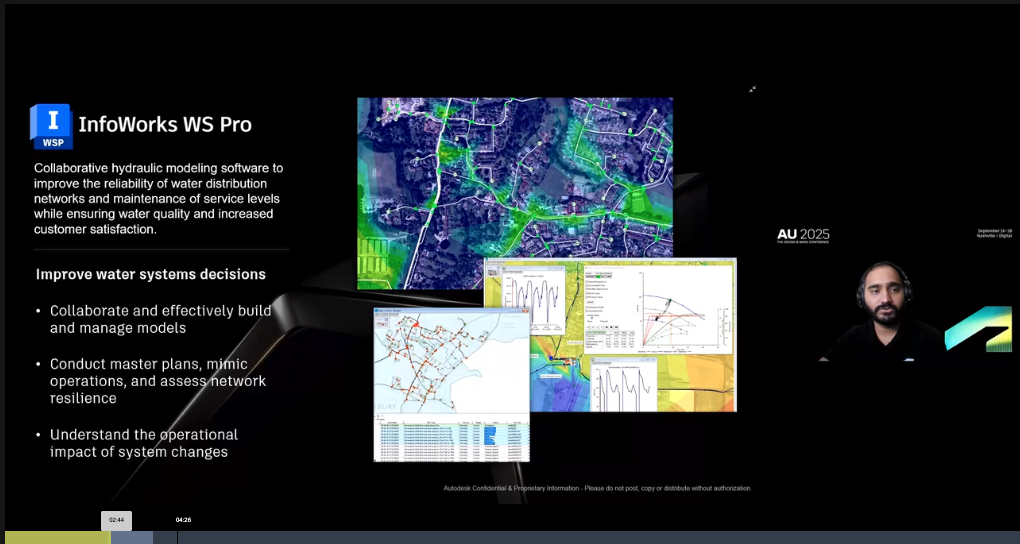
Dynamo-Driven Automation, Integration, & Customization: Simplifying Hydraulic Modeling with InfoWorks ICM, InfoWorks WS Pro, and InfoAsset Manager
Chaitanya Lakeshri of Autodesk demonstrates how Dynamo is making advanced hydraulic modeling automation more accessible by eliminating the need for traditional Ruby coding. Through a live product demonstration, he shows how drag-and-drop workflows can automate repetitive tasks, streamline model development, and improve consistency across projects, helping teams increase productivity while maintaining engineering accuracy.
Asset management
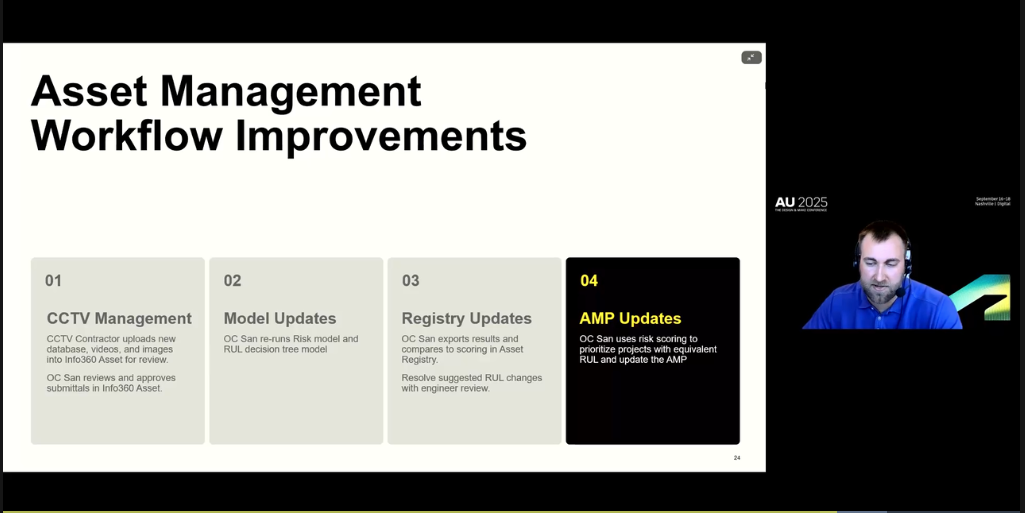
Empowering OC San’s Sewer Asset Management with Info360 Asset
Troy Edwards of Orange County Sanitation District shares how OC San is using Info360 Asset to transform sewer asset management across a system serving 2.6 million residents. Through the use of risk-based modeling, GIS data, and standardized CCTV inspections, he demonstrates how utilities can prioritize the most critical assets, make more informed capital planning decisions, and maximize the impact of limited infrastructure investment dollars.
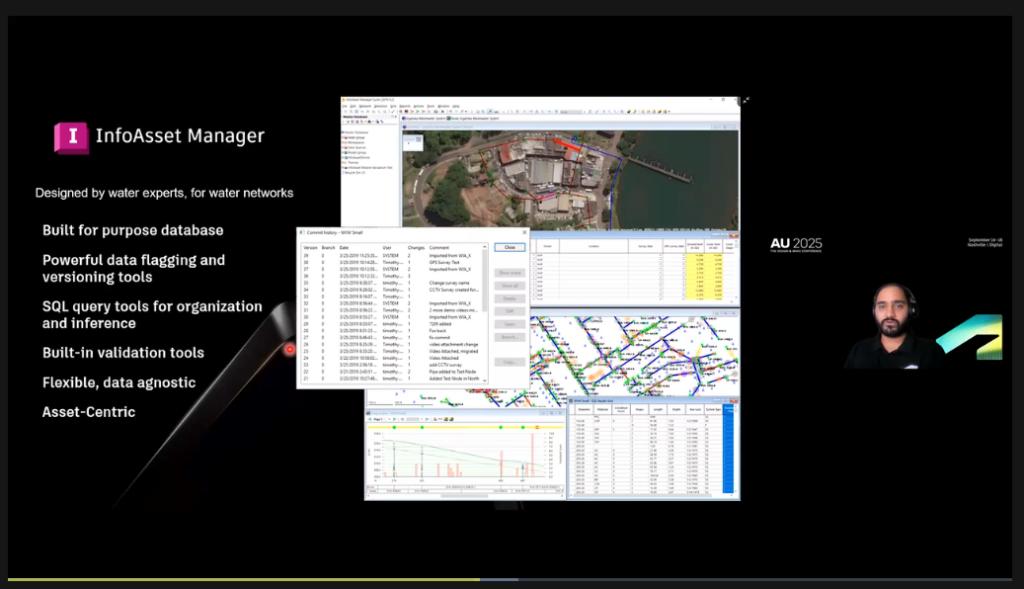
Connected Infrastructure: Integrating Datum360 with InfoAsset Manager, InfoWorks ICM, and InfoWorks WS Pro for Live Asset Synchronization
Tushar Panagaria and Chaitanya Lakeshri of Autodesk demonstrate how utilities can create a connected digital thread between design, asset management, and hydraulic modeling using Datum360, InfoAsset Manager, and InfoWorks. They showcase a live integration workflow that automatically synchronizes asset changes across systems, helping organizations maintain accurate hydraulic models, reduce manual data management, and make faster, more informed operational decisions.
Water Summit at AU 2025
The AU 2025 Water Summit brought together utilities, engineering firms, and technology providers for eight collaborative roundtables focused on advancing intelligent water infrastructure. The conversations were candid, practical, and forward-thinking. Read the event recap and all of the event takeaways from our in-depth roundtable discussions in our blog post here.
We hope to see you in person at AU 2026!