 Shannon McGarry
Autodesk Informed Design for Inventor allows product managers and engineers to create configurable, manufacturable building product models that seamlessly integrate with architectural workflows, streamlining industrialized construction from design through fabrication.

Industrialized construction is transforming the building industry by applying manufacturing principles to accelerate project delivery, enhance quality, and reduce costs. At the heart of this shift is Autodesk’s Informed Design for Inventor. It’s a powerful solution that connects design and manufacturing workflows for smarter decision-making and seamless collaboration between manufacturers, engineers, and architects.
What Is Informed Design for Inventor?
Informed Design for Inventor bridges the gap between mechanical product design and architectural building design. It enables manufacturers to publish parametric, rules-driven Inventor models directly into Autodesk Revit environments. Architects and designers can then insert configurable, buildable product models into their building designs with confidence that the products are manufacturable and compliant.
Unlike traditional static CAD or Revit families, Informed Design supports a dynamic, rules-based approach that incorporates product constraints and logic up front. This means design updates flow seamlessly between Inventor and Revit, drastically reducing costly rework and speeding up project timelines.
Key denefits and features of Informed Design for Inventor
- Configurable Building Products: Manufacturers can create fully customizable product models in Inventor with embedded rules and parameters. This allows architects to configure design options while maintaining manufacturing constraints.
- Seamless BIM Collaboration: Informed Design integrates tightly with the Autodesk Construction Cloud and Revit. This enables workflows where product data is shared securely and updated in real time.
- Automated Fabrication Outputs: Once a design is complete, fabrication documents, shop drawings, and bills of materials are generated automatically, eliminating manual handoffs.
- Iterative Project Development: Multiple product definitions and versions can be managed within a single Inventor model. This aids in supporting design iterations and different stakeholder needs throughout the project lifecycle.
- Future-Ready with APIs and Roadmap: The platform includes an API for deeper integrations and is continuously evolving with new features to support product manufacturers’ unique workflows.
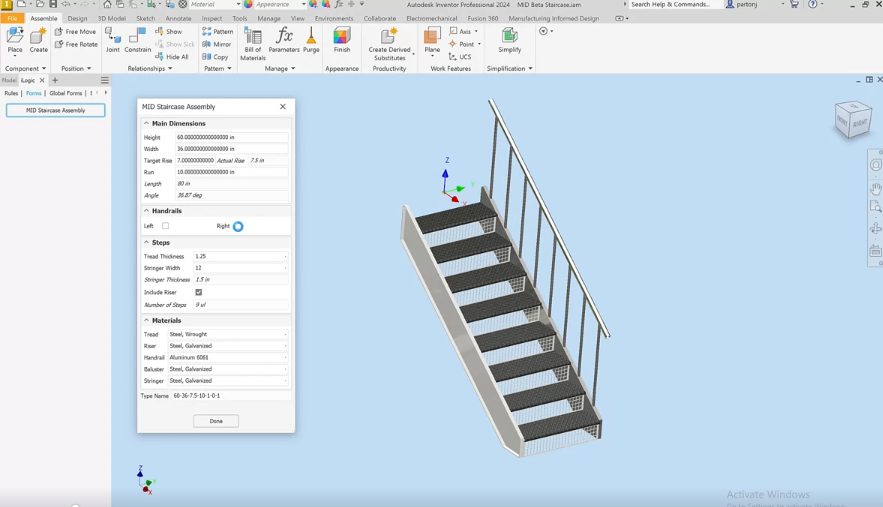
How Informed Design for Inventor works
Manufacturers begin by building product models in Inventor, applying design-for-manufacturing rules, and defining parameters that govern product variations. These models are published to a centralized cloud platform and made accessible to architects working in Revit. Designers then insert configurable product instances into their building models guided by the product rules. This ensures that every design choice is manufacturable and consistent with the manufacturer’s specifications.
This connected workflow reduces errors, tightens collaboration across disciplines, and accelerates the build cycle. Companies are able to more easily meet growing industry demands for faster, smarter, and more sustainable construction.
Why industrialized construction Needs Informed Design
The building industry faces escalating pressures: rising demand, labor shortages, sustainability requirements, and increasing complexity. Industrialized construction addresses these challenges by shifting production to factory-controlled environments and driving earlier decision-making in design and procurement. Informed Design for Inventor enables this shift by digitizing and connecting product and building data to collapse traditional silos between manufacturing and construction.
By embracing Informed Design, manufacturers and construction teams can:
- Decrease downstream errors and rework by validating manufacturability earlier.
- Accelerate delivery timelines with reusable, configurable product models.
- Improve sustainability by reducing waste through precise design-to-fabrication workflows.
- Empower teams to innovate through data-driven collaboration and automation.
Getting started
For manufacturers and product designers, adopting Informed Design means integrating this tool into your Inventor environment, setting up parametric models with defined rules, and publishing product definitions to Autodesk Construction Cloud. Architects and BIM designers can use these published products in Revit to quickly configure and place building components, verifying that designs comply with manufacturing constraints.
Whether you are producing doors, windows, modular systems, or custom building products, Informed Design streamlines the entire product lifecycle. This enables a future where construction is industrialized, efficient, and fully connected.
By bridging mechanical design and architectural workflows, Autodesk Informed Design for Inventor drives a new era of industrialized construction that empowers manufacturers to deliver innovative, buildable, and sustainable building products faster than ever before.