 Shannon McGarry
Establishing a new factory is a complex investment requiring meticulous planning, collaboration, and execution. Learn how Autodesk’s digital factory solutions can help.
Standing up a new factory is most likely the largest single investment a company can make. This massive undertaking involves extensive planning, collaboration, and execution. Despite rigorous planning processes, companies often face cost overruns, missed schedules, and unexpected mistakes that appear during handover or even afterward.
These challenges highlight the need for a more integrated and efficient approach to factory planning and execution. What if every project stakeholder—from the architect to the manufacturing engineer to the facilities manager—could get on the same page right from the start and stay there throughout the project lifecycle? This be achieved with Autodesk digital factory solutions.
The challenges of traditional factory planning
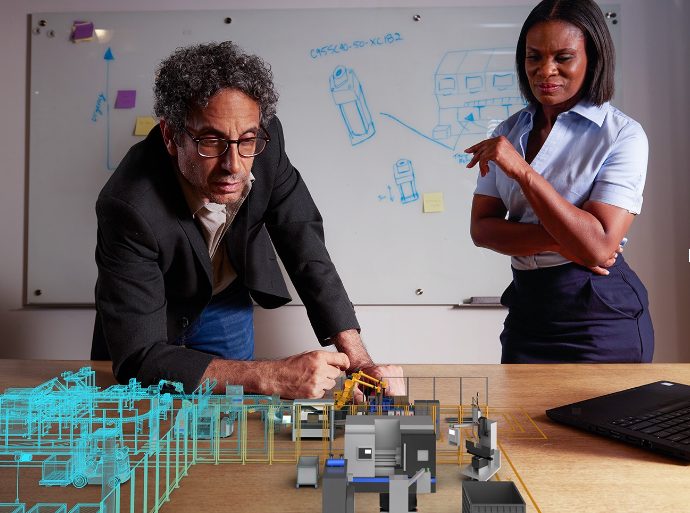
Traditional factory planning involves a number of stakeholders, each with their own set of responsibilities and expertise. The architect designs the building, the manufacturing engineer plans the production processes, and the facilities manager makes sure that everything runs smoothly. While these roles are interconnected, the lack of a unified communication and data-sharing platform often leads to misalignment, inefficiencies, and errors. Let’s take a look at some of the most common challenges:
- Cost overruns: Managing costs is one of the most significant challenges in factory planning. Without a centralized system to track and manage expenses, cost overrun is inevitable. Unexpected changes, last-minute modifications, and lack of visibility into the project’s financial health contribute to these overruns.
- Missed schedules: It’s extremely important that factory projects are completed in a timely manner to meet goals and market demands. That said, coordinating schedules among numerous stakeholders can be challenging. Delays in one area can overflow into other parts of the project, leading to missed deadlines and extended timelines.
- Unexpected mistakes: Errors and mistakes that appear during handover or after the project’s completion can be detrimental. These mistakes often stem from miscommunication and lack of documentation and foresight. Addressing these issues requires extra time, effort, and resources, further impacting the project’s overall success.
Autodesk digital factory planning solutions
Autodesk digital factory solutions offer a transformative approach to factory planning and execution. By leveraging a common data environment (CDE) that connects teams across disciplines, the Autodesk ecosystem helps capture every design, construction, and manufacturing decision from the beginning. This integrated approach boosts collaboration, improves documentation, and improves project predictability.
With Autodesk’s digital factory solutions, stakeholders can work together in a seamless, collaborative environment. The CDE provides a centralized platform where architects, manufacturing engineers, facilities managers, and other team members can access, share, and update information in real time. Everyone is on the same page, reducing miscommunication and fostering a collaborative environment.
Another benefit of Autodesk’s digital factory solutions is the ability to apply lessons from previous factory projects to current ones. By capturing and analyzing data from past projects, teams can identify the best practices, avoid repeating mistakes, and improve their processes. This iterative learning process enhances efficiency and effectiveness in factory planning.
Accurate documentation of existing conditions is also critical for identifying potential risk areas and making informed decisions. Autodesk’s digital factory solutions provide comprehensive documentation, ensuring that every detail is captured and accessible. Teams can anticipate challenges, mitigate risks, and enhance overall project predictability.
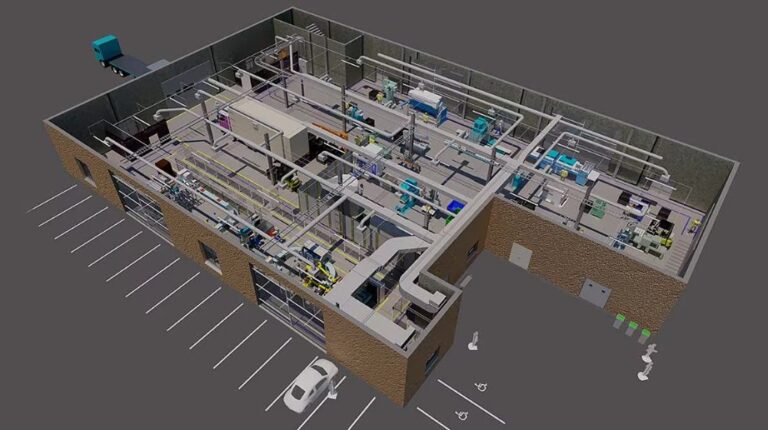
Further, Autodesk’s digital factory design solutions seamlessly integrate the factory envelope with the machines inside, ensuring that the physical infrastructure aligns with the operational requirements. This alignment leads to increased project predictability and potential cost savings.
The complexity of modern manufacturing
As the manufacturing industry continues to increase in complexity, the people, processes, and technologies involved must become more connected than ever before. The rise of advanced technologies, such as automation, IoT, and AI, demands a more integrated approach to factory planning and execution. Autodesk’s digital factory solutions provide the planning environment needed to navigate this complexity and achieve greater visibility for every stakeholder.
Advanced technologies
The integration of advanced technologies into manufacturing processes requires careful planning and execution. Autodesk’s solutions offer tools to design and simulate these technologies, ensuring that they are seamlessly integrated into the factory environment. This proactive approach minimizes disruptions and optimizes performance.
Connected ecosystem
The interconnected nature of modern manufacturing requires a connected ecosystem where every component works together. Autodesk’s digital factory solutions create this ecosystem. Real-time communication, data sharing, and collaboration among all stakeholders is easily achieved. This connectivity enhances efficiency, reduces errors, and improves overall project outcomes.
Visibility
Greater visibility into project progress, financials, and potential risks is essential for achieving meeting budget and scheduling requirements. Autodesk’s solutions provide dashboards, analytics, and reporting tools that offer insights into every aspect of the project. Stakeholders can make informed decisions, proactively address challenges, and make sure that projects stays on track.
Synergy of Autodesk solutions for the digital factory experience
Autodesk’s combined Architecture, Engineering, and Construction (AEC) and Manufacturing (MFG) software solutions offer a unique and powerful suite of tools that transform factory planning into a seamless and efficient process. The integration of AutoCAD, Factory Design Utilities, Inventor, Autodesk Construction Cloud, and ReCap Pro sets Autodesk apart and enables a comprehensive approach to digital factory planning. The true power of Autodesk’s combined AEC and MFG software lies in their integration and collaborative capabilities, which streamline the entire factory planning process:
Initial digital factory layout and design
AutoCAD
AutoCAD is a foundational tool for creating precise design and drafting plans, especially in the digital factory planning process. It aids in producing detailed drawings that include accurate floor plans, layouts, and architectural designs of the factory. Additionally, AutoCAD provides comprehensive documentation that serves as a vital reference for all stakeholders involved in the project. The tool also offers the ability to visualize the factory’s spatial configurations and design elements, enhancing the understanding and communication of the factory’s design.

Factory Design Utilities
Factory Design Utilities are specialized tools designed to streamline the layout and optimization of factory floors. These utilities complement AutoCAD and Inventor by enabling the creation and optimization of both 2D and 3D factory layouts. They facilitate the placement and management of machinery, equipment, and production lines, ensuring that all assets are strategically positioned for maximum efficiency. Additionally, Factory Design Utilities allow for workflow simulation, helping to identify inefficiencies and improve overall productivity within the factory.
Mechanical equipment and design
Enhance Your Engineering Workflows
Precise, powerful, and ready for innovation with Autodesk Inventor.

Inventor
Inventor is a powerful 3D CAD software that supports detailed mechanical design and engineering. In the context of factory planning, Inventor contributes significantly by creating detailed 3D models of machinery, equipment, and factory components. It excels in designing and simulating mechanical systems to ensure they meet operational requirements. Furthermore, Inventor integrates mechanical designs with architectural plans, ensuring seamless compatibility and coherence between different elements of the factory’s design.
Collaboration and project management
Autodesk Construction Cloud
Autodesk Construction Cloud is a comprehensive platform that connects project teams and data across the entire construction lifecycle, enhancing the process of factory planning. It facilitates real-time collaboration among architects, engineers, contractors, and facilities managers, ensuring that all stakeholders can work together seamlessly. The platform provides a centralized repository for all project data, including designs, documents, and models, making data management efficient and accessible. Additionally, Autodesk Construction Cloud offers tools for tracking project progress, managing schedules, and ensuring timely completion, thereby streamlining the overall construction process.
Reality capture and documentation
ReCap Pro
ReCap Pro is a reality capture software that converts reality data into accurate 3D models, significantly supporting factory planning. It excels in capturing and documenting the existing conditions of the factory site with high precision. The software generates point clouds and 3D models that serve as a reliable base for design and planning activities. Additionally, ReCap Pro helps in identifying potential risk areas by providing detailed and accurate site representations, thereby enhancing the overall safety and efficiency of the digital factory planning process.
Standing up a new factory is a complex and challenging endeavor that requires meticulous planning, collaboration, and execution. Traditional approaches often lead to cost overruns, missed schedules, and unexpected mistakes. Autodesk’s digital factory solutions provide the planning environment needed to navigate this complexity and achieve greater visibility for every stakeholder. By embracing Autodesk’s digital factory solutions, companies can stand up new factories with greater budget and scheduling certainty, ultimately achieving success in their manufacturing endeavors.
What are you waiting for? Get started today.