 Jim Byrne
Learn how the digital factory of the future is changing manufacturing through intelligent systems and how Autodesk solutions support this evolution with advanced layout and coordination tools.
The concept of a digital factory has become the blueprint for future-ready production as manufacturing evolves to be more responsive, sustainable, and efficient. By integrating data, automation, and connectivity, the digital factory of the future shifts industry from isolated, reactive processes to synchronized processes with real-time digital feedback. Read on to learn more about the digital factory of the future and how this shift reimagines manufacturing.
Intelligent manufacturing through interconnected systems
The digital factory is fundamentally a shift in how information is used across production environments. This shift converges cyber-physical systems, IoT sensors, AI-driven analytics, and cloud computing. Together these technologies allow machines and people to communicate in a unified digital language. This allows for a tighter integrated workflow—where data is continuously captured, analyzed, and used to optimize operations.
Instead of relying on discrete, manually coordinated systems, digital factories operate on interconnected platforms that span design, machining, assembly, and quality assurance. This results in dynamic production lines that can adapt in real time to machine conditions or shifts in demand. Meanwhile, advanced simulation and predictive modeling allow engineers to anticipate disruptions before they occur. This helps to limit unplanned downtime and extends equipment life through condition-based maintenance strategies.

Human roles are also being redefined, with workers no longer tied to repetitive tasks. Instead, workers monitor and guide processes via tools like digital twins, augmented reality, and AI-assisted decision-making. These capabilities augment the role of human expertise in a shift from physical execution to a more cerebral, strategic oversight.
Further, the digital factory enhances traceability and compliance by embedding data capture throughout the product journey. From the initial material specification to final inspection, every stage is logged and accessible to create a comprehensive digital thread. This level of transparency assists in highly regulated industries that require compliance and performance data.
A digital factory with Autodesk Factory Design Utilities and FlexSim
To implement and manage the digital factory of the future, engineers need tools that bring cross-disciplinary coordination and system-level planning into a unified environment. Autodesk Factory Design Utilities and Autodesk FlexSim deliver by helping teams create intelligent factory layouts that are grounded in real-world constraints and optimized for efficiency.

Autodesk Factory Design Utilities
Factory Design Utilities bridges 2D facility plans with 3D intelligent models. This allows users to evaluate spatial arrangements, material flow, and equipment placement within a realistic digital context. Such oversight confirms that production lines are physically feasible and optimized for productivity and safety before implementation begins. Users can import equipment models from asset libraries, adjust them within layouts, and analyze paths, clearances, and interference in detail.
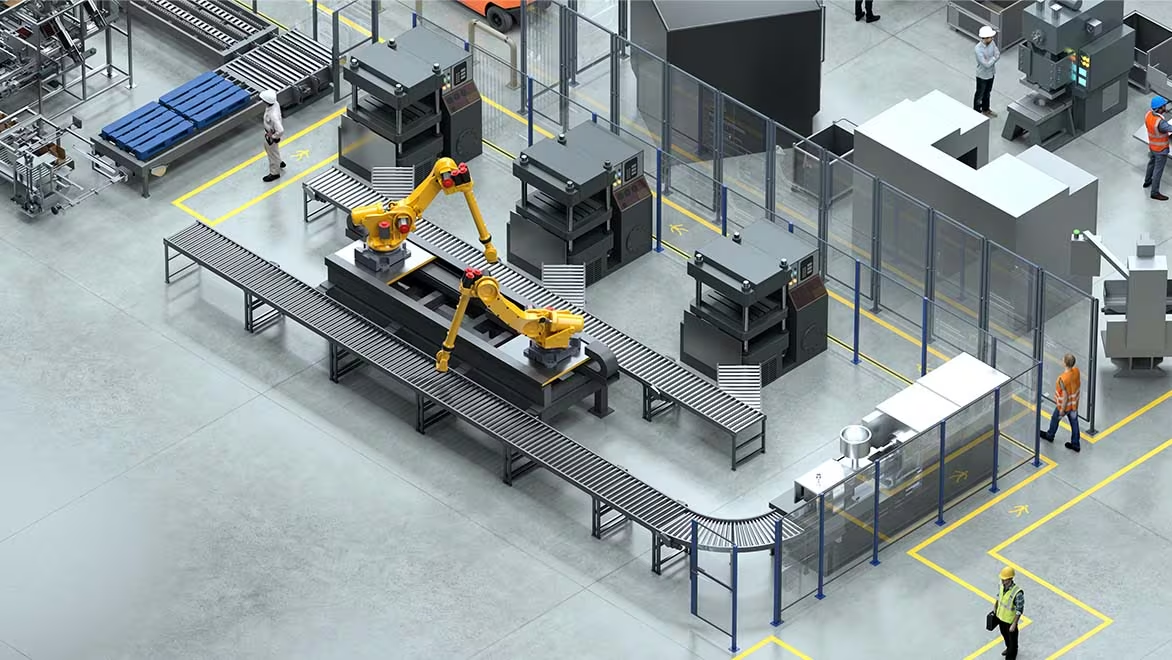
Factory Design Utilities integrates with the larger Autodesk ecosystem for a more cohesive workflow. Integration with AutoCAD and Inventor allows engineers to leverage existing design workflows while improving them with system-wide visibility. As changes occur to equipment or facility structures, updates propagate across views, eliminating inconsistencies and reducing rework.
FlexSim: 3D Discrete Event Simulation Software
Easy-to-use 3D simulation modeling and analysis software with high-end capabilities. Predict and optimize production processes with realistic 3D visuals and data-driven scenarios.
Autodesk FlexSim
FlexSim is a powerful simulation software that enables the creation of a digital factory. It provides a comprehensive, 3D modeling environment where manufacturers can visualize and analyze their production processes. Users can design detailed, virtual representations of their factories, complete with machinery, conveyors, and workstations to see how different elements interact in real-time. This helps identify bottlenecks, inefficiencies, and potential improvements needed in the production line, facilitating more informed decision-making and optimizing overall productivity. By simulating various scenarios and changes before implementing them, businesses can reduce costs, minimize risks, and enhance operational efficiency.
A smarter manufacturing future with the digital factory
The digital factory of the future is happening today. With intelligent systems, real-time data, and collaborative tools, manufacturers are building more agile, resilient operations that can thrive in uncertain conditions.