 Trevor English
 Shiyamdev Sritharan
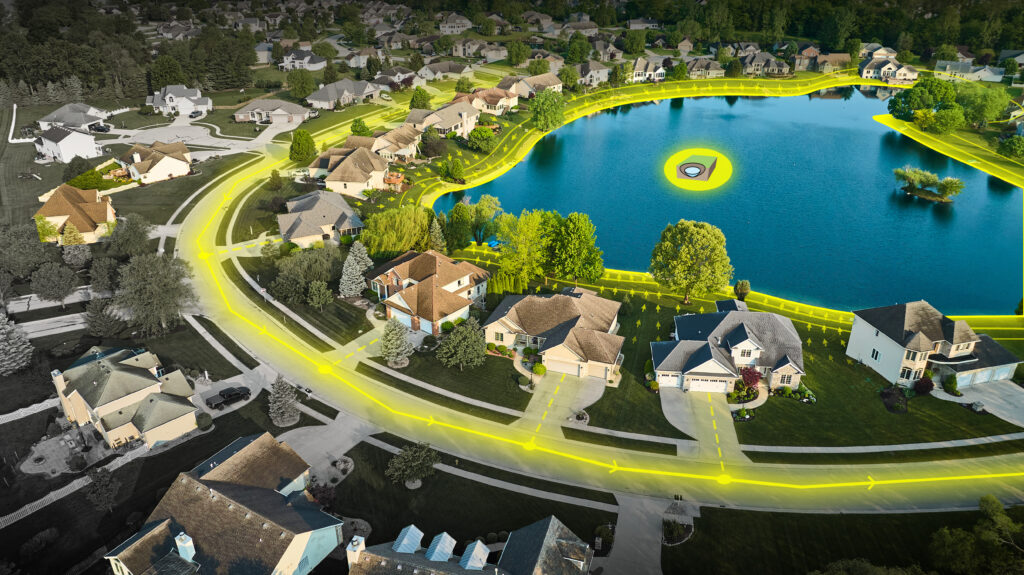
If you use Storm and Sanitary Analysis (SSA) with Autodesk Civil 3D, you may have heard questions about its future and what that means for your drainage workflows.
Here’s what Autodesk is changing and what it means for Civil 3D users.
SSA is a legacy application that Autodesk is transitioning away from. But that doesn’t mean Civil 3D customers are being required to purchase InfoDrainage for drainage design and analysis capabilities. Instead, Autodesk is developing core drainage design tools directly into Civil 3D, with analysis capabilities powered by InfoDrainage analysis cloud services.
InfoDrainage remains a separately licensed, more comprehensive drainage design and analysis solution for engineers who need capabilities beyond those available directly in Civil 3D.
Over time, Autodesk may make additional InfoDrainage capabilities accessible through more connected Civil 3D workflows. Access to advanced capabilities would continue to depend on the appropriate InfoDrainage license.
In simple terms:
- What is SSA today? A legacy Autodesk drainage analysis application that Autodesk is transitioning away from. Existing customers may still use/download it for supported workflows/versions, but it is no longer the current integrated drainage design and analysis direction.
- What are the drainage tools inside of Civil 3D? These are design and analysis tools, powered by InfoDrainage’s cloud analysis engine, that are intended to provide you a path forward from SSA workflows.
- What is InfoDrainage? Autodesk’s advanced drainage design and analysis solution for customers who need capabilities such as design automation, hydraulic and hydrological modeling, optioneering, green infrastructure design, customizable reporting, and related capabilities.
Depending on an organization’s needs, its future drainage workflow may use Civil 3D, InfoDrainage, or both. Here’s what that means in more detail.
SSA is on its way out, but drainage capabilities in Civil 3D are not
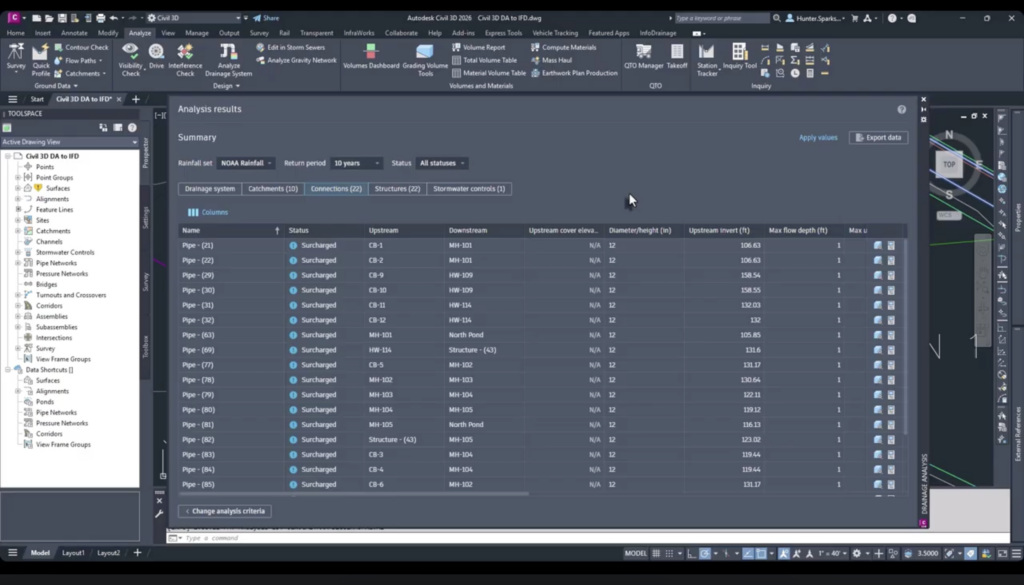
SSA has served Civil 3D customers for many years, but Autodesk is transitioning away from the legacy application and building core drainage analysis capabilities directly into Civil 3D, powered by InfoDrainage analysis cloud services.
SSA is no longer automatically downloaded with current Civil 3D releases, and Autodesk plans to retire from it. Final retirement timing will be announced at a later date.
Civil 3D drainage tools already support workflows for pipe networks, catchments, ponds, underground storage, and open channels with analysis performed using InfoDrainage analysis cloud services. Autodesk continues to expand these capabilities as part of the Civil 3D product experience. The drainage capabilities provided as part of Civil 3D are included with Civil 3D and do not require a separate InfoDrainage subscription.
To be clear: Autodesk is transitioning away from SSA and plans to retire it. SSA’s planned retirement does not make an InfoDrainage subscription a requirement to use the drainage capabilities included with Civil 3D, but customers should evaluate their specific workflows because Civil 3D is not yet at parity with SSA in every workflow.
Autodesk is moving core drainage analysis workflows into Civil 3D while continuing to offer InfoDrainage separately for customers whose drainage design and analysis needs go beyond the capabilities available directly in Civil 3D.
Are Civil 3D drainage capabilities at parity with SSA today?
Not in every workflow yet.
Autodesk continues to expand drainage design and analysis capabilities to Civil 3D, providing core drainage analysis workflows directly within the civil design environment.
Current capabilities include workflows for ponds, underground storage, channels, rainfall and runoff, hydraulic analysis, HGL/EGL, capacity checks, and reporting outputs.
If you’re deciding whether a current SSA workflow can move to Civil 3D today, take a look at our detailed comparison of InfoDrainage, SSA, and Civil 3D drainage tools, which breaks down individual capabilities.
The important direction is this: For core drainage design analysis workflows historically performed with SSA, Autodesk is bringing many core SSA workflows directly into Civil 3D. InfoDrainage complements that experience for more advanced drainage analysis capabilities.
Why are Civil 3D users choosing to buy InfoDrainage?
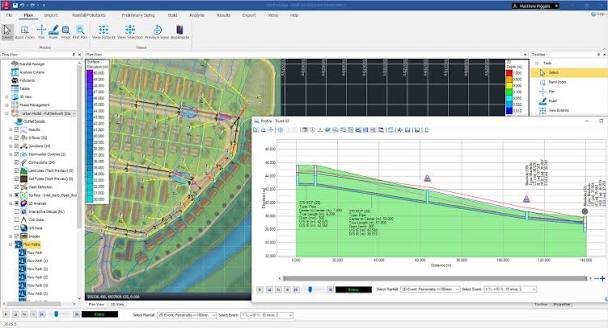
InfoDrainage is not “the paid replacement for SSA.” It is a purpose-built drainage design and analysis solution that works alongside Civil 3D.
Civil 3D remains the core civil design environment for modeling, coordinating, and documenting infrastructure. InfoDrainage extends that workflow with advanced hydrological and hydraulic analysis and drainage engineering capabilities.
The two solutions are designed to complement one another. Together, they provide a connected path from civil and drainage layout through more detailed drainage design, hydraulic analysis, and validation.
A useful way to think about the distinction is checking versus designing.
If you have a drainage network in Civil 3D and want to analyze its performance, inspect capacity, review hydraulic results, or keep your analysis within the drawing, Civil 3D’s drainage analysis tools may be the right fit.
If you need to rapidly develop and compare alternatives, work on highly iterative projects, automate sizing, design green infrastructure, perform more advanced analysis, or create detailed and reusable compliance reports, InfoDrainage is the better fit.
Increasingly, however, this isn’t an either/or workflow. Civil 3D and InfoDrainage are designed to work together, creating a connected workflow from civil design through more detailed drainage design and analysis.
What capabilities does InfoDrainage add to Civil 3D?
For customers whose drainage requirements extend beyond the capabilities available directly in Civil 3D, InfoDrainage provides a dedicated design environment with advanced capabilities.
Some of the key differentiators include:
- Automated design and sizing. InfoDrainage provides tools for rapidly sizing and iterating drainage systems against design criteria rather than relying primarily on a manual check-adjust-reanalyze workflow.
- Phase management and pre- vs. post-development analysis. Engineers can create and compare design scenarios within a project, making optioneering and pre/post-development comparisons significantly easier. This has long been one of the areas where InfoDrainage goes beyond SSA.
- Green stormwater infrastructure. InfoDrainage supports purpose-built workflows for sustainable drainage and green infrastructure, including features such as swales, porous pavement, and bioretention.
- Advanced inlet, bypass, and culvert workflows. These capabilities support additional drainage design use cases, including transportation drainage.
- 1D-2D analysis. InfoDrainage provides advanced modeling options for projects where understanding surface and underground drainage interactions is important.
- Flexible reporting and audit-ready deliverables. Customizable reports, graphs, templates, and automated reporting workflows can reduce the manual work involved in producing consistent drainage deliverables.
- Automated hydrologic parameter calculations. Capabilities such as composite CN and runoff coefficient calculations help streamline model development.
These distinctions reflect Autodesk’s current product positioning: Civil 3D provides core drainage capabilities within the broader civil design environment, while InfoDrainage extends that workflow with advanced hydrological and hydraulic analysis, automation, and additional engineering capabilities.
For a closer look at these differences, see:
InfoDrainage vs. Civil 3D drainage tools: What’s different and when to use each one
And for customers coming specifically from SSA:
10 things you can do in InfoDrainage above and beyond SSA
Frequently asked questions
Is Autodesk discontinuing SSA?
Yes. SSA is a legacy application, and Autodesk is transitioning away from it. SSA is no longer automatically downloaded with current Civil 3D releases and its retirement will occur at a later date. Final retirement timing has not been announced.
Is Autodesk forcing SSA users to purchase InfoDrainage?
No. Autodesk is developing core drainage analysis capabilities directly into Civil 3D, and those capabilities are included with Civil 3D subscriptions. InfoDrainage is separately licensed for customers who need more advanced drainage design and analysis capabilites.
What is the path forward for SSA workflows?
For core drainage analysis workflows historically performed with SSA, Civil 3D drainage analysis tools are the path forward. InfoDrainage complements those capabilities for customers whose drainage design and analysis needs go beyond what is available directly in Civil 3D.
Are the Civil 3D drainage tools included with my Civil 3D subscription?
Yes. Drainage capabilities provided as part of the Civil 3D experience are included with Civil 3D and do not require a separate InfoDrainage subscription.
Are Civil 3D drainage analysis capabilities at parity with SSA today?
Not in every workflow yet. Autodesk continues to expand drainage design and analysis capabilities in Civil 3D. Customers should evaluate their specific workflows against the capabilities currently available rather than assume one-to-one parity today.
Our InfoDrainage vs. SSA vs. Civil 3D comparison provides a more detailed capability-by-capability view.
Why would I need InfoDrainage?
InfoDrainage supports drainage design and analysis workflows beyond those currently available directly in Civil 3D.
It extends the Civil 3D workflow with capabilities for design automation and sizing, rapid scenario iteration, green stormwater infrastructure, advanced hydraulic analysis, 1D-2D analysis, culvert workflows, and flexible, customizable reporting.
InfoDrainage becomes especially valuable when drainage design, optimization, advanced analysis, or compliance reporting represents a significant part of the engineering workflow.
Is InfoDrainage included with Civil 3D or the AEC Collection?
No. InfoDrainage is licensed separately and is not included in the AEC Collection.
Does Civil 3D use InfoDrainage?
Civil 3D’s drainage analysis capabilities use InfoDrainage analysis cloud services. You do not need an InfoDrainage subscription to use the Civil 3D capabilities included with your Civil 3D subscription.
Can Civil 3D and InfoDrainage be used together?
Yes, and the two workflows are designed to complement one another.
InfoDrainage integrates with Civil 3D, enabling the exchange of drainage design information between the two products. This allows engineers to extend their civil design workflow to more detailed drainage design and hydraulic analysis while maintaining continuity between workflows. Autodesk continues to invest in strengthening that interoperability.
Should existing SSA users move to Civil 3D drainage tools or InfoDrainage?
It depends on the workflow.
If your primary need is analyzing and checking drainage networks as part of your Civil 3D design process, evaluate the new Civil 3D drainage tools first.
If you need design automation, rapid optioneering, green infrastructure, complex hydraulic analysis, advanced sizing, or reusable regulatory reporting, evaluate InfoDrainage.
For many organizations, the best long-term workflow may involve both Civil 3D and InfoDrainage, with each used where it provides the greatest value.
The bottom line
Autodesk is transitioning away from SSA and plans to retire it, and timing will be communicated at a later date, but drainage analysis tools are not leaving Civil 3D.
Autodesk is bringing core drainage analysis capabilities directly into Civil 3D, while InfoDrainage extends to advanced drainage design and analysis workflows. The direction is toward a more connected drainage workflow, with Civil 3D and InfoDrainage complementing one another and giving engineers a clearer path from civil design through detailed drainage design, analysis, and validation.
Note: This blog post may contain forward-looking statements about our strategies, products, future results, and performance or achievements. This blog post reflects our current expectations, estimates, and assumptions based on the information currently available to us. This blog post and any product roadmaps are plans, not promises or guarantees. We’re as excited as you to see new functionality make it into our products, but the development, releases, and timing of any features or functionality remain at Autodesk’s sole discretion. This blog post should not be used to make purchasing decisions.