 Christa Prokos
Discover how connected data strategies powered by Autodesk Fusion unify product lifecycle management, strengthen collaboration, and improve traceability across distributed teams.
Manufacturers are increasingly moving toward connected data models that unify information across the product lifecycle. As products grow more complex and timelines accelerate, disconnected systems create bottlenecks and errors.
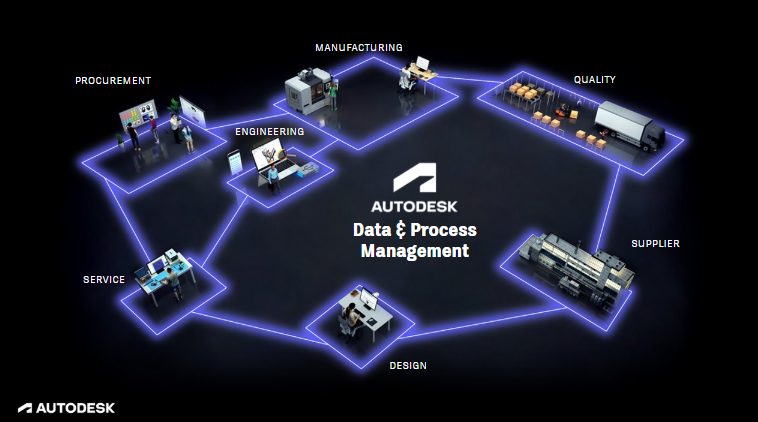
Connected data strategies provide a path forward. By tying information together in a continuous, authoritative flow, teams gain a shared understanding of products and greater confidence in their decisions.
Connected data through the digital thread and digital twin
- Digital thread: A continuous flow of connected data that links every stage of the lifecycle into a single source of truth. Teams gain visibility into engineering decisions, requirements, updates, and manufacturing constraints, reducing errors and improving traceability.
- Digital twin: A contextualized, executable representation of a product or system. Digital twins used connected data to improve decision-making through real-time insight and simulated operational behavior. This enables predictive maintenance and performance evaluation without disrupting physical systems.
“To have a complete digital twin of the aircraft we need to show variant control. The PLM solution with the Autodesk Fusion Manage is at the heart of this process for us, and we are currently working on expanding it.”
—Pol-Victor Gisquet, Team Leader Mechanical Systems Integration and Aerospace Engineer, SwissDrones
Fusion for Design: Built-in data management and integrated PLM
Fusion for Design strengthens connected data strategies with built-in data management that captures versions, relationships, and metadata as work progresses. Teams can collaborate confidently, knowing they are working from the latest design information without conflicts or lost revisions.
This connected environment also prepares teams for manufacturing by maintaining product structures automatically. Manufacturing engineers can refine processes and documentation with assurance that they are referencing current data. When design updates occur, associated information updates seamlessly, reducing rework and accelerating handoffs.
Fusion for Design also integrates PLM capabilities through Fusion Manage, extending connected data across the organization. Teams can manage change requests, coordinate with suppliers, and align operations, procurement, and service functions within a unified lifecycle environment. Automated workflows, real-time visibility into BOMs and revisions, and shared access to accurate product data reduce friction and keep distributed teams aligned.
A more connected approach
Connected data strategies help organizations gain clarity, traceability, and agility in product development. Fusion for Design, with its built-in data management and integrated PLM, makes this vision a reality. By providing synchronized environments that protect data quality and accelerate decision-making, Autodesk Fusion helps manufacturers to innovate faster, collaborate more effectively, and respond to changes with confidence.