 Heather Miller
AEMOTION is redefining urban mobility with a new electric vehicle that blends the agility of a motorcycle with the safety and comfort of a car. Autodesk Fusion played a crucial role in bringing the concept to life with rapid prototyping, complex engineering, and cost-effective development.
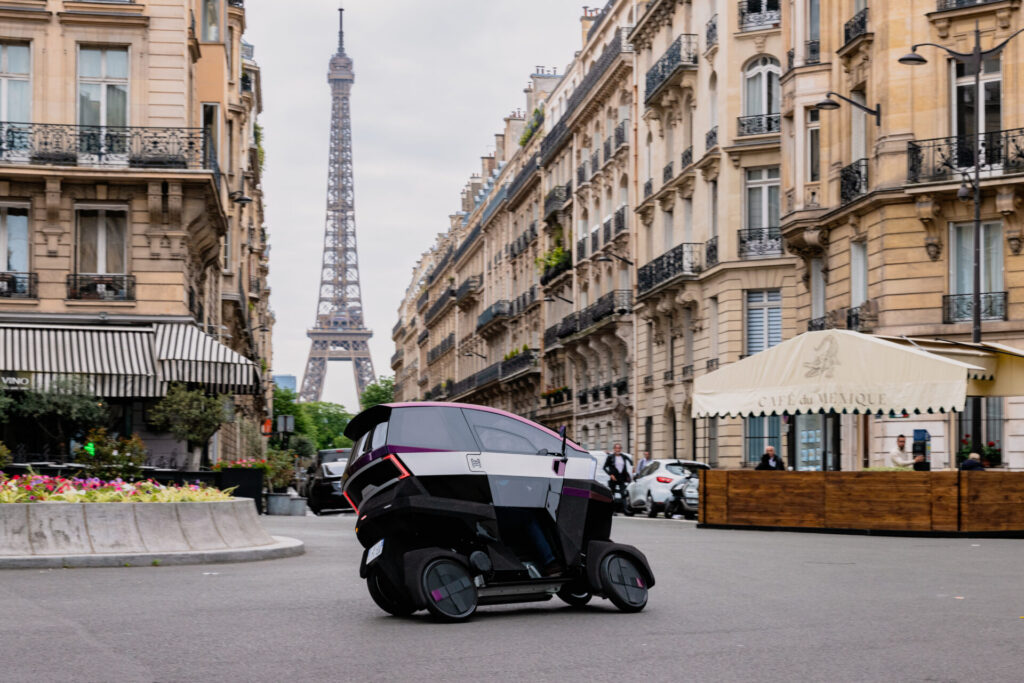
As a Parisian, Alexandre Lagrange experiences the crush of traffic and congestion every day. Crowded boulevards and narrow streets jammed with cars and trucks. Two-wheelers zipping in and out to get through. And the streets of Paris aren’t going to get any bigger. It’s becoming an increasingly dangerous reality as fatalities continue to rise, especially for those driving two-wheel vehicles.
Seeing this first-hand and the same growing trend across major metro areas around the world, Lagrange knew there had to be a solution. What if there could be a vehicle that gives the freedom and agility of a motorcycle, but also a higher level of safety and comfort of a car? One that would make a smaller “footprint” both on the streets and mitigate pollution with an electric battery? That’s the solution with AEMOTION.
Elevate your design and manufacturing processes with Autodesk Fusion
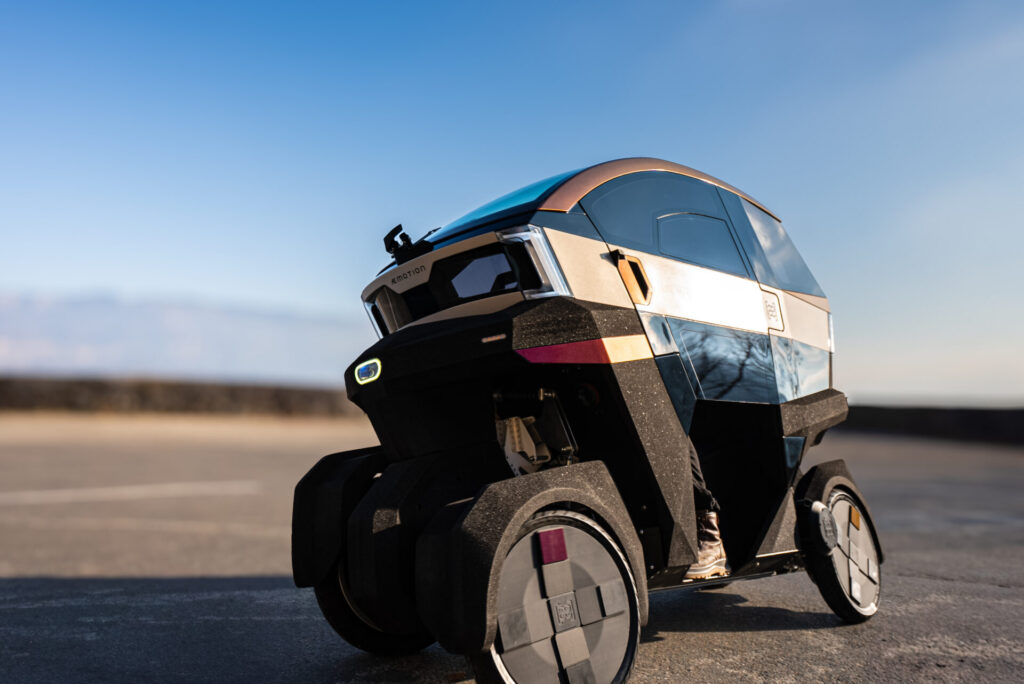
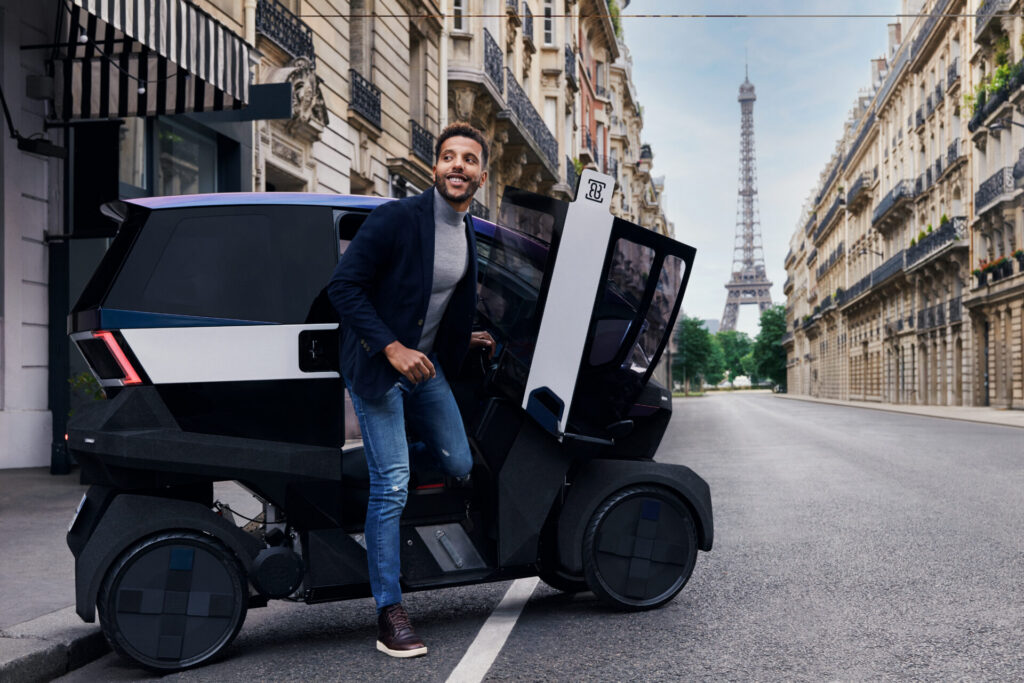
Think of AEMOTION as half motorcycle and half car combined into a 100 percent, 4-wheel electric vehicle. It’s narrow—measuring just 2.35 meters (7.7 feet) long and 79 cm (31 inches) wide—and capable of leaning into tight turns. At the same time, it’s fully enclosed, providing protection from weather and improved safety with seat belts and front and rear crash boxes.
AEMOTION reaches top speeds of 115-120 kph/71.5-74.5 mph, making it suitable for both city streets and highways. In its extended version, the battery provides up to 200km/124miles on a single charge. Batteries also come in a swappable version with a smaller range but allowing charging on a domestic plug. With Autodesk Fusion, AEMOTION is becoming a reality and hitting the streets soon.
From concept to working prototype
AEMOTION didn’t happen overnight. Founded in 2018 by four entrepreneurs it’s gone from an idea to a fully functioning “microcar” prototype with manufacturing and delivery right around the corner in 2027. Lagrange and his co-founders first started early designs with AutoCAD. AEMOTION’s transition to Autodesk Fusion marked a turning point in their development process.
“I knew that Fusion was quite versatile, especially with its manufacturing capabilities,” Lagrange says. “That’s what convinced me to start using it at the time. You could do 3D printing and many different things with fabrication, which was interesting to me.”
“Of course, being accessible in terms of price at the beginning was very helpful, especially as a self-funded startup,” he adds. “Plus, compared to other CAD software, the price is much less and you can do the same if not more.”
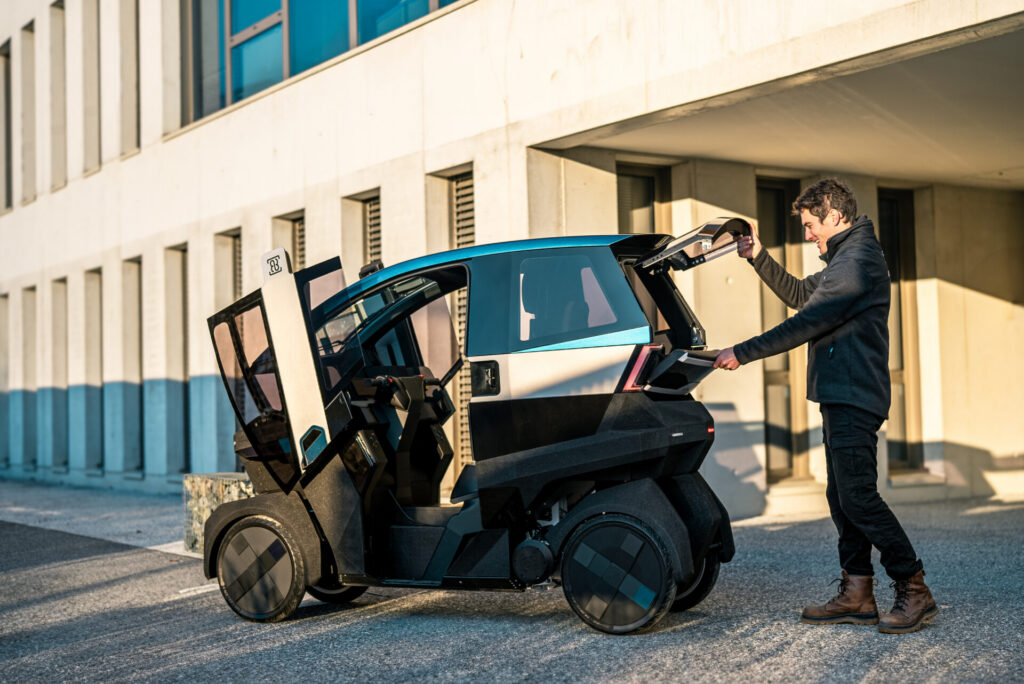
With Fusion, the team built the vehicle in 3D models, ultimately developing a working prototype that reflects the current vision. Today, AEMOTION’s vehicle is fully functional and is being industrialized. The prototype itself showcases their emphasis on rapid iteration. Many interior components were produced using 3D printing, while CNC machining was used for structural and exterior elements such as windows and metal parts. This combination allowed the team to move quickly from design to physical validation.
“I think sometimes people have the wrong first impression about Fusion. Maybe they think it’s for hobbyists and not good for the industrial field. We’re doing something very complex for an entire vehicle and creating a product with many, many parts. My advice is to try it, and you’ll see that’s it really powerful with what you can do.”
– Xavier Jourdan, Senior Engineer, AEMOTION
Elevate your design and manufacturing processes with Autodesk Fusion
Designing in Fusion
All of the vehicle’s mechanical components are designed in Fusion, and the scale is significant with more than roughly 1,000 parts and components. Their workflow first began with design in Autodesk Alias, where the vehicle’s shape was sculpted. Those surfaces were then imported into Fusion. From there, real engineering started in earnest.
For AEMOTION, there are many Fusion capabilities that have a direct impact on their design and engineering workflow for speed and precision. One is automatic part coloring. In large assemblies, visual clarity becomes critical, especially during collaboration. Fusion assigns colors to parts by default, allowing engineers to quickly identify components.
“Something that I love so much in Fusion is that every part is in a specific color natively,” says Xavier Jourdan, Senior Engineer, AEMOTION. “That’s a game changer. If you work in SolidWorks, everything is just gray and it’s impossible to look for something. With Fusion it’s easy in a meeting or when working with another engineer to just say, ‘OK, the red part, do you see it?’ It’s so specific in Fusion and easy to understand and collaborate.”
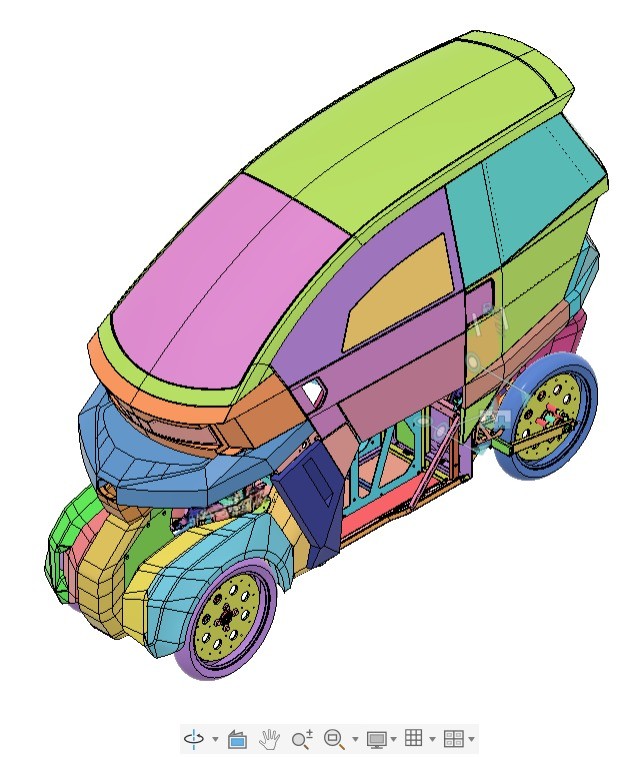
Jourdan also highlights how easy it is to remove faces or features with a single action, and Fusion automatically adjusts the surrounding geometry. This enables rapid iteration, which is particularly useful during design reviews or when testing alternative approaches.
Above all, Fusion helps the AEMOTION team tackle incredibly complex assemblies. For example, the vehicle includes a sophisticated front running gear system with multiple pivots and suspension elements.
“The kinematic is really complex and it’s not a problem for Fusion,” Jourdan says. “I can put all the parts in assembly and move fast. Fusion is great for an industrial product like this one.”
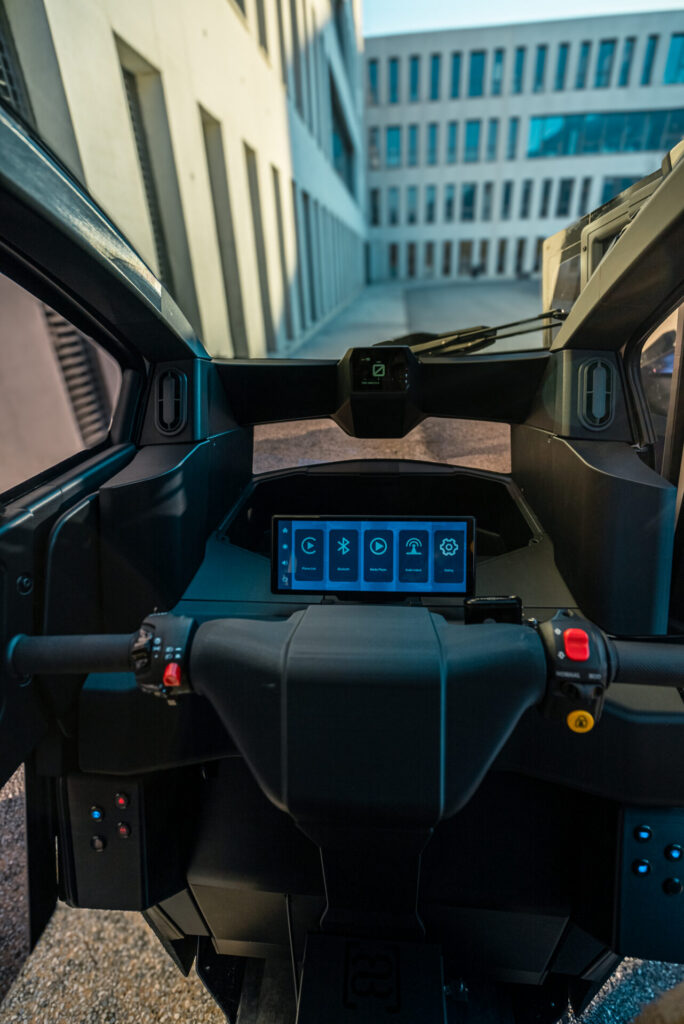
AEMOTION’s road ahead
AEMOTION is now in the transition from prototyping to industrialization. This involves reworking many of the vehicle’s parts and preparing for regulatory approval. The company is producing additional vehicles to pass these approvals, followed by a small batch of vehicles for their pioneer customers. Longer term, production will expand beyond France to serve global markets.
“The main goal this year is to get the certification, so the vehicle is good to go with regulation and out on the road,” Jourdan says.
As this transition progresses, AEMOTION is exploring the Fusion Platform further for PLM with Autodesk Fusion Manage. These capabilities will be essential for a company with a regulated vehicle to track parts, manage revisions, and ensure quality across production.
“Right now, we’re still a bit of an R&D company, but we’re rapidly moving to production,” Lagrange says. “We’ll need the ability to find a serial number and see exactly what parts were used to make it. A global solution like Fusion Manage is going to be very, very useful for us and we see the potential.”