 Trevor English
InfoDrainage 2027.1 is now available, delivering new capabilities designed to help drainage engineers work more efficiently, model real-world conditions more accurately, and gain greater confidence in their results.
In this latest version, Autodesk Assistant is now directly available within InfoDrainage, making it easier than ever to access guidance and support without interrupting your workflow. We’ve also expanded hydraulic modeling flexibility with support for variable depth open channels and enhanced our implementation of the SCS (TR-20) methodology to provide closer alignment with industry guidance.
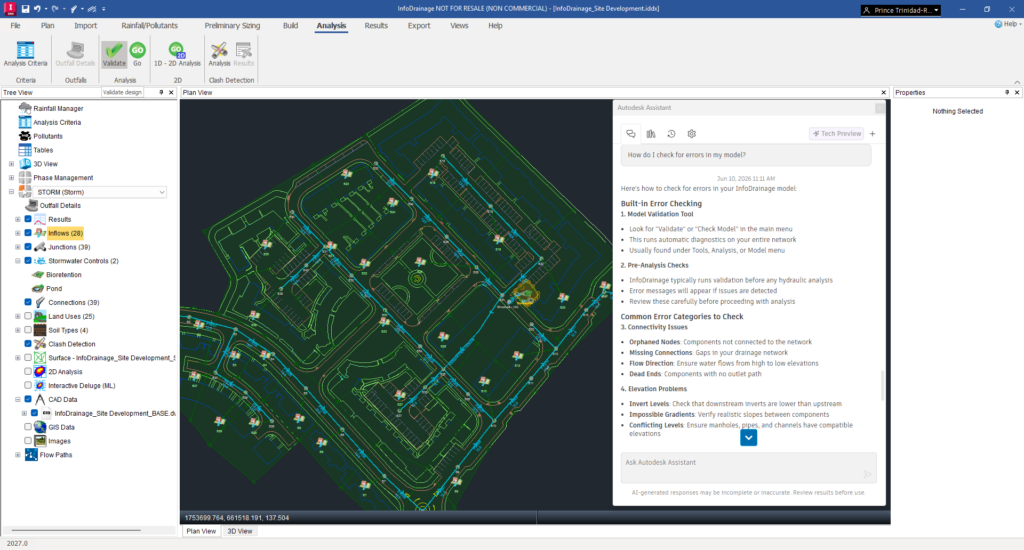
Together, these improvements continue our commitment to helping engineers streamline design processes, improve project outcomes, and tackle increasingly complex drainage challenges. Let’s explore what you can expect from each of these features in the 2027.1 release.
Faster answers with Autodesk Assistant
We’re excited to introduce Autodesk Assistant in InfoDrainage, following a successful launch in InfoWater Pro earlier this year.
Whether you’re learning a new workflow, exploring product capabilities, or troubleshooting a design challenge, Autodesk Assistant provides on-demand support directly within the application. Instead of searching through documentation, knowledge bases, or external resources, users can now ask questions using natural language and receive relevant guidance without leaving the design environment. Over time, we’ll be adding new functionalities and giving you the power to model alongside agentic AI – if that is your choice. You’ll find an option to toggle the Autodesk Assistant on or off.
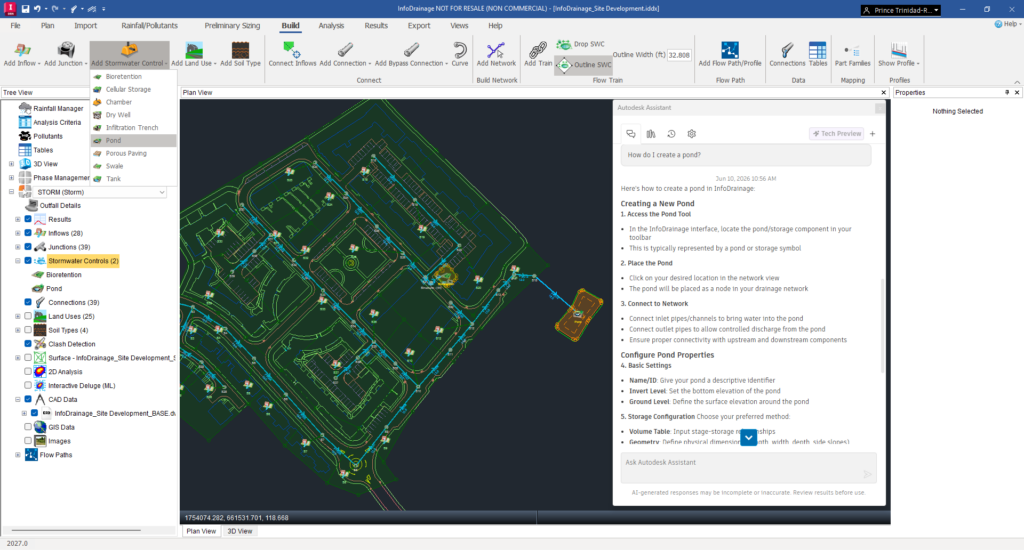
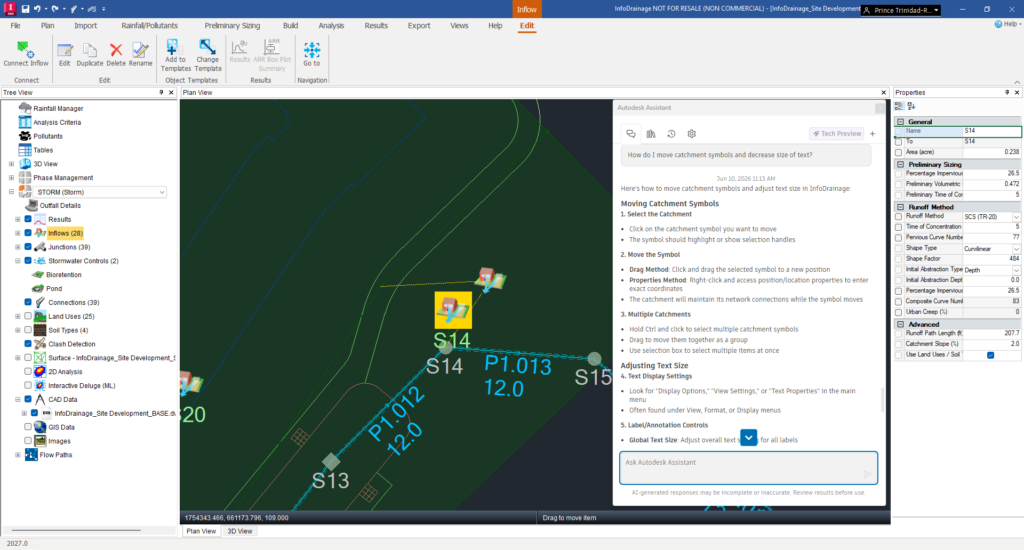
Autodesk Assistant helps reduce interruptions, accelerate learning, and empowers users to make the most of InfoDrainage’s powerful capabilities. Instead of having to leave the software to search for instructions or experiment with a new task, you now have help directly in the app. Less time searching for answers and more time designing.
Variable depth open channels in InfoDrainage 2027.1
In the real world, channel geometry often changes along its length due to site constraints, grading requirements, erosion control measures, or evolving hydraulic conditions. To help with these details, this release also adds support for variable depth open channels, helping you model channels more accurately.
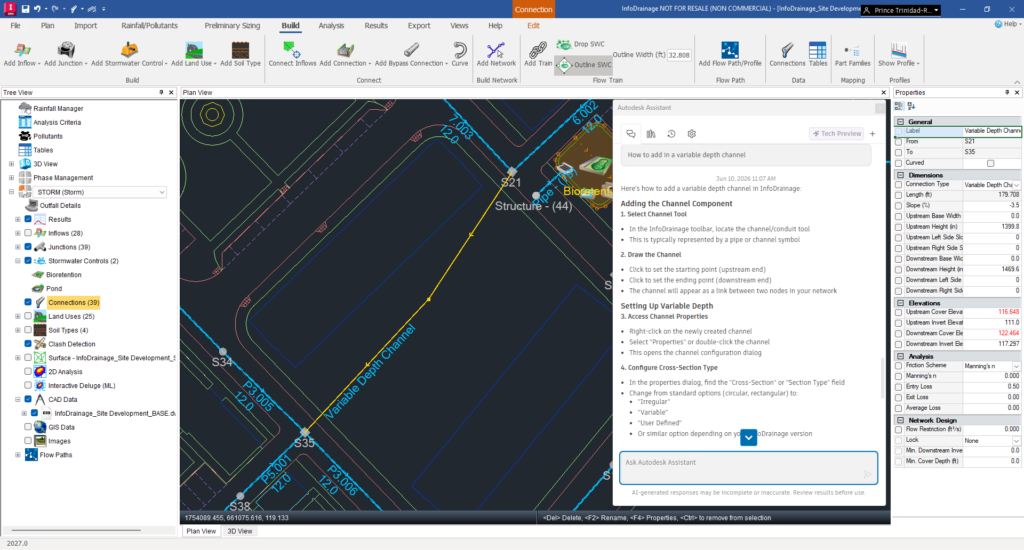
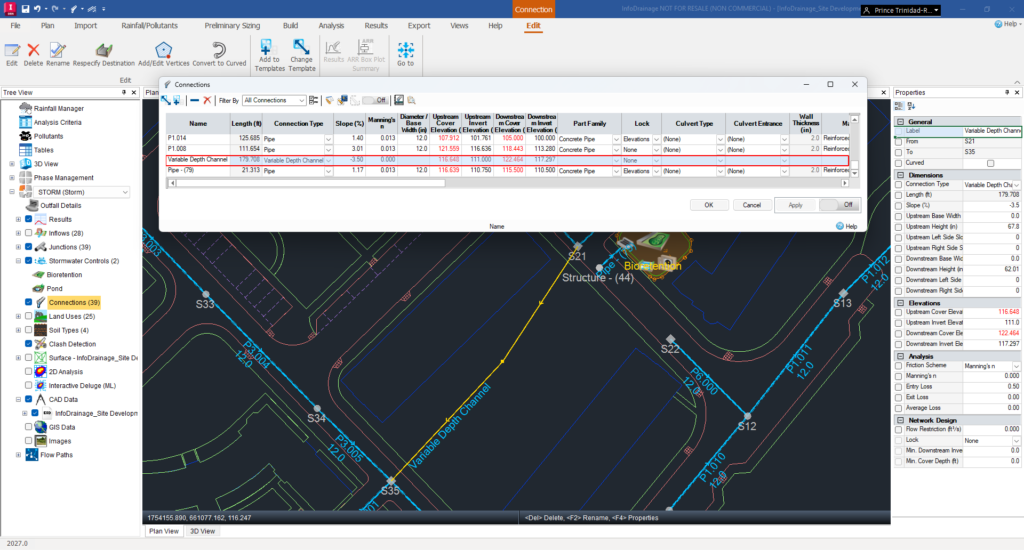
This new capability allows different cross sections to be defined at the upstream and downstream ends of a channel, enabling geometry to transition naturally along the channel length. The result is a more realistic representation of drainage infrastructure and greater flexibility when developing hydraulic designs.
Enhanced SCS (TR-20) methodology support
InfoDrainage 2027.1 also introduces a series of enhancements to the SCS (TR-20) methodology, further strengthening alignment with NRCS TR-20 and TR-55 guidance.
These updates include refinements to defaults, terminology, and rainfall distribution precision, helping engineers produce hydrologic analyses that are more consistent with established industry practices.
For organizations that rely on SCS methodologies as part of their design and approval processes, these enhancements help improve transparency, support defensible results, and increase confidence when preparing regulatory submissions.
By continuing to refine and enhance industry-standard workflows, InfoDrainage helps engineers deliver designs that meet both technical and regulatory expectations.
Update to gain access to the latest features
From intelligent in-product assistance to more flexible hydraulic modeling and improved hydrologic workflows, InfoDrainage 2027.1 delivers practical enhancements that help engineers work smarter every day.
These new capabilities build on InfoDrainage’s mission to provide a comprehensive, modern drainage design platform that supports the entire project lifecycle, from concept planning and analysis through detailed design and regulatory approval.
Ready to upgrade? Sign in to your Autodesk account at manage.autodesk.com to download the latest version of InfoDrainage.