 Trevor English
If you’ve been working in drainage design for a while, chances are MicroDrainage has been part of your journey.
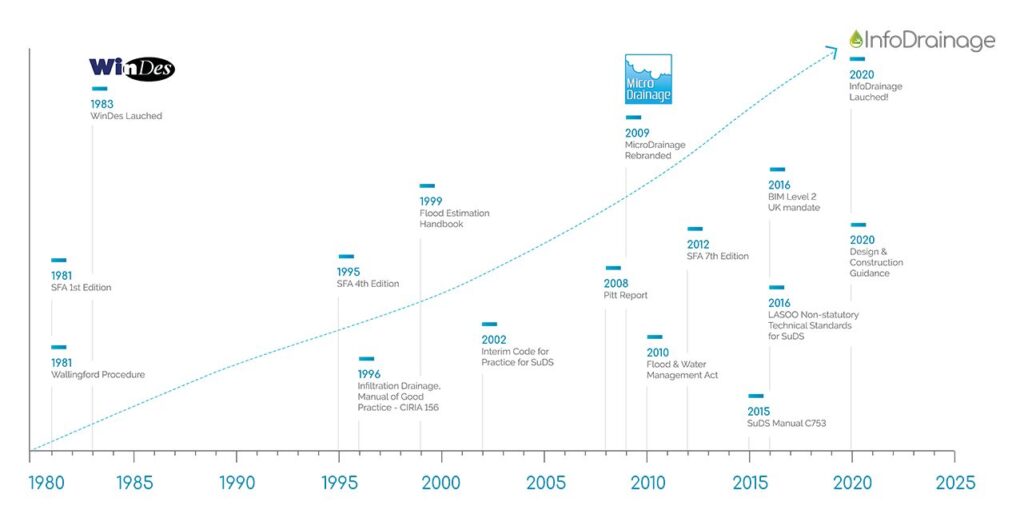
MicroDrainage has played a significant role in shaping how the industry designs and models drainage systems over the last few decades. But as the demands on our industry continue to evolve leading to more complexity, tighter approvals, greater focus on sustainability, it’s clear that the tools we rely on need to evolve with us.
That’s why Autodesk has built InfoDrainage as the next generation of drainage design solutions. However, that also means saying goodbye to old workflows.
We’re officially announcing the planned end-of-life (EOL) of MicroDrainage, with a clear transition path for customers to move forward with confidence.
Why this change and why now?
Over the past few years, we’ve been investing heavily in InfoDrainage, our modern drainage design platform built to support today’s workflows and tomorrow’s challenges.
The reality is, continuing to maintain legacy technology alongside that innovation comes with trade-offs:
- Increased security and compatibility risks
- Limited ability to deliver new capabilities
- Added complexity for customers managing multiple tools
By focusing fully on InfoDrainage, we can put all our effort into delivering what the industry needs most: faster workflows, better insights, and more confidence in your designs.
What this means for you
We’re giving you a clear and structured timeline:
- End of sale: January 31, 2027
- End of life: January 31, 2030
For many customers, your transition to InfoDrainage is already complete. As we’ve seen across the industry, more and more teams are making the move to InfoDrainage as their primary design tool.
What’s different about InfoDrainage?
InfoDrainage isn’t just a replacement, it’s a step change. It was built from the ground up to address the limitations of legacy workflows and to support modern drainage design, including:
- More accurate and detailed modeling of SuDS and green infrastructure
- Faster iteration with scenario comparison and automated workflows
- Integration with tools like Civil 3D
- Flexible, automated reporting for approvals
We know that change takes time, especially when you’re managing live projects and long-standing processes. Watch our walkthrough video that shows you everything you need to know about transitioning from MicroDrainage to InfoDrainage.
Making the transition easier
We know that change takes time, especially when you’re managing live projects and long-standing processes:
- You’re not alone: We’ve helped many customers – like Project Centre – make the switch. They were initially hesitant to change their established workflows but saw great success with their first InfoDrainage pilot project.
- Why switch? A lot has improved with InfoDrainage – like these 10 things you can do in InfoDrainage that you can’t do in MicroDrainage.
- Collaborative work: One of the biggest reasons to switch is InfoDrainage’s deep and growing integration with Civil 3D.
- Making the switch: We’ve created a video that walks you through everything you need to know about transitioning from MicroDrainage to InfoDrainage.
Looking ahead
This change is about more than retiring a legacy tool, it’s about moving the industry forward.
InfoDrainage is already helping teams:
- Design faster
- Reduce errors
- Improve collaboration
- And ultimately deliver better outcomes for communities and the environment
We’re excited about what’s next and we’re committed to supporting you every step of the way.
Ready to take that step? Grab a free trial of InfoDrainage.