 Mahtab Barazandeh
Water utilities face growing pressure from aging infrastructure, climate risk, and regulation. Despite more data, fragmentation limits action. This e-book on digital maturity for water utilities shows how to connect systems, improve decision-making, and build resilience.
Water utilities are being asked to deliver more with less certainty than ever before.
Across the sector, leaders are managing aging infrastructure, climate volatility, workforce transition, and rising regulatory expectations, while still being expected to maintain reliable service, reduce risk, improve performance, and justify investment decisions.
That pressure is not anecdotal.
According to the AWWA 2025 State of the Water Industry report, financing capital improvements remains the sector’s top challenge, with only 41% of utilities fully able to cover costs through rates and fees. Meanwhile, the ASCE 2025 infrastructure report card continues to rate U.S. water systems between C- and D, reinforcing the ongoing strain on critical infrastructure.
At the same time, utilities are generating more data than ever. Yet in many organizations, that data still sits across disconnected systems, teams, and workflows – making it harder to turn information into action. As highlighted in Autodesk’s new e-book Digital maturity for water utilities, these organizations face increasing pressure to improve performance and manage risk, but fragmented data continues to limit visibility, slow decisions, and increase operational risk.
That is why digital maturity for water utilities is becoming a critical priority.
What is digital maturity in water utilities?
Digital maturity is not about adopting or buying a new tool. It is a utility’s ability to use connected and reliable data, systems, and workflows to make better operational decisions and improve outcomes over time.
The digital maturity framework illustrates the path from reactive, fragmented ways of working toward more connected, proactive, and increasingly predictive operations. This is also why digital maturity is becoming a leadership priority, not just a technology conversation.
For many utilities, the challenge is no longer whether digital transformation will happen – but how to apply it in ways that deliver measurable operational value.
This aligns with global industry trends. The International Water Association (IWA) found that digital transformation has already taken root across utilities worldwide, driven by:
- Sustainability goals
- Regulatory pressure
- Economic performance
- Climate and hydrological risks
In other words, digital transformation in the water sector is now unavoidable. However… outcomes are not guaranteed.
The data paradox: why more data isn’t enough
When systems remain disconnected, visibility is limited, coordination slows down, and confidence in decision-making suffers. The water sector still dealing with fragmented ecosystems of legacy systems that create silos and hinder data sharing and decision-making. This challenge maps directly to the “data paradox”; more data alone does not create better outcomes unless systems work together and information becomes traceable, usable, and shared across the organization.
The digital maturity framework for water utilities
What leading utilities increasingly need is a clearer way to understand where they are today, what capability gaps matter most, and what the next practical step should be.
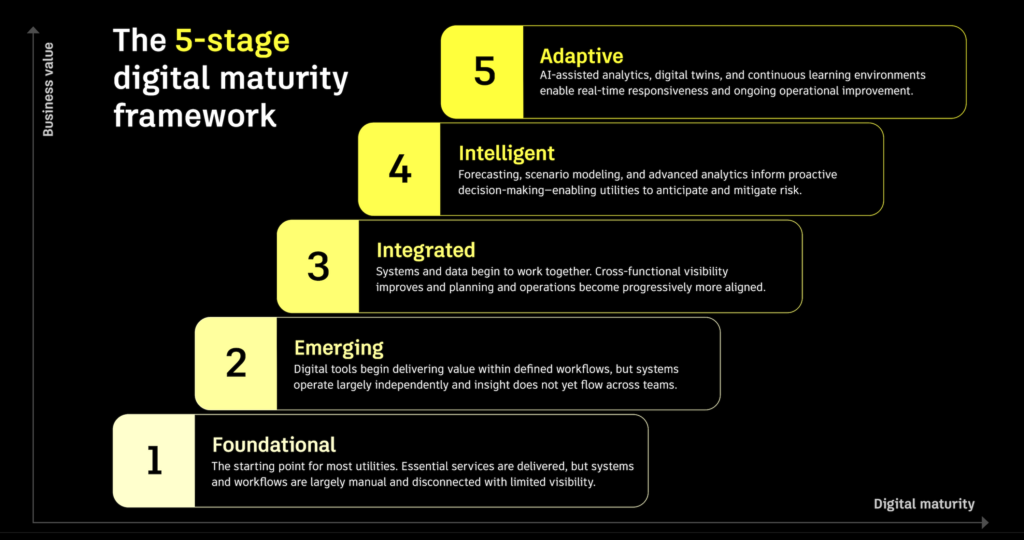
Autodesk’s digital maturity framework in the e-book provides that structure. It defines five stages of maturity:
- Foundational: Manual processes and fragmented data
- Emerging: Digital tools exist but remain siloed
- Integrated: Systems and data begin to connect
- Intelligent: Predictive analytics support decision-making
- Adaptive: AI and real-time insights enable continuous optimization
It is designed to be more than an assessment model; it is intended to give utilities a shared language for progress and a structured way to prioritize what matters next.
Digital maturity across the water lifecycle
Digital maturity does not progress evenly across a utility. A utility may be more advanced in one area than another:
- Distribution operations may be further along than wastewater.
- Asset planning may be more mature than treatment.
- Stormwater teams may face very different pressures than drinking water teams.
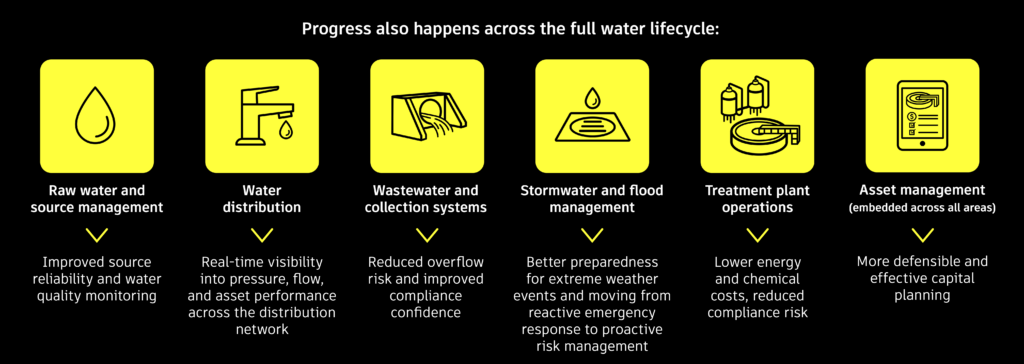
Autodesk’s framework reflects that reality, showing how stronger digital capability can support outcomes such as improved source reliability, better preparedness for extreme weather, lower energy and chemical costs, stronger compliance confidence, more defensible capital planning, and better real-time visibility across the network.
From digital strategy to operational impact
Digital maturity becomes meaningful when it translates into real operational improvements.
In practice, that can include:
- Connecting hydraulic models to live operational data
- Improving how asset condition data is captured and analyzed
- Enabling risk-based maintenance and investment decisions
- Supporting scenario planning and system resilience
The goal is not digital transformation for its own sake – but better, faster, and more confident decision-making.
Regulation, resilience, and the growing need for digital capability
The clock is ticking for many water utilities because digital capability is increasingly tied to regulatory readiness and resilience. Those regulatory requirements are becoming more data-intensive and performance-driven:
- The US EPA PFAS rule requires monitoring by 2027 and compliance solutions by 2029.
- The UK Ofwat PR24 framework is driving significant investment between 2025–2030. (See our AMP8 white paper.)
- The EU Urban Wastewater Treatment Directive (2025) introduces stricter requirements around treatment, energy, and monitoring
Together, these shifts point toward a more data-intensive, performance-driven, and accountable operating environment for utilities.
Real-world examples of digital maturity in action
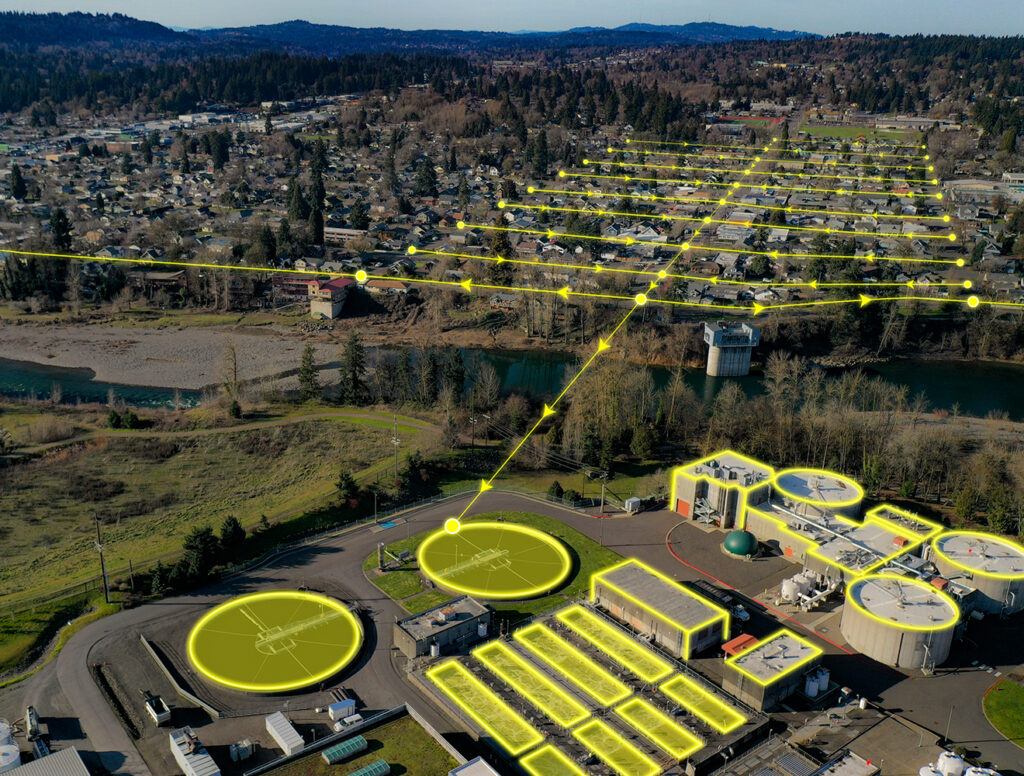
The value of digital maturity is already visible in leading utilities, and the e-book digs into a few good examples:
- SA Water (Australia): Live operational modeling improved resilience, coordination, and real-time decision-making
- Aguas de Alicante (Spain): A hydraulic digital twin supports scenario testing and long-term planning
- Orange County Sanitation District (USA): Connected asset data enables more effective risk-based investment decisions
What these examples make clear is that digital maturity is not abstract or theoretical – it is operational.
Building resilient water utilities with digital maturity
Ultimately, digital maturity is about creating the conditions for better decisions: connected models, trusted data, aligned workflows, stronger governance, and clearer visibility across the organization.
It is also about connecting digital progress to the outcomes that matter most: resilience, compliance, service reliability, investment confidence, and long-term performance.
As emphasized in the Autodesk e-book Digital maturity for water utilities, progress happens step by step – not all at once. Every utility starts from a different place, but each water utility can benefit from following a structured path forward toward better business outcomes.