 Trevor English
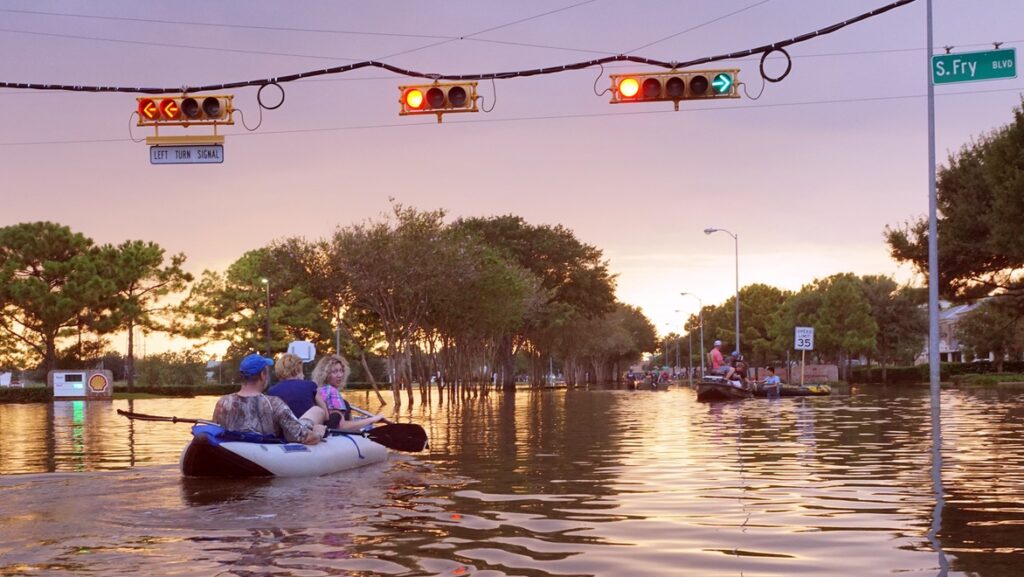
Houston’s relationship with water has always been complex. Sometimes called the “Bayou City”, Houston has been flooding since it was founded in 1836. Flat terrain, lots of concrete, expansive development, its position near the coast, and increasingly intense rainfall events have made stormwater management one of the city’s most critical infrastructure challenges.
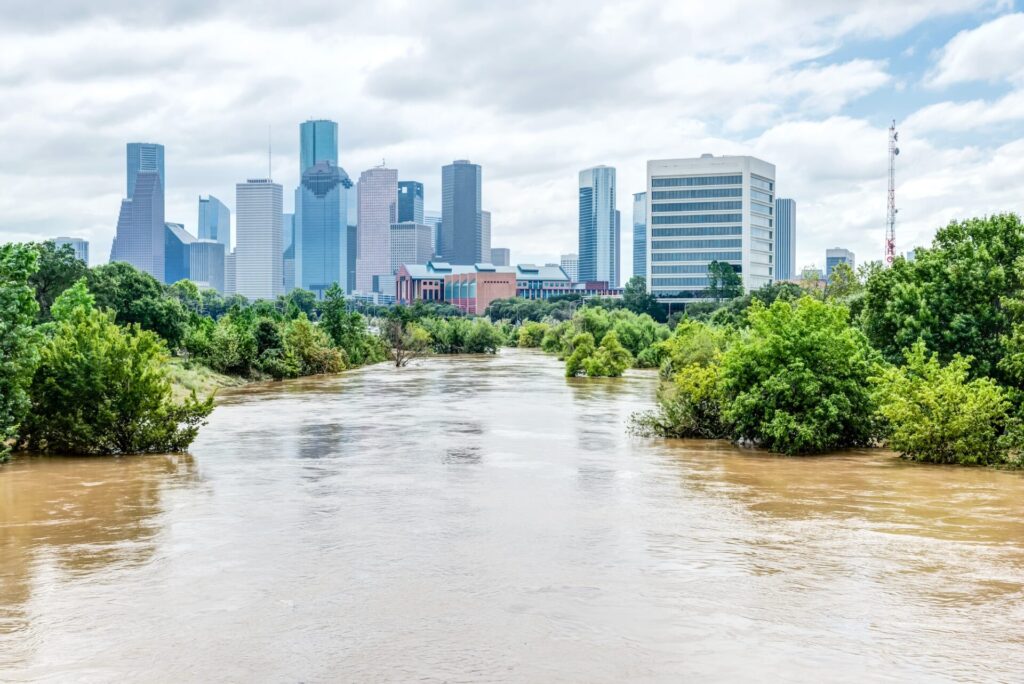
But they’ve been working to meet that challenge, with the recently completed City of Houston Stormwater Master Plan (SWMP) set to lead the city’s stormwater management over the next several decades. Houston’s SWMP stands out among similar stormwater plans, not only for its large scale, but for the modeling approach that underpins it.
The software the city chose is InfoWorks ICM, selected after a formal, documented evaluation process and used to build what Houston describes as its first comprehensive, citywide stormwater model. Their work in software selection, planning, and development around their catchments marks a broader shift in how US cities approach flood risk, compliance, and long-term resilience.
It’s worth taking a closer look at what their master plan encompasses and the strategies their diverse group of modeling consultants – including firms like Halff, LAN, Arcadis and others – considered and utilized, as well as the downstream impacts this new comprehensive plan will have on the city and its metro area residents.
A deliberate, criteria-driven software selection
The city’s SWMP modeling effort began by taking a step back and analyzing which software solution might be the best. According to Houston Public Works, twenty modeling software applications were compared, and three programs were selected for a detailed evaluation. Those three tools were then assessed across more than 50 features like cost, functionality, accuracy, and ease of use.
This process stands in contrast to what municipalities often do, which is fall back on what’s already in place and the software their previous models were built in. While this may feel like the easy route to continue the same processes of document management and record keeping, it ultimately comes with a sacrifice: less effective models, less accurate flood plans, and potentially inefficient workflows. But biting the bullet and undertaking a comprehensive software evaluation, like Houston did, can lead to longer term benefits. After all, long term thinking is the name of the game when it comes to flood planning.
According to their stormwater plan documentation, “InfoWorks ICM was ultimately selected as the most applicable software for the modeling effort due to its ability to model underground and above-ground drainage features, regional familiarity, and reasonable model run times.”
We think the decision to utilize InfoWorks ICM plays to the strength of what InfoWorks ICM offers: thoroughness and accuracy. Stormwater doesn’t move exclusively through pipes or channels, it moves through streets, ditches, detention facilities, bayous, and low-lying areas where overland flow becomes critical during major events. A modeling platform capable of representing those interactions in a single environment reduces fragmentation and improves consistency across studies. Challenges like these are what are being faced by cities around the world as infrastructure gets more complex and dynamic – exactly the type of challenge we’ve built InfoWorks ICM to rise to.
Modeling stormwater the way it actually behaves
In the SWMP, the city explains that “InfoWorks ICM software was used to evaluate the flows, water surface elevations, depths, and performance of the infrastructure within the city.” The software, they note, has the capability to simulate flow through storm sewers, channels, ditches, and bayous as well as more complex systems that can include overland sheet flow, bridges, culverts, and detention facilities.
The result is what they describe as “the first comprehensive model of stormwater conditions within the City.” Their detailed InfoWorks ICM models were simulated for a range of storm events to understand the ponding for both frequent and significant events, providing insight into how the system performs across both everyday and extreme conditions.
In essence, the city was able to create a stormwater digital twin for their planning and design process. By having a holistic model of the region’s entire network, engineers and modelers can get insight into exact network performance.
Each watershed submission includes all ICM databases for each watershed, consisting of a series of models discussed in each watershed report. The city emphasizes that model inputs, including terrain, storm sewer information, structures, bridges, and culverts, were corroborated by validation against historic events.
From planning tool to long-term infrastructure asset
In the SWMP, the city is explicit about how these models are intended to be used beyond the completion of the master plan, leading to better efficiencies and insights down the line.
According to the SWMP documentation (page 38), the models:
- Establish baseline conditions throughout the city, which can be used to streamline future study efforts.
- Include models of all major storm sewers within the city, including elevations for a wide range of storm events.
- Can be used in design projects to establish a downstream tailwater that accurately represents existing conditions, accounting for downstream storm sewer and channel capacity.
- Provides insights into the potential causes of flooding in high-risk areas, allowing engineers to review storm sewer profiles, ditch depths, flow paths, and other model attributes before a detailed study is conducted.
This framing by the city positions the models not as a static deliverable, but as a living dataset that can inform capital planning, design decisions, and future studies as conditions evolve. These are the kinds of opportunities that pursuing a digital twin strategy can unlock, allowing water system operators to take full advantage of the wealth of data they collect.
Supporting compliance, flood mapping, and defensible decisions
An important aspect about stormwater modeling in the US is regulatory compliance, in particular ensuring FEMA flood mapping compliance. While the city’s SWMP isn’t framed specifically as a FEMA flood mapping submission, the modeling approach it describes closely aligns with modern regulatory and reporting expectations.
Validated, physics-based 1D/2D hydraulic models are increasingly used across the US to support FEMA Flood Insurance Rate Map (FIRM) updates, Conditional Letter of Map Revision (CLOMR) and Letter of Map Revision (LOMR) submissions, and other federal and state reporting requirements.
Accurate models matter not just for compliance, but for credibility. They help agencies demonstrate how flood risks were evaluated, how assumptions were tested, and how decisions were informed by defensible data – all of which ultimately supports public safety. The models enabled the city to develop detailed flood risk maps, identifying areas of high risk for focus in new infrastructure projects.
Other communities, like Brookings, South Dakota, have used InfoWorks ICM successfully in FEMA workflows. Time and time again, we’ve seen regulatory bodies like FEMA adopt new software submissions when the results can be shown to be more accurate and deliver sustainable results. Houston’s investment in a comprehensive, validated modeling framework positions the city to support similar efforts in the future, should flood mapping updates or regulatory submissions require it.
A broader shift in U.S. stormwater modeling?
The history of flood mapping in the US has been characterized by fragmented studies performed by diverse consultants or as part of in-house based projects. Too often, the data corralled for those studies isn’t living data and can’t be shared or utilized further, suitable only for that one specific project. New technologies, in particular advances in live modeling, are beginning to make this fragmented workflow severely outdated.
We think Houston’s approach reflects a welcome trend among US cities: moving away from fragmented, study-by-study models and toward integrated platforms that can support planning, design, flood studies, and most importantly long-term systems thinking.
Consultants across Texas are beginning to adopt similar integrated modeling workflows. For example, LAN built a digital twin hydraulic model for the city of San Marcos, and Arcadis has utilized InfoWorks ICM’s rain-on-mesh functionality – in tandem with HEC-RAS – to support floodplain management, capital improvement planning, and digital twin initiatives for the City of Houston.
These kinds of advanced use cases for hydraulic modeling software are becoming more common, and it’s helping utilities make big strides in their level of digital maturity – and providing new options as they climb the ladder. Once you’ve gone down the road of creating a digital twin, you can go even further by connecting cloud-based operational analytics like Info360 Insight and even link up your asset management data using Info360 Asset.
Looking ahead
Stormwater master plans often sit on shelves after they’re completed, but Houston’s SWMP is published online and open for perusal, making it a good example for others to follow.
By documenting its software selection process, validating models against historic events, and delivering comprehensive InfoWorks ICM databases across its watersheds, the city has established a modeling foundation that can support better, more informed decisions for years to come.
For communities facing similar challenges, the takeaway isn’t about choosing any single tool; it’s about adopting modeling approaches that reflect how water actually moves through cities and using those models to protect the people who live there.
Go deeper into the story
Does your city need a new stormwater master plan? The city of Houston’s example is a good one to follow:
- Read the City of Houston Stormwater Master Plan Overview
- Read the Stormwater Master Plan Executive Summary [PDF]
- Dig into the Technical Overview of their Master Plan
- Check out Houston’s ICM-powered interactive flood map