 Eric Suesz
From time to time, we like to collect our favorite quotes, sayings, and statistics about water and share them with readers. Today we’re celebrating one of the pioneers of hydrology: Luna Leopold.
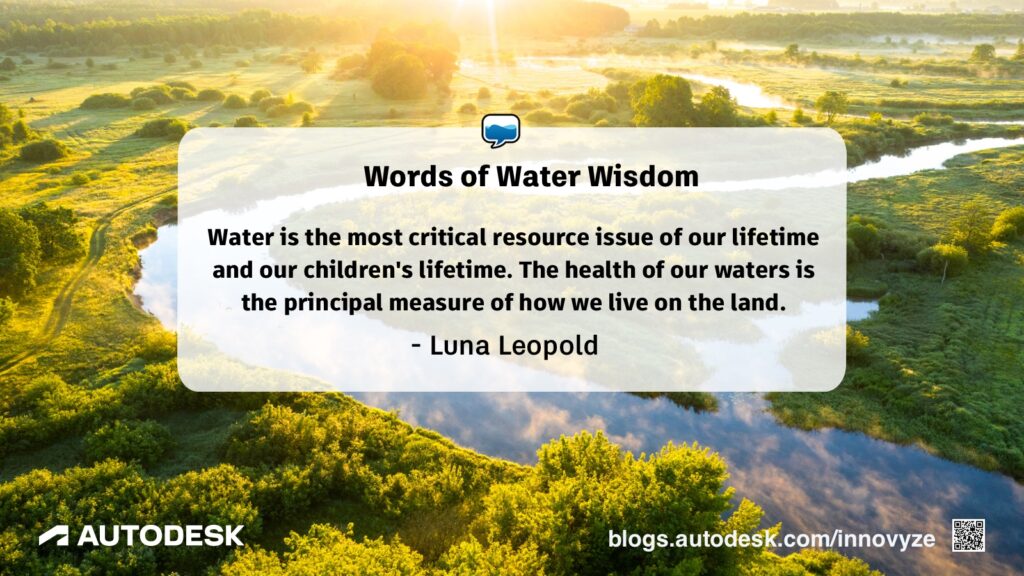
What strikes us about this quote, which Leopold wrote over half a century ago, is not just that it feels true but also timeless.
Water is the most critical resource issue of our lifetime and our children’s lifetime. The health of our waters is the principal measure of how we live on the land.
– Luna Leopold
The health of a community’s water really is an excellent measure of a community’s success. But it also makes us a bit sad. It’s currently Leopold’s kids’ lifetime. If he were still with us, would he say that we’ve done enough to make water sacrosanct? In many cultures, water is regarded as a sacred gift, a blessing that sustains life and deserves our gratitude and respect. But, sadly, our modern world often treats it as merely a commodity.
Who was Luna Leopold? His research and legacy.
Luna Leopold gained valuable experience in various scientific roles before becoming chief hydrologist. Born in 1915 to biologist and conservationist Aldo Leopold, Luna followed in his father’s footsteps, devoting his life to studying ecology, hydrology, and nature. As the first chief hydrologist for the USGS, Luna was the lead author of several influential works and a leader in his field. He spent over two decades working in hydrology at the USGS. Luna also developed key concepts and techniques in the field of fluvial geomorphology, always working to understand how rivers were shaped by the landscape.
Shaped by water resources – and his father’s reputation
After Luna’s father Aldo passed away of a heart attack while battling a wildfire, Luna edited and published his father’s collection of essays Sand County Almanac. It’s a classic of conservationist thought in which Aldo poses simple questions about man’s relationship to nature, always striving to find the right balance between unchecked expansion and conservation of the land – questions which still bedevil us today. This ongoing challenge requires innovative solutions and a commitment to both development and preservation.
One of Aldo’s most popular essays, Thinking Like a Mountain tackles this issue deftly through metaphor to show how cattle farmers who remove wolves from the landscape can’t foresee the unexpected and deleterious effects that their removal will have on the entire ecosystem.
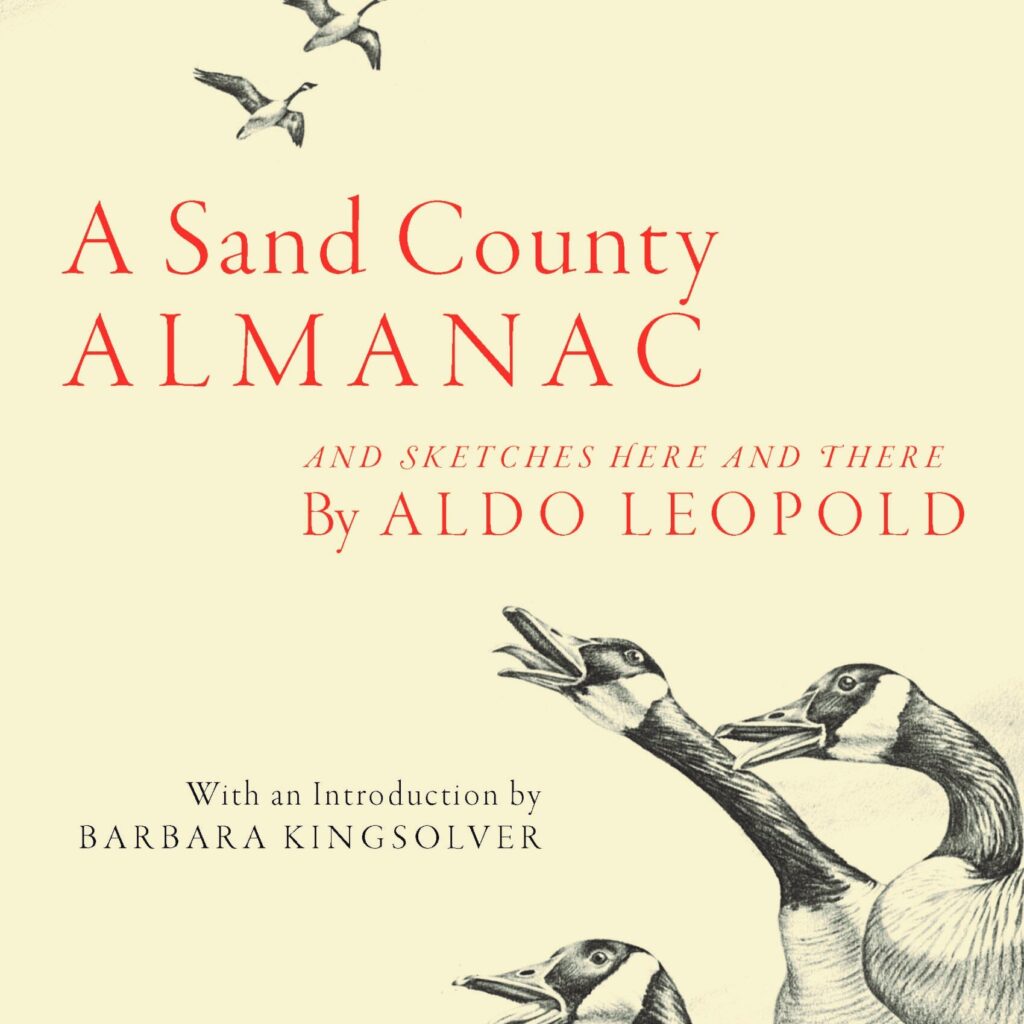
You can support the Aldo Leopold Foundation by buying Sand County Almanac directly from them.
All of which is to say that both Aldo and Luna strongly believed that water management should be governed not just by economic, social, and political concerns (the extent of focus of water policy back then) but also informed by geology, geography, and the climate. Importantly, they recognized the value of incorporating diverse perspectives, including Indigenous and cultural viewpoints, into water management for a more holistic approach. His idea of a “land ethic” expanded the definition of community beyond just us humans and our needs to include plants, animals, soil, and – of course – the actual water itself. To him, leaving those constituencies out of the conversation was short-sighted at best, unethical at worst.
Water resources in each region face unique challenges, requiring collaborative efforts and tailored management strategies to address local needs. These resources must be carefully managed through structured, ongoing stewardship to ensure their long-term viability. Sustainable practices are essential to sustain the health of ecosystems and communities for generations to come.
Aldo’s essays were praised and shared by both conservationist-minded public-policy makers and back-to-the-land hippies once it was publshed as a paperback in 1968. It quickly rose to prominence thanks to its popularity during the first ever Earth Day in 1970. The book has sold over 2 million copies and has secured Aldo’s place in the pantheon of American conservationists. His and Luna’s work continues to contribute to environmental stewardship and the well-being of communities.
Luna kept up the family’s reputation, publishing his own influential books Fluvial Processes in Geomorphology, which became an essential textbook for hydrologists, and essay collections like A View of the River. Luna died in 2006 at the age of 90, but the family’s influence continues via the Aldo Leopold Foundation.
Interconnectedness of natural resources
When we talk about water resources, it’s easy to focus on rivers, lakes, and wetlands as isolated features. But, as Luna Leopold and many before him have shown, the true story of our environment is one of deep interconnectedness. Every drop of water, every patch of wetland, and every living organism is part of a vast, intricate web that sustains life on Earth.
Traditional knowledge, especially from tribal communities, has long recognized this delicate balance. For generations, these communities have understood that the health of water resources is inseparable from the health of the land, the air, and all living things. Their wisdom teaches us that when we protect one part of the environment, we are, in fact, supporting the whole.
Modern research, too, is catching up to this holistic perspective. Environmental chemistry has revealed how pollution from our daily lives – whether from cities, farms, or factories – can travel through water and soil, affecting water quality and causing environmental impacts that ripple through entire ecosystems. The health of a single lake or river can influence the well-being of communities, plants, fish, and even the food we eat.
Universities and research institutes around the world are working to deepen our understanding of these connections. Adjunct professors, scholars, and passionate students are developing new ways to address the challenges facing our natural resources. Their work is often supported by organizations and institutions that provide funding, resources, and education to promote the protection and restoration of our environment.
Community-based initiatives are also making a difference. Education programs and local projects are helping people discover the value of wetlands, which act as natural filters for pollution and provide vital habitat for countless species. By drawing on both traditional knowledge and scientific research, these efforts are promoting biodiversity and inspiring a new generation to care for our planet.
Ultimately, the mission to protect our water resources and natural environment is a shared one. It requires the collaboration of individuals, communities, and organizations, all inspired by the wisdom of the past and the passion of today’s scholars and leaders. By working together, we can ensure that the world’s natural resources remain healthy and vibrant for generations to come.
Other wise water articles
- Beavers are back – and that’s a good thing. Read about the Planet saving power of ponds and how they can help against climate change.
- The categories of reused Water: recycled, reclaimed, toilet-to-tap? What are the differences?
- Lawns are wasteful – and expensive. Are you ready to ditch your lawn and save 50,000 gallons of water?