 Trevor English
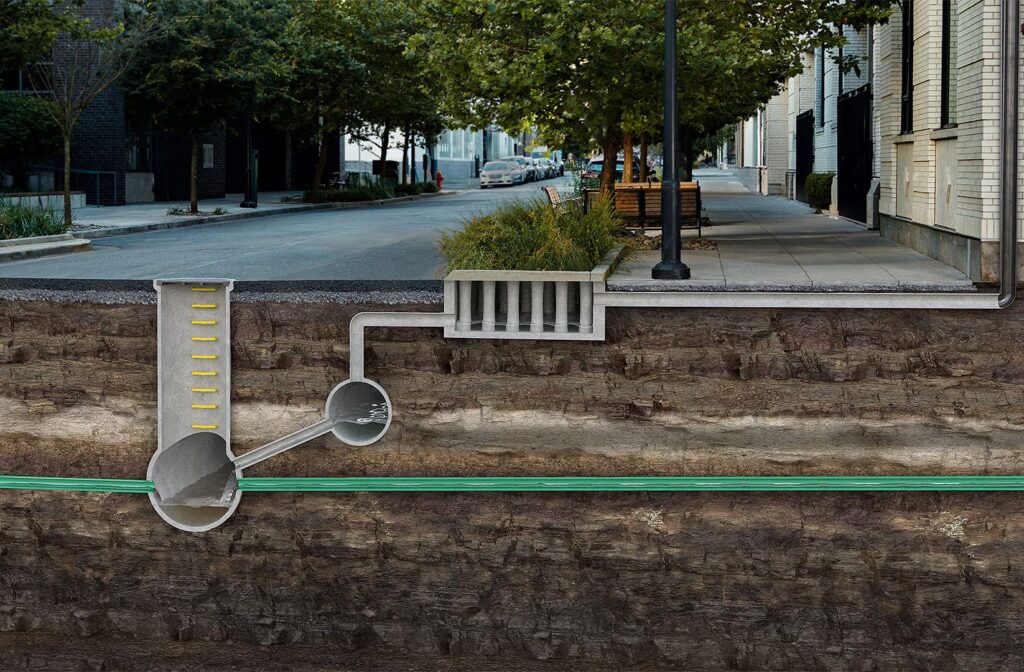
In recent years, the drainage design process has been radically transformed at the hands of technological advancements and workflow improvements. It’s a landscape that is evolving rapidly and Autodesk is at the forefront of this transformation. As you’ve seen, we’ve delivered advancements in drainage design capabilities inside of Civil 3D with analysis powered by InfoDrainage. This is an integrated workflow we’re investing heavily in, but clarity on where we’re headed with our drainage design solutions.
What’s ahead for InfoDrainage and Civil 3D
InfoDrainage has emerged as one of the most powerful drainage design applications, supporting workflows for everything from culvert analysis to sustainable drainage systems and delivering flexible reporting for easier regulatory compliance. One of the biggest strides we’ve made in drainage is building a tight integration between InfoDrainage and Civil 3D, a user-centric workflow that allows you to easily go from civil design to hydraulic analysis and back again to civil design.
InfoDrainage is, and will continue to be, Autodesk’s drainage design solution for all your drainage modeling needs. This is why we’re enabling capabilities of InfoDrainage into Civil 3D to make your workflows even more seamless as we work to improve your civil design experience. Over the next few years, you’ll see our development of Civil 3D and InfoDrainage working together in lockstep, advancing drainage design through workflow efficiency.
As we build the future of drainage design at Autodesk, we want to clarify where we’re heading with both InfoDrainage and Civil 3D: how the products are converging and how they will benefit your drainage design capabilities. To do this, let’s be explicit about a few things:
- InfoDrainage will remain a standalone desktop solution for drainage design, with continued improvements to continue strengthening the integration with Civil 3D.
- We are not removing your ability to do basic drainage design in Civil 3D as part of your subscription. Rather, we’ve expanded Civil 3D drainage design workflows to include objects including ponds, underground storage, and open channels and introduced a modern analysis workflow that is launched directly from within Civil 3D and powered by InfoDrainage cloud services. Advanced capabilities for higher efficiencies are and will continue to be available via an InfoDrainage subscription.
- Capabilities that traditionally have been available with Civil 3D will remain included with a base subscription of Civil 3D.
Being explicit about the future of both of these products is important, but you might then have some questions about what this means for you. Let’s talk through it.
First off, as noted, nothing is being taken away with regards to drainage capabilities inside of Civil 3D. In fact, we’re doubling down on drainage design civil workflows, and significantly increasing what an InfoDrainage subscription means for Civil 3D users by delivering advanced drainage capabilities inside of Civil 3D.
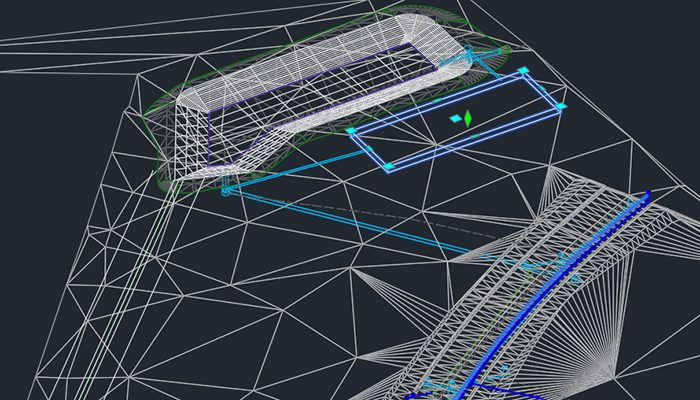
Beyond the drainage capabilities inside of Civil 3D, InfoDrainage delivers not only advanced analysis and design options, but also improved workflows and reporting efficiencies, making compliance easier than ever. The advanced capabilities inside of InfoDrainage deliver a great deal of power and functionality to civil designers and drainage designers alike today.
InfoDrainage’s Flexible Reporting functionality quickly and automatically compiles drainage reports in a flexible table format allowing you to automate your drainage design outputs to your local drainage report regulations and formats.
While InfoDrainage delivers value in certain applications as a standalone desktop application, we know that many civil designers would love to be able to do it all without ever leaving Civil 3D. Over time, you’ll start seeing the more advanced capabilities of InfoDrainage available from within Civil 3D as part of your InfoDrainage subscription, meaning that an InfoDrainage subscription will start delivering significant incremental value when you also have a Civil 3D subscription.
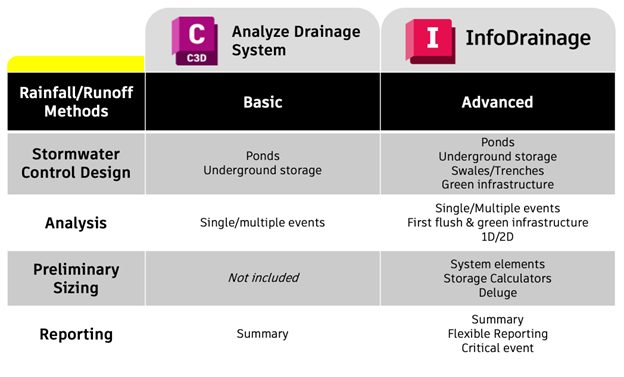
This also means that drainage design inside of Civil 3D will get incrementally better, easier, and more efficient, all inside the software ecosystem you’re used to, unlocked by InfoDrainage. Along the way, the two desktop products will continue to share data seamlessly.
Looking to the future
Our process of integrating drainage capabilities from InfoDrainage into Civil 3D will of course take time. This means that for today, you might be wondering how you should approach drainage design. While you still have drainage capabilities in Civil 3D as part of our new drainage initiative, there are many advantages to embracing InfoDrainage today, even before we expose more advanced features inside of Civil 3D.
Explore how our already-powerful InfoDrainage and Civil 3D Roundtripping process works.
A few examples of where we think InfoDrainage especially stands out:
- Compliance: InfoDrainage delivers near-automatic advanced, flexible drainage reporting. This means that compliance for government agencies and stakeholder approval is easier than ever before.
- When building highways: If you’re working on a USDOT highway project, the integrated FHWA culvert analysis tool in InfoDrainage allows you to rapidly run hydraulic simulations in a familiar environment.
- When sustainability is a priority: If you’re designing sustainable drainage systems (SuDS/LIDs/WSUDs/BMPs), InfoDrainage maintains industry-leading support for modeling the hydraulic behavior of these designs.
- When complexity is a given: Our customer VHB, a top design consulting firm, chooses InfoDrainage for its ability to model complex interconnected systems, SWMM support, and its ability to quickly model dozens of options.
Aside from these examples, there’s a plethora of workflows and advanced analysis tools, like land use and soil types, international rainfall and runoff, autoprofiling, and deluge (the list goes on), available today as part of InfoDrainage that can help you embrace the future of drainage design, all within the Autodesk ecosystem.
The future of drainage at Autodesk is incredibly bright as we continue to innovate and transform how you approach civil and drainage design. You can learn more about InfoDrainage for Civil 3D and even download a free trial. Explore more about what’s on our Civil 3D roadmap, including drainage design here.
Note: This blog post may contain forward-looking statements about our strategies, products, future results, and performance or achievements. This blog post reflects our current expectations, estimates, and assumptions based on the information currently available to us. This blog post and any product roadmaps are plans, not promises or guarantees. We’re as excited as you to see new functionality make it into our products, but the development, releases, and timing of any features or functionality remain at Autodesk’s sole discretion. This blog post should not be used to make purchasing decisions.