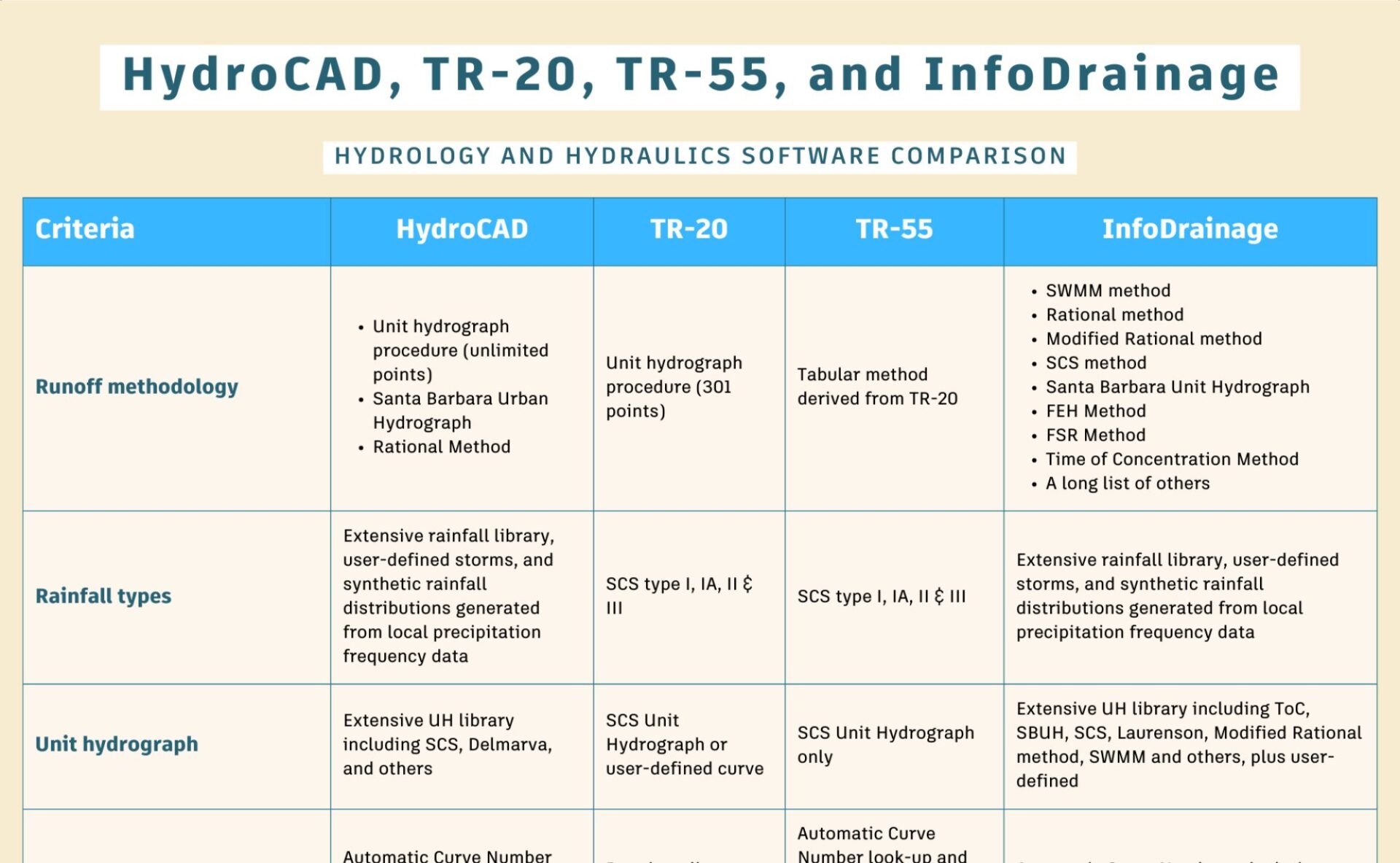
• How does InfoDrainage compare to HydroCAD, TR-20 & TR-55?

    In stormwater management and drainage design, selecting the right software is not just about features. It’s about how well a tool fits the way engineers actually work. Tools like HydroCAD, TR-20, and TR-55 have long been used for runoff calculations based on established hydrology methods. At the same time, newer tools like InfoDrainage are expanding…


  • Steady state vs extended period simulations in InfoWorks ICM: How to decide

    When modeling hydraulic systems in InfoWorks ICM, one of the most important decisions is whether to use a steady state simulation or an extended period simulation (EPS). This guide explains the difference between steady state and extended period simulations, when to use each, and how to make the right choice for your project. It is not uncommon for numerical…


  • The Water Drops don’t stop: watershed master plans, even more RTCs, and some smart Python use cases

    We’ve got a really diverse and interesting group of tutorials in our latest batch of Water Drop workflow videos. If you haven’t been following along, over the last year or so we’ve been making a whole lot of videos to show our customers smarter and better workflow ideas. And this month, we’ve got a fresh…


  • Water Drops: NEXRAD, inlets, and templates, oh my!

    This release of Water Drops focuses on some key functionality to help improve your workflows: Designing inlets in InfoDrainage We’ve already seen many useful tools in InfoDrainage from previous Water Drops collections. In this video, we continue to built on those skills by taking a deep dive on inlets inside InfoDrainge. More specifically, how inlets should…


  • 5 ways to make InfoWorks ICM even more efficient

    As we continue to expand the capabilities of InfoWorks ICM, we want to always find ways to help our customers work more efficiently. From model development and simulation runs to data intake, we’ve found numerous ways to help customers streamline their projects. Here are five ways we’ve been able to streamline workflows for customers since…


  • Public-Private Partnerships (P3) funding for water infrastructure and how to limit risk

    Public-Private Partnerships (P3) have been a popular funding mechanism for public works projects around the world since the late 80s. More recently, P3 programs have been initiated to help address water quality concerns related to stormwater by providing funding for stormwater retrofits and the development of green infrastructure throughout a municipality, and has become a…


  • 5 ways live water modeling helps you make better business decisions

    Utilities and municipalities make significant investments in their development and planning to better serve the residents of their communities. It’s no surprise that they value simplicity and reliability. They not only need to make sure people are safe and happy, they want to be able to optimize performance and increase productivity from their teams to…