Innovating for Gold: Digital Technologies for the US Olympic Sailing Team
New design processes and advanced materials are rapidly finding a place in transportation. From cars and trains to planes and spacecraft, these innovations are helping to create vehicles that are lighter, faster, stronger, and more efficient.
But don’t forget about the boats. Specifically, a new racing vessel being developed by the US Olympic Sailing team. Redshift recently profiled the development process for their latest craft, a variation on a Moth Class boat, or “hydrofoiling dinghy.”
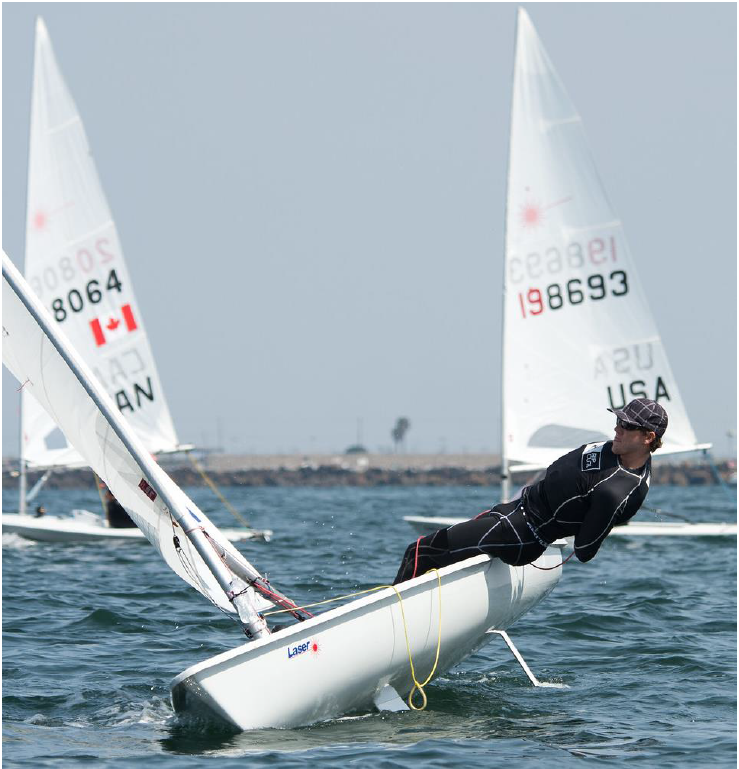
Unlike the World Cup and other sailing events, which feature larger vessels and teams of 5-10 sailors, Olympic sailing features small boats with 1-2 sailors. The races are athletic and take place in tight formation. Boat designs are highly regulated to ensure it’s about skillful sailing, not technological advantage. But there are still opportunities to get an edge through design. And the US team is working with Autodesk design and simulation tools to create a craft that can put them in the lead.
Richard Didham—an engineer with US Olympic Sailing Innovation, Research and Development and former athlete with its development program—worked on the Moth hydrofoil and shared the team’s design and engineering process in his AU 2018 class, Going for Gold: How to Win Olympic Gold with Autodesk Software. Their main focus was on topology optimization to create an ideal hydrofoil shape using computational fluid dynamics (CFD) and materials simulation to create a carbon fiber hull that was light, strong, and compliant with strict Olympic regulations.
"It was great to use Fusion 360 and TruComposites, which were completely new to us. Using the CFD code, we achieved the maximum lift versus drag for the specific design constraints of the hydrofoil, and as you refine your skillset in these areas of engineering, you’ll produce better results.” —Richard Didham, Engineer, US Olympic Sailing Innovation, Research and Development
Check out these related AU classes
Aim93: Designing the Fastest Bicycle in the World, Enabled by Autodesk Generative Design and CFD
Riding a bike is vastly different than sailing a boat, but when it comes to designing a better vehicle, CFD and simulation can play similar roles—it’s all about improving performance and reducing drag. In this AU London 2018 class, bicycle design legend Mike Burrows and his collaborators Glen Thompson and Barney Townsend describe their process for developing a new prototype that could eventually be the fastest human-powered vehicle in the world.
Up and Running with Autodesk Nastran In-CAD
One thing holding back adoption of simulation tools is the understandable question: will it measure up in real-world conditions? Nastran In-CAD provides tools to help you answer this question and make sense of your results. When you’re ready to build your simulation skills, this AU 2018 instructional demo shows you the workflows to simulate designs and have confidence in the results, enabling greater innovation.