
Autodesk Fusion for Computer-Aided Engineering
Computer-Aided Engineering (CAE)
Computer-Aided Engineering (CAE)
Autodesk Fusion is a comprehensive CAE software solution that enables engineers to conduct detailed simulations and analyses, enhancing product performance and reliability.

What is computer aided engineering (CAE)?
What is computer aided engineering (CAE)?
Computer-aided engineering (CAE)(US Site) is the use of computer software to aid in the design, analysis and manufacturing of products. It encompasses functionalities like simulation, optimisation and validation, combined with disciplines like finite element analysis (FEA), computational fluid dynamics (CFD) and multiphysics for enhanced engineering analysis.
Computer-aided engineering (CAE)(US Site) is the use of computer software to aid in the design, analysis and manufacturing of products. It encompasses functionalities like simulation, optimisation and validation, combined with disciplines like finite element analysis (FEA), computational fluid dynamics (CFD) and multiphysics for enhanced engineering analysis.

What is CAE software?
What is CAE software?
Computer-Aided Engineering (CAE) software is a type of program that uses advanced computational methods to assist in engineering tasks. It includes several disciplines including stress analysis on components and assemblies, kinematics, mechanics of materials and optimisation of designs. CAE software enhances the engineering process by providing tools for modelling, simulation, validation and optimisation of products and manufacturing tools. It allows engineers to evaluate and improve product designs, ensuring their functionality, durability and efficiency.
Computer-Aided Engineering (CAE) software is a type of program that uses advanced computational methods to assist in engineering tasks. It includes several disciplines including stress analysis on components and assemblies, kinematics, mechanics of materials and optimisation of designs. CAE software enhances the engineering process by providing tools for modelling, simulation, validation and optimisation of products and manufacturing tools. It allows engineers to evaluate and improve product designs, ensuring their functionality, durability and efficiency.
The advantages of CAE software

Enhanced design efficiency
Enhanced design efficiency
Access advanced simulation study types to validate real-world design performance through side-by-side design comparisons.

Improved product performance and reliability
Improved product performance and reliability
By simulating real-world conditions, CAE software enables the prediction and improvement of product performance and reliability before manufacturing, ensuring optimal product functionality.

Reduced need for physical prototypes
Reduced need for physical prototypes
CAE software allows virtual prototyping, reducing the need for costly and time-consuming physical prototypes, and speeding up the product development cycle.
Common applications of computer-aided engineering
Computer-Aided Engineering (CAE) is widely used to simulate real-world conditions, optimise designs and validate product performance, enhancing the overall engineering process.

Stress Analysis
Using Finite Element Analysis (FEA), CAE can simulate and predict how a product will respond to physical forces like tension, compression and shear. This helps engineers optimise and validate their designs to ensure durability and reliability.

Fluid Dynamics
In Computational Fluid Dynamics (CFD), CAE helps simulate fluid flow, heat transfer and other related phenomena inside or around a product. This is crucial in fields like aerodynamics, hydraulics and HVAC systems where fluid behaviour significantly impacts product performance.

Thermal Analysis
CAE can perform thermal analysis to predict how heat transfer will affect a product. This helps make sure the product can maintain effective performance under varying temperature conditions. This is particularly critical in the electronics, automotive and aerospace industries.

Multibody Dynamics
CAE is used to simulate and analyse the dynamic behaviour of systems with multiple components. This helps engineers understand the impact of motions and forces on the assembly. This is crucial in designing complex mechanical systems like vehicles, robots and machinery.
Featured CAE software
Autodesk Fusion Simulation Extension
Autodesk Fusion Simulation Extension
The Autodesk Fusion Simulation Extension, including Computer-Aided Engineering (CAE), equips your team to analyse part performance, manufacturability and generative design capabilities.
Generative design outcomes can guide you to achieve weight reduction and performance enhancements. By combining this with various simulation study types like structural, thermal and explicit simulations, as well as injection moulding, you can acquire a comprehensive understanding of how your 3D design will perform under real-life conditions before manufacturing.
The Autodesk Fusion Simulation Extension, including Computer-Aided Engineering (CAE), equips your team to analyse part performance, manufacturability and generative design capabilities.
Generative design outcomes can guide you to achieve weight reduction and performance enhancements. By combining this with various simulation study types like structural, thermal and explicit simulations, as well as injection moulding, you can acquire a comprehensive understanding of how your 3D design will perform under real-life conditions before manufacturing.
Benefits of the Fusion Simulation Extension
Dive into the limitless design possibilities with Autodesk Fusion's CAE capabilities.
Shorten your product development time
Automate performance and reduce design costs with generative design. Minimize physical prototypes with digital prototypes using simulation tools.
Improve your product's reliability
Access advanced simulation study types to validate real-world design performance through side-by-side design comparisons
Expand your design possibilities
Use manufacturing process-aware artificial intelligence to quickly expand design options well beyond human imagination.
Fusion Simulation Extension’s CAE capabilities
Nonlinear Static Stress
Nonlinear Static Stress
With the ability to simulate large deformations, motion, and contact behaviours on nonlinear materials, this CAE capability is pivotal in predicting how materials and structures will respond under diverse stress conditions, thus enhancing design reliability.
With the ability to simulate large deformations, motion, and contact behaviours on nonlinear materials, this CAE capability is pivotal in predicting how materials and structures will respond under diverse stress conditions, thus enhancing design reliability.


CAE tools for consumer product development
CAE tools for consumer product development
Bringing consumer products to market faster requires a smooth transition from design to production. With Autodesk Fusion, product designers have the ability to use CAE analysis tools, which were created with the designer in mind, to validate the product performance and quality before manufacturing.
Validate product performance and quality
Minimise costly delays and rework
Intuitive and easy to use analysis tools
Bringing consumer products to market faster requires a smooth transition from design to production. With Autodesk Fusion, product designers have the ability to use CAE analysis tools, which were created with the designer in mind, to validate the product performance and quality before manufacturing.
Validate product performance and quality
Minimise costly delays and rework
Intuitive and easy to use analysis tools
How industries harness CAE software for success

Kawai Plastic Industry
Kawai Plastic Industry
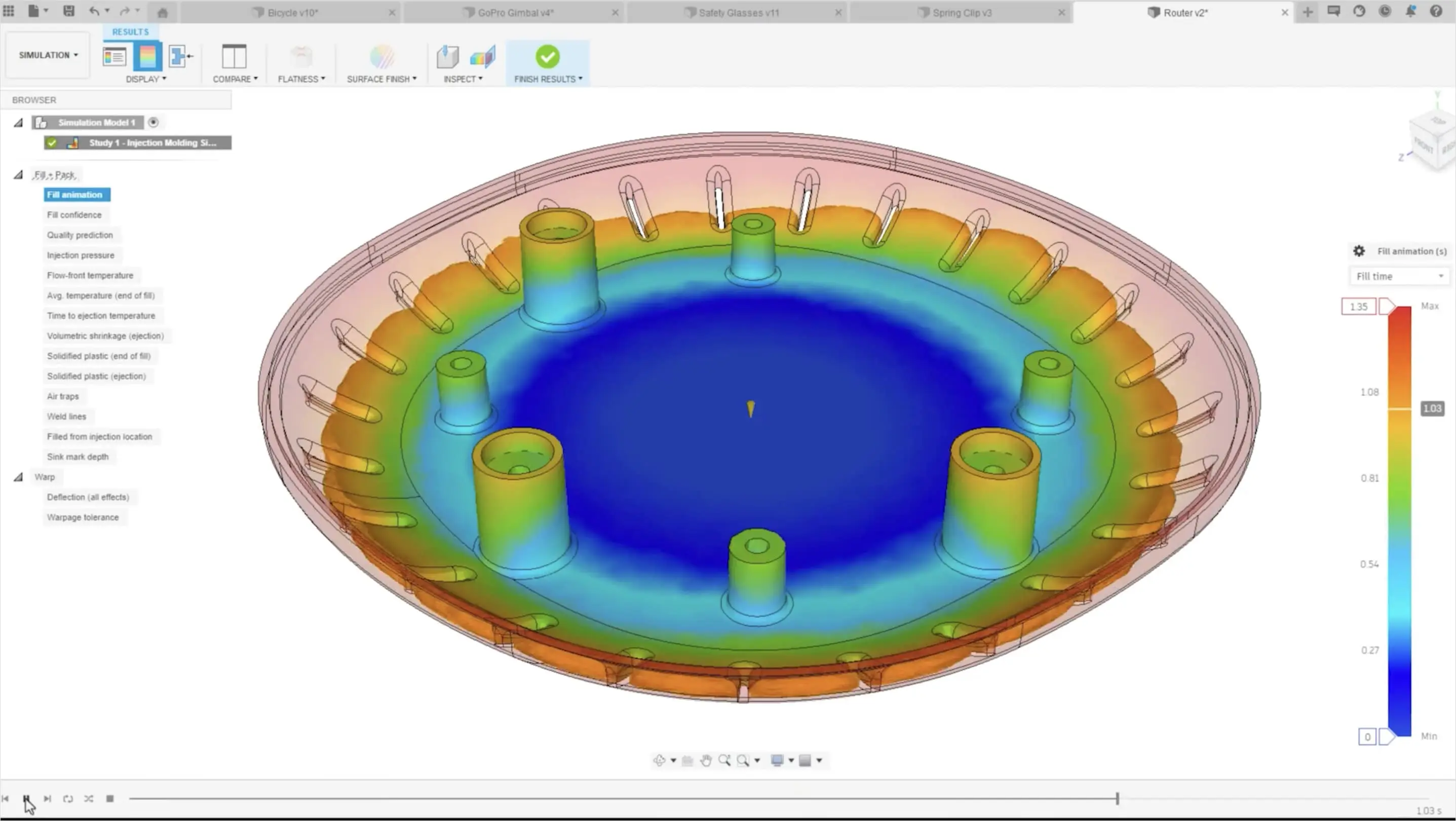
Kawai Plastic Industry used the Fusion Simulation Extension, a Computer-Aided Engineering (CAE) tool, to run injection moulding simulations and flow analyses. This allowed them to prevent short shots in their process, visually confirm mould accuracy and reduce the number of trial injection runs by 25%, significantly improving their cost efficiency.
Kawai Plastic Industry used the Fusion Simulation Extension, a Computer-Aided Engineering (CAE) tool, to run injection moulding simulations and flow analyses. This allowed them to prevent short shots in their process, visually confirm mould accuracy and reduce the number of trial injection runs by 25%, significantly improving their cost efficiency.

Dr. Hannes Schwenke
Dr. Hannes Schwenke
Dr. Hannes Schwenke used Computer-Aided Engineering (CAE) in the form of 3D modelling and printing technologies. Using Autodesk Fusion and Netfabb, precise 3D models of artery systems and brain aneurysms were created. These models helped in visualising complex surgical procedures, improving surgeon training and enhancing patient treatment outcomes.
Dr. Hannes Schwenke used Computer-Aided Engineering (CAE) in the form of 3D modelling and printing technologies. Using Autodesk Fusion and Netfabb, precise 3D models of artery systems and brain aneurysms were created. These models helped in visualising complex surgical procedures, improving surgeon training and enhancing patient treatment outcomes.

Coral Maker
Coral Maker
Coral Maker used Computer-Aided Engineering (CAE) through Autodesk Fusion to design and prototype moulds for mass manufacturing coral skeletons. They also used it to test robotics systems for seeding corals. This CAE tool facilitated iterative design improvements and enabled the use of CNC machines and 3D printing for manufacturing.
Coral Maker used Computer-Aided Engineering (CAE) through Autodesk Fusion to design and prototype moulds for mass manufacturing coral skeletons. They also used it to test robotics systems for seeding corals. This CAE tool facilitated iterative design improvements and enabled the use of CNC machines and 3D printing for manufacturing.

ACWA-ROBOTICS
ACWA-ROBOTICS
Discover how ACWA-ROBOTICS uses Autodesk Fusion to design water pipe-inspecting robots. The article underscores the significance of Computer-Aided Engineering (CAE), particularly simulations for assessing mechanical durability and thermal characteristics. These CAE features in Fusion are crucial to successfully designing and optimising the robot's performance.
Discover how ACWA-ROBOTICS uses Autodesk Fusion to design water pipe-inspecting robots. The article underscores the significance of Computer-Aided Engineering (CAE), particularly simulations for assessing mechanical durability and thermal characteristics. These CAE features in Fusion are crucial to successfully designing and optimising the robot's performance.
Fusion resources for computer-aided engineering (CAE)
Get started with CAE with these informational blog posts.
Get started with CAE with these informational blog posts.
Transforming Manufacturing with Fusion’s Comprehensive CAE Integration (US Site)
In product development, Computer-Aided Engineering (CAE) swiftly validates designs before manufacturing, reducing costs, time-to-market and enhancing product quality.
In product development, Computer-Aided Engineering (CAE) swiftly validates designs before manufacturing, reducing costs, time-to-market and enhancing product quality.
Unlocking the Power of Computer-Aided Engineering (CAE) with Autodesk Fusion
This article expands upon CAD, CAM and CAE, advantages across crucial touchpoints in the end-to-end product development process.
This article expands upon CAD, CAM and CAE, advantages across crucial touchpoints in the end-to-end product development process.
What is Computer Aided Engineering (CAE)?
Explore the world of Computer Aided Engineering (CAE), highlighting its crucial role in modern product development.
Explore the world of Computer Aided Engineering (CAE), highlighting its crucial role in modern product development.
Why Fusion Is the Ultimate CAD, CAM, CAE & PCB Tool
Discover how Autodesk Fusion revolutionises product development with its powerful CAE capabilities, seamless simulation and innovative digital prototyping in a robust cloud-based environment.
Discover how Autodesk Fusion revolutionises product development with its powerful CAE capabilities, seamless simulation and innovative digital prototyping in a robust cloud-based environment.
How to Choose the Right CAE Software Solution
Here are some factors to consider when choosing a CAE software solution and a breakdown on how Autodesk Fusion can help.
Here are some factors to consider when choosing a CAE software solution and a breakdown on how Autodesk Fusion can help.
The Unwavering Importance of CAE in Product Development
Product development uses CAE software like Fusion for rigorous testing and design enhancements under varied conditions.
Product development uses CAE software like Fusion for rigorous testing and design enhancements under varied conditions.
Frequently asked questions (FAQ) on computer aided engineering and CAE software
What is CAE?
Computer‑aided engineering (CAE) is the use of simulation software to analyse, validate, and optimise how a product will perform under real‑world conditions. CAE helps teams test factors like strength, heat, and motion digitally before manufacturing begins. In Autodesk Fusion, CAE is integrated directly into the design workflow, making simulation a natural part of product development.
What is CAD simulation?
Computer‑aided engineering (CAE) simulation uses software to digitally test how a product will perform under real‑world conditions. This includes factors such as structural stress, thermal loads, or fluid flow before anything is physically built. In Autodesk Fusion, these simulations are integrated directly into the design environment, allowing teams to test and refine ideas earlier in the process.
What is the difference between CAD and CAE?
CAD (computer‑aided design) focuses on creating and defining product geometry, while CAE analyses and validates how those designs will perform in real‑world scenarios. With Autodesk Fusion, CAD, and CAE work together in a single platform, enabling a seamless transition from design to simulation without switching tools.
Is CAE software only for analysts?
No. Modern CAE software is accessible to designers and engineers, not just simulation specialists. Autodesk Fusion includes intuitive, designer‑friendly CAE tools that make it easier for teams to run simulations, understand results, and make informed decisions without deep analysis expertise.
Why is computer aided engineering important?
Computer‑aided engineering helps teams reduce development risk, improve product quality, and shorten time‑to‑market by identifying issues early. By validating performance before manufacturing, Autodesk Fusion enables teams to minimise rework, reduce reliance on physical prototypes, and move from concept to production with greater confidence.
What industries commonly use CAE software?
CAE software is used across a wide range of industries, including manufacturing, consumer products, medical devices, robotics, electronics, and sustainability‑focused design. Teams in these industries rely on CAE to validate performance, improve reliability, and reduce development risk. Autodesk Fusion supports these workflows with flexible simulation tools designed for modern product teams.
What features matter most in CAE software?
There are several key features to consider most when evaluating CAE software for engineering analysis:
Integrated CAD‑to‑CAE workflows, so simulations stay connected to design changes and geometry updates without manual rework
Core physics capabilities, such as structural stress, thermal analysis, motion, and fluid behaviour, to support real‑world performance validation
Ease of use and accessibility, enabling designers and engineers—not just simulation specialists—to run and interpret analyses
Design iteration support, allowing teams to quickly compare design options and refine performance early in development
Workflow integration and collaboration, reducing handoffs between design, analysis, and manufacturing teams
Autodesk Fusion addresses these priorities by combining CAD, CAE, and CAM in one platform, enabling continuous validation from concept through production without breaking workflows.
What CAE software is beset for engineering analysis?
The best CAE software depends on your team’s needs, experience level, and workflow. Many organisations choose Autodesk Fusion because it combines CAD, CAE, and CAM in a single platform. Engineers and designers can analyse performance without switching tools or exporting data between systems.