Solutions for airports and ports
Solutions for airports and ports
See how Autodesk customers are transforming airports and seaports
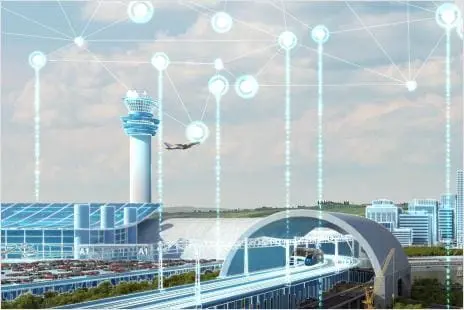
"Experiencing how effective this Autodesk workflow can be on the [Automated People Mover] project, we wasted no time."
– Cameron Schaefer, Digital Design Lead, HDR
"We needed the right tools to work on a platform where we were up to date and could keep up with the project pace."
– Crystal Barriscale, Regional Director of Urban Design, HKS Architects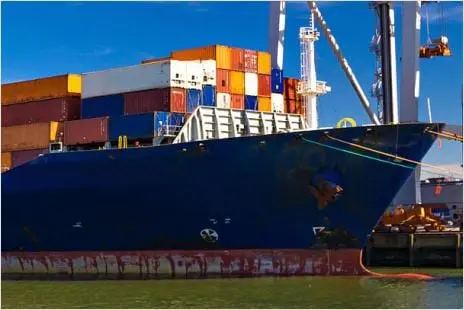
"Breaking down information siloes helps us to work together for better outcomes."
– Peter Rollier, BIM Office Manager, Port of Antwerp-Bruges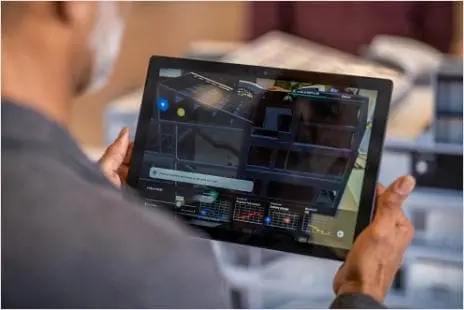
"We developed a small group … and we made, like everybody does, our own definition of what a digital twin is."
– Dr. Luciana Burdi, Director of Capital Programs and Environmental Affairs, Massachusetts Port Authority
Airports and ports industry insights

ARTICLE
3 international airport designs transforming future travel
3 international airport designs transforming future travel
Discover how Los Angeles International Airport, Hong Kong International Airport, and the LaGuardia Airport are enhancing design and usability.

ARTICLE
GIS and BIM integration for smarter infrastructure
GIS and BIM integration for smarter infrastructure
Learn how geographic information system (GIS) and Building Information Modeling (BIM) will revolutionize infrastructure design and construction.

ARTICLE
What it means to collaborate in the AEC industry
What it means to collaborate in the AEC industry
As the architecture, engineering, and construction (AEC) industry adopts digital tools and processes, collaboration could be more profitable than competition.
Autodesk products for airport and seaport design
Learning resources for airports and seaports professionals

AUTODESK UNIVERSITY CLASS
Airports asset management ownership policies
Airports asset management ownership policies
In this class, learn how to handle airport asset management obstacles temporarily and permanently so you can move toward a single source of truth.

AUTODESK UNIVERSITY CLASS
How to use UAS reality capture for airport design
How to use UAS reality capture for airport design
This class walks through the waiver process, flight logistics, workflows, and other critical elements of unmanned aircraft system (UAS) reality capture for airport design.

AUTODESK UNIVERSITY CLASS
Designing an international airport with cloud innovation
Designing an international airport with cloud innovation
Discover how HOK pushed the cloud to the limits to design the Salt Lake City International Airport, one of the largest aviation projects in the United States.

AUTODESK UNIVERSITY CLASS
Airport digital twin that integrates BIM, GIS, and EAM
Airport digital twin that integrates BIM, GIS, and EAM
Parsons highlights the capabilities of an airport digital twin, including the integration of BIM, GIS, and enterprise asset management (EAM) into a common data environment.

AUTODESK UNIVERSITY CLASS
Port planning with InfraWorks software
Port planning with InfraWorks software
Explore a large-scale port and transportation project that uses various InfraWorks functions, including randomizing data objects, running scripts, and more.
Explore related industries
Bridges and tunnels
Bridges and tunnels
Gain advanced analysis and design workflows for bridges and tunnels.
Roads and highways
Roads and highways
Support each stage of your road or highway project.
Railways
Railways
With reduced complexity and increased quality, deliver best-in-class rail infrastructure.
Transportation
Transportation
Empower your transportation workforce to achieve greater resilience and stability.
Let’s talk about airports and seaports
Let’s talk about airports and seaports
Contact us to learn how Autodesk software can improve your infrastructure projects.
Contact us to learn how Autodesk software can improve your infrastructure projects.
Let’s talk about airports and seaports
Let’s talk about airports and seaports
Contact us to learn how Autodesk software can improve your infrastructure projects.
Contact us to learn how Autodesk software can improve your infrastructure projects.
Frequently asked questions (FAQ)
What is airport design and development?
When designing an airport or seaport, the site selection is critical because it determines accessibility, proximity to transportation networks, and the potential for expansion. The design should also consider the expected traffic volume and provide sufficient capacity to accommodate projected growth, as well as take into account the safety of passengers, crew, and cargo. Safety concerns include runway and taxiway design, air traffic control systems, and airport or seaport security systems.
In addition, sustainability considerations are important to minimize the impact of the port on the environment and surrounding communities, and the airport or seaport should be accessible to all users, including people with disabilities and those with limited mobility. Finally, the design can go a long way toward ensuring efficient operations of the airport or seaport, from traffic flow to cargo handling. For the infrastructure owners and local authorities, it’s also important that the design be cost-effective, including construction, operation, and maintenance costs, to ensure that the airport or seaport remains financially viable.
What are the key factors to consider when designing an airport/seaport?
When designing an airport or seaport, the site selection is critical because it determines accessibility, proximity to transportation networks, and the potential for expansion. The design should also consider the expected traffic volume and provide sufficient capacity to accommodate projected growth, as well as take into account the safety of passengers, crew, and cargo. Safety concerns include runway and taxiway design, air traffic control systems, and airport or seaport security systems.
In addition, sustainability considerations are important to minimize the impact of the port on the environment and surrounding communities, and the airport or seaport should be accessible to all users, including people with disabilities and those with limited mobility. Finally, the design can go a long way toward ensuring efficient operations of the airport or seaport, from traffic flow to cargo handling. For the infrastructure owners and local authorities, it’s also important that the design be cost-effective, including construction, operation, and maintenance costs, to ensure that the airport or seaport remains financially viable.
What are the benefits of airport design software?
Airport design software can provide many benefits to airport planners, engineers, and architects. For example:
Improved accuracy: Airport design software can help ensure that the design of an airport is accurate and takes into account all necessary factors, such as runway length, taxiway placement, and terminal size.
Faster design process: Using airport design software can speed up the design process, allowing for more efficient use of time and resources.
Cost savings: By improving accuracy and reducing the need for redesigns, airport design software can help save money during the construction process.
Better communication: Airport design software can facilitate better communication between different stakeholders, such as architects, engineers, and airport authorities.
Enhanced safety: By ensuring that an airport is designed to the highest safety standards, airport design software can help enhance safety for passengers, crew, and aircraft.
Who uses airport and seaport design software?
Airport and seaport design software is used by architects, engineers, and planners who are involved in designing, constructing, and managing airports and seaports. It is also used by government agencies responsible for overseeing and regulating airport and seaport infrastructure.
What Autodesk software is used for airport and seaport design and development?
Autodesk offers several software solutions for airport and seaport design and development. For example, Autodesk InfraWorks, which can be used to create 3D models of transportation infrastructure, including airports and seaports. It allows users to design and visualize various aspects of the infrastructure, such as runways, taxiways, terminals, and cargo areas. Another key piece of software is Autodesk Civil 3D, primarily used for civil engineering and construction projects, including airport and seaport development. It provides tools for creating detailed design plans, grading and drainage analysis, and more. And finally, Autodesk Revit. While not specifically designed for airport and seaport development, Revit can be used to create detailed building models, which can be useful for designing airport terminals, control towers, and other related structures.
What are some sustainable design strategies for airports and seaports?
Examples of sustainable design strategies for airports and seaports include:
Energy-efficient lighting and HVAC systems to reduce energy consumption and greenhouse gas emissions
Water conservation using low-flow fixtures and rainwater harvesting systems
Use of renewable energy sources such as solar and wind power to reduce dependence on non-renewable energy sources
Waste reduction and recycling programs to reduce waste and promote sustainability
Use of sustainable materials such as recycled steel, bamboo, and non-toxic paints
Incorporation of green spaces and landscaping to reduce the urban heat island effect and improve air quality
Sustainable transportation options such as electric shuttles, bicycles, and pedestrian-friendly design
Strategies like these can help infrastructure owners reduce the environmental impact of airports and seaports.
What are common challenges faced during construction of airports and seaports?
First, airport and seaport construction projects can be very expensive, and budget constraints can limit the scope of the project or delay completion. Second, the construction of airports and seaports can have a significant impact on the environment, particularly on local water resources and habitats. Ensuring that construction activities comply with environmental regulations can be a significant challenge. Third, acquiring the necessary land for an airport or seaport can be a difficult and time-consuming process, particularly in densely populated areas where land is scarce. Fourth, the construction of airports and seaports involves the movement of large quantities of materials and equipment, which can be a logistical challenge. And finally, airports and seaports are complex facilities that require a high level of technical expertise to design and construct. Ensuring that all systems and components work together seamlessly can be a significant challenge.
Addressing these challenges requires careful planning, effective project management, and collaboration between all stakeholders involved in the construction process.
What emerging trends shape airport and seaport design and development?
Some of the most significant trends shaping airport and seaport projects include:
Sustainability and energy efficiency: More and more airports and seaports are focusing on sustainable design and operations, incorporating renewable energy sources, green roofs, rainwater harvesting, and other eco-friendly features.
GIS and BIM integration: Integrating BIM and GIS data allows infrastructure owners to improve logistics, increase efficiency, and minimize data redundancy.
Digitalization and automation: Airports and seaports are increasingly relying on digital technologies to enhance efficiency and improve the passenger experience. This includes automation of check-in and boarding processes, biometric scanning, and the use of sensors to monitor and optimize operations.
Security and safety: Security and safety are top priorities for airports and seaports, and new technologies are being developed to better detect and prevent potential threats.
Flexibility and adaptability: Many airports and seaports are designed to be flexible and adaptable, allowing for future growth and changing needs.
Passenger experience and comfort: With increased competition among airports and seaports, many are investing in amenities such as lounges, retail and dining options, and relaxation areas to enhance the passenger experience.
How do airports and seaports impact their surrounding communities and environment?
Airports and seaports have both positive and negative impacts on their surrounding communities and environment.
Positive effects:
Economic benefits: Airports and seaports can bring significant economic benefits to their surrounding communities by creating jobs, generating tax revenue, and supporting local businesses.
Connectivity: Airports and seaports provide critical links between communities, regions, and countries, allowing for greater connectivity and mobility.
Tourism: Airports and seaports often serve as gateways for tourism, attracting visitors to the surrounding area and contributing to the local economy.
Negative effects:
Noise pollution: Airports and seaports can generate significant noise pollution from aircraft, ships, and ground transportation, which can have negative effects on the health and well-being of nearby residents.
Air pollution: Airports and seaports also generate air pollution from aircraft and ships, which can contribute to local air quality issues.
Land use: Airports and seaports require large amounts of land and can displace communities and wildlife habitats.
Water pollution: Seaports can generate water pollution from cargo and ship operations, which can affect the surrounding marine environment.
Carbon emissions: Airports and seaports are significant emitters of carbon dioxide and other greenhouse gases, contributing to climate change.
Note that the specific effects of airports and seaports can vary depending on their location, size, and the types of operations they conduct.
Why is digital project delivery important in airport development projects?
Digital project delivery is important in airport development projects because it enables project teams to collaborate more efficiently, reduce errors and rework, and ultimately deliver projects on time and within budget. With the use of digital tools and platforms, such as Building Information Modeling (BIM) and Virtual Design and Construction (VDC), project teams can visualize and simulate the project before construction even begins, allowing them to identify and resolve issues early on in the process. This leads to fewer change orders, fewer delays, and fewer cost overruns. In addition, digital project delivery can improve safety by identifying potential hazards and conflicts in advance and can also enhance the overall quality of the project by providing greater accuracy and precision in design and construction.