 Gary Wollenhaupt
Rain gardens are a common feature of Sustainable Drainage Systems (SuDS) and are widely used in urban drainage design to manage stormwater and rainwater runoff, as well as promote sustainable drainage practices.
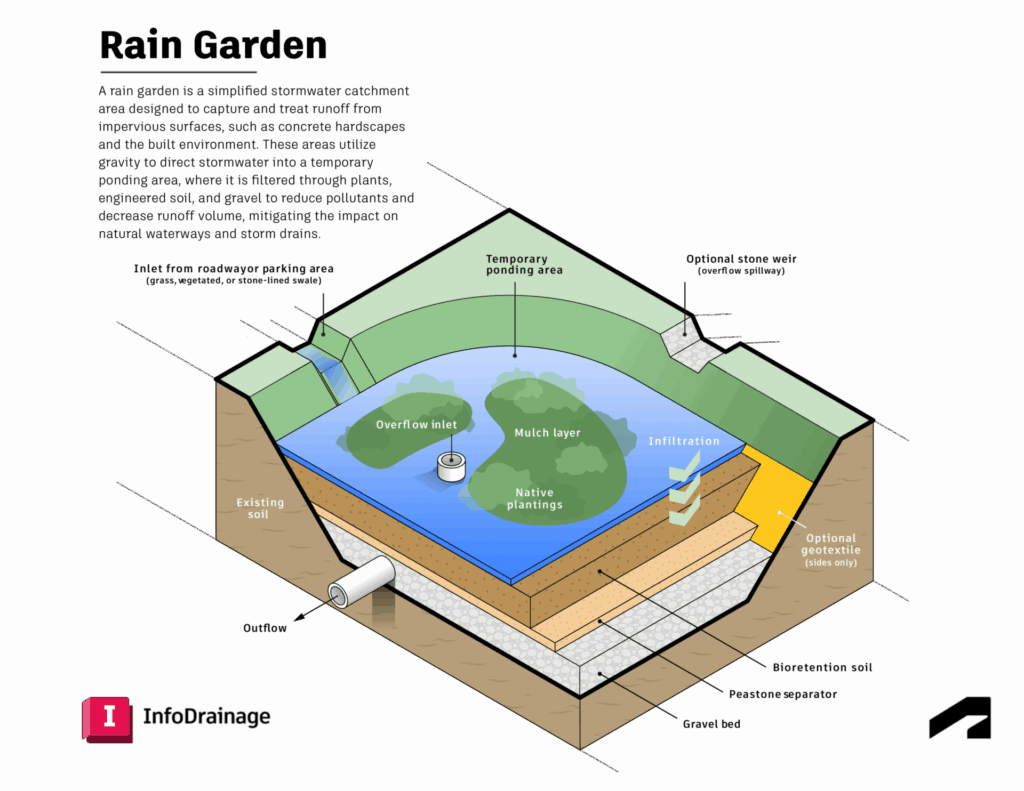
In the urban environment, hard or impervious surfaces often block the natural process of infiltration, which means rainwater can’t soak into the ground. One very effective solution to this problem is a rain garden, a small stormwater control installation that mimics the natural environment as rainwater evaporates, gets absorbed by plants or soaks into the ground.
A simplified form of a bioretention system, a rain garden is a stormwater management design that uses natural materials and processes to collect and filter runoff from impermeable surfaces such as streets, driveways, and sidewalks.
But rain gardens do much more than just move water along; they act as natural filters. Stormwater runoff from such impervious concrete surfaces often carry pollutants, including grease, heavy metals, pathogens, and nutrients, and these can be harmful to both humans and the environment. Without a rain garden, these surface pollutants are often discharged directly into nearby streams and lakes.
Where are rain gardens typically installed?
Rain garden design is often a cost-effective approach to managing stormwater in urban areas and is commonly employed as a post-construction solution to address drainage issues, either anticipated issues or issues that arise after a construction project is completed. The typical rain garden is a depressed area in the landscape that collects runoff and holds it long enough for a large portion to soak into the ground. Using a combination of design and materials, including soil, sand, and gravel, the garden captures stormwater before it can flood the area or enter open water or storm sewers.
Rain gardens are typically installed in lawns, the edges of roads, or in the medians of parking lots. They are often planted alongside grasses and flowering perennials, providing a spot of greenery in an urban landscape and offering food and shelter for birds, butterflies, and other wildlife. Proper plant selection is one way to enhance the water filtration capabilities of a rain garden. By using native plants, rain gardens provide food for pollinators and other local species, supporting biodiversity and local ecosystems.
Stormwater management is an increasing priority for many cities, and a rain garden is a cost-effective strategy that is no longer a nice-to-have but a necessity. In this article, we will discuss the concept of rain gardens, their benefits and how Autodesk InfoDrainage helps designers optimize rain garden design.
How do rain gardens compare to other stormwater systems?
Rain gardens are often used with swales for conveyance and soakaways for infiltration as part of a SuDS management train.
These bioretention-based designs are a common retrofit for existing parking lots, sidewalks, and other impervious surfaces, capturing and treating runoff. Although some of these systems appear similar, they each possess unique characteristics that make them well-suited for specific use cases.
- Rain garden: Rain garden design focuses on reducing the volume of runoff and removing pollutants using methods that mimic natural systems. Although typically less engineered than more sophisticated bioretention areas, the term “rain garden” may be used by some municipalities to informally describe various types of simplified bioretention areas.
- Swale: Swales are shallow, vegetated channels designed to slow down, capture, and filter stormwater, which may be part of a larger SuDS installation that could link to rain gardens or other bioretention systems. Swales may be wet or dry, depending on whether they are designed to maintain a permanent pool of water.
- Bioretention cell: Bioretention areas are similar to rain gardens but are often held to a higher design standard. They are typically larger and more highly engineered to more effectively capture and infiltrate stormwater runoff from impervious surfaces, such as rooftops, driveways, and parking lots. Bioretention areas are designed to allow water to temporarily pond when it rains and then either soak into the ground or flow through an underdrain.
The many benefits of rain gardens in urban areas
Rain gardens are a cost-effective and easily installed bioretention practice in densely developed urban areas with limited pervious surfaces. They are also especially beneficial in suburban areas where increased development leads to more impervious surfaces and stormwater challenges. Rain gardens can help with many aspects of water management:
- Stormwater management: Rain gardens help reduce runoff, prevent flooding, and minimize erosion by pooling water. The filtered stormwater seeps into the ground, helping to recharge the local groundwater supply while reducing the burden on downstream sewer infrastructure.
- Water quality improvement: Rain gardens filter pollutants and improve the quality of groundwater and surface water by filtering pollutants through the layers of materials
- Enhanced biodiversity: Planted with natural, native flora, rain gardens provide habitats for local wildlife, including pollinators such as bees and butterflies, which enhance the local ecosystem.
- Aesthetic and community benefits: In addition to practical functional enhancements of stormwater management, rain gardens contribute to the visual appeal of concrete landscapes by creating greener, more sustainable urban spaces.
- Climate resilience: Rain gardens can help mitigate the impacts of extreme weather events due to climate change by managing stormwater runoff from small to moderate storms and alleviating stress on other flood control facilities by reducing peak flows during extreme weather events.
Rain gardens around the world
Rain gardens are considered a staple of bioretention practices around the world, but construction and drainage professionals in different countries and regions engage these techniques from their unique perspectives. They often talk about them as different acronyms or concepts, although with mostly similar meanings:
- LIDs: The US Environmental Protection Agency (EPA) refers to these systems as Low Impact Development (LID) practices. However, most professionals use the term BMPs or Best Management Practices to refer to rain garden structures. These acronyms are also used in Canada.
- SuDS: In the UK, the term Sustainable Drainage Systems (SuDS) refers to drainage solutions that reduce flooding and improve water quality by mimicking natural processes.
- WSUD: In Australia, the common term is Water Sensitive Urban Design (WSUD), referring to rain gardens and other practices that mimic the natural water cycle to reduce the environmental impact of urbanization by better managing stormwater.
- Sponge cities: A program of urban planning measures that is loosely called “Sponge City” by its proponents incorporates nature-based solutions, including rain gardens and similar features (such as infiltration swales, green roofs, and permeable pavements) to absorb, retain, and reuse stormwater to manage urban flooding and water quality. Many of these ideas originated in China, and the Sponge City movement is growing, incorporating innovative ideas like installing blue-green roofs to help manage stormwater.
Regardless of the name you use, rain gardens are designed to reduce the impact of stormwater runoff in urban areas, particularly in areas where land has been converted into impermeable surfaces. Rain gardens help manage how water runs off hard surfaces like driveways and roofs, slowing and filtering the flow before it enters storm drains.
How rain gardens are designed
Rain garden designs are well-suited for small sites in urbanized settings and can effectively filter stormwater from small to medium-sized storms. While they may seem simple enough to install over a weekend at home, urban installations require planning and expertise as well as adherence to local, state, and federal regulations.
Professionals typically use software like InfoDrainage, which contains Stormwater Control Sizing Calculators, CAD integration, and AI-powered Deluge features to help drainage designers build digital models well before construction begins, predicting exactly how an installation will function under both normal rainfall and flood conditions.
Steps for designing a rain garden include:
- Site selection: Begin by analyzing the need for a rain garden, considering proximity to water sources, slopes, and drainage areas. Rain gardens are often added as a post-construction measure in urban areas to address water runoff problems. A rain garden can also be integrated into existing parking lot islands, along roads, at intersections, or in other landscaped areas as part of a retrofit, redevelopment, or new construction project. Avoid placing a rain garden over a septic tank to prevent interference with underground systems.
- Water sources: Consider the sources of stormwater runoff that will flow into the rain garden. Hot spots are areas where activities generate highly contaminated discharges, such as those from gas stations and industrial areas. To address these pollutant concentrations, it may be necessary to include an impervious liner to prevent groundwater contamination.
- Water flows: Design inflow and outflow pathways, such as swales or pipes, and consider installing underdrains if necessary. Consider a path for overflows that extends beyond the garden’s capacity to handle the initial rainfall. Rocks or weirs may be needed to manage the energy of fast-moving water, thereby avoiding damage to the rain garden and allowing the water to spend more time in the garden, which enhances filtration.
- Sizing: Rain garden designs typically require a footprint of approximately 5 to 10 percent of the surrounding drainage area. The size and scope of the rain garden will determine whether additional water management features, such as an underdrain, are required. Determining the garden size is a crucial step in the design process, ensuring the rain garden functions effectively and fits well within the landscape. Most rain gardens range from 100 to 400 square feet depending on the area of impervious surface draining to them.
- Soil preparation: Begin with site-specific soil testing by a qualified professional to determine the mix of the primary layer and the subsequent layers required based on the expected water volume. Gardens can be installed in a variety of soil types, from clay to sandy soils. The exact soil type will dictate the amendments necessary to create the customized bioretention soil to ensure the garden is able to filter out pollutants while replenishing the groundwater.
- Balance soil drainage: The primary layer of amended soil is a custom mix of sand, topsoil, and compost, designed to provide proper drainage and support plant life. Well-draining soil is crucial to prevent the rain garden bed from becoming clogged with debris. Experts recommend separating the bottom layer of a rain garden installation from the seasonal high groundwater table by at least 2 feet.
- Plant selection: Choose native plants that are well-suited to the local climate and can thrive in both wet and dry conditions. Some rain garden plants require full sun for optimal growth, so select species according to the sunlight conditions of your site.
Rain garden installation steps
Rain gardens are simple enough that homeowners can complete one themselves. For commercial and civic situations, rain garden practices require professional design and installation. Regardless of the complexity, a functioning rain garden is the result of these steps:
- Excavation: Depending on the area’s topography and soil permeability, it may be necessary to excavate the soil to accommodate the installation of layers of material, as well as inflow and outflow piping, and underdrains.
- Layering of materials: Once the underdrain system is in place, fill the hole with a mixture of sandy soil and hardwood bark mulch, ensuring the mixture has the appropriate permeability rating. A liner of geotextile fabric may be necessary to prevent weed growth, separate media layers to avoid the migration of material, or prevent interaction with the groundwater.
- Inflow/outflow: Ensure that runoff can enter the garden through engineered or natural structures. Install an energy dissipator, such as a weir, check dams, or rocks, to dissipate the energy of the flowing water
- Planting: Keep in mind that rain gardens are not designed to be wetlands. The goal is to ensure water moves through the garden within 24 hours. Most gardens will be too dry for typical wetland plants such as cattails and reeds. The vegetation must be able to withstand brief periods of inundation and longer dry periods. When selecting trees, choose species that are compatible with rain garden conditions and will not interfere with water management or damage infrastructure.
Essential components of a rain garden system that are not always evident
While a rain garden is considered a simplified form of bioretention, it’s a complex design with components and systems that aren’t visible from the surface. Here’s a look at what you may be overlooking when you look at a rain garden.
- Existing soil: The natural ground in which the rain garden will be built; its composition and drainage characteristics determine how water is absorbed and filtered.
- Gravel bed: A layer of coarse material placed at the bottom to improve drainage and support water movement through the garden.
- Peastone separator: A small stone layer used to separate different soil layers, facilitating filtration and preventing mixing of materials.
- Bioretention soil: A specially mixed medium designed to support plant growth and filter pollutants from stormwater runoff before it enters groundwater.
- Mulch: Organic material spread over soil to retain moisture, suppress weeds, and protect plant roots from erosion and temperature extremes.
- Plantings: Selected vegetation, often native species, which help absorb water, stabilize soil, and filter contaminants through their roots.
- Inlets: Structures or features such as swales or pipes that direct stormwater from hard surfaces into the rain garden for treatment.
- Ponding area: The lowest area of the garden where water temporarily collects and slowly infiltrates into the soil, mimicking natural absorption.
- Outflow: A controlled exit point, such as an overflow drain, that safely discharges excess water from the garden during heavy storms.
- Optional components: Spillways direct overflow away from structures, while geotextiles are permeable fabrics used to separate soil layers and prevent erosion within the garden.
- Troubleshooting rain garden designs
The importance of rain garden maintenance
Rain gardens require regular maintenance to ensure they continue to remove pollutants effectively and protect groundwater supplies. Proper upkeep can address issues like sediment buildup and erosion that hamper the garden’s performance. Often, problems arise due to a lack of maintenance, and it’s crucial to recognize the signs of a problem.
- Standing water: A rain garden may fill up after a heavy rain, but the water should soak into the ground within about 24 hours to prevent mosquitoes from breeding and to prevent drowning the plants. If wetland-type plants, such as cattails, sprout in the garden, it’s holding too much water. The problem may be with the soil mixture or over-compaction during construction.
- Erosion and debris: Manage the energy level of the water entering the garden to avoid erosion. Place barriers in the inflow path to reduce the speed to prevent erosion of the soil and create debris from floating mulch. Debris such as leaves and mulch can clog the outlet, leading to a backup. Consider implementing fixes such as soil berms or netting to keep the mulch in place.
- Dead plants: Seedlings may struggle to survive in the cycle of flooding and drought, or may be lost to local wildlife. It’s okay to redirect water to allow the plants to establish themselves. Ongoing weed cutting is necessary to enable the desirable plants to thrive and reduce debris in the ponding area and outflow.
Dig deeper into sustainable drainage design
We have a full guide about how SuDS features work together in a drainage system. In addition to this article on rain gardens, we have articles on bioretention systems, swales, infiltration trenches, cellular storage, porous pavement, soakaways, and wet ponds and infiltration basins – plus plenty of other resources:
- Read the SuDS manual: We have a comprehensive Guide to Representing SuDS in InfoDrainage in accordance with the SuDS Manual Ciria 753.
- Features and functionality: Our documentation can help you accurately model and size rain gardens, as well as all of the Stormwater Controls available inside InfoDrainage.
- Learn the basics: We offer an excellent video, “Fundamentals of Drainage Design,” for budding civil engineers, urban planners, or anyone interested in understanding how drainage systems work.
- Try it out: Don’t have a copy of InfoDrainage? We offer a 30-day free trial with no credit card required.
- Get it for free? Are you a student or educator? If so, we have some very good news for you.