 Christa Prokos
PLM streamlines new product introduction (NPI) by centralizing data management, enhancing collaboration, automating low-value tasks. Integrating tools like Autodesk Fusion Manage and Vault improve efficiency and agility in product development.

NPI in manufacturing
In today’s manufacturing environment, efficiently managing the lifecycle of a product from conception to retirement is crucial. Product Lifecyle Management (PLM) is powerful tool that can speed up product development processes. It also enhances supply chain agility, improves collaboration, and reduces time wasted on low-value tasks. Let’s explore how Autodesk PLM and PDM can transform your new product introduction (NPI) process and drive significant value for your business.
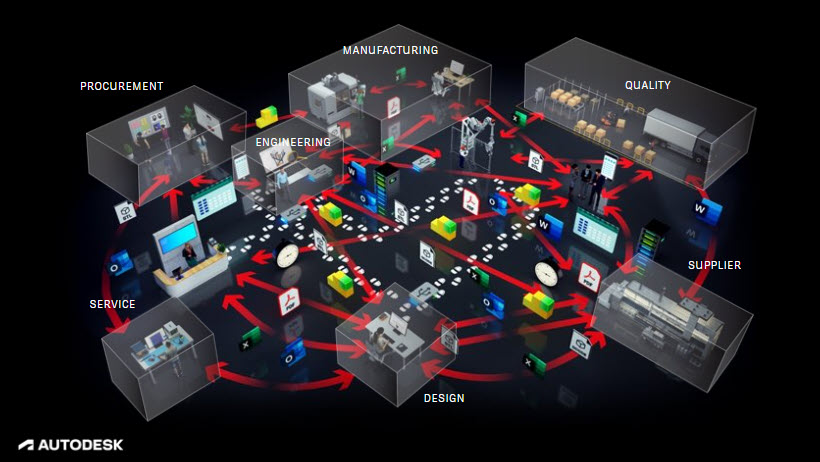
NPI – New product introduction: Understanding the product lifecycle
The lifecycle of a product begins with the initial idea and continues through development, market entry, and eventually retirement. Each stage involves various investments and is influenced by various external factors. These include factors such as market conditions, quality issues, and process inconsistencies. According to a study by Gartner, new product introduction is often delayed by at least one month. Harvard Business Review also reports that 72% of new products fail to hit their profitability targets.
These delays and failures often arise due to companies operating in functional silos, where departments use disparate tools like Excel, email, and shared drives. This siloed approach leads to errors, delays, and inefficiencies. However, by centralizing workflows and ensuring access to up-to-date information, PLM can significantly improve new product introduction processes.
Benefits of NPI manufacturing
New Product Introduction (NPI) manufacturing offers major benefits for accelerating launches and reducing risks in today’s competitive markets.
- Faster time to market: Structured NPI manufacturing processes streamline product development, enabling quicker launches and competitive advantage.
- Reduced development and production costs: Early design validation, cross-functional collaboration, and error minimization help cut costly redesigns and control budgets.
- Higher product quality: Rigorous testing and standardized workflows assure fewer defects and consistent product excellence from concept to manufacturing.
- Lower manufacturing risks: Integrated planning and continual reviews allow teams to avoid launch failures and production setbacks, safeguarding against costly NPI manufacturing mistakes.
- Enhanced collaboration: NPI connects engineering, operations, supply chain, and marketing, leading to more efficient problem-solving and alignment, especially with digital PLM tools like Fusion Manage.
- Easier scaling and variation management: Flexible processes and lifecycle tracking make it easier to ramp up or adapt for product variants, supporting growth over time.
The role of PLM in product development and new product introduction
PLM connects your data, people, and processes across the enterprise, reducing the total investment and time to profitability while increasing total revenue. Here are some ways in which PLM improves product development, supply chain agility, and NPI in manufacturing.
- Centralized data management: PLM centralizes data and process management, ensuring that all teams have access to the latest information when and where it’s needed facilitating better NPI manufacturing processes.
- Improved collaboration: By connecting teams and streamlining communication, PLM fosters better collaboration across departments and with external partners.
- Reduction in low-value tasks: PLM automates routine tasks, freeing up time for high-value activities and reducing errors and inefficiencies during the NPI manufacturing process.

Enhancing new product introduction agility with PLM
Product development agility refers to an organization’s ability to adapt to rapidly changing circumstances, while maintaining high velocity and quality in design, testing, and production. Early decisions in product development, such as part selection and sourcing, set the cost and performance profile of the product. Changes made later in the lifecycle are more expensive and disruptive.
By leveraging PLM, companies can make informed decisions early in the NPI manufacturing process. This reduces the need for costly late-stage changes. PLM provides a comprehensive view of product information, enabling better choices and trade-offs. Early cross-functional collaboration helps identify and address potential issues before they become costly problems.
Streamlining supplier collaboration
Effective supplier collaboration is critical for successful new product introduction (NPI). Autodesk PLM provides a supplier workspace that allows companies to manage approved vendor and manufacturer lists in one place. This includes part numbers, costs, contact information, and other essential details, giving everyone access to the most up-to-date supplier information.
PLM enables direct, secure access for suppliers to product data and structured workflows, allowing for smoother communication and collaboration. This centralized approach reduces the fragmentation and silos of data that often hinder supply chain efficiency.
Improving collaboration across teams
Collaboration while often challenging, is essential in product development. Tech-Clarity reports that engineers waste an average of 20% of their time managing design data, and collaboration issues are a significant challenge for many companies.
Autodesk PLM addresses these challenges by centralizing all product CAD data in one location, providing accessible, real-time dashboards for tracking KPIs, and enabling seamless data sharing across teams and with external partners. This ensures all stakeholders have access to the latest information, reducing errors and delays during new product introduction.
Reducing time spent on low-value tasks
Autodesk PLM automates many low-value tasks, such as data and attribute checks, updating drawing tables, and generating PDFs, freeing up time for more strategic activities. Concurrent engineering allows design teams to work on new iterations of a product in parallel, reducing delays and encouraging innovation. By streamlining processes and centralizing data, PLM minimizes the time spent on manual tasks and enhances overall efficiency during NPI manufacturing.
Autodesk solutions for new product introduction (NPI)
Fusion Manage and Autodesk Vault are powerful tools that can significantly enhance the new product introduction (NPI) process by streamlining data management and improving collaboration.

Autodesk Fusion Manage: Connect People, Processes, and Data
Streamline workflows, enhance collaboration, and gain real-time visibility with PLM.
Autodesk Fusion Manage provides a centralized cloud platform for managing product data, processes, and people. By using Fusion Manage, teams can easily access the most up-to-date information, automate workflows, and ensure traceability and accountability throughout the product lifecycle. This leads to reduced errors, faster decision-making, and improved efficiency, helping companies bring products to market more quickly and cost-effectively during NPI manufacturing. Further, Fusion Manage is configurable and easy-to-use with an open API for integration with other systems like PDM, ERP, and CRM.
Optimize Data Management with Autodesk Vault
Secure, organize, and manage your engineering data efficiently.
Autodesk Vault is a data management tool designed to securely store and manage engineering design data. Vault ensures that all team members are working with the latest versions of design files, reducing the risk of errors and rework. It also facilitates collaboration by allowing multiple users to work on the same project simultaneously, with robust version control and change management capabilities. By integrating Vault with Fusion Manage, companies can create a cohesive environment where design data and PLM processes are seamlessly connected. This further enhances the overall efficiency and agility of NPI manufacturing. Together, these tools provide a comprehensive solution for managing the complexities of product development and ensuring successful product launches.