Murphy bridges design and fabrication with Autodesk Informed Design
The firm is shaping a more connected, data-driven approach to infrastructure delivery—advancing its vision for Industrialized Construction.
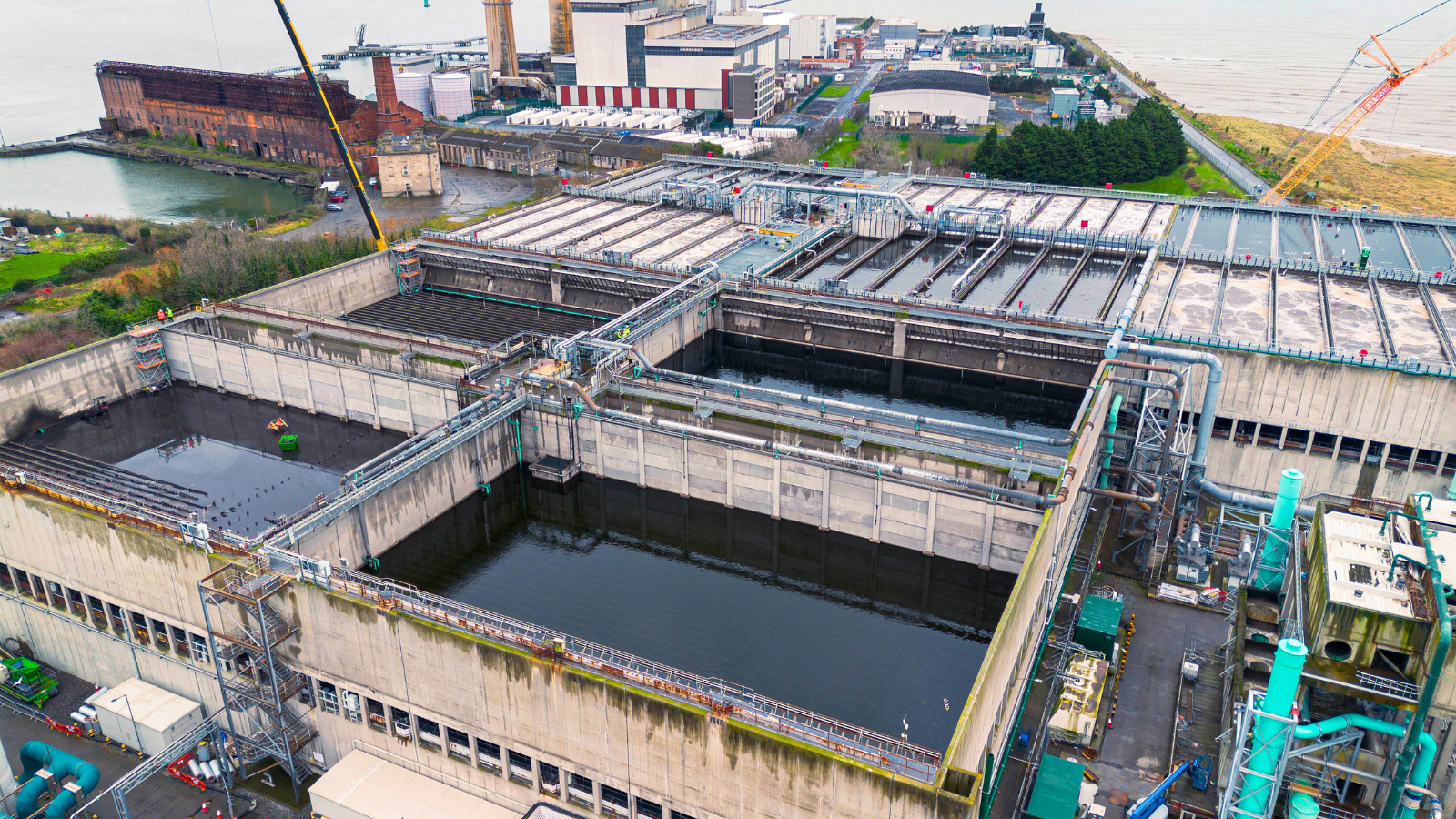
Murphy, an engineering and construction firm, applies Industrialized Construction principles and Autodesk Informed Design to connect Revit and Inventor workflows, improving alignment, reducing rework, and accelerating project delivery.
Standardized, rule-driven models bring mechanical design input earlier in projects and improve model accuracy from the start
Improved collaboration and data accuracy between BIM and fabrication teams
25% faster design-to-fabrication turnaround by reducing rework and manual coordination
Two weeks saved in coordination on a recent wastewater facility in Ireland
40% less time spent on file conversion and cleanup through a connected Inventor–Revit workflow
15–20% lower overhead costs tied to design coordination and version management
Delivering world-class infrastructure, from design to build
Founded in 1951 in London, Murphy is a multi-disciplinary engineering and construction company operating across the United Kingdom, Ireland, North America and Australia. The company delivers complex projects in Transportation, Natural Resources, Energy, and Water, offering both construction and engineering services.
In the Water and Wastewater business unit, Murphy’s BIM and Mechanical Fabrication teams design, build, and maintain water treatment plants across Ireland and the UK, where design and fabrication must be tightly coordinated to meet demanding technical standards.
Autodesk software plays a central role in these workflows. The BIM team relies on Revit, AutoCAD, Navisworks, Plant 3D, and Autodesk Construction Cloud (ACC), while the Mechanical Fabrication team uses Inventor alongside the AEC Collection. Together, these tools support Murphy’s move toward connected and standardized processes that align with its broader Industrialized Construction strategy.
Bridging two worlds of design
Before adopting Autodesk Informed Design, Murphy’s BIM and fabrication teams faced recurring interoperability challenges that slowed coordination between Revit and Inventor. Transferring 3D CAD, STEP, or SAT files often led to lost detail, outdated versions, and inconsistent information at critical stages of design.
According to Shane McDonald, Design Manager at Murphy, the team struggled to integrate fabrication-spec models into Revit until Informed Design connected the two environments and made it possible to bring fabrication data into design much earlier.
Manual file sharing also created version control issues, with models exchanged through email and multiple file formats. “The workflow of exporting a .DWG file from Inventor into a Revit family was extremely cumbersome,” adds Matthew Lenehan, Mechanical Design Engineer. “Sometimes the files had to be cleaned and purged just to make them usable.”
These challenges made it difficult for mechanical designers to contribute during early design development, when their input could have the greatest impact.
Connecting design intent to fabrication detail
Murphy brought its design and fabrication teams closer together with Autodesk Informed Design, creating one connected workflow for Revit and Inventor users.
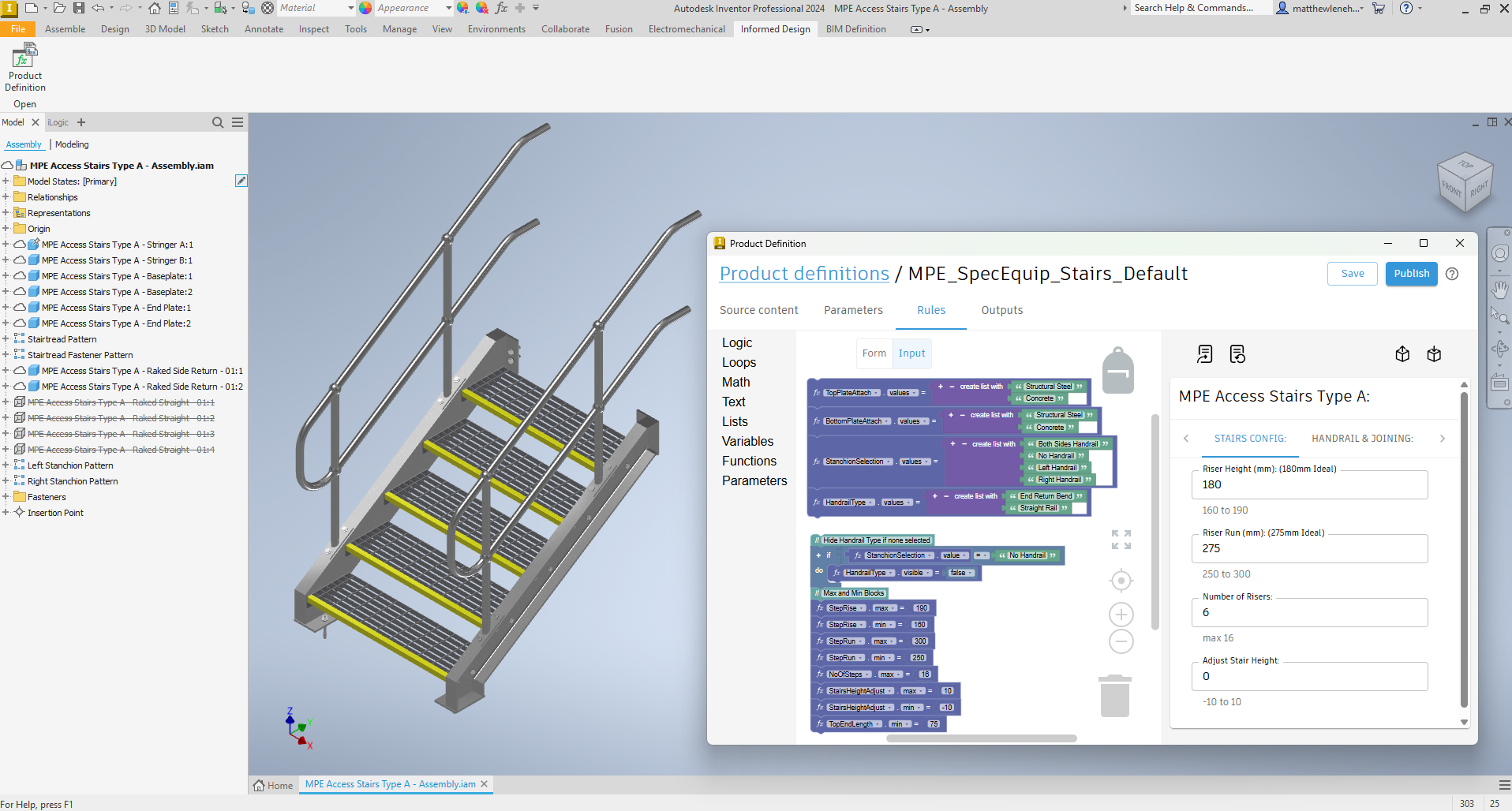
With Informed Design for Inventor, the mechanical team builds configurable models with built-in rules and constraints that define how each component can be configured. Those models are published to ACC, where Revit users access them through Informed Design for Revit.
From there, designers can browse Murphy’s library of fabrication-spec models, customize them within the parameters set in Inventor, and place them directly in their designs. The result is a smoother exchange of data, fewer manual transfers, and consistent geometry from concept through fabrication.
“The best feature for us has been applying rules and constraints in the Informed Design add-in for Inventor,” says Lenehan. “It allows us to control what our Revit users produce early in the design process without needing constant meetings or back-and-forth communication. It also reduces the gap between early-stage Revit modeling and final fabrication modeling, so we are doing less rework and redesign.”
By involving mechanical designers from the start, Murphy now produces more accurate, fabrication-ready models and sets the stage for greater standardization across projects.
Smarter coordination, measurable gains
Integrating Informed Design has simplified Murphy’s workflow between BIM and fabrication.
Time spent on file conversion and cleanup was reduced by about 40%
25% faster design-to-fabrication turnaround with better alignment and fewer revisions
Two weeks saved on coordination for a recent wastewater project in Ireland
15–20% reduction in overhead tied to design coordination and version management
More consistent, reliable models with fewer versioning errors
Murphy also developed an Informed Design library of commonly used models, shortening setup time and improving consistency across projects.
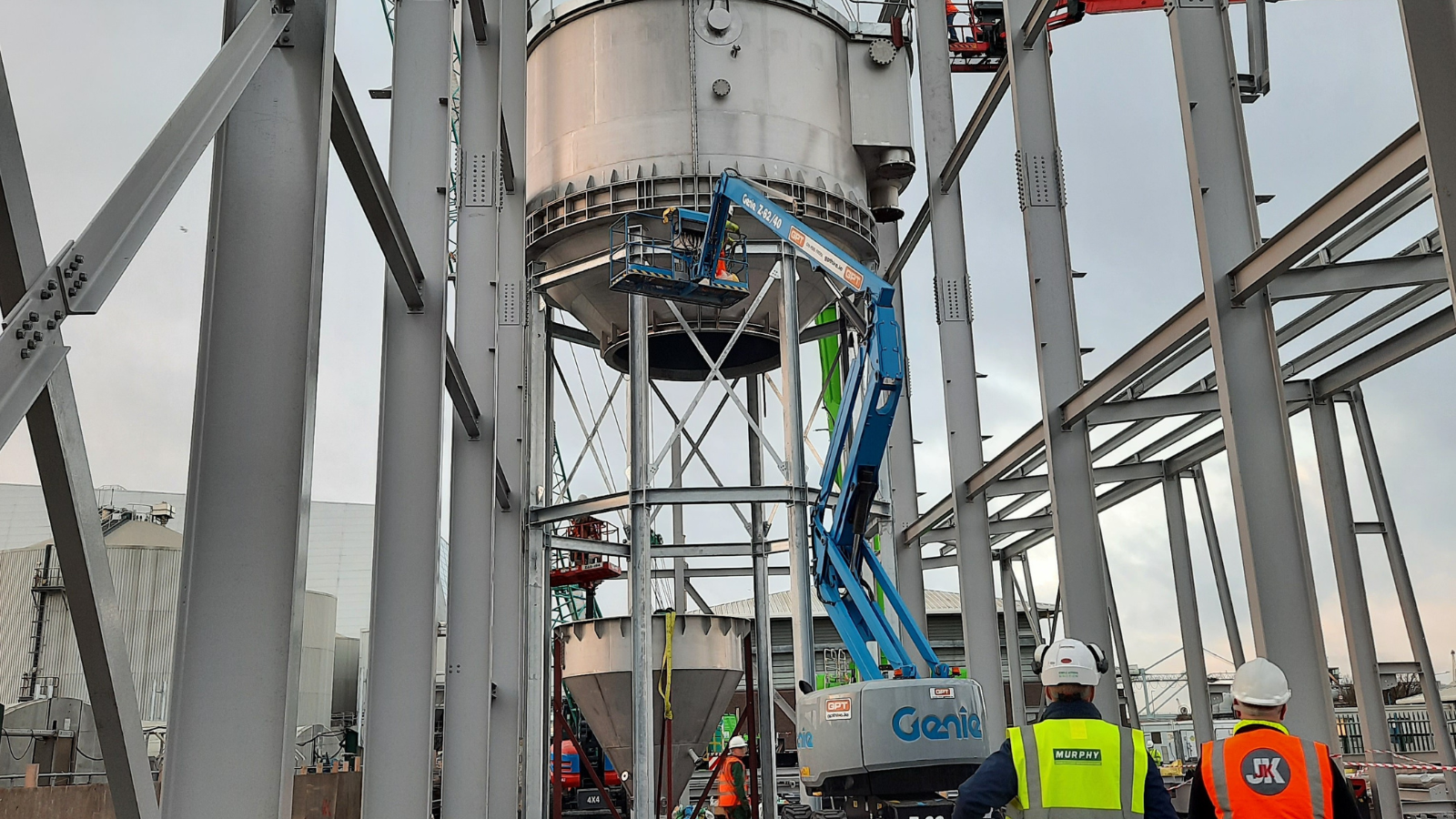
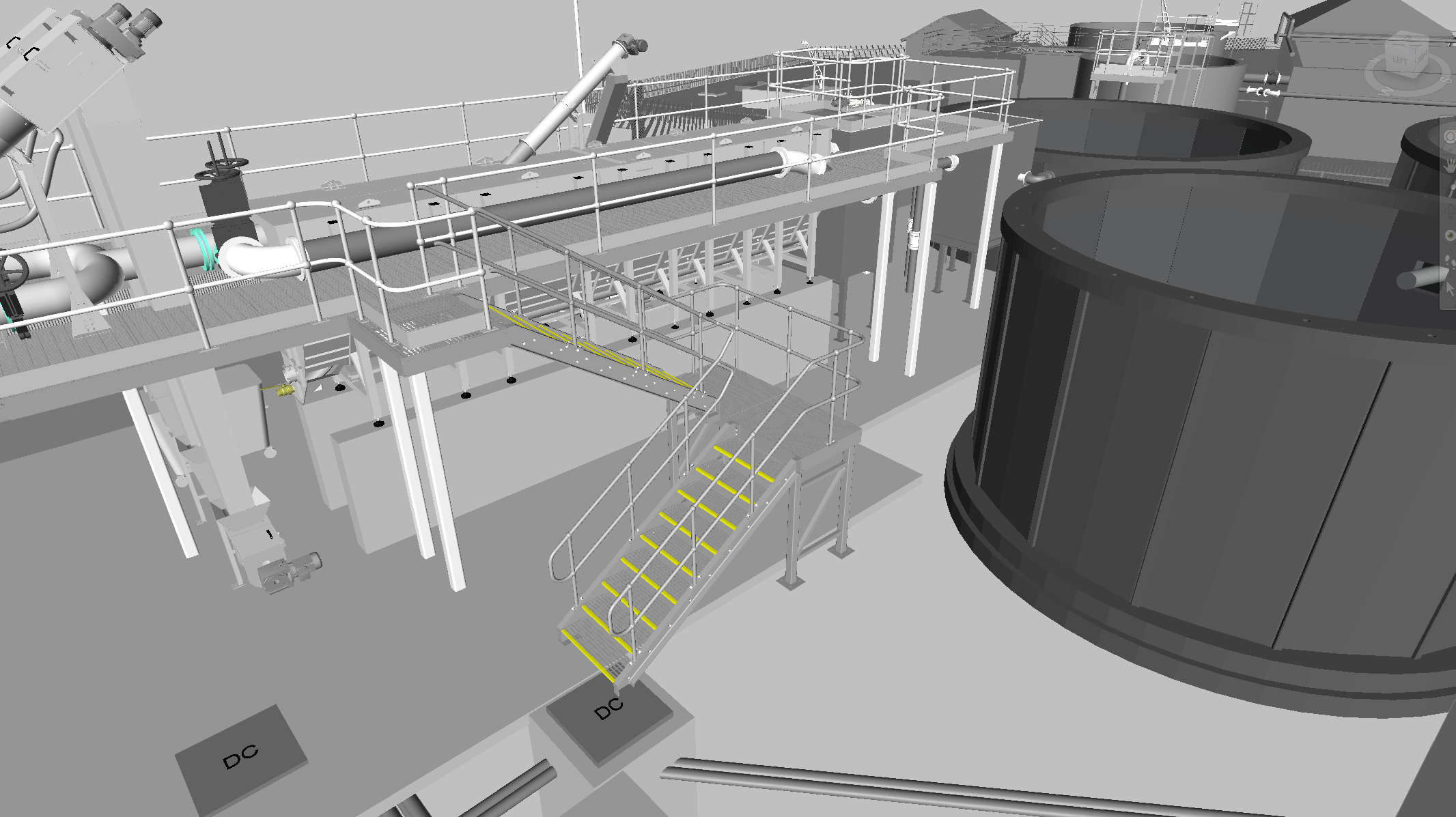
On one wastewater project in rural Ireland, Informed Design helped the team avoid a major late-stage conflict. “Initially we were designing a stair tower in Revit with a low level of detail,” recalls McDonald. “When it reached the fabrication stage, it turned out the design wasn’t feasible and interfered with a civil structure. Informed Design allowed us to catch that kind of issue much earlier and make the change before it caused delays.”
The new workflow also supports Murphy’s commitment to Design for Manufacture and Assembly (DFMA) and prefabrication. “With accurate fabrication models available early, we can plan for offsite fabrication and installation,” explains Michael Kenna, BIM Manager. “That has shortened project timelines and improved program certainty, especially on live water treatment plants where efficiency is crucial.”
“With accurate fabrication models available early, we can plan for offsite fabrication and installation. That has shortened project timelines and improved program certainty, especially on live water treatment plants where efficiency is crucial.”
Collaboration that builds confidence
Informed Design has transformed how Murphy’s BIM and fabrication teams work together. Using a shared data environment in ACC allows both groups have access to accurate, up-to-date models throughout design and fabrication.
“Before, we sent a lot of files to each other through email with no version control,” says Lenehan. “Now, when we insert models from Informed Design into Revit, we can stand behind those models and trust them knowing we designed them ourselves.”
This connected workflow has improved communication, sped up reviews, and strengthened confidence in the data that drives every project.
"Before, we sent a lot of files to each other through email with no version control. Now, when we insert models from Informed Design into Revit, we can stand behind those models and trust them knowing we designed them ourselves."
A connected future for Murphy
Following strong results in the Water and Wastewater Business Unit, Murphy plans to extend the use of Informed Design to other divisions such as Transportation and Energy, where similar coordination challenges exist.
The company sees potential to standardize the connected workflow across multiple teams, improving efficiency and consistency while reducing rework. This expansion will help establish a more unified approach to design and fabrication across the Murphy business.
For Murphy, Autodesk Informed Design has eliminated long-standing interoperability issues between Revit and Inventor, creating a connected, reliable workflow. By enabling mechanical and BIM teams to work from the same set of data, Murphy has improved alignment, reduced rework, and delivered higher-quality designs with greater confidence.
“Informed Design has changed how we work at every stage,” says Michael Kenna. “The interaction between the fabrication and design teams has completely changed, and we’re now collaborating at a much higher level. We’re producing highly detailed models that can be fabricated off-site and installed with greater confidence. It’s a big step forward for how we deliver projects.”
“It’s the first instance of true interoperability between Revit and Inventor,” adds Shane McDonald. “You can generate product definitions at the touch of a button and share information with stakeholders earlier than ever before. For anyone considering Informed Design, I’d say it’s a no-brainer.”
Informed Design continues to help Murphy strengthen collaboration, improve project efficiency, and advance its Industrialized Construction strategy.
“It’s the first instance of true interoperability between Revit and Inventor. You can generate product definitions at the touch of a button and share information with stakeholders earlier than ever before. For anyone considering Informed Design, I’d say it’s a no-brainer."
Learn more
Learn how Autodesk Informed Design connects design and fabrication workflows to help you deliver better outcomes faster. Try it today – get started with Informed Design for Inventor or Informed Design for Revit.