 Shannon McGarry
Discover how optimized material handling strategies—such as zoned presorting, batching, and workflow redesign—can significantly increase warehouse throughput with Autodesk FlexSim.
FlexSim: 3D Discrete Event Simulation Software
Easy-to-use 3D simulation modeling and analysis software with high-end capabilities. Predict and optimize production processes with realistic 3D visuals and data-driven scenarios.
Introduction: Why material handling drives warehouse performance
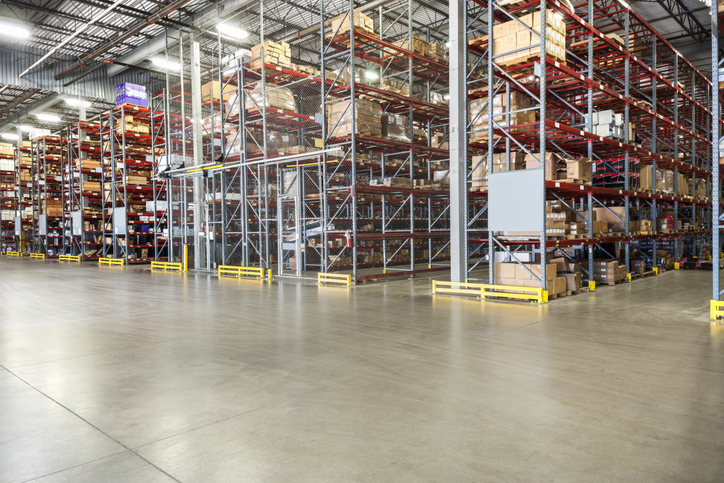
Material handling is one of the most influential factors affecting operational success in today’s distribution centers. In facilities that span hundreds of thousands of square feet, every second counts—from how operators travel, to how items are batched, to how sorting zones are organized.
Optimizing material handling strategies helps warehouses:
- Increase throughput
- Reduce congestion
- Improve operator utilization
- Lower travel time
- Streamline sortation and picking
- Enhance scalability without additional labor
However, choosing the best approach isn’t always straightforward. That’s where simulation becomes a powerful decision‑making tool.
This article examines multiple material handling strategies through simulation to identify the most effective approach for boosting throughput.
The challenge: Identifying inefficiencies in manual sorting workflows
A major retailer managed a large distribution center with a manual sorting process:
- Operators picked items from a gravity roller conveyor
- Each item was transported to its designated pallet area
- Significant travel and manual touchpoints limited efficiency
Warehouse leaders suspected that alternative material handling strategies could boost throughput, but needed data—not assumptions—to decide.
Simulation offered a safe, accurate way to test new workflows before making operational changes on the floor.
Simulation study: Three material handling scenarios analyzed
Using a detailed warehouse model, three strategies were evaluated to understand their impact on throughput and operator efficiency.
Scenario 1: Single‑item pick and place
This scenario represented a modest adjustment to the existing process:
- Operators picked one item from the conveyor
- Pushed it forward
- Transported it to the assigned pallet destination
Limitations:
- High operator travel time
- Low batching efficiency
- Significant idle time between tasks
Outcome: Throughput improvements were minimal because operators spent more time walking than sorting.
Scenario 2: Cart‑based batch material handling
The second scenario introduced multi‑item batching using carts:
- Operators picked five items at a time
- Loaded them into a cart
- Moved the cart to pallet destinations for unloading
Advantages:
- Reduced aisle traffic
- Fewer individual transport trips
- More efficient batching
Remaining constraints:
- Operators still traveled long distances
- Bottlenecks emerged in shared travel paths
Outcome: An improvement over single‑item handling but still constrained by travel-heavy workflows.
Scenario 3: Zoned presorting for optimized material handling
The third concept fundamentally reimagined the process:
- Incoming items were presorted into zones
- Operators worked within dedicated zones
- Material came to them instead of requiring them to roam
- Travel was nearly eliminated
Benefits:
- High operator utilization
- Minimal congestion
- Predictable, controlled workflows
- Balanced workload distribution
Outcome: This scenario produced a significant increase in throughput—far outperforming the previous methods. When implemented in the real facility, it even exceeded the simulation’s performance expectations.
Key insights: What this study reveals about material handling optimization
- Reducing operator travel drives the biggest gains: Travel time is a hidden throughput killer. Minimizing it produces immediate improvements.
- Zoning creates efficient, predictable workflows: Operators perform best when confined to compact, well-defined areas.
- Batching improves efficiency – but only to a point: While carts help, they don’t match the gains from a fully redesigned layout.
- Material handling processes must be tested prior to implementation: Physical changes are costly; simulation prevents expensive trial‑and‑error.
- Continuous optimization is essential: Warehouse demands evolve—material handling strategies must evolve too.
Why simulation is essential for modern warehouse optimization
Simulation empowers warehouse leaders to:
- Test layout concepts safely
- Quantify throughput gains
- Identify operator bottlenecks
- Validate real-world performance
- Reduce financial and operational risk
It provides a level of insight that is simply not possible through spreadsheets or observational analysis alone.
Autodesk FlexSim: The ideal platform for material handling optimization
Modern warehouses need modern tools—and Autodesk FlexSim stands out as the premier solution for optimizing material handling strategies.
Why Autodesk FlexSim?
- Powerful 3D and discrete-event simulation to model even the most complex workflows
- Accurate material handling behavior modeling for conveyors, operators, AMRs, batching, routing, and more
- Scenario comparison tools to evaluate throughput, travel time, resource utilization, and congestion
- Scalable models that work for small facilities to multi‑building distribution centers
- Fast iteration cycles enabling continuous improvement
- Data-backed decision making that reduces risk and increases operational confidence
Whether evaluating new sortation layouts, operator travel paths, workflow zoning, automation investments, or batching strategies, Autodesk FlexSim gives you the clarity needed to select the optimal approach.
The strongest performing strategy in this case study—zoned presorting—was identified and validated because of simulation. And Autodesk FlexSim is built precisely for this type of high‑value analysis.
If your goal is to boost throughput, improve operator flow, reduce congestion, or validate warehouse design changes, Autodesk FlexSim is the solution that transforms “what if?” into clear, actionable insight.