 Shannon McGarry
A digital factory integrates cloud platforms, connected data, and automated workflows to boost throughput, streamline operations, and enable manufacturers to adapt quickly for smarter, more efficient production.
Digital factories are quickly becoming the foundation of modern manufacturing, thanks to powerful cloud platforms and integrated workflow management tools. Let’s take a look at the importance of the digital factory and how Autodesk solutions can help improve manufacturing agility.
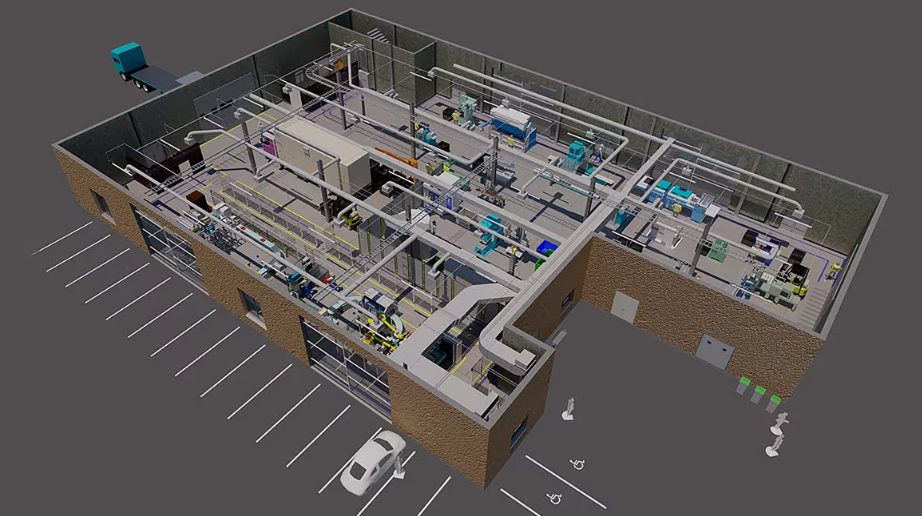
The importance of a digital factory
Manufacturing and construction organizations are looking for one thing above all: increased throughput. A successful digital factory maximizes output and operational transparency by intelligently allocating resources, minimizing downtime, and optimizing quality control. this is acheived through a connected ecosystem that integrates building, design, and manufacturing data for continuous feedback and accelerated innovation.
The four pillars of the digital factory journey
Autodesk’s approach breaks the digital factory journey into four core pillars:
- Plan: Capacity studies, feasibility assessments, and project specification management come first—whether for a new “Greenfield” facility or optimizing existing operations.
- Design: The move from siloed 2D drawings to collaborative 3D models accelerates updates and simplifies coordination with stakeholders and contractors.
- Build: Connected workflows streamline asset commissioning, construction coordination, real-time issue tracking, and documentation management across teams.
- Operate: From digital twins to manufacturing execution systems (MES), cloud-based platforms centralize asset maintenance, production tracking, and on-the-fly problem resolution.
Why unified data matters in the digital factory
A key challenge for many organizations remains operational silos—where planning, design, build, and operation data is fragmented. Unified platforms, like Autodesk Construction Cloud and Fusion Operations, give every stakeholder access to a “single source of truth.” This leads to better collaboration, data security, and version control. Stakeholders can update files, track versions, assign permissions, and interact with models in real time, eliminating confusion and costly rework.
Integrated workflows and asset intelligence
Autodesk’s digital factory ecosystem supports everything from 2D AutoCAD drawings to 3D Inventor and Revit models. This makes it easy to transition between project phases while preserving asset tags, geometry, and metadata.
- Drag-and-drop libraries and bi-directional sync mean any change is instantly propagated in both 2D and 3D.
- Point cloud scans, powered by AI, turn “as-is” documentation into actionable layouts for expansion or renovation, regardless of the original software or scan file type.
- Real-time dashboards and simulation tools help teams visualize bottlenecks, optimize process flows, and validate capacity increases pre-build.
Turn data into action: Unlock the power of end-to-end factory collaboration
Boost productivity and reduce operational risks by connecting every phase of your digital factory lifecycle—without adding complexity. When all stakeholders work from shared data, you can:
- Track and resolve issues in real time, keeping key projects on schedule and eliminating expensive rework.
- Empower teams to update, review, and manage documentation centrally. Your maintenance leads, engineers, and managers will always have the latest asset info and manuals at their fingertips—streamlining compliance and troubleshooting.
- Automate asset tracking and status updates across locations. Inventory, inspection schedules, spare parts lists, and references link to specific equipment. This simplifies maintenance and eliminates wasted hours searching for data.
- Sync workflows with your ERP or CMMS system for proactive machine service, lowering capital costs and minimizing downtime.
- Set up automated checklists and forms for preventive maintenance, ensuring every asset gets timely attention and prolonging effective production capacity.
By focusing on connected data and collaborative workflows in the digtial factory, manufacturers and contractors can dramatically improve throughput and efficiency—ultimately keeping pace with today’s demands for smarter, faster, and more flexible factories.