Construction teams collect an enormous amount of information every day, yet much of it never makes its way into decisions that improve project outcomes. This is particularly true for construction materials. The data exists, but it's rarely captured, connected, and used in ways that help teams make smarter, more sustainable decisions.
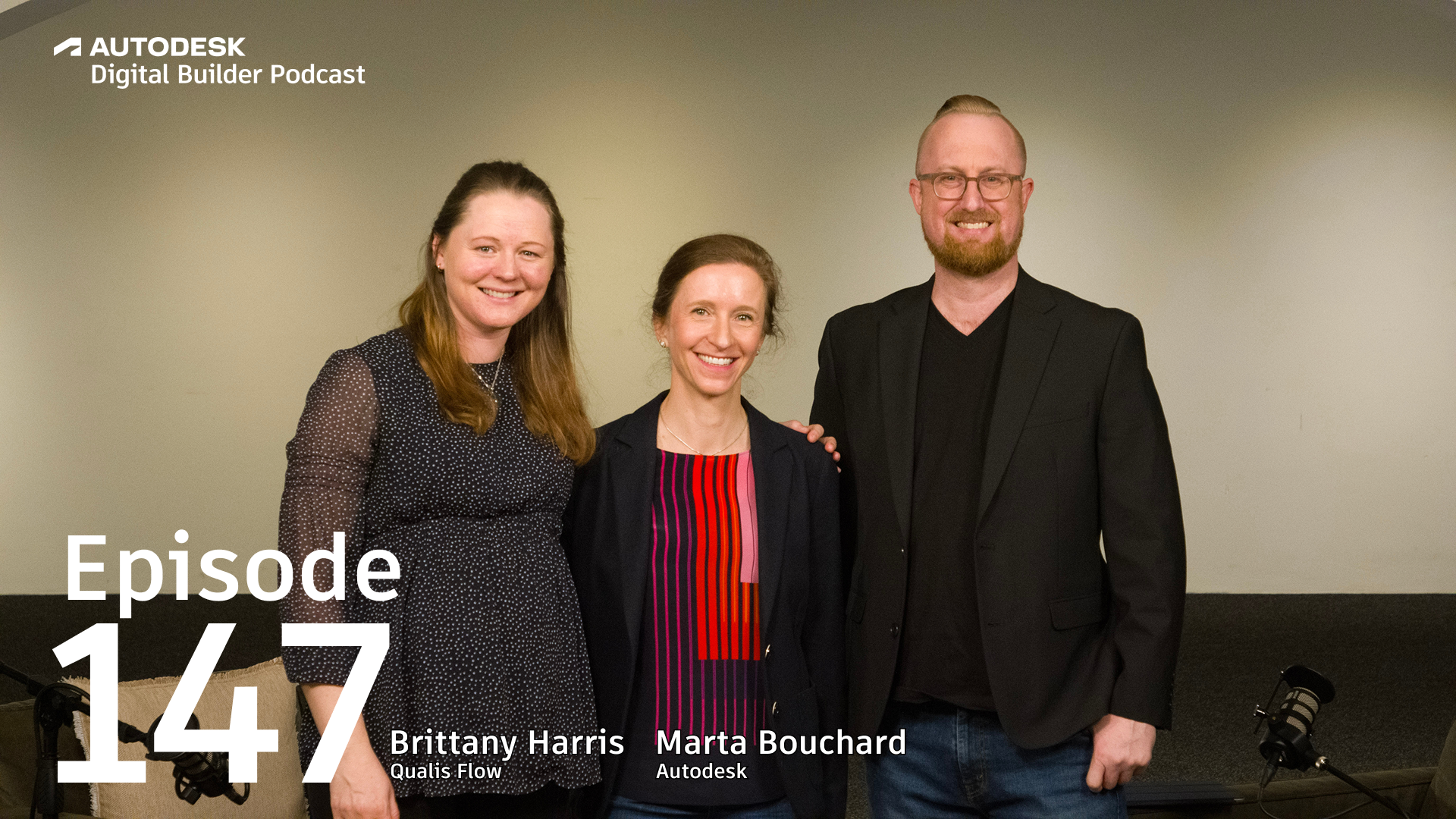
In this episode of the Digital Builder podcast, I sit down with Brittany Harris, CEO and Co-founder of Qualis Flow (aka Qflow), and Marta Bouchard, Director of Sustainability Solutions at Autodesk, to discuss how better jobsite data can not only reduce rework and improve accountability but also strengthen sustainability efforts and help create more valuable assets long after construction is complete.
We discuss:
QFlow began with a problem that Brittany and her co-founder, Jade, experienced firsthand. Brittany was working as a civil engineer at a major design consultancy, while Jade was delivering large infrastructure projects in the field.
Though they worked on opposite ends of the construction process, they shared what Brittany describes as a "love-hate relationship" with the industry.
"Construction is this amazing industry that literally builds these incredible buildings, but it's inefficient, and it's not sustainable," she says. As a designer, Brittany spent years trying to make projects more sustainable and efficient, only to hand them off to contractors and hope they were built as intended.
Meanwhile, Jade was on site collecting information about what was happening during construction. The problem was that much of that data ended up buried in filing cabinets instead of helping teams improve outcomes.
After years of conversations, the pair decided to do something about it. They founded QFlow in 2018 with a simple question: How can construction become more sustainable and more efficient?
The answer kept leading them back to one area: materials.
“We interviewed hundreds of people across the industry, and the thing that kept coming up was materials, and the issue of not always knowing what's on site or whether it's the right stuff. And so, we end up doing a lot of rework because we build with the wrong things,” Brittany explains.
She continues, "If we can fix materials management, then we can have a really material impact on the construction industry's footprint.”
So, how does QFlow work? It starts with a simple process. Site teams take a photo of a delivery slip when materials arrive or a waste transfer note when materials leave the project.
From there, machine learning and AI extract the information, structure the data, and check it against project requirements. Teams can identify missing information, compliance issues, incorrect specifications, or potential substitutions.
What began as a way to support sustainability reporting soon found broader applications. Finance teams started using the data to verify invoices. Quality teams used it to track material compliance and safety requirements. Over time, QFlow discovered that once reliable material data is available, it can support decisions across cost, quality, scheduling, and sustainability.
As Brittany puts it, "This data just does all of these things once you put it into people's hands."
Construction projects generate a massive amount of information but capturing and using that information effectively is another story.
According to Brittany, most teams still rely on a surprisingly familiar process: "Lots of bits of paper and a very stressed-out graduate trying to collect all those bits of paper and type them into spreadsheets."
While some organizations have adopted reporting platforms, spreadsheets remain the primary tool for many teams. The problem isn't just how the data is collected. It's what happens afterward.
Material data is often gathered for compliance and reporting purposes, but then largely forgotten. As Brittany puts it, the process becomes "tick the box of we've done our compliance, but we can put it in a bucket and forget about it."
Material data also has to navigate a maze of people, processes, and technologies.
As Marta explains, construction projects involve countless stakeholders, from architects and builders to specifiers, consultants, and specialty trades. Each group works differently, uses different tools, and manages information in its own way.
"When you pull back the curtain and know how much goes into that, there is so much room for error," she says.
At the same time, the amount of information teams are expected to track has increased dramatically.
Carbon reporting, material sourcing, safety documentation, and regulatory requirements all add new layers of data collection. What may have once required a single form at the end of the day can now involve information spread across multiple systems.
"The amount that these teams are having to report, capture, and verify throughout the whole process has gone up tenfold, probably even more," says Brittany.
The challenge with implementing more sustainable efforts doesn’t stem from a lack of interest. It’s usually because people don't have clarity on where to start and what to do with the information once they have it.
According to Marta, sustainability often requires specialized expertise that not everyone feels they have.
"There’s some subject matter expertise that's needed," she explains. Team members may not feel they have the training or knowledge to act confidently, which can make sustainability initiatives feel intimidating from the outset.
Even when teams want to make informed decisions, finding the right information can be a challenge.
Project teams may need to conduct research, track down documentation, or consult specialists before they can move forward. That extra effort can create friction, particularly on projects where folks are already managing tight schedules and competing priorities.
Construction projects balance countless objectives, from cost and schedule to safety, quality, and performance.
As Marta points out, sustainability can sometimes feel like "one more thing that you have to manage."
The solution isn't treating sustainability as a separate initiative. Instead, it needs to become part of the broader project planning process. The more teams can integrate sustainability into everyday decision-making, the easier it becomes to turn goals into measurable outcomes.
When it comes to sustainability, data collection, and long-term asset performance, owners have more influence than anyone else in the project lifecycle. As Marta points out, owners are often the "orchestrators of time and budget and objectives," and they ultimately make the final decisions about what success looks like.
Set expectations early
Many owners are already establishing sustainability goals, whether they're responding to regulations or pursuing broader corporate initiatives around carbon reduction, energy efficiency, or environmental performance.
That said, how those goals are managed can vary from one firm to the next.
Some projects treat sustainability as a compliance exercise, where teams compile documentation at the end of a project to prove they met a requirement. Others take a more proactive approach.
"Let's start at the beginning. Let's set this performance target. Let's track it throughout. Let's make sure we're meeting these milestones," says Marta.
That shift from end-of-project reporting to continuous measurement can make a significant difference in outcomes.
Define the data you expect
From Brittany’s point of view, one of the industry's biggest challenges is uncertainty around responsibility.
Owners often assume contractors will handle sustainability and reporting requirements. Contractors, meanwhile, may wait for owners to define those expectations.
The result is that critical requirements around data, quality, and sustainability can fall through the cracks.
"You end up with no one saying, 'This is what we want. This is the outcome we need,'" she explains.
Think beyond construction
Owners are also the ones who will operate, maintain, sell, or eventually repurpose the asset.
"If you don't have an accurate picture of what went into that building," says Brittany, "it's going to cost you more to run."
Detailed project data creates long-term value. It can support digital twins, improve energy management, simplify renovations, and make it easier to reuse materials in the future.
As Brittany puts it, "Green is green." Reducing waste, improving efficiency, and lowering costs often go hand in hand. The owners who recognize this are in the best position to drive meaningful outcomes, both during construction and long after project handover.
The immediate benefit of living in a world where materials and waste data is consistently captured? Teams are less likely to run into preventable headaches.
Fewer surprises during construction
Harris shares an example of a project that accidentally received double its insulation order. The materials were craned onto the roof before anyone realized something was wrong.
That led to another road closure, another crane rental, and a bill that ran into the hundreds of thousands of dollars.
In another case, the wrong aggregate was installed beneath a warehouse. The issue wasn't discovered until after the building was occupied, forcing part of the facility to close and resulting in more than $1 million in lost revenue claims.
With better materials tracking, many of these issues can be identified before they become expensive problems.
More value over the life of the asset
That said, the bigger opportunity may be decades away.
When owners have a detailed record of the materials used in a building, they gain much more flexibility when it's time to renovate, repurpose, or deconstruct the asset.
Instead of guessing what's inside the building, teams can make informed decisions about what can be retained, refurbished, reused, or resold.
That opens the door to circular economy initiatives while reducing the need for new materials.
As Brittany explains, once you already know what's in the building, you can avoid much of the costly auditing and investigation that typically comes with deconstruction.
Ultimately, it's about creating value that lasts beyond project delivery. Marta frames it really well: “You’re transferring value today and preparing for the value for tomorrow."
Digital Builder is hosted by me, Eric Thomas. Remember, new episodes of Digital Builder go live every week. Listen to the Digital Builder Podcast on:
or wherever you listen to podcasts.