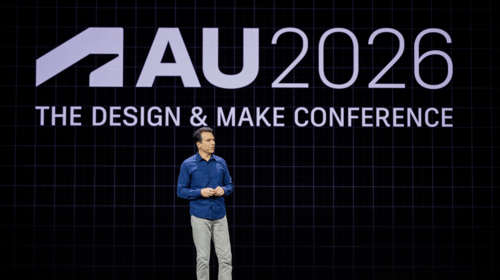
Dell at AU 2026: Bringing agentic AI to the design workstation
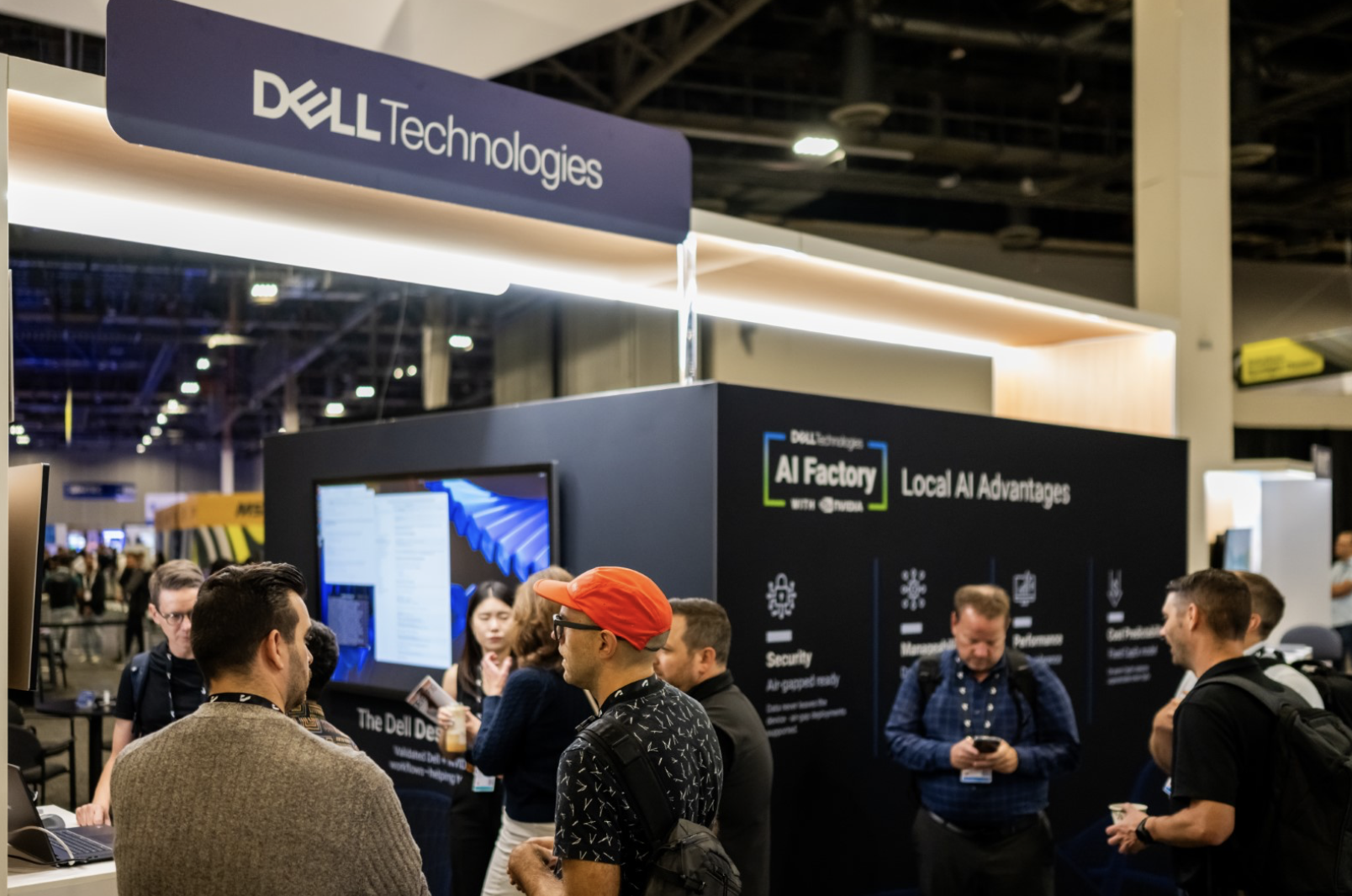
AI is changing how design, engineering, and construction teams think about computing. Dell Technologies, together with NVIDIA, AMD, and Intel, demonstrated this shift at AU 2026, from more efficient systems for demanding CAD and BIM workloads to large language models and agentic AI running locally.
More performance with less power
Design and engineering professionals have traditionally relied on powerful workstations to handle demanding CAD and BIM workloads. Advances in power efficiency are changing that equation.
New mobile and small form factor systems can deliver the performance these workflows require while consuming less power and generating less heat. For users, that means systems that can run cooler and longer while providing greater flexibility to work from virtually anywhere.
Dell Technologies and its technology partners showcased how improvements in power-to-performance can support demanding design and engineering workflows in increasingly compact and mobile systems.
Bringing AI to the desktop
An equally important shift is happening with AI. Large language models have largely been associated with cloud-based services. Increasingly, capable models can run locally on workstation-class hardware, bringing AI closer to the applications, data, and people doing the work.
Dell Technologies showcased local LLMs and agentic AI running on the Dell Deskside Agentic AI Platform. The demos also highlighted the advantages of local AI, including security, manageability, performance, and cost predictability. Running AI locally gives design and engineering organizations another approach to deploying AI. It has the potential to address some of the operational expense and data governance considerations associated with cloud-based AI while enabling organizations to keep certain workloads closer to their data and existing workflows.
For architecture, engineering, construction, and design organizations, this represents an important inflection point. AI no longer has to be thought of exclusively as a service running somewhere in the cloud. Increasingly, it can become part of the local computing environment.
Beyond chatbots to workflow automation
Perhaps the greatest opportunity for AI in design and engineering isn’t another chatbot. It’s workflow automation. CAD managers, BIM managers, design technologists, and other highly skilled experts often spend significant amounts of time on repetitive processes. These activities may require domain knowledge, but they don’t always require the creative judgment and expertise that make these professionals so valuable.
Agentic AI creates an opportunity to change that. Rather than replacing designers and engineers, AI agents can help automate repetitive activities, coordinate multi-step processes, and assist with routine workflows. The goal is straightforward. Give skilled professionals more time to focus on the work that benefits most from their expertise.
And when those agents can operate locally, organizations have greater flexibility in deciding where their AI workloads run and where their data resides.
The workstation is evolving
Taken together, these developments point toward a broader evolution of the design and engineering workstation. The next generation of systems isn’t simply about adding more computing power. It’s about delivering that performance more efficiently while introducing a new layer of local intelligence.
The technologies demonstrated by Dell Technologies, NVIDIA, AMD, and Intel at AU 2026 showed how that combination can support today’s CAD and BIM workloads while opening the door to a new generation of AI-assisted and agentic workflows.
The workstation has always been where designers and engineers turn ideas into reality. Now, it has the potential to become an active participant in getting that work done.