Lenovo at AU 2026: Building the path to AI from anywhere
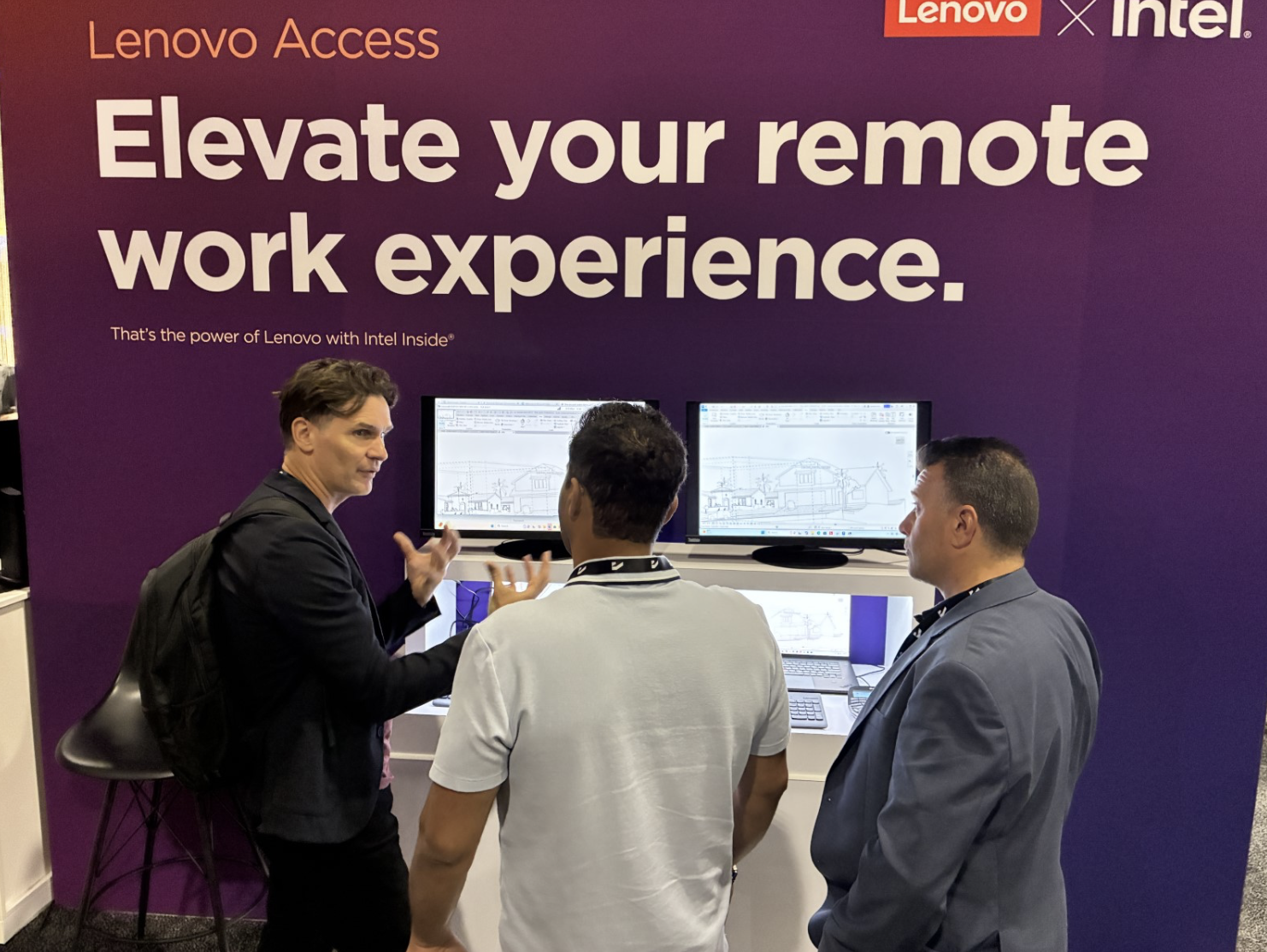
AI is creating new possibilities for architecture, engineering, and design teams, but it is also raising practical questions. Where should AI workloads run? How can organizations give teams room to experiment while protecting project data and intellectual property? And how can they provide access to the compute people need without allowing cloud costs to become unpredictable?
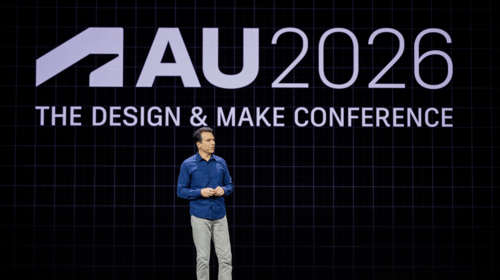
Lenovo brought these questions to AU 2026, demonstrating a hybrid approach that brings together Autodesk cloud services, AI PCs powered by Intel® Core™ Ultra processors, local AI inference, remote workstations, and centralized AI resources.
The idea is not that every workload belongs in one place. It is about giving organizations greater flexibility to match the workload with the right computing environment.
AI from anywhere
These ideas also came together in Lenovo’s AU 2026 session, “AI from Anywhere: Building Secure Hybrid AI Workflows for Autodesk Users.” The session explored how architects, engineers, and designers can build AI capabilities using a hybrid model while balancing performance, flexibility, security, governance, and cost.
A key theme was creating safe environments for AI experimentation. By combining local AI, remote workstations, centralized AI resources, and cloud services, organizations can give teams opportunities to test ideas using real project data, evaluate business value, and then scale the workflows that prove successful. Just as importantly, the approach gives organizations a framework for considering where different AI workloads should run based on factors such as performance, scalability, data privacy, intellectual property, governance, and cost.
Work from anywhere without leaving performance behind
AEC teams are increasingly distributed across offices, homes, client locations, jobsites, and wherever projects take them. This creates new challenges for compute-intensive workflows such as 3D CAD, BIM, simulation, and rendering.
Traditional approaches can introduce trade-offs. Public cloud desktops can bring recurring costs and variable performance for demanding workloads. Traditional VDI relies on shared resources. Mobile workstations can put sensitive project data on endpoints. And maintaining separate office and home machines can create synchronization and version-management challenges.
Lenovo’s approach turns that model around. Instead of bringing the workstation to the user, the user can connect to the workstation. A dedicated physical workstation can remain centralized in a data center or server room while designers and engineers access its CPU, GPU, memory, and storage remotely. The computational work happens on the workstation, while encrypted visual data is streamed to the user’s device.
Bringing AI into the hybrid model
That same thinking becomes increasingly relevant as AI enters design and engineering workflows. Organizations now have more choices about where AI runs. Some tasks can benefit from local AI inference on an AI PC. Others may require the performance of a dedicated workstation or centralized AI resource. Still others may be better suited to cloud-based AI services.
A hybrid model allows organizations to consider performance, scalability, security, data governance, and cost when deciding where each workload belongs. Lenovo’s workstation portfolio reflects that range, spanning mobile systems and compact ThinkStation devices through high-performance systems designed for demanding visualization, simulation, multi-GPU, and AI development workloads.
Creating a safer space for AI experimentation
One of the most interesting opportunities is what this approach could mean for experimentation. Designers and engineers need opportunities to explore how AI can improve real workflows. But experimentation using real project information can introduce questions around intellectual property, privacy, governance, and where that data resides.
A hybrid architecture gives organizations a framework for creating controlled environments where teams can test ideas, understand their business value, and determine which workflows are worth scaling.
Centralization can play an important role here. By giving users access to dedicated workstation resources remotely while keeping project data centralized under IT control, organizations can provide greater flexibility while maintaining control over sensitive information.
The future isn’t local or cloud. It’s hybrid.
The conversation around AI infrastructure can sometimes sound like a choice between local and cloud computing. For design and engineering organizations, the more useful question may be which environment makes sense for each workload.
Local AI can put intelligence directly in the hands of users. Remote workstations can provide access to dedicated high-performance compute while keeping data centralized. Centralized resources can support more demanding workloads. And cloud services can provide reach and scalability when those characteristics are needed.
The opportunity is to connect those environments into an experience that lets designers, engineers, and architects work and experiment from virtually anywhere.