
CAM software for CNC machining
CAM software for CNC machining

What is CNC programming?
What is CNC programming?

What is CAM software for CNC?
What is CAM software for CNC?

What is the role of a CNC programmer?
What is the role of a CNC programmer?
Automation and precision
Automation and precision
Increased efficiency
Increased efficiency
Flexible manufacturing
Flexible manufacturing
Consistency and reproducibility
Consistency and reproducibility
Reduction of human error
Reduction of human error
Advanced machining capabilities
Advanced machining capabilities



What is g-code?
What is g-code?

Roteadores CNC
Roteadores CNC
Os roteadores CNC são normalmente usados em trabalhos de madeira e podem variar em tamanho e estilo, desde uma configuração de bancada de 3 eixos até uma configuração de sala de 5 eixos.
Os roteadores CNC são normalmente usados em trabalhos de madeira e podem variar em tamanho e estilo, desde uma configuração de bancada de 3 eixos até uma configuração de sala de 5 eixos.

Cortadores a plasma
Cortadores a plasma
Cortadores de plasma CNC são utilizados para cortar metais condutores utilizando um jato de plasma quente. Essas máquinas CNC oferecem alta precisão a baixo custo.
Cortadores de plasma CNC são utilizados para cortar metais condutores utilizando um jato de plasma quente. Essas máquinas CNC oferecem alta precisão a baixo custo.

Cortadores a laser
Cortadores a laser
Podem ser usados cortadores a laser para cortar vários tipos e espessuras de materiais, até mesmo metal, dependendo da potência do laser.
Podem ser usados cortadores a laser para cortar vários tipos e espessuras de materiais, até mesmo metal, dependendo da potência do laser.

Tornos CNC
Tornos CNC
Tornos CNC rotacionam a peça de trabalho e aplicam várias ferramentas de corte para criar peças com um perfil de revolução. Eles são muitas vezes programados manualmente.
Tornos CNC rotacionam a peça de trabalho e aplicam várias ferramentas de corte para criar peças com um perfil de revolução. Eles são muitas vezes programados manualmente.

Máquinas de fresamento/torno
Máquinas de fresamento/torno
Máquinas de fresamento/torno combinam fresamento e torneamento num único centro de usinagem. Essas máquinas podem criar perfis rotacionados como tornos.
Máquinas de fresamento/torno combinam fresamento e torneamento num único centro de usinagem. Essas máquinas podem criar perfis rotacionados como tornos.

Fresadoras
Fresadoras
Fresadoras são versáteis e vêm em várias configurações, possibilitando fresamento de 2 a 5 eixos.
Fresadoras são versáteis e vêm em várias configurações, possibilitando fresamento de 2 a 5 eixos.

Fresamento multieixos
Fresamento multieixos
Fresamento multieixos é a adição de até dois eixos rotacionais a uma configuração de fresamento de 3 eixos. Isso permite o acesso a uma parte maior da peça.
Fresamento multieixos é a adição de até dois eixos rotacionais a uma configuração de fresamento de 3 eixos. Isso permite o acesso a uma parte maior da peça.

Cortadores a jato de água
Cortadores a jato de água
Os cortadores a jato de água CNC combinam água de alta pressão com um meio abrasivo para cortar peças.
Os cortadores a jato de água CNC combinam água de alta pressão com um meio abrasivo para cortar peças.
Early beginnings of CNC
Early beginnings of CNC

What is the CAM software for CNC programming software?
Autodesk Fusion is a cloud-based 3D modeling, CAD, CAM, CAM, and PCB software platform for product design and manufacturing. It provides integrated CAD and CAM, CNC programming tools for 2D, 2.5D, 3-axis, 3+2, and 5-axis machining solutions. A range of subscription options exist, including a free option for personal use, a commercial subscription ($680 per year), and a range of Extensions to unlock additional technology to meet the needs of more advanced applications.
What is CNC machine programming?
Computer numerical controlled (CNC) machine programming is a process whereby instructions are combined together to define how a CNC machine will move and function. By carrying out these instructions, the CNC machine will convert some form of raw material into a finished product. CNC programming can be used to drive a wide variety of different machine types, including; routers, mills, lathes, mill-turn and turn-mill machines, multitasking centers, wire EDMs (electrical discharge machining), and industrial robots.
How do you program a CNC machine?
Regardless of the type of machine being used, the instructions are typically provided in one of two ways, either; 1) via manual data input (MDI) using some kind of human interface built into the CNC machine, or 2) by producing a digital file using offline CAM (computer-aided manufacturing) software.
In recent years, there has been a substantial increase in part complexity. This, combined with an increasing pressure to improve part quality and increase overall operations effectiveness (OOE) has resulted in the most manufacturers moving away from manual (MDI) CNC programming and investing in CAM software.
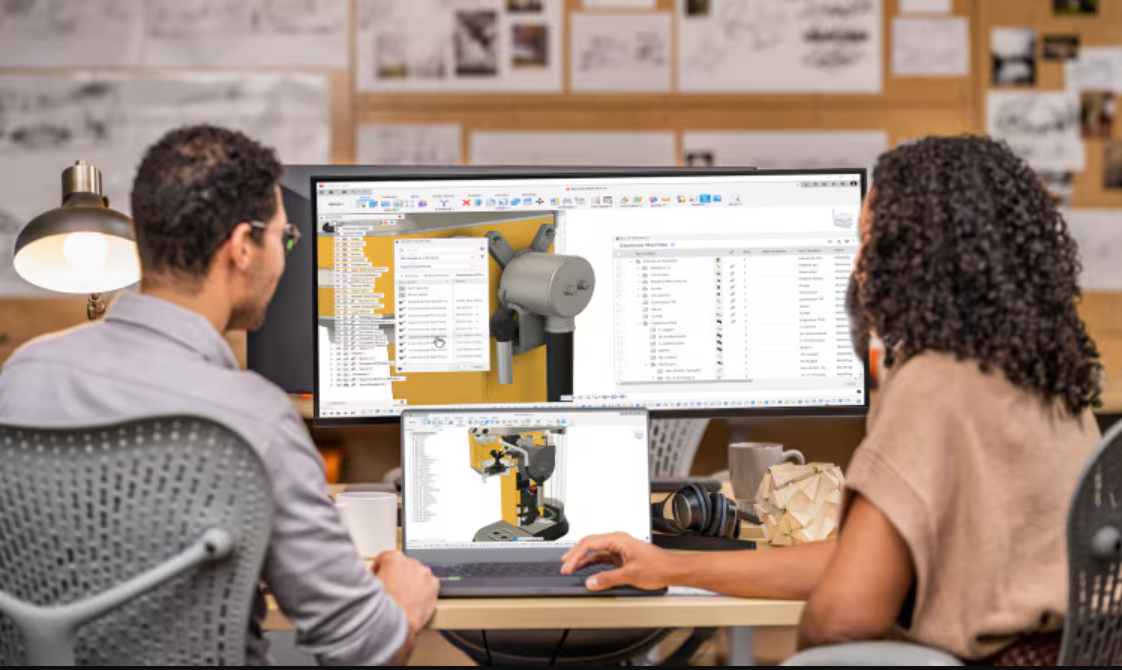
CAM software, such as Autodesk Fusion 360, is used to create a digital file (NC program) that contains instructions necessary to control how the machine will function. The CAM software is used to define the entire machining process and often uses a digital twin of the machine, cutting tools, and work-holding that will be used. This "offline" programming allows the machining process to be developed away from the physical machine – meaning problems can be simulated and avoided long before they're run on the actual machine. The use of CAM software plays a major part in helping manufacturers to make better use of their CNC machinery, and to avoid costly machine down-time that would otherwise be caused by unnecessary data input.
How many types of CNC programming are there?
There are three basic means of CNC programming: 1) Manual data input (MDI) – where a skilled operator will manually enter the various M-codes and G-codes to define the NC program. This kind of programming is best suited to simple parts. 2) using computer-aided manufacturing (CAM) – where dedicated CAM software is used to produce one or more toolpaths that will be used to machine the part. CAM software can export these toolpaths into NC programs that contain M-code and G-codes suited to run on a specific CNC machine. CAM software is best suited to more complicated geometry or applications – such as programming simultaneous 5-axis machines. 3) Conversational programming – whereby a machine operator uses predefined routines to carry out simple machining operations (for example using a wizard to automatically program a simple rectangular pocket). This kind of programming is best suited for simple parts.
What is G-code in CNC programming?
An NC program typically combines G-codes and M-codes together to form a set of instructions that a CNC machine will carry out. G-codes (or geometric codes) typically control how and where a machine should move (for example moving a linear/rotary axis from one position to another). M-codes (or machine codes) are used to control different modes or functions within the machine (for example turning coolant on, loading a cutter into the spindle, activating the spindle and turning it clockwise, or controlling whether the machine should position itself using absolute or incremental mode).
How long is a CNC program?
The length of a CNC program will vary depending on the component that is being machined. As an example, a simple program that drills a few holes into a component may only be a few lines of code, it may be a few kilobytes in size, and will probably take a few seconds to generate within your chosen CAM software. As the size and complexity of a part increases, the CNC program needed to make it will correspondingly increase in size and the time needed to both calculate it and execute it on a CNC machine.
What is CAD CAM CNC?
CAD (Computer-Aided Design), CAM (Computer-Aided Manufacturing), and CNC (Computer Numerical Control) are interconnected technologies used in manufacturing. CAD software is used to create detailed digital models of parts, CAM software translates these models into machining instructions, and CNC machines follow these instructions to produce the parts with high precision and efficiency. This integrated workflow streamlines the design-to-production process, improving accuracy, reducing errors, and enhancing overall product quality.
What is a CNC programmer and what are their primary roles?
A CNC (Computer Numerical Control) programmer plays a crucial role in the manufacturing industry. Their primary responsibilities include:
Creating CNC Programs: They write and develop the code that directs CNC machines to perform specific tasks, such as cutting, drilling, or milling materials to create parts and products.
Interpreting Technical Drawings: CNC programmers interpret blueprints, technical drawings, and computer-aided design (CAD) models to understand the specifications and requirements of the workpiece.
Selecting Tools and Materials: They choose the appropriate tools, materials, and machine settings needed to achieve precise and efficient machining operations.
Setting Up Machines: Although often done by machinists, CNC programmers may also be involved in setting up and calibrating CNC machines to ensure they operate correctly as per the programmed instructions.
Optimizing Processes: They optimize machining processes to improve efficiency, reduce waste, and ensure high-quality output. This includes selecting cutting speeds, feeds, and tool paths.
Troubleshooting: CNC programmers diagnose and fix issues that arise during the machining process, such as program errors, tool wear, or material inconsistencies.
Overall, CNC programmers are essential in ensuring that CNC machines operate efficiently and produce high-quality parts in a cost-effective manner.