How Drees & Sommer accelerates data center design with Autodesk Forma
Drees & Sommer, an international consulting firm specializing in construction, real estate, and infrastructure, developed a cloud-based workflow to meet growing data center design demands.
5 min read
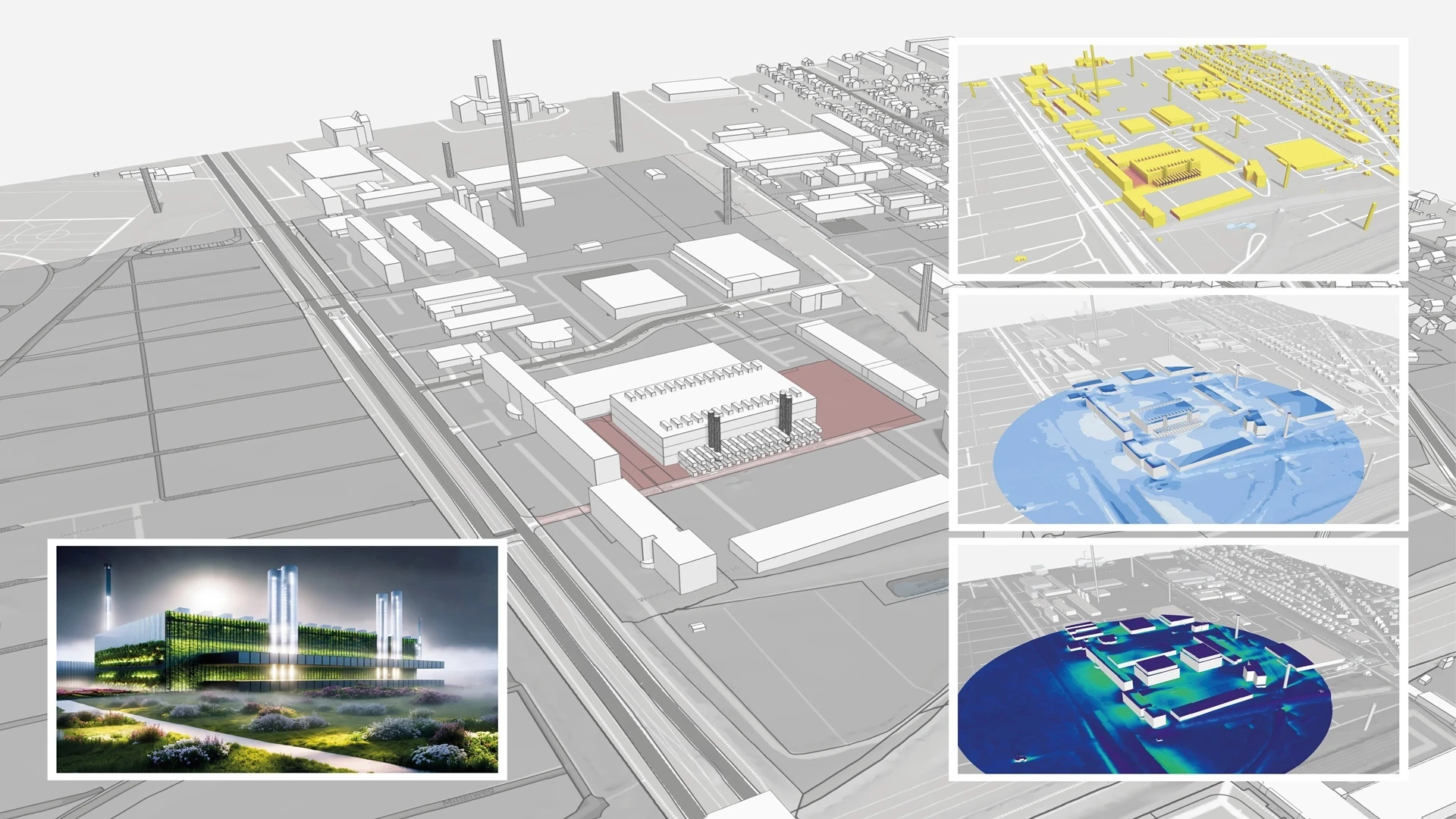
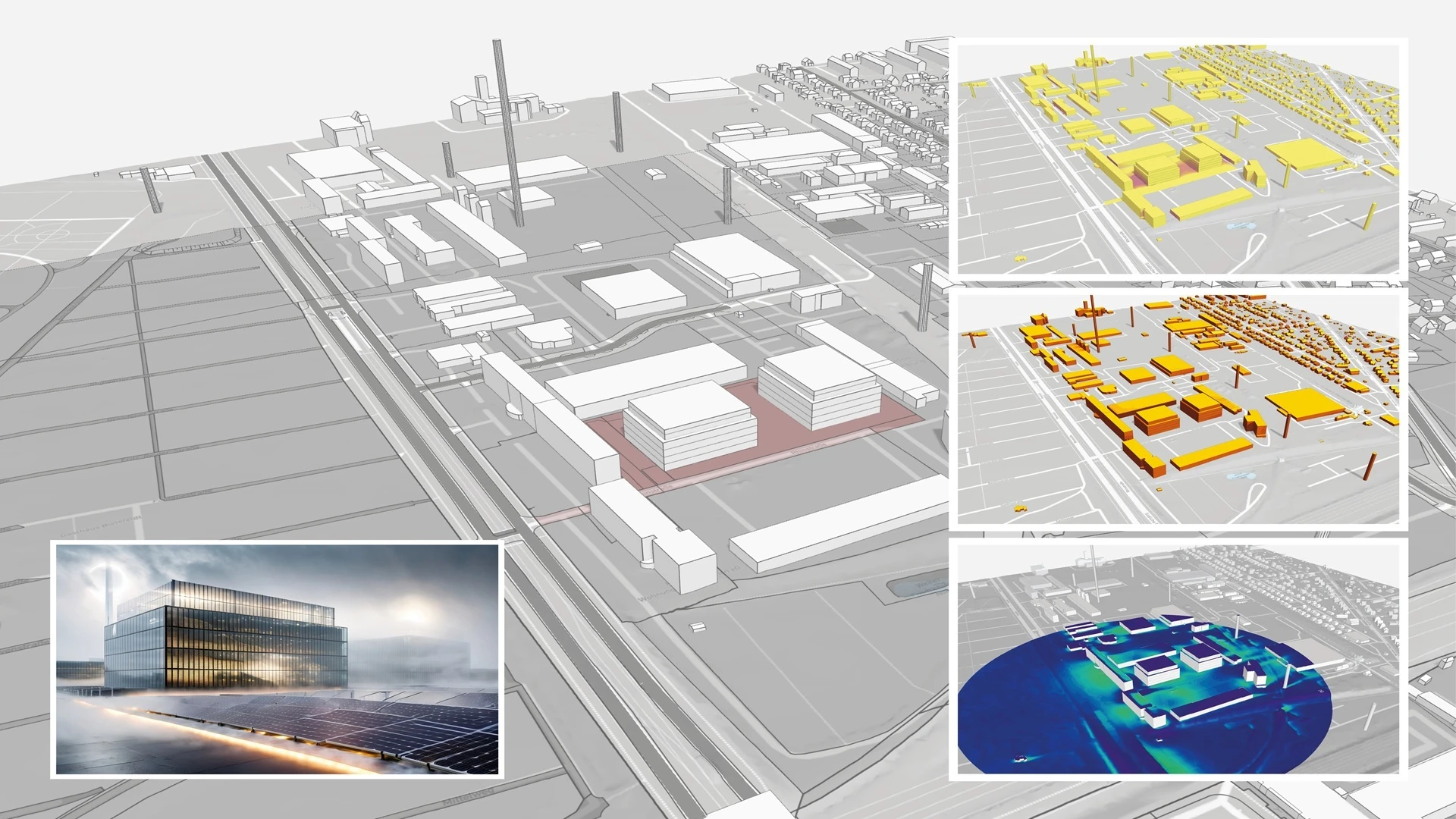
The Drees & Sommer design team uses Autodesk Forma as a central platform from the concept phase to analyze sites, test initial layouts, and integrate all project stakeholders across disciplines – regardless of project status.
Autodesk Forma acts as the starting point in a connected digital ecosystem that enables seamless development through detailed planning and delivery with tools like Grasshopper, ShapeDiver, Revit, Revizto, and Veras.
The firm demonstrates how end-to-end digitalisation can significantly enhance quality and speed for complex construction projects and how the future of planning begins in the cloud.
Data centers rank among today's most challenging construction projects. They are technically complex, demand high security standards, and often lack clearly defined building regulations. Yet teams must develop and deliver them within tight timeframes. At the same time, stakeholders expect reliable feasibility studies very early on in the process—often before securing a site. The Drees & Sommer team developed a completely digital, cloud-based workflow to meet these challenges. Autodesk Forma plays a central role: teams use the platform in early concept phases to evaluate site suitability, test initial layouts, and integrate experts from all disciplines from day one.
From pilot to practice: Moving to Autodesk Construction Cloud
Drees & Sommer's transformation results from years of experience with digital tools. It all began with BIM 360, but the complete transition to Autodesk Construction Cloud marked the decisive step. Today, every project is centrally created there—a deliberate move toward greater transparency, efficiency, and consistency.
"We work entirely in the cloud today. This means everyone on the planning team—whether architects, engineers, or technical experts—has access to current data at any time," says Benedikt Thorwarth, senior design manager at Drees & Sommer. This simplifies coordination and reduces typical friction losses that previously arose from exchanging different data versions or slow feedback loops.
A central entry point for every project
Data centers particularly showcase the benefits of this approach. Drees & Sommer encounters three typical starting scenarios in practice: the client seeks a site based on specific requirements, already has a site but no data centre concept, or has various options for both sites and data centre concepts and seeks the best combination. In all cases, speed is essential. "Our clients expect reliable feasibility statements from us in the shortest possible time," says Thorwarth.
Speed through reuse and model libraries
To accelerate the early phase, the Drees & Sommer team uses simple volume models to test initial design concepts. They evaluate specific conditions against common concepts and compare them with internal best practices.
"We try to leverage proven concepts. When they fit, we save time. Moving forward, we'll systematically expand our internal hub for each project typology," explains Stefan Peckruhn, Senior Expert at Drees & Sommer. This library will include rough concepts and functional subsystems for detailed design development.
Once initial layouts are established, real-time interdisciplinary coordination begins: mechanical experts, electrical engineers, and other technical specialists directly access the model, input requirements, and evaluate sizing. "We can now involve specialist colleagues very early. This improves quality and saves significant time later in planning," emphasises Thorwarth.
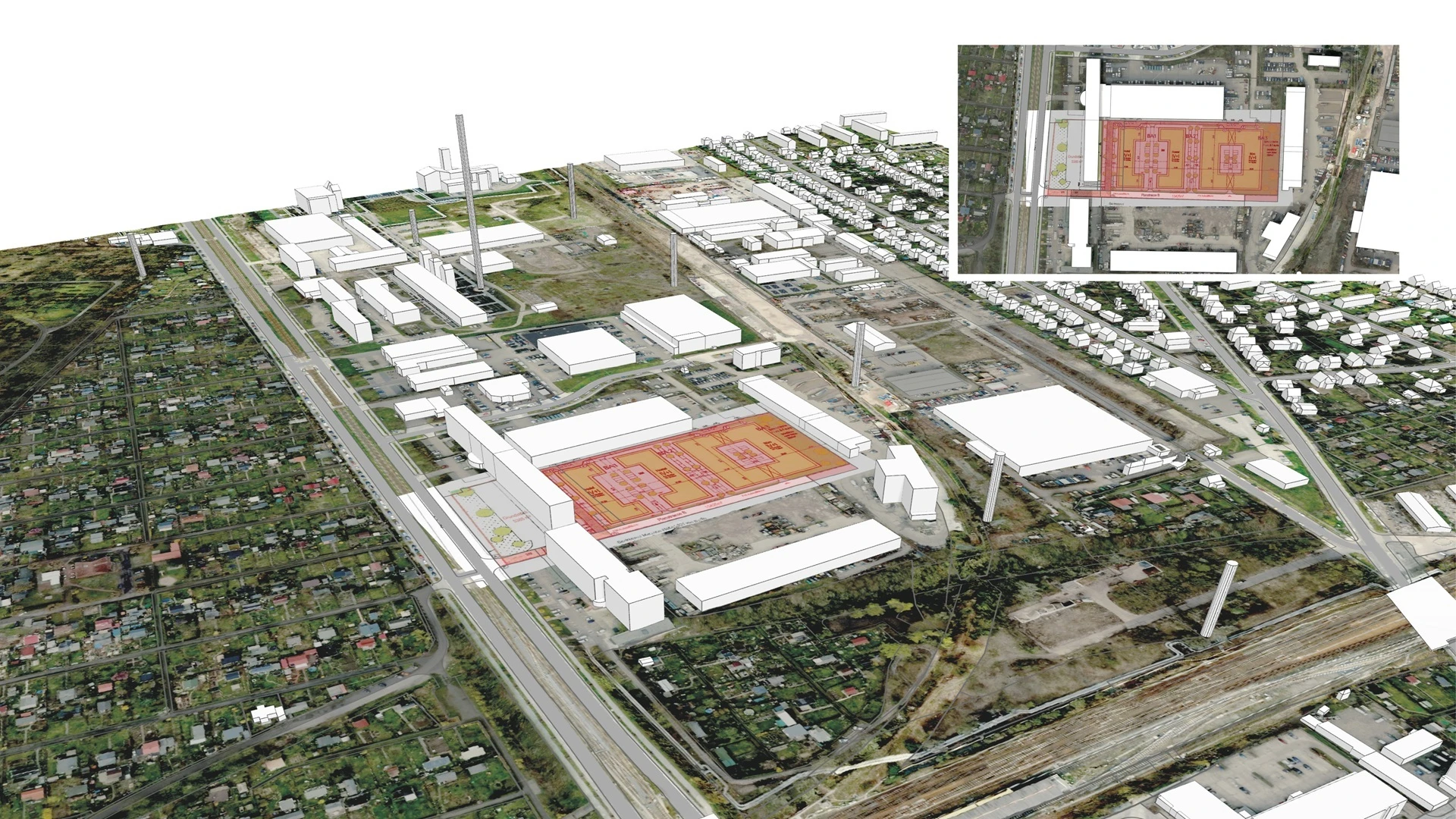
Data centre projects in the early phase are strongly characterised by the ratio of server space to supporting infrastructure. The shared model makes these complex dependencies visible – even before the first-floor plan is drawn. The team addresses peculiarities of German planning law, such as missing clear regulations for data centres or varying approval requirements, through additional documentation directly in the Forma project: digitised development plans, cadastral maps, area and height restrictions, and building mass specifications – everything is integrated early to minimise potential risks. "We integrate all necessary, sensible, and available information – and make it available to the team in one place," says Thorwarth. This reduces communication effort and ensures maximum transparency across the entire team.
Collaboration across software boundaries
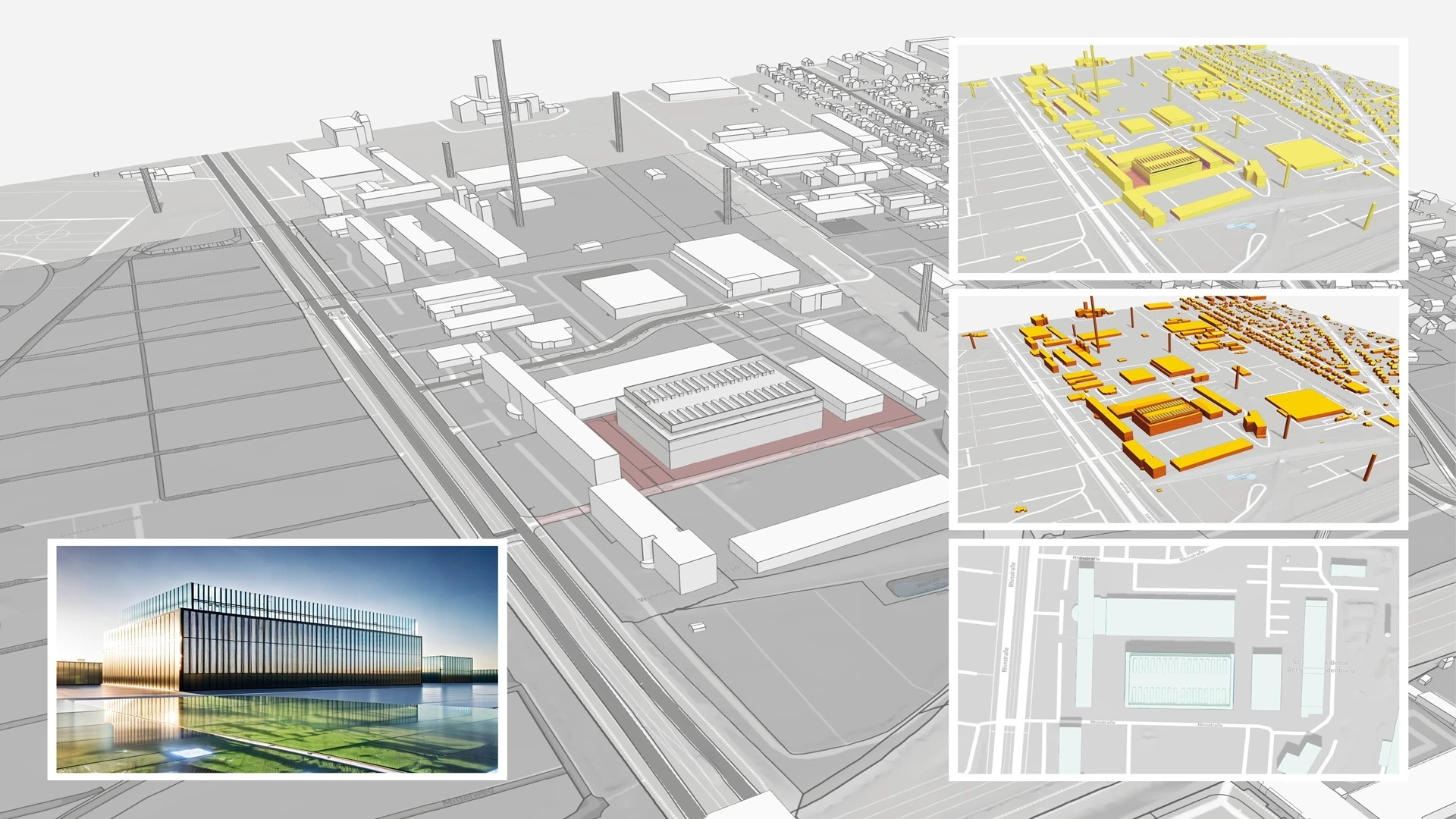
For Drees & Sommer, Autodesk Forma isn't just a starting point but part of a connected digital ecosystem. Initial ideas are developed in Forma. Teams can collaborate on complex relationships and visualise them for clients. They develop projects further in Grasshopper as needed, where they can generate more complex parametric models. For design and later detailed planning, they transition to Revit, where the main model is deepened in discipline-specific sub-models and integrally supplemented. Additionally, this workflow allows teams to visualise various ideas at any time through AI-supported renderings with the Veras extension.
"This combination of tools enables speed, early depth, and consistent development across all phases, something that would be difficult to achieve using traditional methods," explains Thorwarth.
A central hub for better decisions
The advantages are clear: through the Common Data Environment in the Forma Hub, location-independent collaboration, and the ability for rapid iteration, a planning process emerges that's not only efficient but also highly collaborative. This integrative approach saves time, especially because qualified foundations are available earlier, enabling faster, more informed decision-making. Clients benefit from reliable foundations for decision-making, developers receive comparable options within the shortest time, and the entire team can access reliable, always-current information.
"We see Forma as the starting point and platform for our planning strategy. The digital foundation enables us to set up projects from day one in a structured, transparent, and future-ready way," summarises Peckruhn.
More clarity, less risk, better projects
Drees & Sommer shows how a consistently cloud-based planning strategy leads to real efficiency gains, especially for highly complex project types like data centres. Autodesk Forma enables the team to start planning faster, creating the foundation for data-driven, interdisciplinary collaboration that leads to better projects. The future of planning is connected, transparent—and begins in the cloud.