Design for well-being: Stantec enhances patient care and building performance
Forma Site Design Customer Success Story
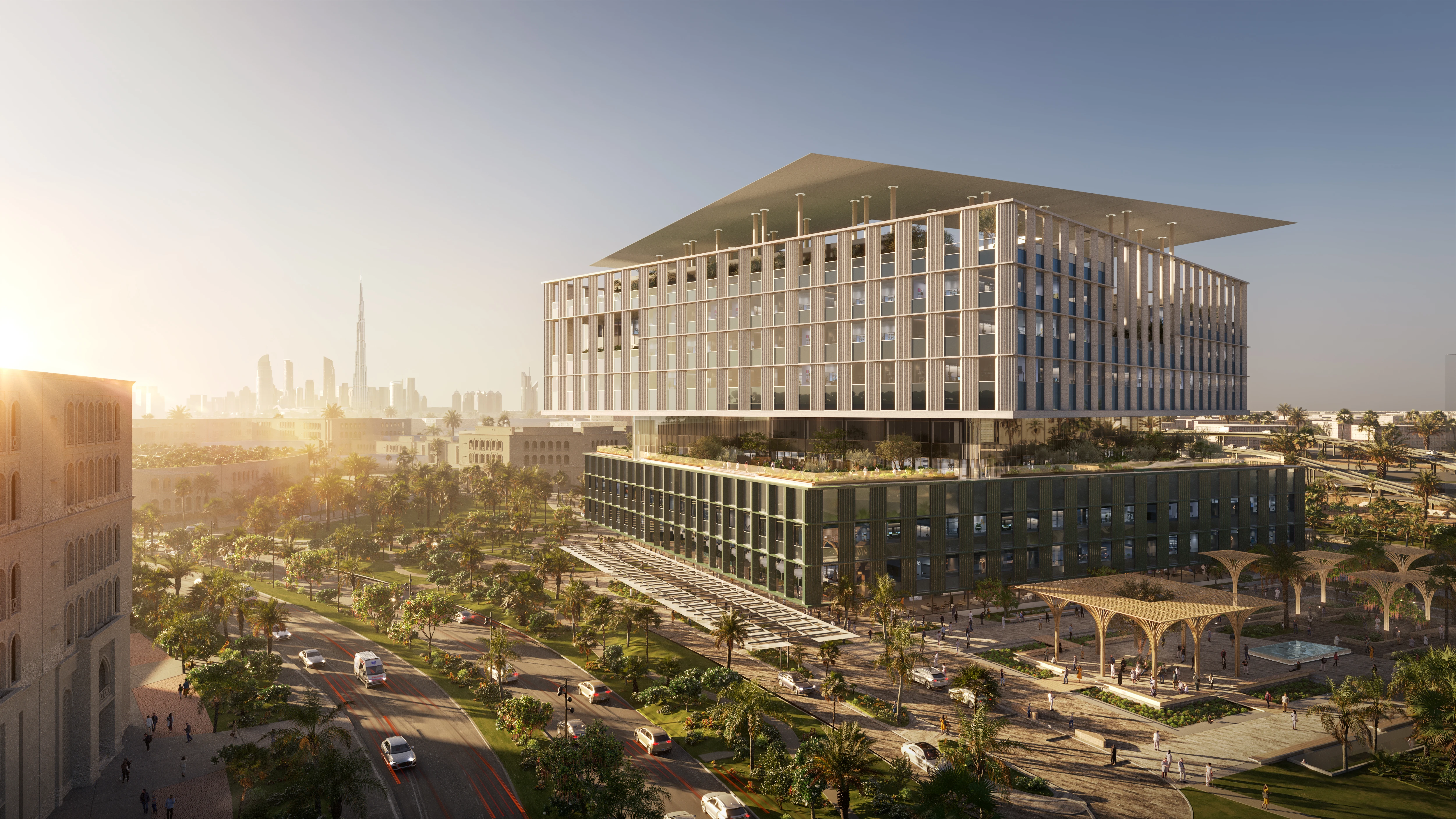
The Hamdan Bin Rashid Cancer Hospital is Dubai’s first comprehensive cancer center. Designed by Stantec, the 603,000-square-foot/55,000-square-meter hospital features advanced facilities to support a full spectrum of cancer care.
Stantec’s global design team used Forma Site Design’s built-in environmental analyses to quickly test and refine strategies for shading, cooling, and embodied carbon, helping to keep occupants comfortable in Dubai’s challenging desert climate.
This rapid, data-driven approach allowed the team to advance sustainability goals from the outset, gain early insights into certification efforts (LEED Gold, WELL), and make informed design choices efficiently within a tight project timeline.
A pioneering new healthcare center
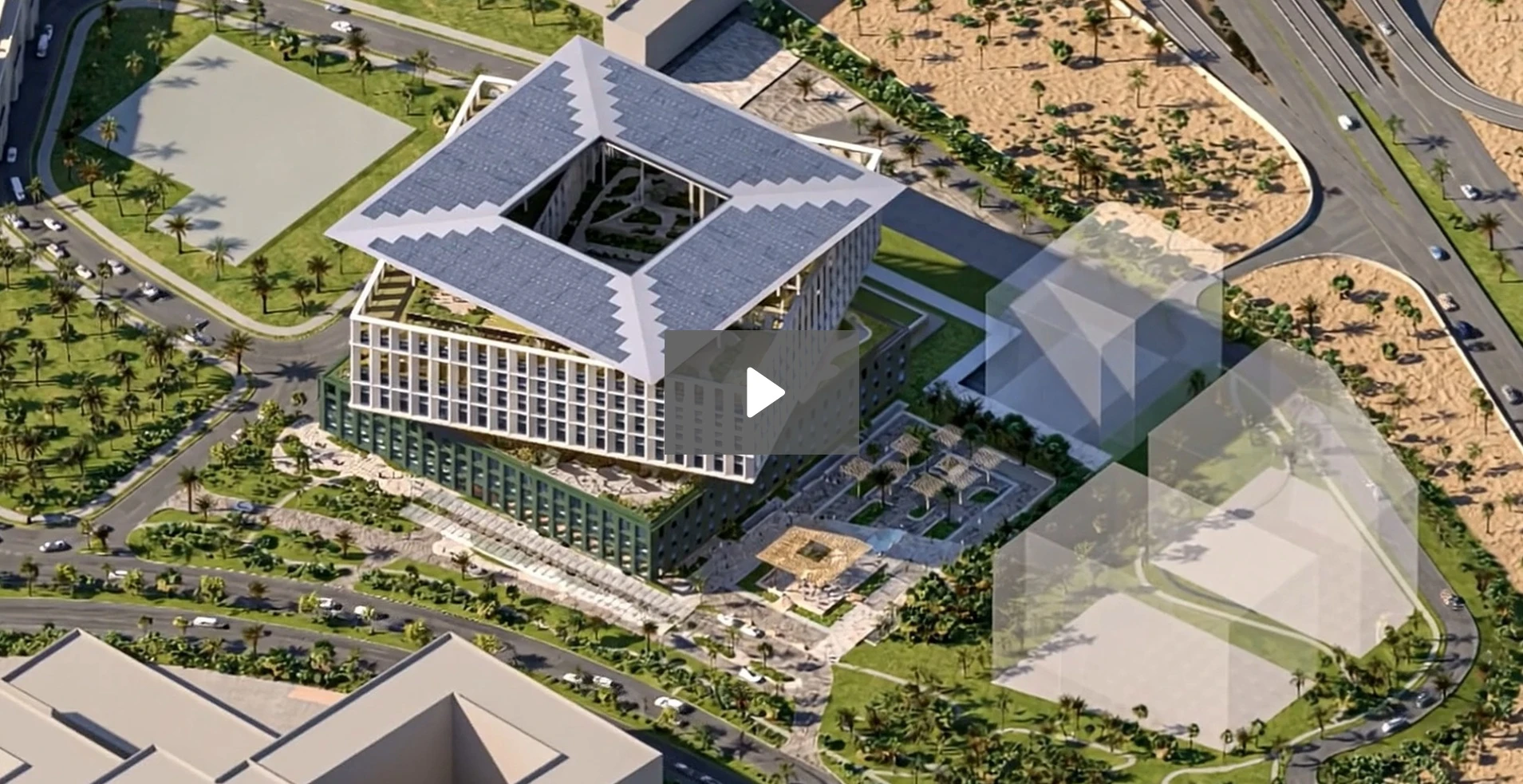
The Hamdan Bin Rashid Cancer Hospital is Dubai's first to offer comprehensive cancer treatment from early diagnosis to supportive care. Designed by Stantec, a global leader in healthcare architecture, this innovative 55,000-square-meter facility started construction in the summer of 2025.
High-performance healthcare projects demand advanced tools
Creating such an ambitious facility presented significant challenges, driving the design team to rethink conventional processes. “The main challenge was to build something technologically advanced in an environment marked by extreme heat gain and energy demands while supporting compassionate care,” explains David Martin, Global Design Director at Stantec. “With this extreme complexity, we committed to acquiring the advanced tools necessary to integrate our efforts and validate the building's performance–Autodesk Forma Site Design is the perfect tool for this.”
The team adopted Forma, an AI-powered software for data-driven design, to help them remain productive under tight deadlines, design for patient comfort and climatic needs, meet sustainability goals, and stay coordinated despite time differences. Forma Site Design stood out as a facilitator in the design process, allowing efficient work without compromising quality and empowering the team to incorporate sustainability strategies early. Connecting Forma with Revit, their primary design and documentation tool, was key.
New ways of working to tackle time pressure
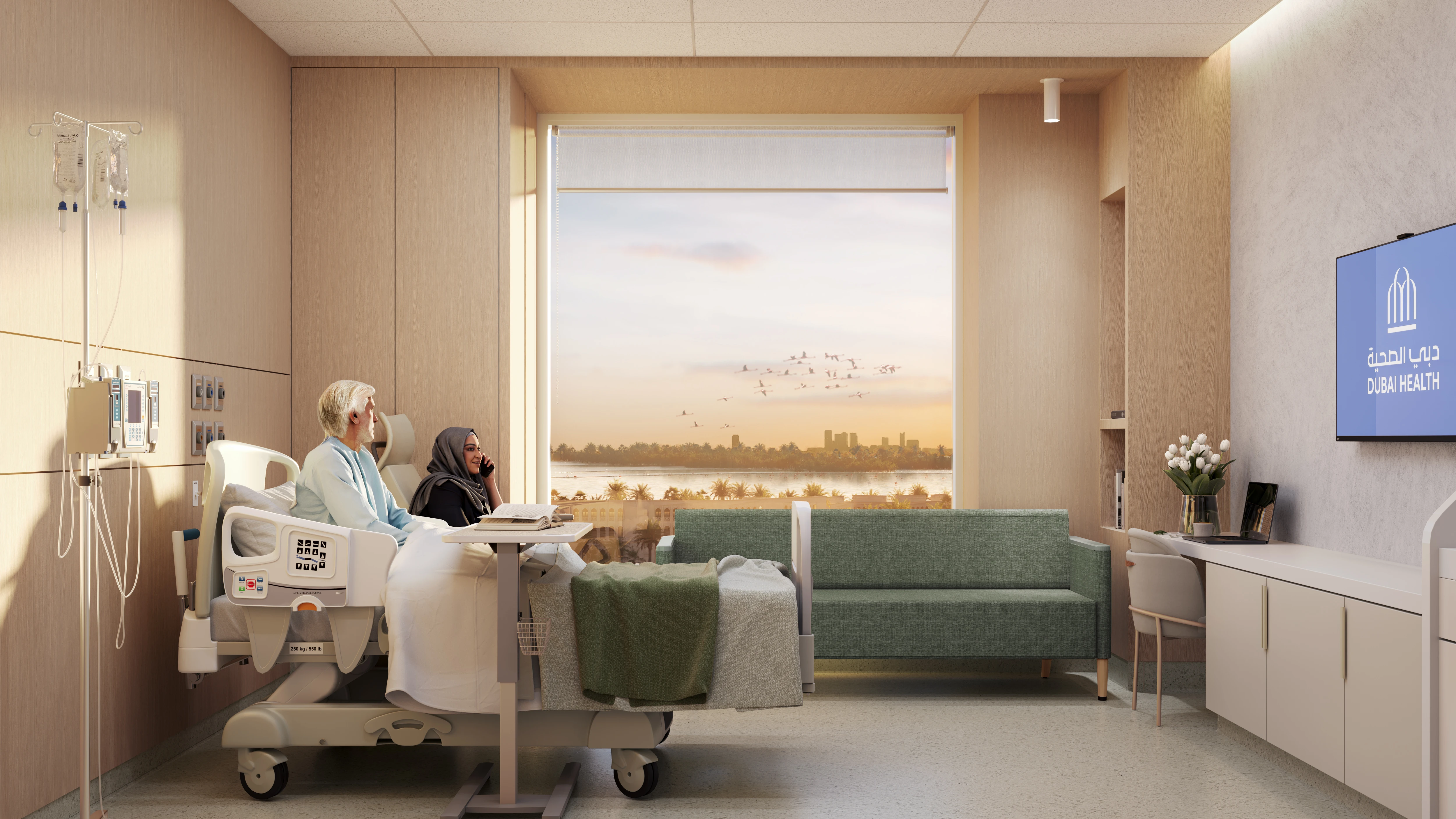
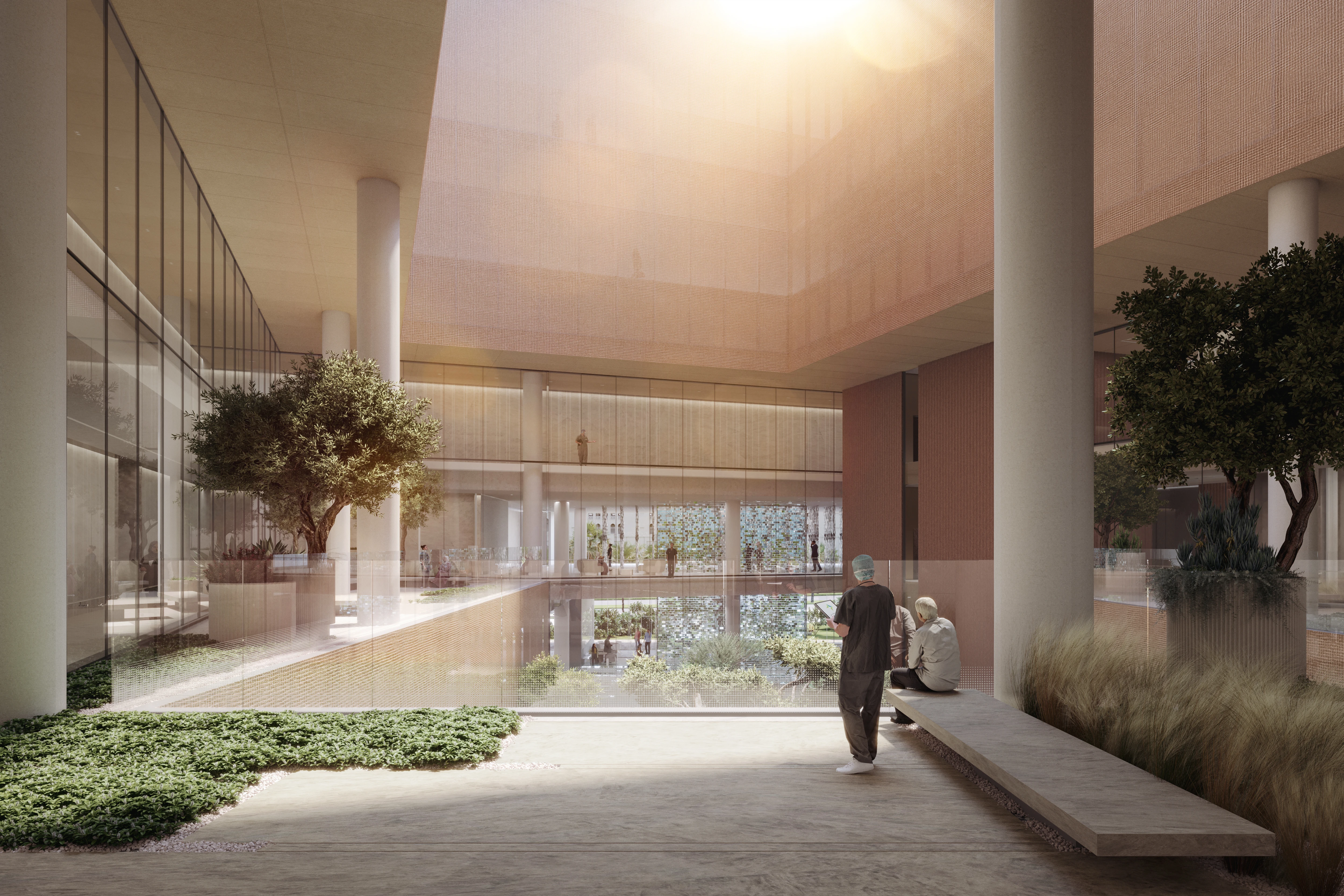
The hospital’s striking design merges a calming healing environment with high-performance architecture and efficient clinical planning. “The temperature extremes are severe and trying to create positive healthcare outcomes that both have internal and external environments is extremely challenging,” says Darren Burns, Vice President and Innovation Leader at Stantec. Inspired by the twisted trunk of the Ghaf tree, UAE’s national tree, the building’s rotated volumes create a sense of shelter and arrival at the forecourt. Healing gardens interweave through the interior and exterior, providing pockets of calm for patients, their families, and staff.
Traditionally, designing and documenting such a project would take three to four years. However, with a deadline of under a year, the team realized the need to improve productivity through, for example, smoother workflows and reduced rework. Time constraints pushed the team to think outside the box. The concept design, schematic design, and design development phases all happened simultaneously within a condensed timeline. With this pace, new tools needed to be easy for the team to learn and adopt so they could hit the ground running. “Forma was beneficial with its rapid optioneering and testing that provided quick answers,” says Michael Romita, Regional Digital Delivery Lead.
A global, interdisciplinary team of 120 from a community of over 15 studios spanning 11 time zones worked around the clock, requiring careful coordination. Cloud collaboration enabled efficient teamwork where everyone could access the same model in Forma and the Revit model in Autodesk Construction Cloud (ACC).
Forma’s environmental analyses accelerate sustainability workflows
Strategic shading and cooling strategies are vital to keep occupants comfortable and reduce energy consumption in this climate. Coupled with high ambitions for LEED Gold and WELL certifications, sustainability was prioritized from day one. Traditionally, running building performance simulations can cause bottlenecks due to the need for specialized teams and tools. Using Forma’s built-in environmental analyses, the design teams performed initial tests themselves.
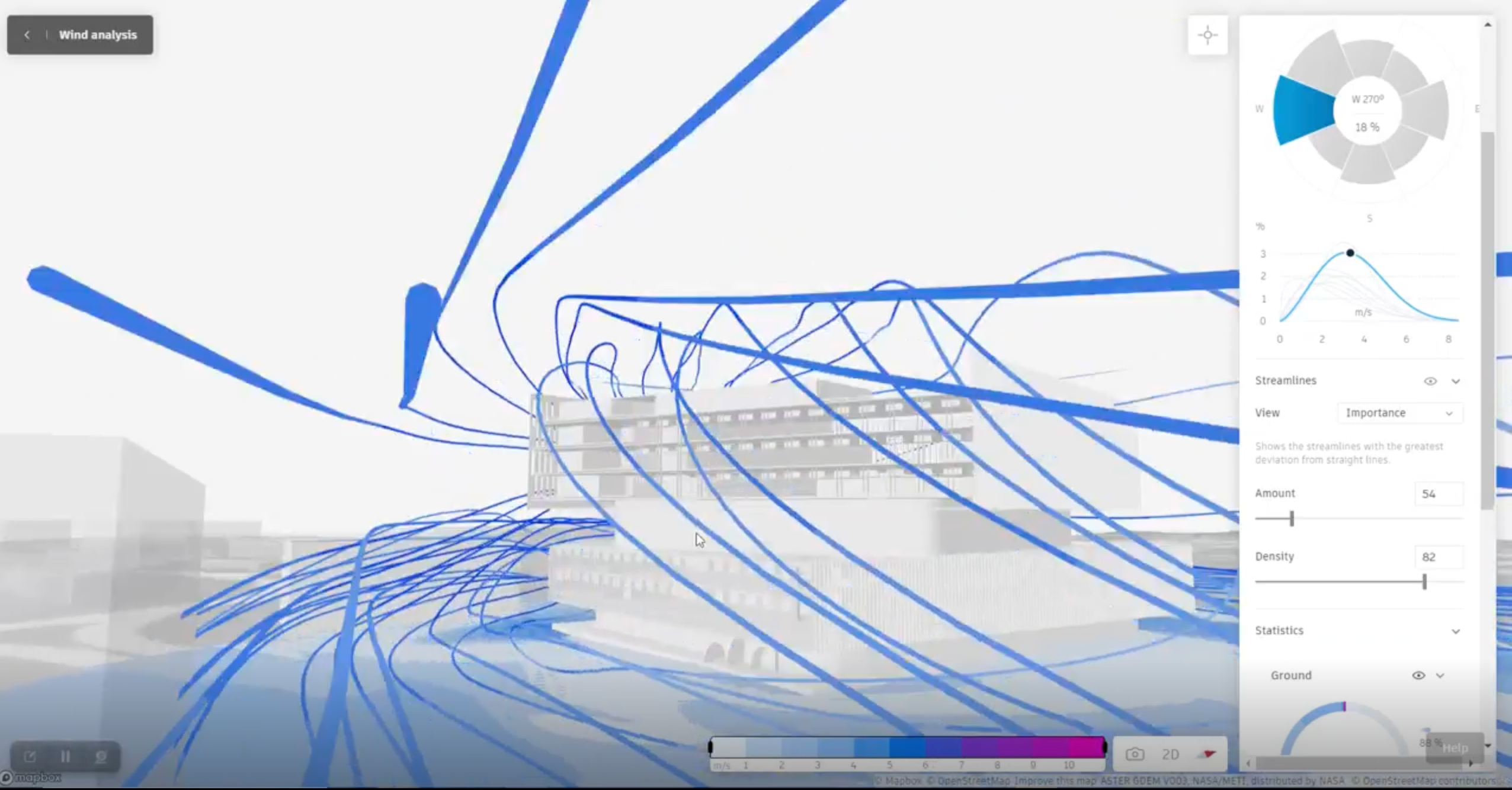
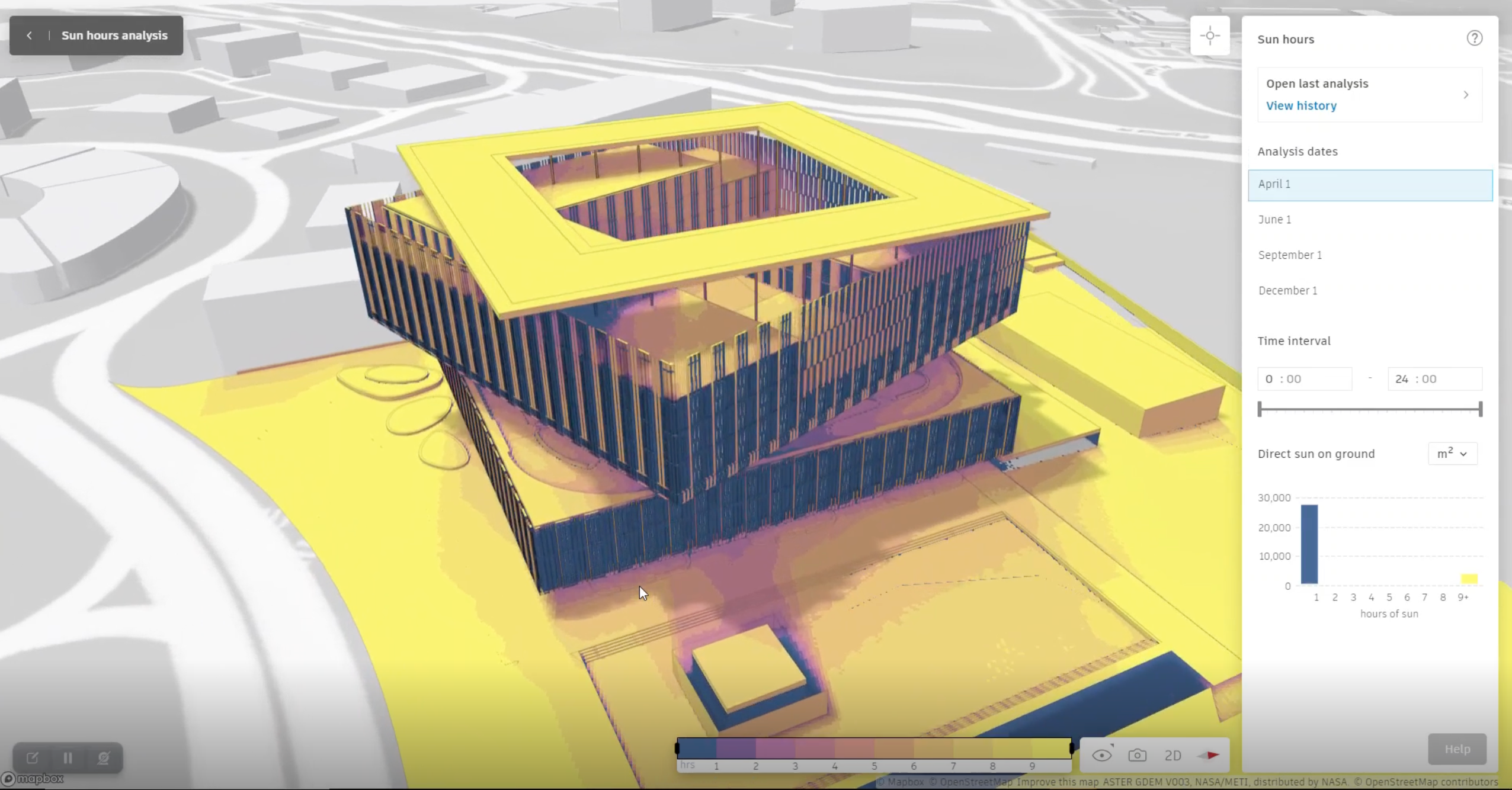
Sketchup and Rhino massing models were sent to Forma for continuous checking and analysis. When refining the building’s twist and canopy, the team used the sun hours analysis to check sun exposure and increase shading. Wind analysis insights further informed the passive cooling strategy to capture breezes in the courtyards, some of which are cooled by exhausted cooler air from air conditioning systems.
“Forma is a quick assessment tool for the early stages”
The team gained a head start for meeting certification requirements. “Forma is a quick assessment tool for the early stages. You can test, review, and compare results immediately,” says Aaditya Patel, Sustainability Consultant at Stantec. “Forma’s initial insights into LEED requirements like daylighting and embodied carbon were valuable when testing design options and materials. This also guided early discussions to find the right direction and informed detailed modeling efforts,” explains Patel. “For instance, we were able to assess multiple external facade shading strategies within a single day. Using traditional detailed geometric modeling, this process would have required several days of effort.”
Early-stage energy modeling often requires significant effort, tells Ghina Annan, Decarbonization Business Lead. “Rather than investing in detailed energy modeling during preliminary phases, which requires more information and time, Forma allowed us to run simple massing modeling effectively. For example, to test building orientation for energy efficiency.”
Later, the team used Forma to optimize the facade strategy, sending the Revit model to Forma for analysis to finetune the positioning, angles, depth, and widths of facade elements. “We could rapidly assess external shading elements and their impact on patient comfort–is there enough daylight or too much glare or sun?” says Patel. It facilitated the design, allowing the Stantec team to do quick testing in Revit and other tools, while avoiding days of modeling and rework. Revit and Forma were used until the end of design development.
Visualization for clear decision-making and communication
Real-time visualizations sped up communication. “During discussions with the team, client, and stakeholders, Forma’s visuals helped them understand the data and design easily,” Annan says. Analysis visuals could be quickly generated for immediate client feedback and making quick design pivots.
Fast-tracking the process further, the Veras for Autodesk Forma extension enabled AI-driven visuals for rapid design optioneering. This allowed the team to generate approximately 30 design options in three minutes–helping avoid rework–and explore, compare, and present the best options to the client much faster.
Overall, this new workflow helped advance sustainability goals earlier, saving precious time. By the time their sustainability team came on board, Stantec had already done significant groundwork measuring towards LEED Gold at the beginning of the project.
With this project, the Stantec team envisions a design that meets patient needs with compassion. Clever passive strategies meet high-tech solutions to address climatic challenges; new technology helped the design- and sustainability teams consider effective strategies earlier and with less effort and remain cool under time pressure. The team is proud to contribute to a groundbreaking facility designed, at its heart, with and for the community of Dubai.
Learn more
Ready to run your first analysis? Try Forma for free.