Arcadis: How data is the key to designing resilient communities
Using Forma and ArcGIS, Arcadis implemented four changes in early-phase workflows to enhance design intuition with data and environmental analysis

Executive summary
Authors: Sandra Petkute, Aya Abdelfatah
Sandra Petkute is a Solutions Consultant at Arcadis whose work focuses on shaping Arcadis’ global technology strategy. Aya Abdelfatah is an Associate Urban Designer and Project Manager at Arcadis and a registered architect in Egypt.
This blog post is based on the 2025 Autodesk University session: Designing Resilient Communities: Using Autodesk Forma Simulations for Environmental Livability
Four shifts in design practice are highlighted to help architects leverage data to design with resilience in mind:
Move resilience to the early phase: shifting from a reactive to proactive design approach
Measure what matters: setting context-specific KPIs that measure both environmental and social values
Integrate context from 2D to 3D: working in a live 3D model with layers of real-world data that makes impacts tangible
Enhance intuition with data: combining real-time environmental and spatial data in one platform to make informed decisions, earlier
Why communities struggle with livability and resilience
Urban design decisions shape how communities live, grow, and adapt to challenges such as climate change, rapid urbanization, and social inequities. To build resilient cities, design must move beyond intuition and incorporate data, context, and measurable outcomes from the very beginning.
Arcadis, with its long tradition of improving quality of life, is embedding resilience at the heart of this transformation. For us, resilience is not just a target—it’s a design mindset. Using tools like Autodesk Forma and the ArcGIS for Autodesk Forma extension, we integrate AI-powered environmental simulations from day one, allowing smarter choices on wind comfort, noise, daylight, public space quality, and—critically—carbon impacts. This ensures communities are not only livable and sustainable but also aligned with global climate goals for decarbonization.
Cities are becoming hotter, denser, and less equitable. Heat waves and urban heat islands threaten outdoor comfort and people’s well-being, growth outpaces housing and infrastructure, and inequities persist in how neighborhoods are designed and resourced. A resilient community is one that adapts, recovers, and thrives—balancing environmental quality with social well-being. What makes this possible is data: data that is relevant, contextualized, and accessible.
The built environment contributes 42% of global CO₂ emissions, making every design choice an opportunity—or a liability. Streets, buildings, and blocks shape both emissions and community well-being. If cities are changing, so should the way we design them. Designing with resilience in mind allows us to turn these challenges into opportunities for both lowering emissions and healthier living.
1. Move resilience to the early phase: from a reactive to proactive approach
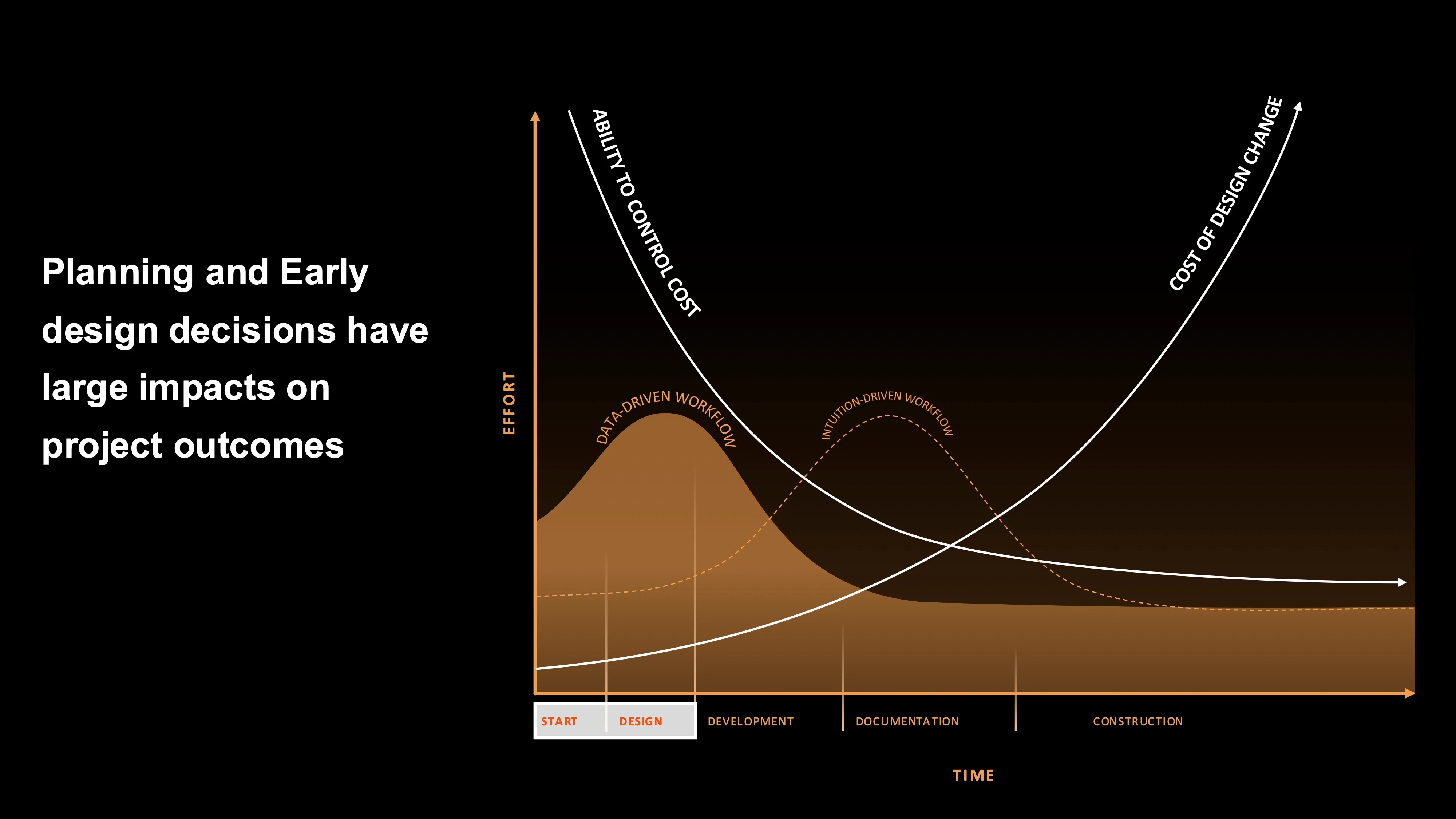
The decisions with the greatest impact—such as density, orientation, and open space—happen early. Yet too often, environmental analysis comes late, when redesigning is costly and risks project delays. By shifting simulations to the start, design teams can shape projects to meet climate and resilience goals while controlling costs.
The MacLeamy Curve underscores this: influence on project outcomes is highest at the start. Arcadis leverages early-phase simulation to lock in resilience benefits from the first sketch.
2. Measure what matters
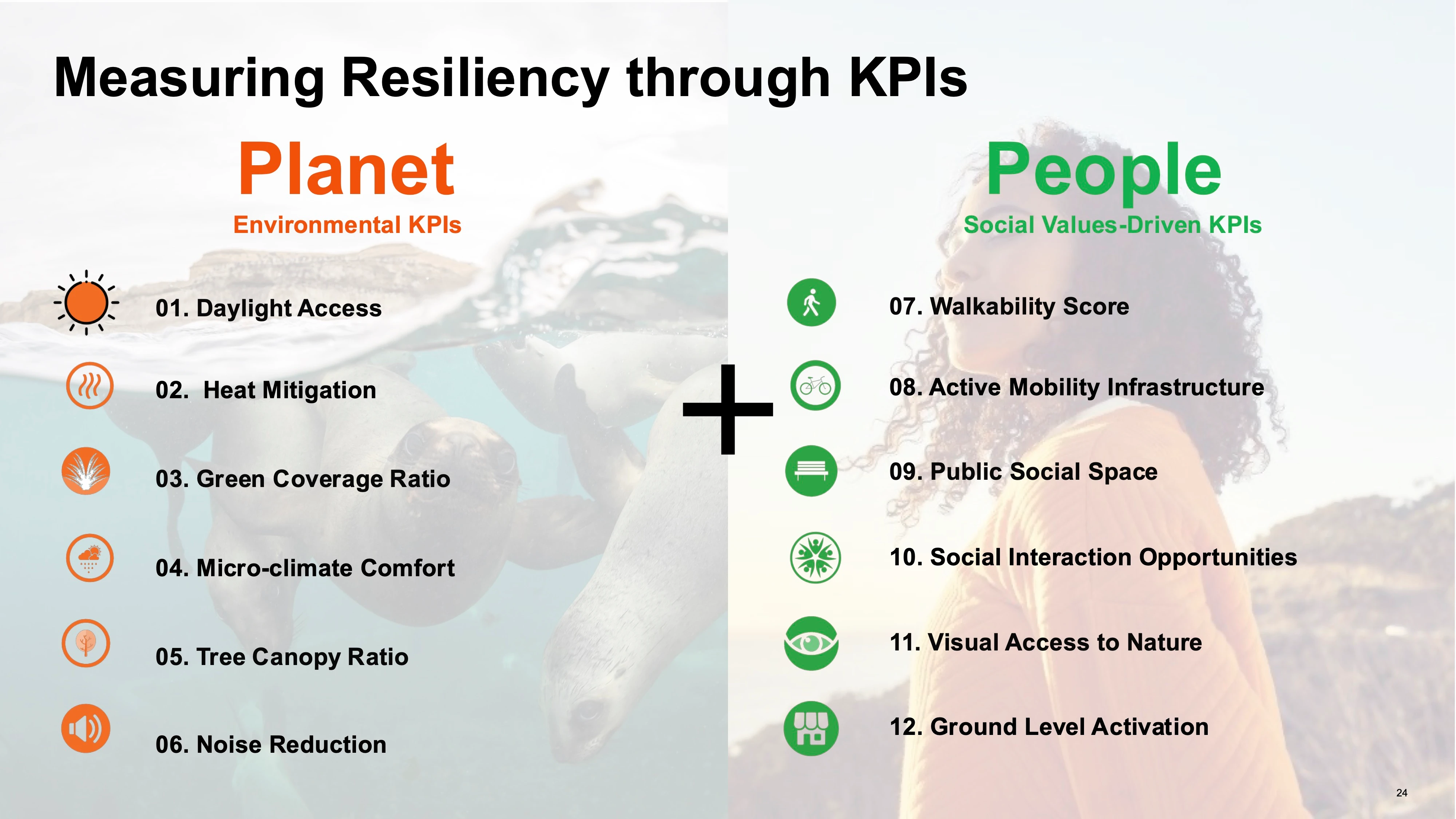
Resilience is only actionable when defined through Key Performance Indicators (KPIs). At Arcadis, we set context-specific KPIs that measure both environmental and social values, balancing climate outcomes with human well-being.
Environmental values: carbon reduction, biodiversity, energy efficiency, access to nature.
Social values: health, connectivity, equity, comfort, and sense of place.
By quantifying resilience and livability goals, KPIs keep teams accountable and ensure projects support both planetary health and community quality of life.
3. Integrate context from 2D to 3D
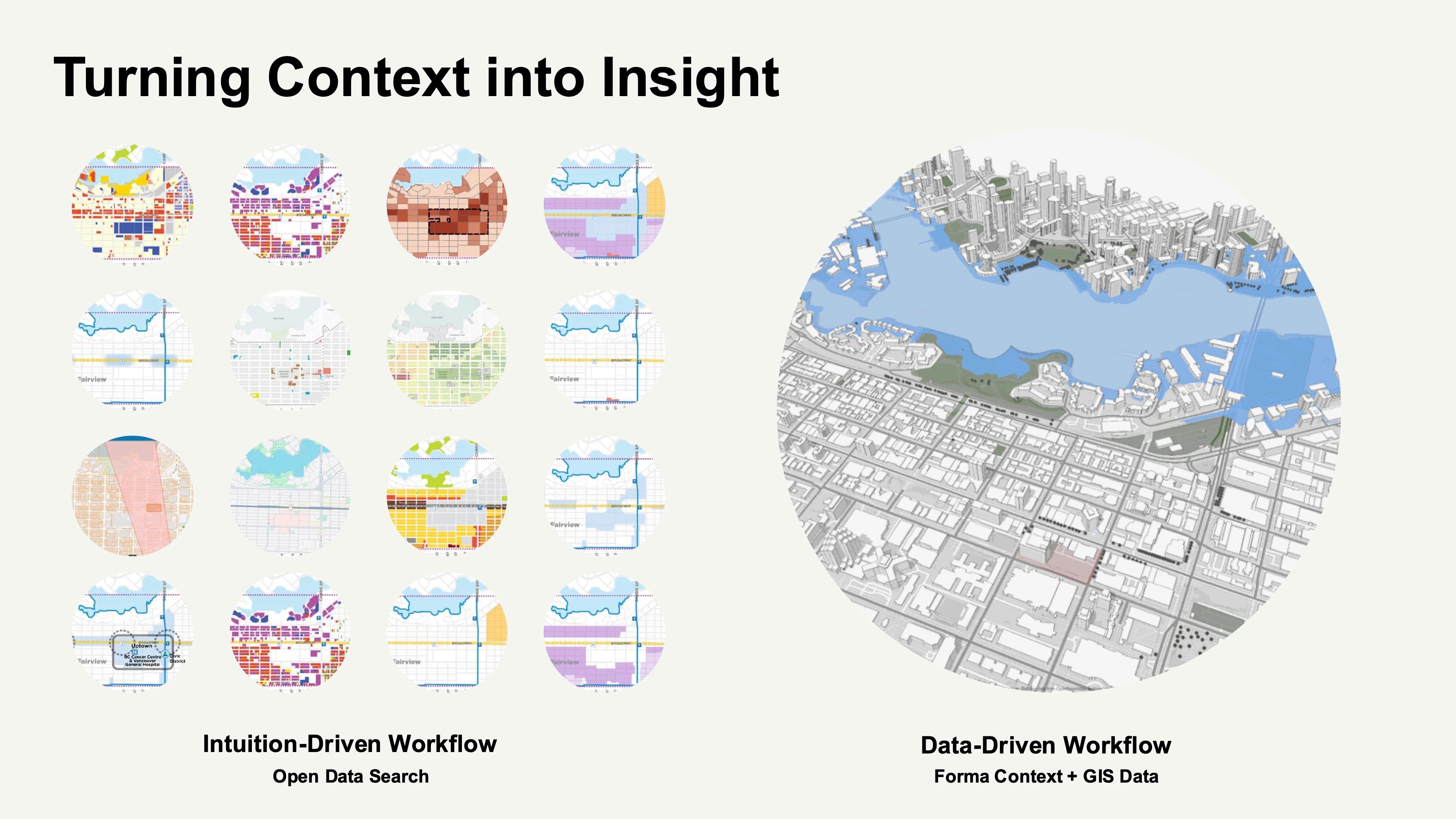
Traditionally, planners spent days assembling static 2D maps. With Forma and ArcGIS, zoning, transit, and public space layers are automatically imported into a live 3D model where teams can sketch and iterate design concepts with integrated area metrics and environmental simulations. This reduces wasted effort and brings real-time insights into early design decisions.
Working in 3D makes climate and carbon impacts tangible rather than abstract. Designers can quickly test alternatives, spot risks, and identify opportunities to improve livability—helping projects stay aligned with resilience targets.
4. Enhance intuition with data
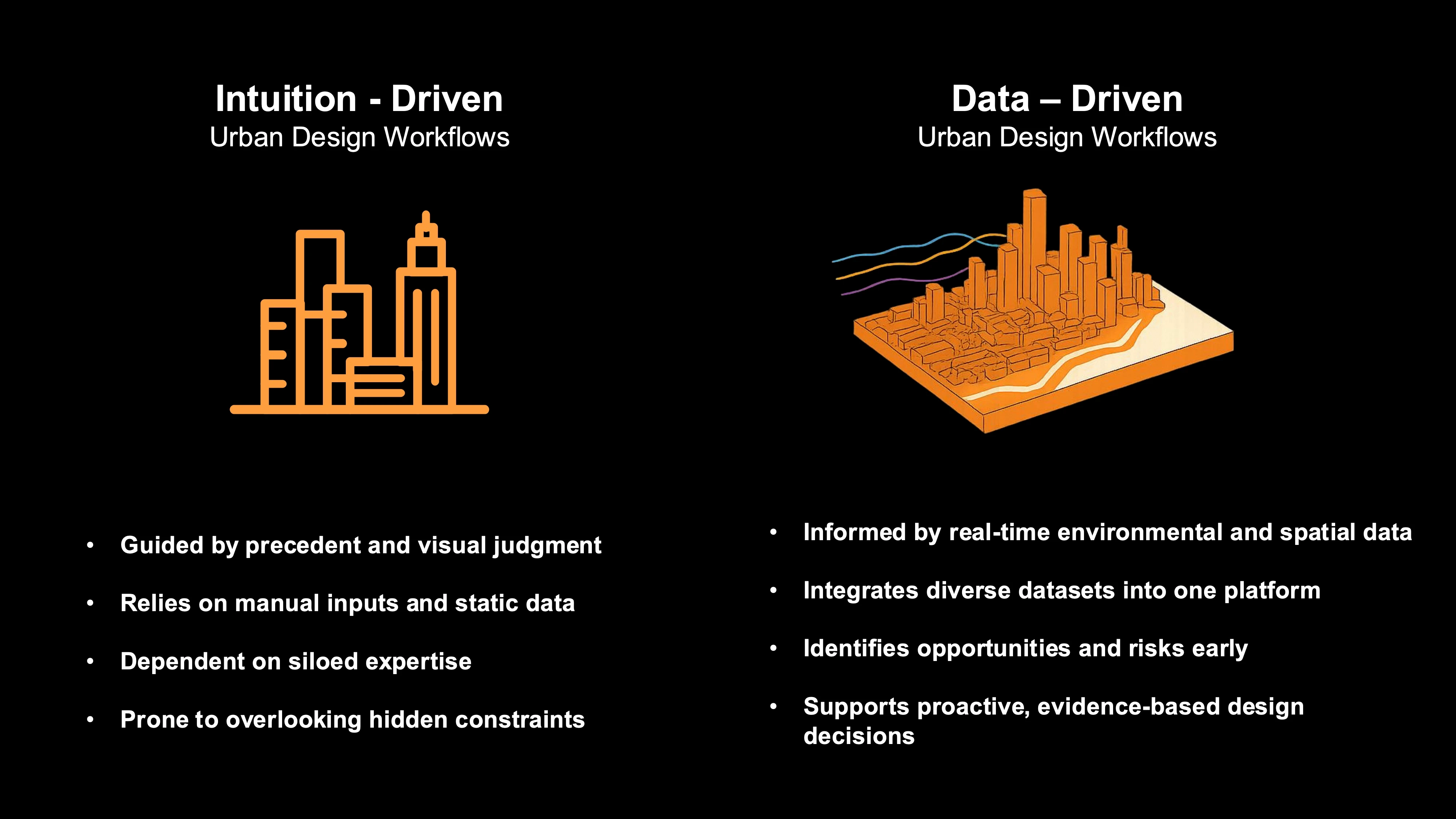
At Arcadis, we believe creativity flourishes when paired with evidence. Traditionally, this was static data and often fragmented inputs from multiple consultants. This makes it harder to see the full picture early on, which is precisely when high-impact decisions are locked in. Forma integrates BIM and GIS—traditionally siloed in early planning workflows—to let designers sketch, iterate, and test ideas dynamically in one platform while tracking density, carbon, and livability metrics.
This approach doesn’t replace intuition or professional expertise, it amplifies them. Teams can ground bold design choices in data that demonstrates progress toward decarbonization and resilience.
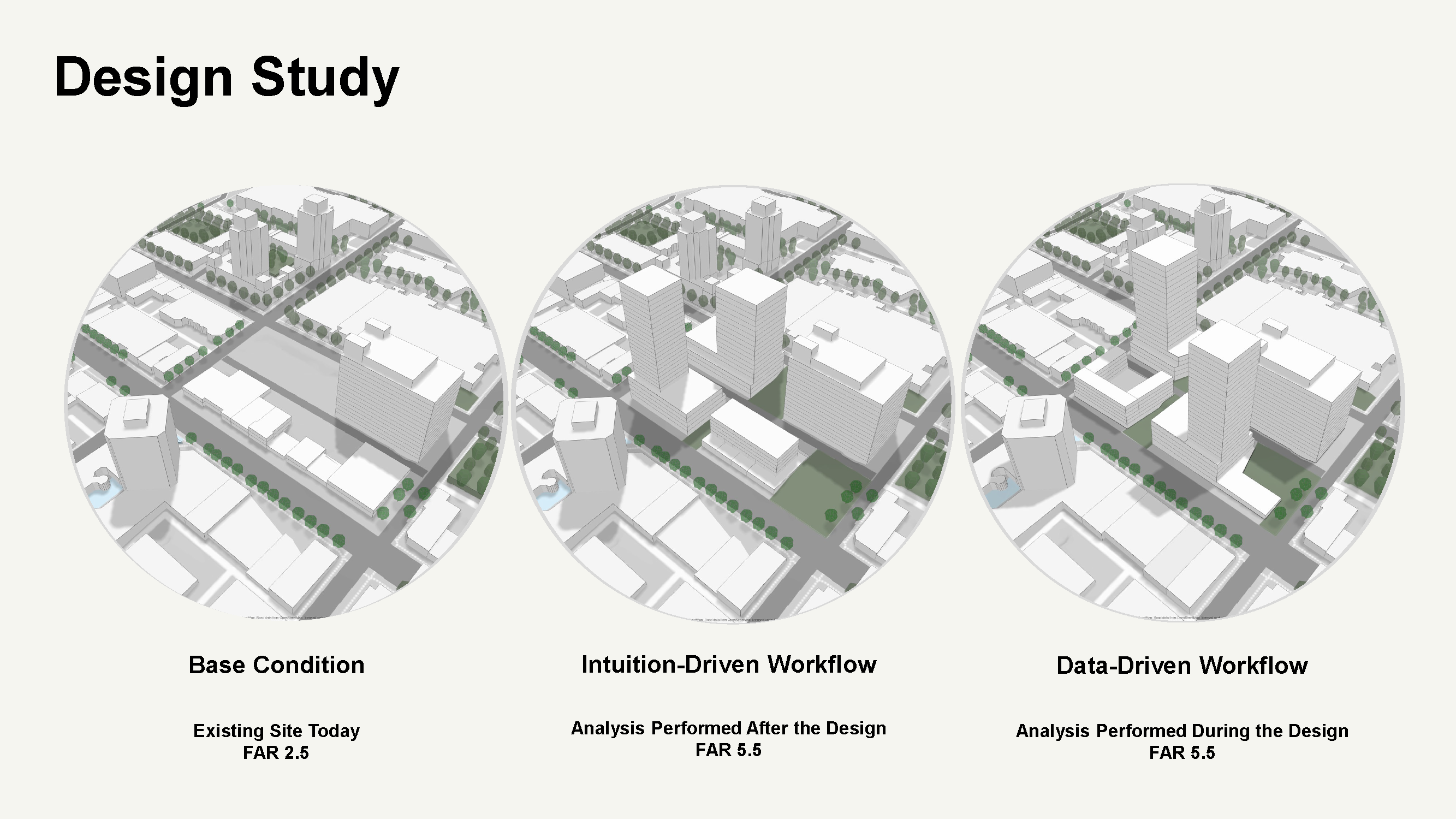
Case study: Vancouver workflow comparison
A study in Vancouver compared three approaches:
Base condition: The existing site
Intuition-driven workflow: A design based on expertise, with analysis only at the end for checking
Data-driven workflow: Iterative analysis with Forma, using the same density target but guided by KPIs
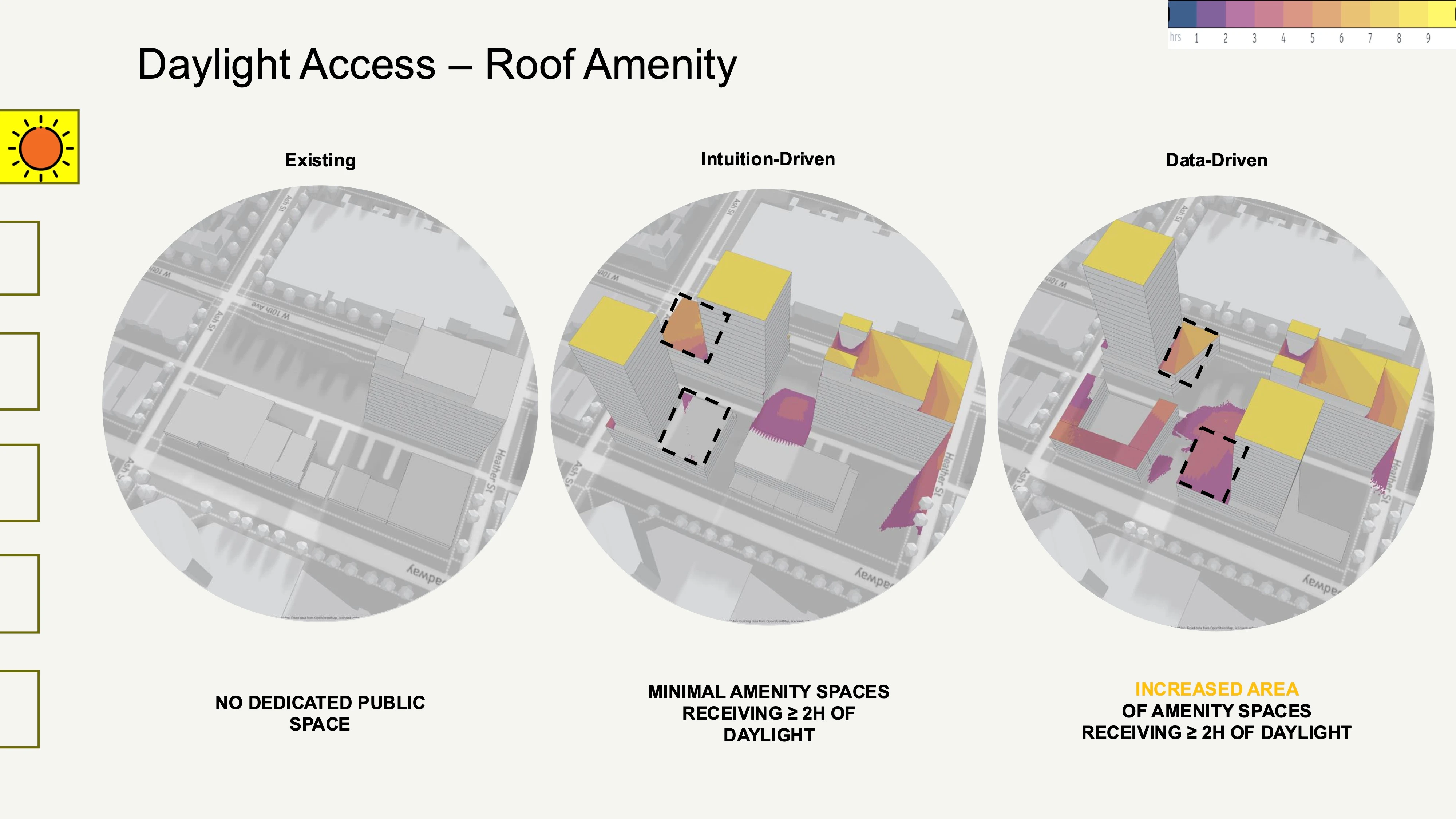
We tested three KPI outcomes relating to environmental values, specifically outdoor comfort for public spaces:
Daylight access: Target of two hours of winter solstice sunlight in public spaces. The intuition-led plan left only small areas lit, while the data-driven design reshaped buildings to maximize sun exposure, improving comfort and mental health.
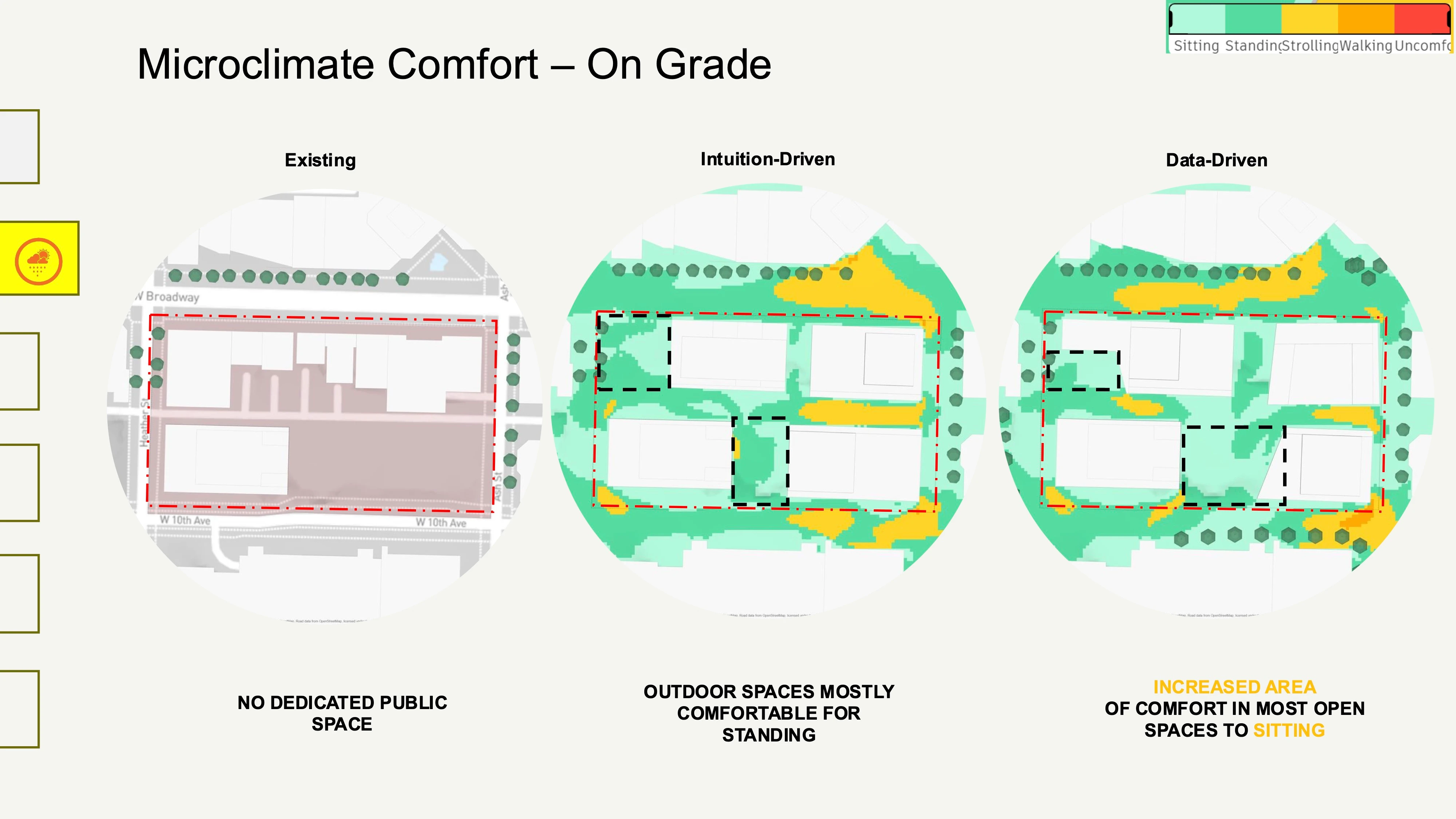
Microclimate comfort: Target of 80% of outdoor areas usable year-round. Intuition produced limited standing areas, but the data-driven approach created more shaded, wind-protected seating areas, boosting livability.

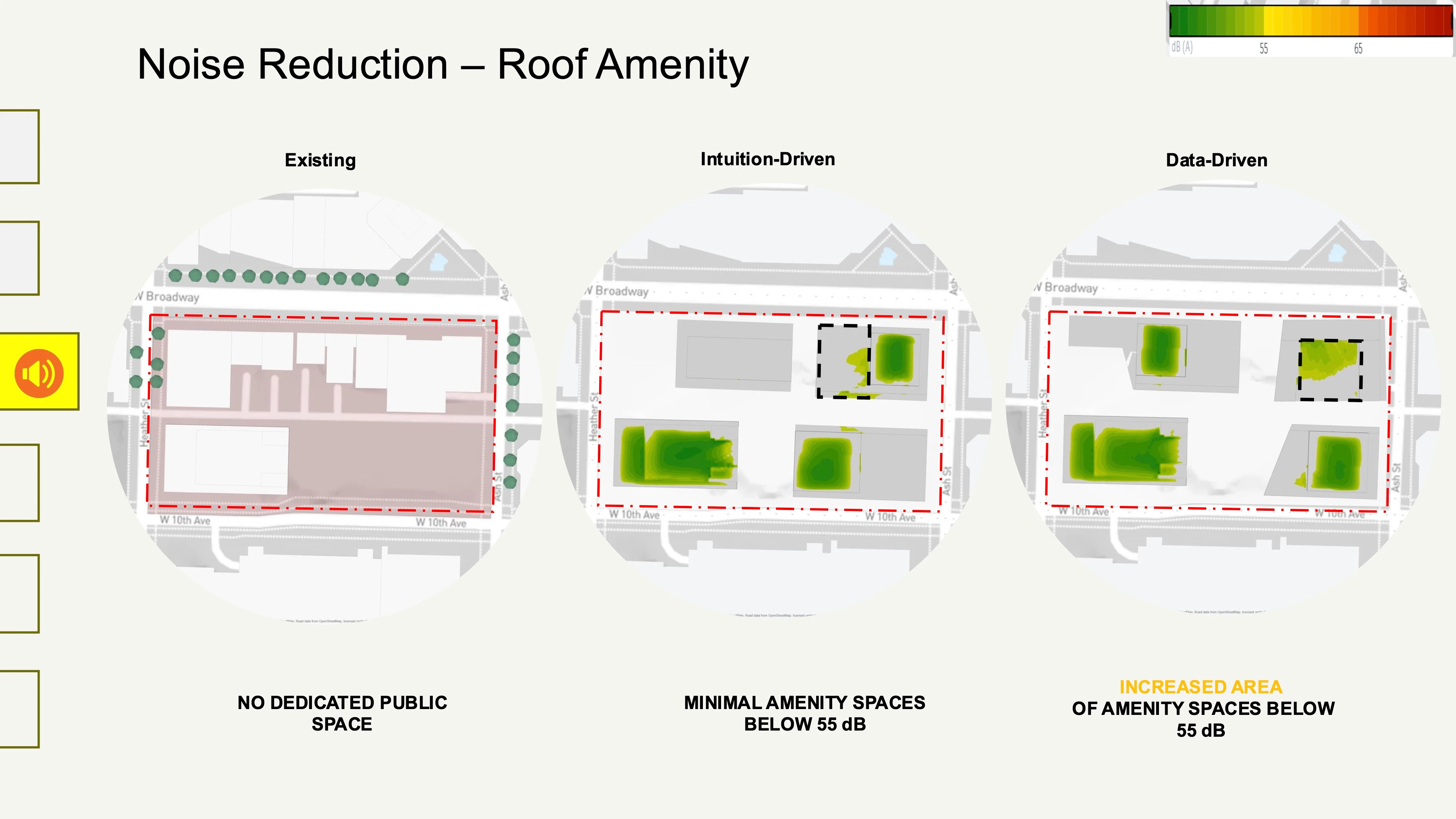
Noise reduction: Public space noise below 55 decibels. Intuition left most areas above the threshold, while the data-driven workflow increased quiet zones, enabling improved health and social interaction.
These comparisons highlight that intuition lays the foundation for success, but data-driven workflows unlock measurable gains in livability and resilience.
At Arcadis, resilience guides every project—not as an afterthought, but as a foundation. Using Autodesk Forma, our teams evaluate wind, noise, daylight, public realm quality, and carbon simultaneously. This integrated approach ensures designs are robust, equitable, and low-carbon from day one, without sacrificing creativity.
By treating resilience as a design parameter rather than a compliance box, we help cities meet global climate commitments while creating vibrant, people-centered places.
"At Arcadis, resilience is more than a target—it’s a design mindset."
Building futures ready for change
Future-proof communities are those that thrive under pressure—balancing livability, equity, and climate goals. Achieving this requires embedding resilience into design culture, supported by data-rich tools that make climate performance visible from the start. Four final takeaways:
Start optimization with the first sketch, not the last.
Design with context, community, and carbon in mind.
Use tools like Autodesk Forma and ArcGIS for Autodesk Forma to enhance creativity and intuition.
Shape resilient futures by sparking conversations about environment, comfort, and access.
From its origins transforming wetlands into habitable land, Arcadis has always turned challenges into opportunities. Today, we continue that legacy by designing for a low-carbon future—building communities that are beautiful, resilient, and ready for the challenges ahead.