If you've worked in estimating, takeoff, or early design coordination long enough, then you've seen how much this space has changed over the last decade. Preconstruction processes have gone from manual and fragmented (lots of spreadsheets and email threads) to becoming significantly more collaborative, data-driven, and tech-enabled.
Preconstruction has gone through immense transformation, but in many ways, we're also just getting started. Owners and contractors increasingly recognize that investing in preconstruction directly reduces risk and improves cost certainty.
With the rise of AI in construction, the continued evolution of teams, and more urgent sustainability goals, preconstruction workflows will accelerate even further. Precon will be more predictive, more automated, and more tightly connected to downstream construction activities.
So that raises the big question: What will the preconstruction process look like in 2030?
Here at Autodesk, we have a few ideas…
Preconstruction today is definitely more integrated, thanks to cloud-based digital tools that keep teams on the same page.
But as projects become more complex and schedules get tighter, there's always room for improvement. This is particularly true in design and estimating.
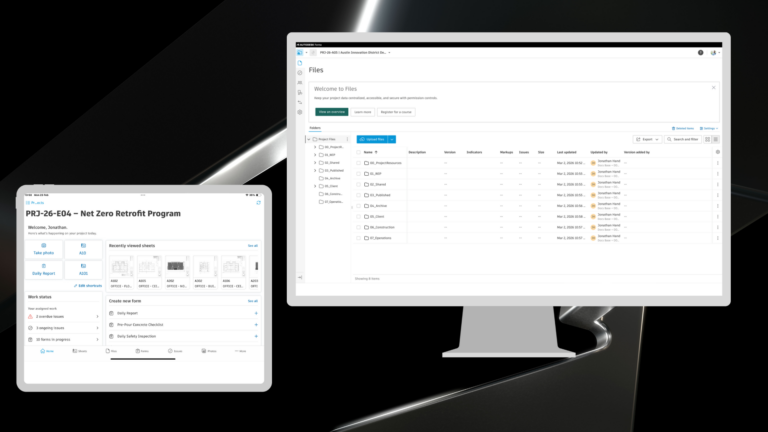
The good news is that technology continues to support how people work. Tools like Autodesk Estimate are bringing more connection to the preconstruction processes, especially when it comes to connecting estimates with takeoffs.
And in the near future, we can expect design and estimating to not only be more integrated but also highly data-driven.
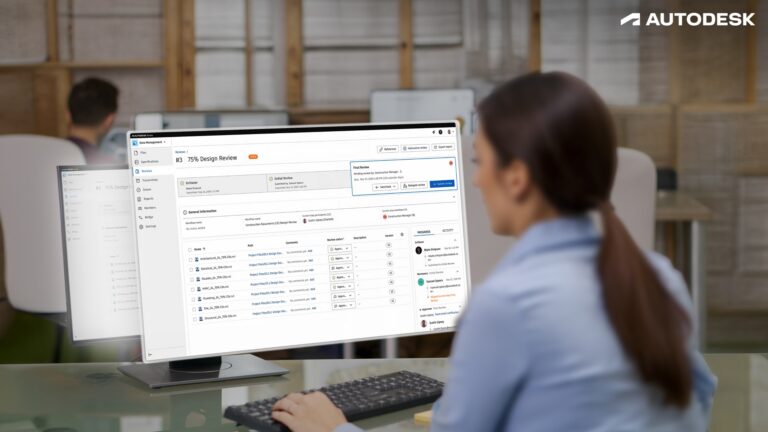
Imagine getting cost feedback the moment a change is made, with Forma and Autodesk AI creating real-time feedback loops so teams see the impact of each design decision. The same connection carries through to day-to-day work, too. RFIs and Issues flow directly between design and precon, allowing users to spot problems early instead of chasing them down later.
All of that leads to fewer silos, faster iterations, and better collaboration. Contractors benefit from higher-quality projects and better cost and schedule certainty, while owners and architects gain the transparency they need to make confident decisions.
Predictive analytics aren't new, and they're already available for construction teams to anticipate budget and design risks. In the next five years—likely sooner—it will continue to get even smarter.
Teams will be able to leverage predictive analytics to surface risks sooner through historical data and advanced pattern recognition.
In addition, machine learning models will help shape contingency planning on a broader scale. AI will be able to analyze and predict risk factors like market volatility and supply chain disruptions, which then inform better contingency budgets and early design adjustments.
Ultimately, the teams leveraging these technologies will not only reap benefits such as lower costs, more reliable schedules, and proactive decision-making, but they will also stay competitive and outperform those who rely on outdated tech.
Now let's talk about automation in construction. Again, it's not a new concept, and many teams are already using software to put repetitive tasks like data entry and quantity takeoffs on autopilot.
Automation will continue to impact estimators—but not in ways you may think.
Automatic and AI-driven processes won't replace estimators. Instead, their roles will shift from tactical to strategic. The best estimators will harness AI and automation to speed up grunt work and surface insights more quickly, freeing up time to focus on scenario planning, value engineering, and client advisory.
The goal isn't to do less estimating. It's to do more of the high-value thinking that shapes project outcomes.
In the coming years, the skills needed to be a great estimator will also change. Rather than just manual takeoff, spreadsheet manipulation, or chasing down updated drawings, the next five years will call for data literacy and tech fluency that let estimators move beyond number-crunching and into true advisory work.
Conversations around sustainability in construction have shifted from "Why should we do this?" to "How do we actually make it happen?"
Governments, clients, and building end-users are setting higher expectations and asking for projects that balance cost with environmental impact.
To that end, preconstruction teams must better understand the cost and performance impacts of low-carbon materials and greener design choices.
Several tools that enable teams to do these things already exist today (EC3 for Autodesk Construction Cloud is a great example).
And in the next few years, sustainability will become even more embedded in preconstruction workflows
Here's what that could look like: preconstruction will pull in real sustainability data at the planning stage so teams can see the carbon impact of design and material decisions before anything is locked in.
Estimates will include carbon accounting right alongside cost, and teams will be able to evaluate lifecycle impacts early.
This shift will give owners clearer options and help project teams make more responsible choices from the start.
If there's one takeaway from all of this, it's that preconstruction is heading toward a more intelligent and connected future.
The pillars shaping the industry—AI, automation, and sustainability—aren't abstract ideas anymore. They're already emerging in today's workflows, and the next few years will only accelerate their impact.
With all that being said, what do you want your preconstruction process to look like in 2030?
You don't need to have a well-carved-out answer today, but you do need to start preparing for the future. That planning might mean investing in new tools, building data literacy across the team, rethinking roles, or experimenting with more connected workflows.
Pro tip: whatever your workflows look like, Autodesk's Preconstruction Bundle can help support the future of your precon tech stack. Learn more about the bundle and see how it fits into your plans for 2030.
I'd love to hear your take on the future of preconstruction. How are you preparing your preconstruction team for the next decade? What steps are you taking today to build a smarter, more resilient workflow?