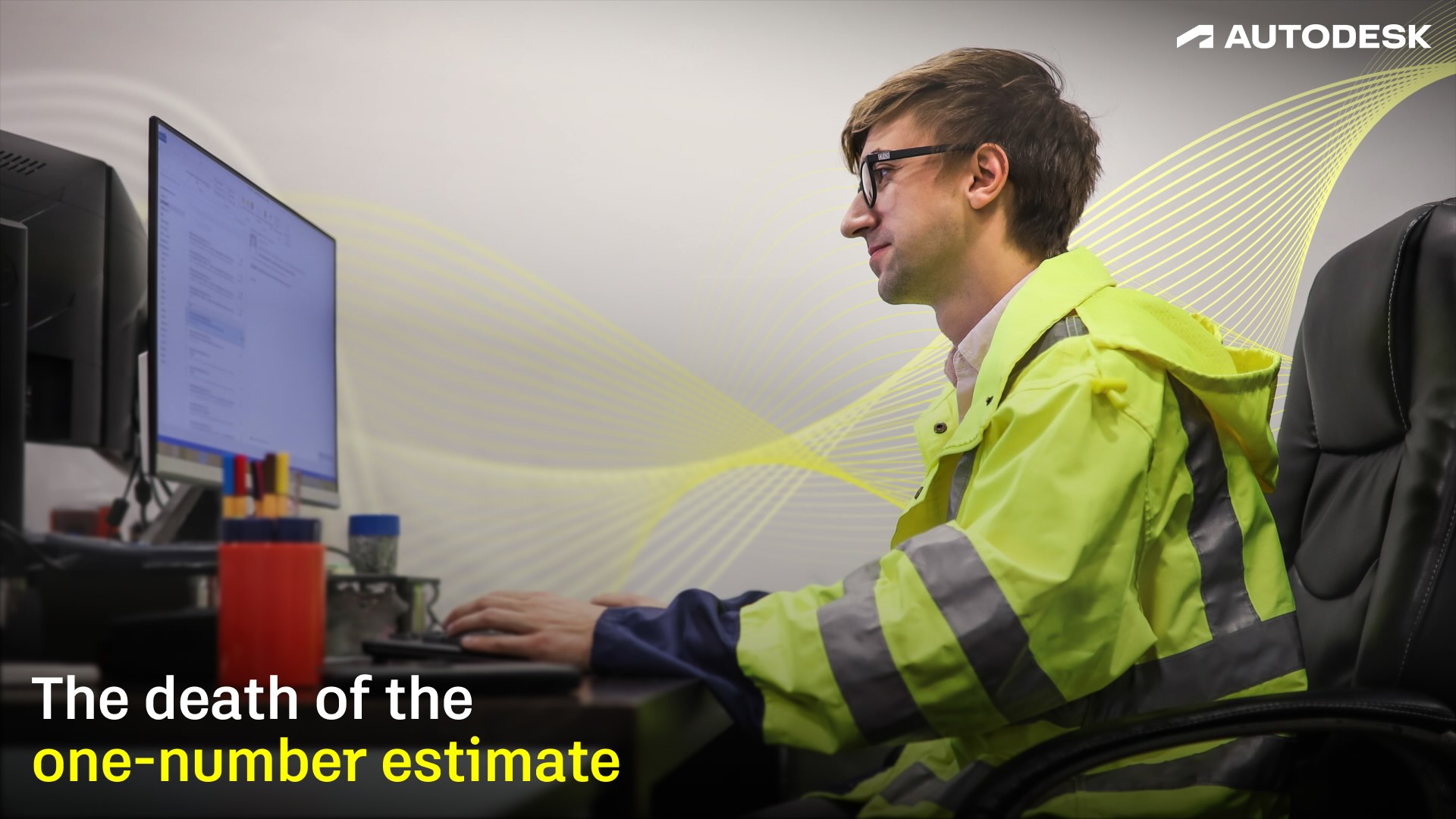
For decades, construction estimating has revolved around one number, which typically comes in the form of total project cost, GMP, or estimated cost per square foot.
That single total is meant to bring certainty, confidence, and commitment—which it did, for a while.
But the industry has changed. Projects are more complex and conditions fluctuate daily.
Today, one number no longer tells the full story. And in many cases, it even hides risk instead of explaining it.
There are several reasons the “single number” estimate no longer reflects the reality of modern construction projects.
For starters, project conditions are less predictable than ever. With material cost volatility, ongoing labor shortages, and supply chain disruptions, estimators are being asked to make high-stakes projections in constantly changing conditions.
Early estimates are often produced with partial information, but market conditions shift between estimate creation and buyout.
With that in mind, producing one definitive number doesn’t make sense, especially when so many variables are still evolving, and project teams need visibility into risk, assumptions, and potential cost movement.
The danger with having a single number is that it creates false precision and confidence. People think the estimate is fixed and reliable, but when the project or market inevitably shifts, teams are left explaining why the number changed. Here are some of the blind spots you’ll run into if you rely too much on a single number estimate.
Pricing can change dramatically between design milestones, especially on longer projects. Material costs, subcontractor availability, tariffs, and procurement delays all impact pricing in ways that are difficult to lock in early. A single number rarely shows how sensitive the estimate is to those moving pieces, which can create problems later when procurement or buyout costs come in higher than expected.
Many estimates are created before the design is fully resolved. At early stages, teams may still be working through scope gaps, coordination questions, or evolving owner requirements. Even experienced estimators are making assumptions to keep projects moving. The challenge is that a single number often makes those assumptions invisible to everyone else reviewing the estimate.
One number tends to flatten complexity. Instead of showing where uncertainty exists, it hides it behind a total cost. That makes it harder for teams to communicate exposure, contingency strategy, or areas that may still change. Stakeholders see the final number, but not the level of confidence behind different parts of the estimate.
When stakeholders see one definitive total, they often interpret it as a precise commitment rather than a point-in-time projection. That can create friction later if scope evolves, pricing changes, or design decisions impact cost.
When teams treat an early estimate as a fixed certainty instead of a working projection, problems tend to surface later in the project. Budgets drift as assumptions get revisited and scope becomes more defined. Teams often end up forced into defensive value engineering conversations that feel reactive instead of strategic. Owners may feel blindsided by cost changes, even when those changes were driven by evolving project conditions rather than bad estimating.
At the same time, estimators are put in a difficult position. Instead of being viewed as professionals responding to new information, they’re seen as being “wrong” because the original number changed. Over time, that dynamic can erode trust between project teams, owners, and trade partners, even when the estimate was reasonable based on the information available at the time.
While teams that rely on a single value estimate struggle to adapt when projects change, mature teams build flexibility and transparency into their processes and unlock benefits such as better decision-making and fewer surprises downstream. Here’s what they’re doing differently:
Strong preconstruction teams don’t pretend every number is fixed on day one. They openly discuss unknowns, assumptions, and areas where pricing may shift as the project develops.
Instead of simply presenting a total cost, they use estimates to evaluate options, compare tradeoffs, and shape project direction. For example, if a design choice pushes the project over budget, the team can quickly model alternatives and show how different materials, systems, or phasing strategies impact cost and schedule before decisions are finalized.
The best preconstruction teams stay engaged throughout the project. They don’t just drop off after delivering a number; they help owners understand cost drivers, explain market conditions, and prepare for potential changes along the way.
Instead of treating estimates as static snapshots, mature teams continuously refine them as new information becomes available. If steel pricing shifts mid-design or scope changes after coordination meetings, the estimate evolves alongside the project.
Experienced teams spend less time defending one final number and more time explaining what influences cost. They discuss pricing ranges, escalation exposure, procurement risks, and scope decisions to help stakeholders make informed choices.
Not every part of an estimate carries the same level of certainty, and mature teams make that clear. They communicate which numbers are highly validated and which are still based on assumptions or early design inputs.
The goal of modern estimating isn’t to predict one perfect number of that’ll dictate the project's cost. Rather, it’s to help teams understand possible outcomes and make smarter decisions as projects evolve.
Forward-thinking estimators are moving away from presenting a single “final” number and toward giving teams a clearer view of possible outcomes. Instead of creating false confidence through precision, mature preconstruction teams provide ranges, explain cost drivers, and model different scenarios based on changing project conditions.
That approach helps stakeholders understand not just what the project may cost, but why those numbers can change over time.
Beyond improving estimate accuracy, estimates built around informed ranges pave the way for smarter decision making. Consider the following:
When owners understand pricing ranges and risk drivers early, they can make proactive decisions before problems surface downstream. Let’s say a project team identifies potential escalation risk on electrical materials early in design. In this instance, the owner may choose to procure certain packages sooner rather than deal with surprise cost increases months later.
Strong estimating teams use cost information to guide conversations, not defend a final number after the fact. The estimate becomes a working tool that helps teams evaluate direction, timing, scope, and priorities throughout preconstruction instead of something that only gets judged at buyout.
When estimates evolve alongside design, teams can compare options with a clearer understanding of budget impact. For instance, a project team may evaluate two façade systems side by side and quickly see how each option affects not only cost but also schedule, procurement risk, and long-term constructability.
Better estimates create space for earlier conversations about priorities and constraints. If an owner wants to accelerate the schedule while maintaining a fixed budget, teams can openly discuss what tradeoffs may be required, whether that means adjusting scope, changing materials, or resequencing phases.
When uncertainty, assumptions, and risks are communicated early, teams spend less time defending why numbers changed later. Stakeholders already understand the factors influencing cost, so conversations stay focused on solutions and decision-making instead of blame or surprise.
Moving away from the single number estimate changes the relationship owners and project teams have with the estimate itself.
Instead of treating it as a fixed promise, teams begin using it as a shared planning tool that evolves alongside the project. In the process, owners gain a clearer understanding of where risks exist, what assumptions are driving cost, and which variables may still change as design progresses.
That added transparency helps teams align earlier on realistic outcomes. Conversations also become more collaborative because stakeholders already understand the “why” behind potential cost movement. Rather than debating whether an estimate was right or wrong, teams can focus on evaluating options, managing tradeoffs, and making informed decisions together.
All of that leads to greater trust over time, as owners feel better prepared because expectations are set earlier and reinforced throughout the process. Project teams spend less energy defending numbers and more energy helping stakeholders navigate complexity. The estimate stops being a scorecard and becomes a reference point everyone can use to guide the project forward.
A single number may feel simple, but simplicity doesn’t always equal accuracy. Construction projects are influenced by evolving designs, changing market conditions, and countless moving parts. Presenting one fixed number can create the illusion of certainty when uncertainty still exists.
On the flip side, ranges, scenarios, and transparent conversations may feel more complex, but they give teams a more realistic way to plan and make decisions. Mature preconstruction teams understand that clarity builds stronger outcomes than false precision ever could.
When owners understand risks, assumptions, and tradeoffs early, projects run with fewer surprises and more alignment.
That transparency also strengthens long-term relationships because owners are more likely to trust and partner again with teams that communicate honestly and help them navigate complexity.
If you’re ready to create more transparent, collaborative, and realistic preconstruction workflows, here are some action steps to move beyond the single number today:
While accurate numbers are essential, the future of estimating is more about helping owners and teams make smarter decisions with better context and realistic expectations.
The “single number” estimate may have worked in a more predictable era, but today’s construction environment demands more flexibility and transparency. Mature preconstruction teams understand that trust is built through insight, not the illusion of certainty.
In a world where projects, pricing, and priorities can shift quickly, the teams that communicate openly about risk, assumptions, and tradeoffs will be the ones best positioned to lead projects successfully from preconstruction through closeout.
Ready to modernize your preconstruction workflows? Check out the preconstruction bundle to see how connected tools can help teams estimate with more clarity, collaboration, and confidence.