Every project starts with big expectations and even bigger unknowns. And in construction, the people making the most critical decisions often don’t get the benefit of repetition.
For certain projects (e.g., hospitals and large-scale campuses), owners might take them on only once or twice in their careers because they unfold over decades and require massive investments. As such, every decision carries weight, and there’s no real playbook to fall back on.
So how should teams move forward with confidence when the stakes are this high?
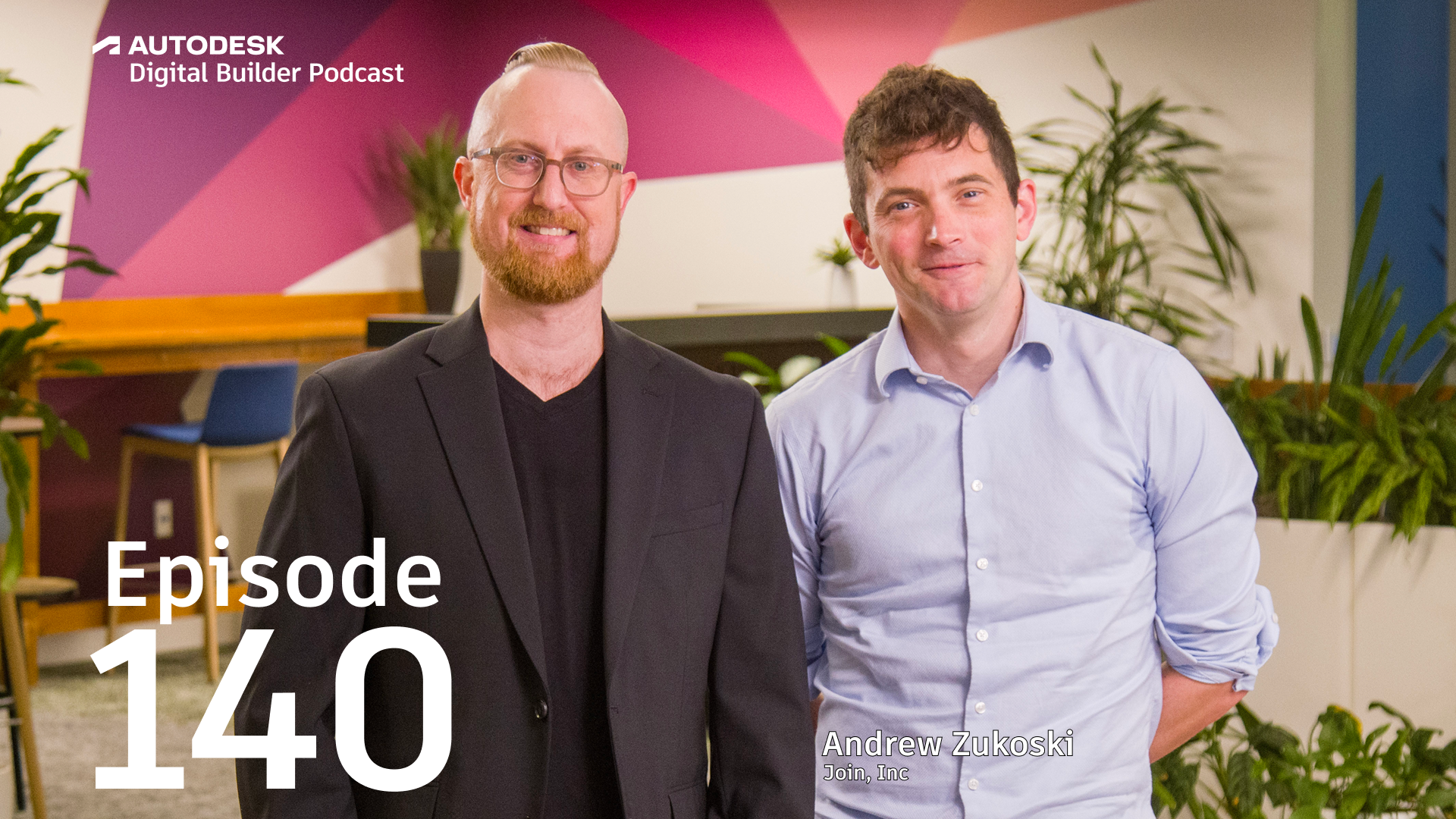
On this episode of the Digital Builder podcast, I sit down with Andrew Zukoski, CEO of Join.Build, to unpack the realities of preconstruction through the lens of the “eternal beginner.” We dig into why owners struggle to make high-stakes decisions, how early collaboration shapes project outcomes, and what it takes to build trust across teams.
We discuss:
To become an expert, you must get your repetitions (i.e., reps) in. This is a privilege that many owners simply don’t have because they may only take on a handful of major projects over an entire career.
Andrew puts it plainly: “Every project is unique, so every owner is like an eternal beginner in a way.” Even experienced owners don’t get many reps when it comes to large, complex capital projects. They might have built projects before, but not this building, with these stakeholders, and this market.
The tricky thing about being an owner is that they’re expected to make high-impact decisions around cost, schedule, and outcomes, with limited information. There’s a gap between the decisions they need to make and the data available to guide them.
Andrew brings up a recent healthcare project as an example.
A project director shared that his entire career will likely consist of just three major hospital builds. That means when he runs into a challenge, there’s a good chance he’s only seen it once or twice before, and possibly years apart. The stakes are massive, but the opportunity to learn through repetition is limited.
Another major challenge for owners? Wrangling stakeholders.
As Andrew explains, owners are trying to coordinate “hundreds, if not thousands of different stakeholders” to solve a problem.
These aren’t teams that have worked together for years. They’re groups brought together to design and build something incredibly complex.
That’s why the early stage matters so much. You’re not just planning a project. You’re setting the tone for how people will work together for the next several years.
Early trust shapes everything that follows
“Upfront planning goes a really long way,” Andrew says. But it only works if the right people are involved early and actually working together. The tough reality is that many teams enter preconstruction with a baseline assumption of friction.
“The challenge is these people have never worked together before, and there's a baseline assumption of an adversarial relationship that permeates not all of, but a lot of the industry,” he explains.
The most successful projects flip that dynamic early. Andrew points out that the biggest impact doesn’t come from a specific tool or process. It comes from “the level of trust and transparency that the owner both demands and sets early on.”
The ripple effect shows up on site
The positive dynamic mentioned above isn’t just a feel-good idea. It shows up in real outcomes.
Andrew shares an example from YouTube’s headquarters project, which was built under intense pressure during COVID. For him, what stood out wasn’t just the building itself—it was how people talked about the experience.
“The thing that struck me was that people got really emotional talking about this project ending. And it was part of this pattern that we've seen when you ask people about their favorite project. It’s very rarely something about the building. It’s almost always about the dynamics of that cross-functional team.”
That says a lot and shows that when they’re working in a high-trust environment, teams don’t just deliver better projects; they also enjoy the work. They solve problems together instead of fighting through them. And that energy carries from early planning all the way to the field.
You can’t leave it to chance
None of this happens by accident. Teams are often thrown together, asked to align quickly, and expected to deliver results right away. They may even have to start by delivering bad news about cost or feasibility.
That’s exactly why owners must be intentional. If you’re an owner, you need to set expectations early and create space for transparency. Because once that foundation is in place, everything else gets easier.
One of the biggest challenges in construction isn’t just making the right decisions. It’s making sure everyone stays aligned as the project evolves.
According to Andrew, most owners don’t come in with a defined playbook. Instead, “they rely on their stakeholders and partners to introduce them” to new tools and ways of working. Over time, those experiences carry forward into future projects. But that also means consistency can be hard to maintain, especially when every team and project looks different.
Part of the problem is visibility. In the field, progress is obvious. You can walk the site and see what changed. Preconstruction isn’t like that. “It’s a spreadsheet no matter what,” Andrew says. And when everything lives in disconnected files, it’s tough to understand what changed, why it changed, and what needs to happen next.
The fix isn’t just better communication. It’s creating a shared system where everyone can see the same information at the same time.
As Andrew puts it, “Having a system that holds that data that takes some of the pressure off the individual walking in to have to be the bearer of bad news.”
In other words, when the full process is visible, from early design through GMP and into the field, teams don’t have to rely on individuals to carry context. It becomes something everyone can collaborate around.
That shift also changes accountability. Instead of one person being the bearer of bad news, responsibility becomes shared. Owners understand the impact of delays or changes. Teams stay aligned around the same goals.
“It turns into natural mutual accountability,” explains Andrew. The owner isn’t just overseeing the project from a distance. “
Teams need owners to understand “the consequences of delay in a decision or the consequences of changing their mind.” When that awareness is there, accountability flows both ways.
If there’s one lever owners can pull to improve project outcomes, it’s this: invest earlier. “Precon and design is not the time to be penny-wise and pound-foolish,” he remarks.
When owners treat preconstruction as a place to cut costs, they limit the quality of the inputs they receive when it matters most.
On the flip side, when owners put real investment into precon, teams show up differently. Builders and trade partners can “bring their best team to the table” and stay engaged from the start.
“I think if owners understood that and saw the difference it made in project outcomes, it would be really good for them and all the stakeholders on the team.”
The dynamic between owners, architects, and contractors is changing. Andrew sees tech and AI as major drivers of this shift.
“Owners are increasingly sophisticated,” he states. Technology, including AI, is making it easier to access data, compare options, and understand tradeoffs. That means fewer decisions are based on guesswork or information gaps. It’s also getting “much harder to build a profitable business based on asymmetric information.” You can’t win just by knowing more than the owner anymore. You have to deliver real value.
That shift raises the bar for everyone involved. Owners are better equipped to push projects toward their goals. And partners who align with those goals will stand out.
On the design side, things are getting more complicated. Andrew believes the role of architects and engineers isn’t going away, but where they sit in the ecosystem might change. More of that expertise could move closer to builders. Why? Because at the end of the day, “the owner doesn’t want a design… they want to turn that into a building.”
As general contractors expand their capabilities, especially in design-build and CM-at-risk models, they’re increasingly bringing more services in-house. Not everything, but the parts that help them control risk and deliver outcomes.
Digital Builder is hosted by me, Eric Thomas. Remember, new episodes of Digital Builder go live every week. Listen to the Digital Builder Podcast on:
or wherever you listen to podcasts.