 Eddy Krygiel

We have recently been talking, blogging, presenting, and posting quite a bit about the AECO industry’s need to focus on making our project data better. To help the industry drive towards better data, we are excited to announce our next step in the journey towards data-rich BIM with the launch of Autodesk Datum.
Better data in our models and documents doesn’t just mean better analysis, it means less change orders, errors and omissions, and a more predictable design process.
Hasn’t that always been the holy grail of design and construction? To take a process that is rife with unpredictability and try to tame it?
Designers, engineers, and contractors have long sought to make design and construction predictable, repeatable, and in many ways, standardized. We need to follow building codes, health and life safety requirements and ensure the building functions for its tenants.
Improving the accuracy and predictability of documentation and building analysis with BIM
We have been using Building Information Modeling (BIM) for decades now to improve the accuracy and predictability of documentation and to make building analysis more reliable. BIM has helped the industry dramatically reduce several problems. For example, when was the last time you had to run through a drawing set and double-check all the references?
Building Information Modeling technology has been focused primarily on the Building and Modeling aspects for the past 20+ years. We can collaborate on cloud-hosted models and render them with life-like accuracy. However, we have not spent the same amount of time working to make the Information part of BIM as robust. Autodesk has been investing in the ‘I’ of BIM to make the information—the data behind how we design, engineer, and build—more predictable and reliable. Our most recent solution is Autodesk Datum.
What is Autodesk Datum?
Datum is a full asset lifecycle information management tool that allows users to specify, connect, and validate asset information throughout the project lifecycle. The tool decouples asset information with the models, meaning both non-model and model data are supported.
Datum manages information requirements, data standards, change tracking, and progressive assurance so that data remains trusted. While this information management tool is not a data exchange, Datum helps ensure all exchanged data is valid, structured, can be used and reused – and is reported in a consistent format to meet stakeholder expectations.
Let’s unpack this a bit using a globally recognized data module – the humble Lego® brick.

Striking similarities between Lego bricks and BIM
Lego bricks are not very different than objects in BIM – they are pseudo-generic representations of real-life elements shown in a simplified manner. They can be as simple as a simple ‘brick’, or as arranged in a sophisticated manner illustrating a more complex assembly of parts like a doorway or a person. So how do Lego bricks relate to Datum and the Information component in BIM?
All our projects in part contain a task – or challenge – to organize data. We need to specify, connect, and validate information so we can report the information in door schedules, fire ratings, or layout plans. Locating the information we need—when we need it— is nearly impossible without any sort of organizational principles.
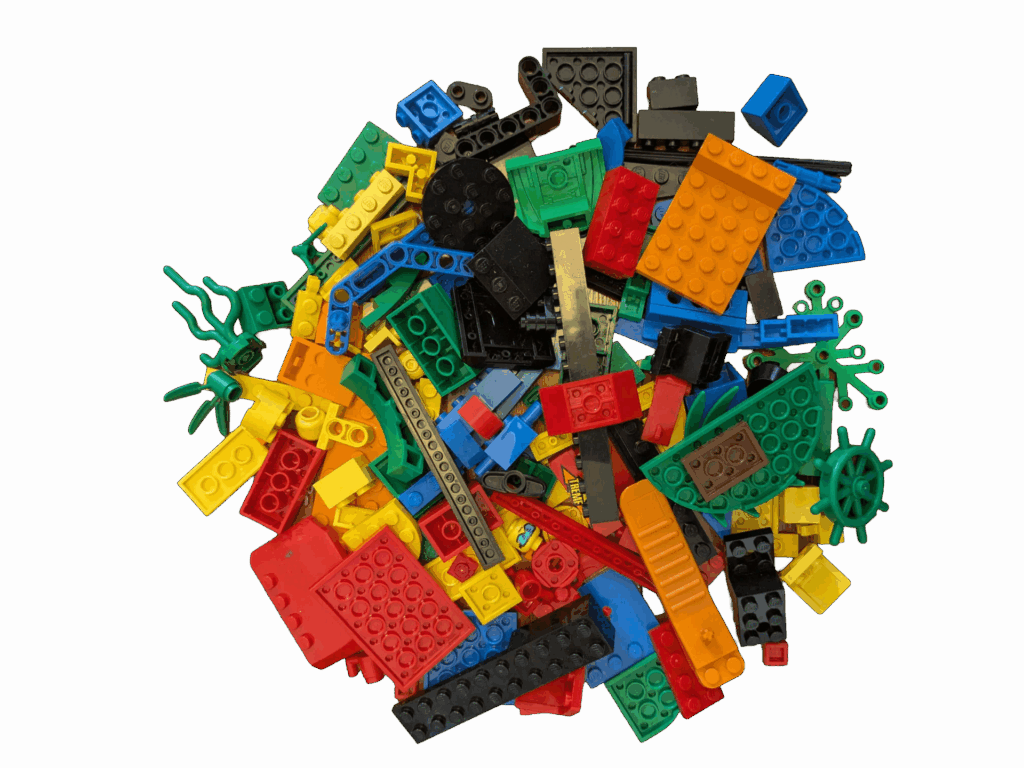
For years, we have used classification systems, BIM standards, and other workflows to help organize our data in projects. Most of the time, we get the data into a state of ‘good enough’. This allows us to attain a level of semi-organized information and standards and get the documents out the door in a reasonable state.
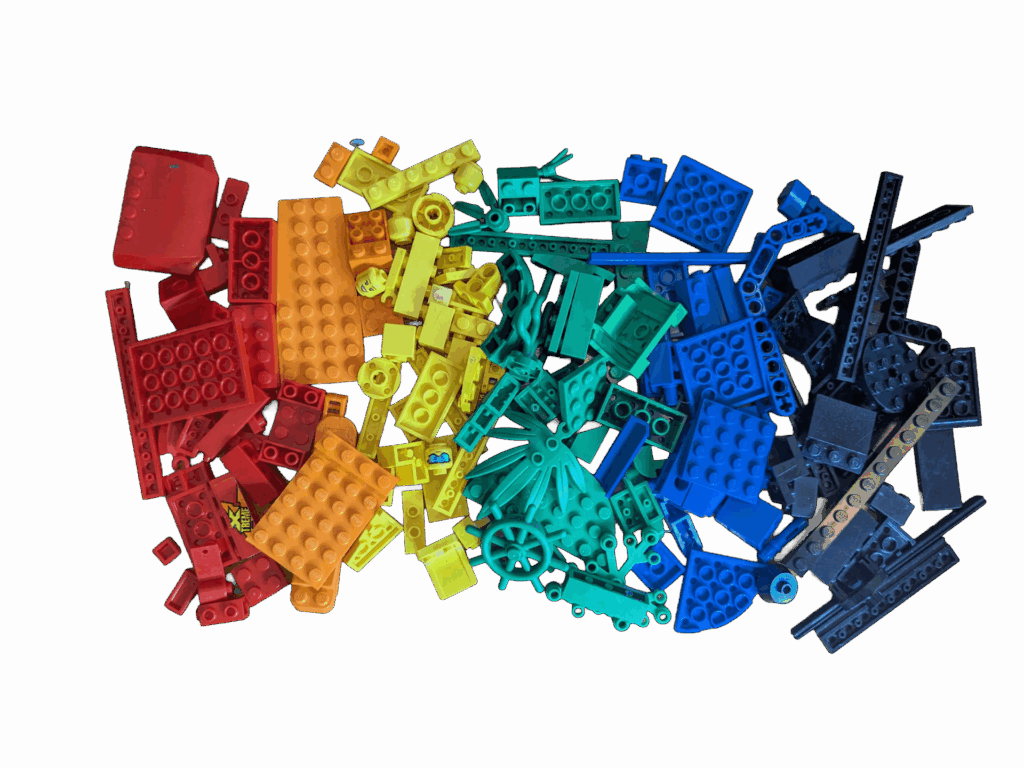
Enhancing outcomes with more accurate and reliable data
‘Good enough’ will soon no longer suffice. Both our projects and document sets are getting larger and more complex. The number of models in a project continues to grow. Simple data management tools won’t be enough if this trend continues—and the complexities will continue. In addition, there is growing demand to leverage AI and automation for repeatable tasks, further prompting the need for reliable data.
BIM data must be more accurate, reliable, and a closer reflection of the proposed building to build users’ confidence that this data will improve outcomes, enhance predictability, and support more design iterations in less time.
But we will need better data to achieve these goals—and that isn’t a process we can simply brute force. While we need better data, we need to make it easier to achieve– it can’t be at the cost of more time or less attention to design.
This is where tools like Datum become valuable. Datum applies an organizational structure to the data to help validate the entries and shape the inputs based on one or more standards. The information management tool can take the pile of Lego bricks and help designers, engineers, contractors, and owners structure them in a way that can be easily understood and converted from one standard to another.

My friends with lots of Lego bricks rarely throw them all in a bin. Instead, the Lego bricks are sorted by color, size, or type of block. Managing Lego bricks by hand can be tedious. Imagine, however, if organizing these building blocks wasn’t so difficult. If the act of sorting could be reduced to simply defining a sorting structure.
It is not much different in BIM today – the act of sorting the data can be tedious and time consuming. But if we can apply tools that can organize the data at scale, that same data now becomes an asset instead of a burden.
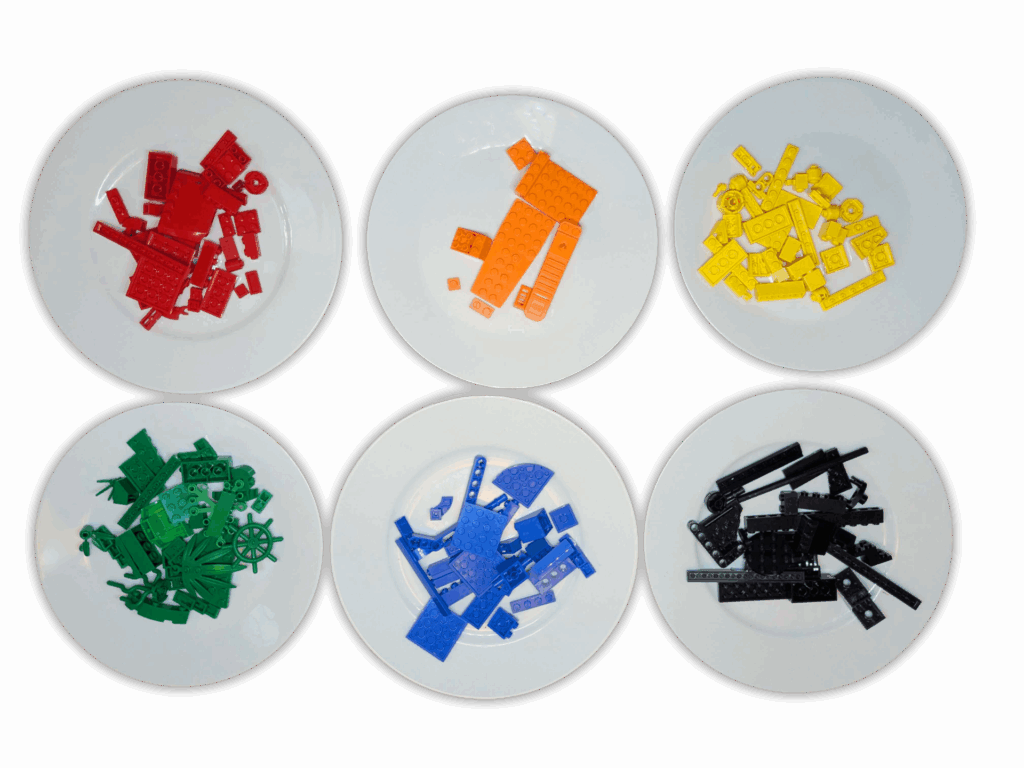
The purpose of Datum is not to create data for the sake of more data. The asset lifecycle information management tool helps elevate the process of design, engineering, construction, and operations so we can create superior buildings that perform better and last longer.

We are continually working to make the process of building more predictable and to drive better outcomes. The next step in our BIM evolution is to focus on the Information, to create better data, and ultimately, better buildings. We are working hard to solve the data problem and make data accessible not only to buildings, but roads, rail, and other project types. Data accuracy isn’t a building problem – it impacts all design, engineering, and construction industries. You can find out more about the AEC Data Roadmap here.
Interested in finding out more about Autodesk Datum? You can find information about the newly released tool on Datum’s website or contact your Autodesk account manager.
Ready to reimagine AECO projects with smarter, connected data? Watch our on-demand webinar “Unblocking the Future of AECO: Autodesk’s Data Roadmap for Smarter Projects”.
Photography courtesy of Alexine Gordon-Stewart.
LEGO® is a trademark of the LEGO Group of companies which does not sponsor, authorize, or endorse this article.