September 5, 2017
5 Questions for Kate Morrical
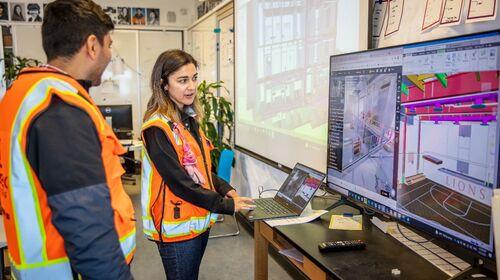
Kate Morrical is the digital design manager for Robert Silman Associates, a structural engineering firm with offices in New York; Washington, DC; and Boston. She is also president of AUGI (Autodesk User Group International). Here we ask her 5 questions about AU and the role it has played in her professional development.
How would you describe your career path?
My career path has been fairly traditional in some ways, and very nontraditional in others. I entered college as a structural engineering major, and never wavered from that. I also talked my way into some internships at design firms even before I started college, when I knew absolutely nothing about engineering...so they gave me CAD work instead. I quickly got hooked on the technology, and when I landed my first engineering job out of school I also got involved with CAD standards development and implementation, and later, with Revit. One of my earliest AU memories is Matt Murphy's class, The Productivity Power of AutoCAD Tool Palettes—Revealed. I went home and made some for us right away!
A few years later, I left engineering and went to work for Autodesk on the AutoCAD and AutoCAD LT marketing teams. Because I was focused on technical marketing, I was able to use my CAD and training skills while improving others like video creation and public speaking.
In 2012, I rejoined my former engineering firm as the digital design manager. This role is a great fit for me because I'm able to research the fascinating developments in AEC technology while supporting my colleagues with their day-to-day design and documentation challenges.
You’ve been a part of AU for several years. How have your AU experiences and the AU community impacted your work? What have you gained through them?
AU is actually a big reason why I answered the first question the way I did! From the beginning, AU has been a resource for the professional development I needed to do my job. It's provided technical knowledge, opportunities for "soft skill" development, writing and public speaking, and, last but not least, networking.
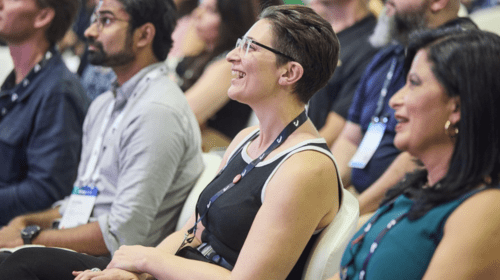
Many of my professional contacts have been made or strengthened at AU and other technical conferences. It was at AU that I made the contacts that led to my joining Autodesk, and it's where I met members of the AUGI (Autodesk User Group International) community in person (after chatting online for years), which laid the groundwork for my AUGI Executive Team roles. I served first on the board of directors and then as president. Even if you're not actively looking for a new job (and I'm not!), having this extended network of colleagues who can support you—or vice versa—is an amazing professional resource.
 Has AU helped solve professional challenges?
Earlier in my AU career, I was more likely to attend classes focused on picks-and-clicks, and would bring back tons of stuff that was immediately useful. These days, I tend to choose more "blue sky" sessions, and come home with more ideas of what could shape our practice in the future—hopefully the near future. But even if the session topics are a little more abstract, I always collect several tips and tricks just from chatting with other attendees!
One of my favorite parts of AU is discussing some really obscure quirk of some software package or other—everybody else will usually say, "Yeah, I've seen that too!" and at least one person will follow up with, "And here's how we fixed it!"
Has AU helped solve professional challenges?
Earlier in my AU career, I was more likely to attend classes focused on picks-and-clicks, and would bring back tons of stuff that was immediately useful. These days, I tend to choose more "blue sky" sessions, and come home with more ideas of what could shape our practice in the future—hopefully the near future. But even if the session topics are a little more abstract, I always collect several tips and tricks just from chatting with other attendees!
One of my favorite parts of AU is discussing some really obscure quirk of some software package or other—everybody else will usually say, "Yeah, I've seen that too!" and at least one person will follow up with, "And here's how we fixed it!"


Has AU helped solve professional challenges?
Earlier in my AU career, I was more likely to attend classes focused on picks-and-clicks, and would bring back tons of stuff that was immediately useful. These days, I tend to choose more "blue sky" sessions, and come home with more ideas of what could shape our practice in the future—hopefully the near future. But even if the session topics are a little more abstract, I always collect several tips and tricks just from chatting with other attendees!
One of my favorite parts of AU is discussing some really obscure quirk of some software package or other—everybody else will usually say, "Yeah, I've seen that too!" and at least one person will follow up with, "And here's how we fixed it!"