Uravu Labs is designing a future where water comes from the air
From student innovation to global impact, discover how Bengaluru start-up Uravu Labs is reshaping water access for industries and cities worldwide.
Divya Ramaswamy
4 min read
Facing increasing water scarcity, innovators are rethinking how communities can source and manage this vital resource.
Bengaluru-based Uravu Labs is developing modular systems that extract clean water from the air, combining advanced engineering with sustainable design.
CEO Swapnil Shrivastav and his team use digital tools and collaborative processes to scale their technology, delivering reliable water solutions for industries and cities.
Water shortages are a daily reality for millions of people in cities and communities around the world. In the heart of Bengaluru, India, a start-up is quietly revolutionizing how to think about water, climate tech, and manufacturing. Uravu Labs, led by CEO and co-founder Swapnil Shrivastav, is on a mission to decouple water from geography, making abundant, clean water from the air itself. Their work is driven by a simple question: What if access to water didn’t depend on local supply or infrastructure?
Uravu Labs’ journey began in 2012, when the founding team—inspired by the moisture “vaporators” in Star Wars—conceived the idea as part of a student competition on the future of water in cities. The concept gained urgency in 2016, during a critical water shortage on their college campus that lasted several weeks. Motivated by this real-world crisis and their ongoing research into wastewater treatment, the team built and tested its first solution.
What started as a side project soon evolved into a dedicated effort. By 2018, Uravu Labs was selected as a top 5 global finalist for the Water Abundance XPRIZE, securing a $50,000 grant. The company was officially incorporated in 2019 and has since grown to a team of 40, with installations in Bengaluru and Abu Dhabi, and projects underway for data centers in the US.
Uravu Labs’ approach is rooted in engineering, collaboration, and a drive to solve real-world problems. By rethinking how water is sourced and delivered, the team is helping communities find solutions that work, whether for a single building or an entire city. Supported by funding from deep-tech impact fund AWE Funds, a portfolio organization of the Autodesk Foundation, Uravu Labs is employing a hands-on approach to design and manufacturing, demonstrating how practical engineering and teamwork can turn a simple idea into something that changes lives.
From prototype to production—faster, cheaper, bigger
In the early days, Uravu Labs’ first prototypes for absorbing water from the air produced just five liters of water per day for 10 to 12 cents per liter. Through years of research and development, the company has scaled its technology to deliver up to 5,000 liters per day, reducing costs to two cents per liter. “We are now on Gen three of our technology stack,” says Shrivastav. “We are hitting these low costs and have further plans to scale it, to bring it to one cent per liter and lower.”
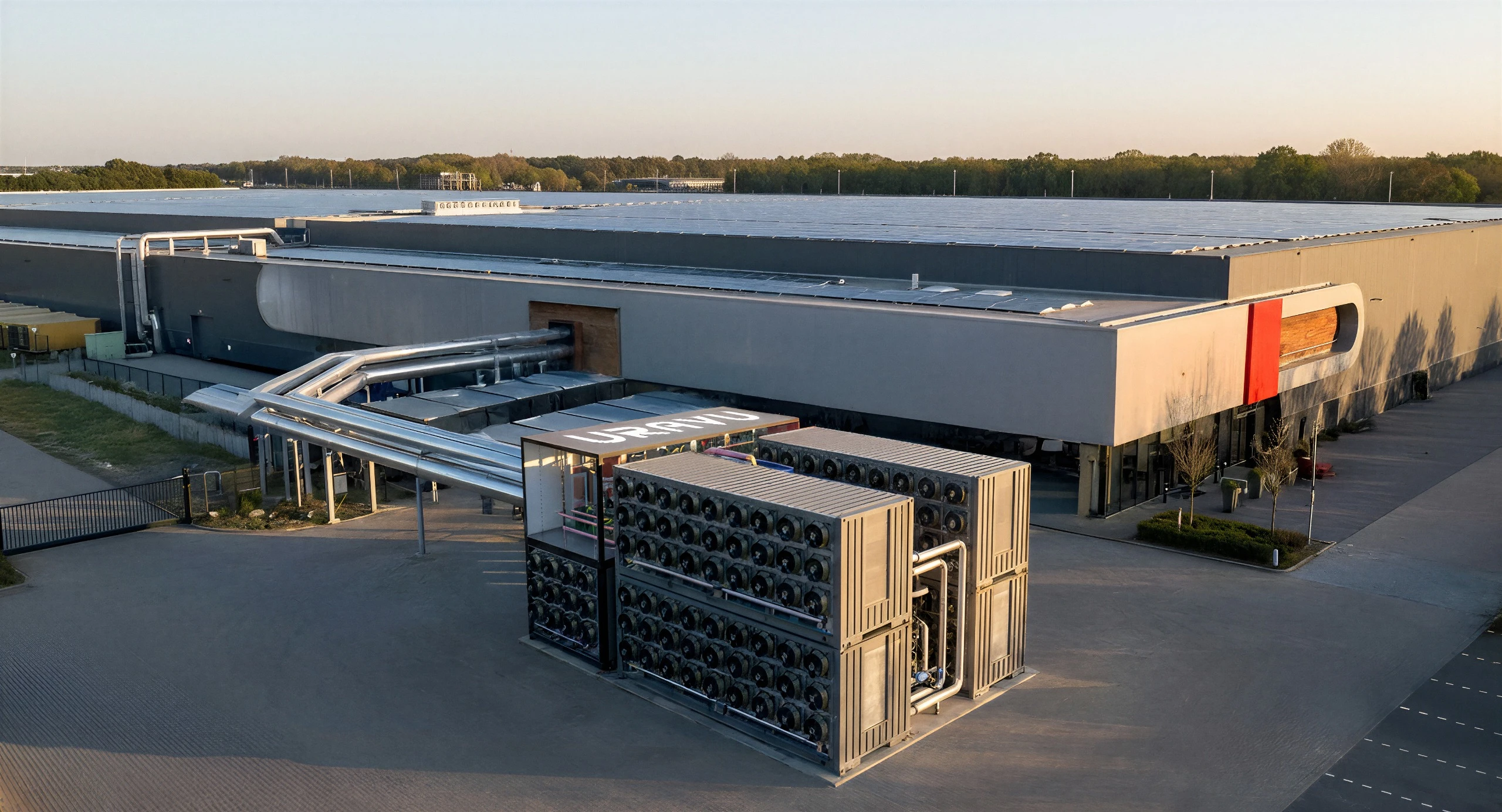
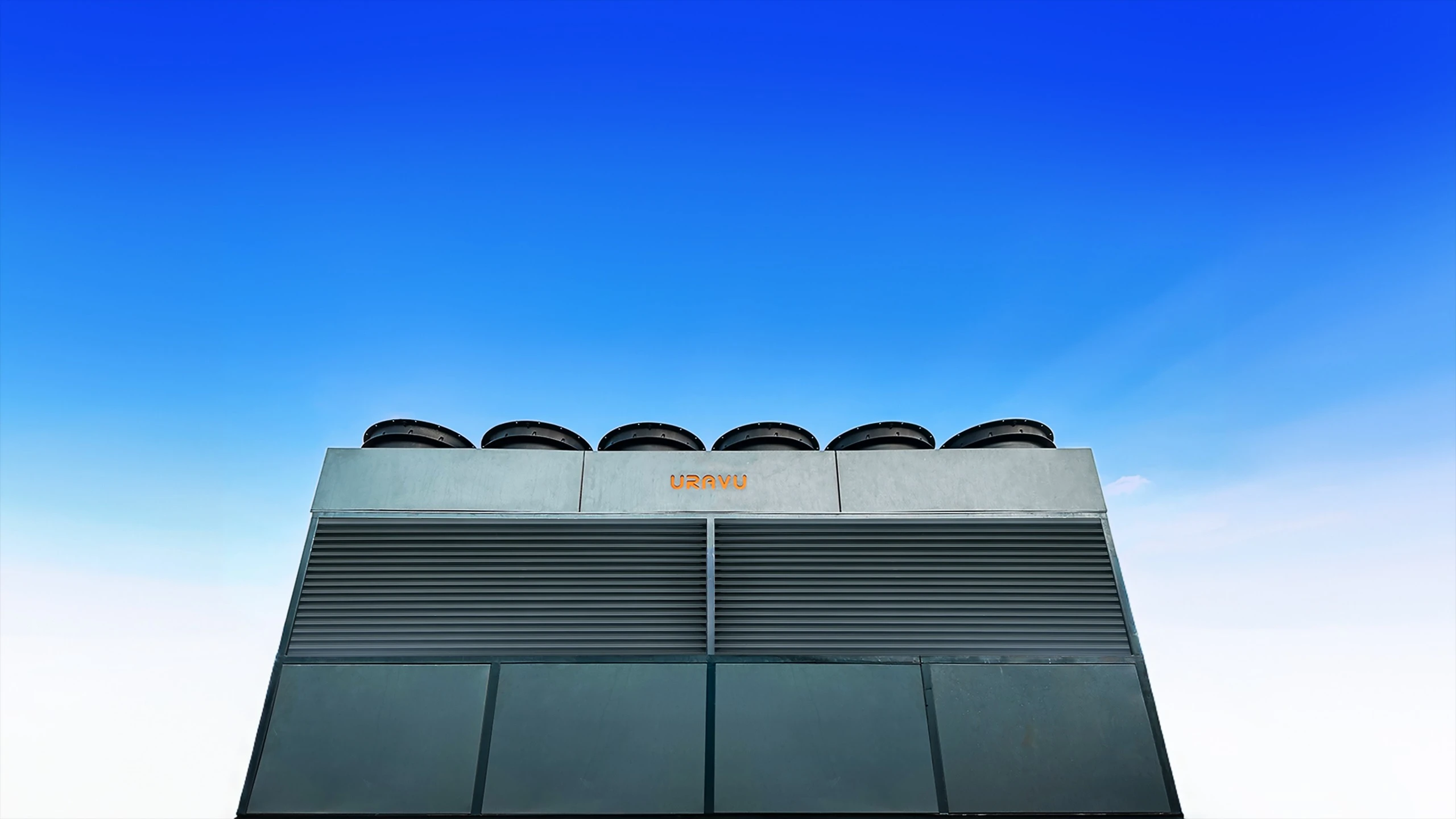
Uravu Labs’ systems are designed to fit inside a standard 20-foot shipping container, making them easy to deploy and maintain. The team has reduced the number of main components from 20 or more to just five, shrinking the footprint by a factor of 10 while increasing output. “We design many custom parts that we then machine, fabricate, assemble, and finish with different kinds of welding, joints, and more,” Shrivastav says.
Through an Autodesk Foundation-supported Engineering for Change fellowship, Uravu Labs adopted Autodesk Inventor and CFD for product design, 3D modeling, and computational fluid dynamics (CFD) simulation. This has helped accelerate design and manufacturing processes, enabling a more efficient transition from prototypes to production-ready models.
Two years ago, Uravu Labs launched its first commercial application in the beverage industry, supplying its packaged FromAir drinking water to hotels and industrial clients in Bengaluru. This pilot has already reached nearly one million dollars in annualized revenue. “We wanted to show that a first-of-its-kind plant can deliver immense business value,” Shrivastav says. The company is now expanding to new locations and sectors, including data centers and commercial cooling.
Digital modeling and real-time data fuel the path to scale
Digital tools are central to Uravu Labs’ processes. “Everything starts with simulations, including the material itself,” Shrivastav says. These simulations model airflow, mass transfer and heat transfer inside the absorber subsystem, which helps to identify recirculation losses and optimize packing configurations.
Within the operating facility, real-time data from sensors and Internet of Things (IoT) systems help monitor performance and optimize operations. Uravu Labs is also developing a digital twin of its factory, integrating production, bottling, and inventory into a virtual model for better planning and scalability.
Building the future of water through ingenuity and purpose
Uravu Labs is optimistic about the future of climate technology and environmental engineering. Shrivastav sees growing opportunities for new solutions, driven by falling renewable energy costs and encouraging government policies in India.
“Whether it’s design and manufacturing or the broader environmental tech and climate industry, there’s a tremendous opportunity for innovations and new solutions to emerge,” he says. “I’m excited to witness that.”
Uravu Labs’ story is a testament to what’s possible when necessity meets ingenuity. By combining practical engineering, digital innovation, and a commitment to collaboration, the team is helping communities build resilience and improve quality of life—one drop at a time.
About the author
Divya Ramaswamy
Divya Ramaswamy is a content manager at Autodesk who has spent more than a decade finding the story inside complex ideas across brands and industries, bringing together research, strategy, and a strong editorial instinct. A Gen AI enthusiast, she spends her time outside work reading, getting deep into a film or TV series, baking, doodling, practising yoga, or plotting her next long road trip.