Coalfield Development is transforming Appalachia into a solar haven for its people
Coalfield Development stands at the forefront of Appalachia’s clean energy revolution—turning challenges into opportunities.
Kylee Gordon
8 min read
Coalfield Development’s 33-6-3 model blends hands-on training, higher education, and personal development, helping West Virginians clear real-life barriers and grow enduring careers.
The team breathes new life into long-vacant properties and plans to install solar on abandoned coal mines, inviting communities to help build what comes next.
Partnerships with the United Mine Workers, Solar Holler, and philanthropic allies show clean energy and resilience projects can unite neighbors around more stable, diversified energy and job opportunities.
There was a time when the coal-mining region of Southern West Virginia was thriving. Jacob Hannah, CEO of Coalfield Development, remembers his father telling him about it when he was younger. “I’d be driving in the truck with my dad,” Hannah says, “and he’d point to old empty buildings and say, ‘That was the grocery store where I used to go and get food as a kid,’ or, ‘At Christmas time, you couldn’t walk down the street because it was so full of people shopping and so vibrant with life.’” Hannah’s father was the third generation in his family to mine coal, but that tradition wasn’t destined to last. “My dad was one of 6,000 other dads who were laid off during the decline of the coal industry,” he says. He remembers his dad opening his final paycheck and his “look of loss, trying to figure out what comes next because that was pretty much the only employer in town.”
Tensions between solar and coal
Since the crash of what Hannah calls the “mono economy” of the coal sector, West Virginia’s people have suffered due to fewer opportunities for dignified work and education.
“You got folks who are trying to take care of their grandparents and raise their own kids with no childcare, and there’s no access to healthy food,” Hannah says. “And maybe they had their driver’s license revoked because they missed some payment or due date, and they can’t get to their jobs. So, there are these barriers to employment.”
But Hannah is determined to change that. He was the first in his family to get his GED and go to college. He calls it “that first unlocking step” to a better future, so he carries his GED card in his wallet as a reminder.
“Huntington was once labeled one of the unhealthiest communities in America, and now that has done almost a complete 180 in our state. But just like they didn’t build Rome in a day, we can’t rebuild Appalachia in a day.”
Hannah received a scholarship from Bucknell University in Lewisburg, PA, to study sustainability management, but at first, he was conflicted about working in the green energy sector.
“For the longest time, I had a lot of internalized frustration towards anything renewable because the only communications I heard about the sector were, ‘Every solar panel installed is a coal miner job lost,’ so it was challenging to know what to do next,” Hannah says. But then he started to see solar as a resource to build back the community after the coal mines closed.
After all, this year’s Lazard report, which calculates an energy resource’s levelized cost, shows that renewable energy—even without subsidies—now outpaces cost-effectiveness compared to gas and coal plants. It’s a key consideration in keeping up with the energy demand for data centers and AI.
The opportunity
Seven years ago, Hannah reached out to Brandon Dennison, the founder of a nonprofit called Coalfield Development. At the time, Coalfield was focused on workforce development and community revitalization, but Hannah thought it was missing the environmental energy component, so he volunteered to work with Dennison to strengthen the business model. Seven years later, he’s the CEO of the company.
Since then, Coalfield has trained 1,500-plus people in renewable energy, construction trades, and sustainable agriculture, creating more than 600 new jobs in sustainable sectors.
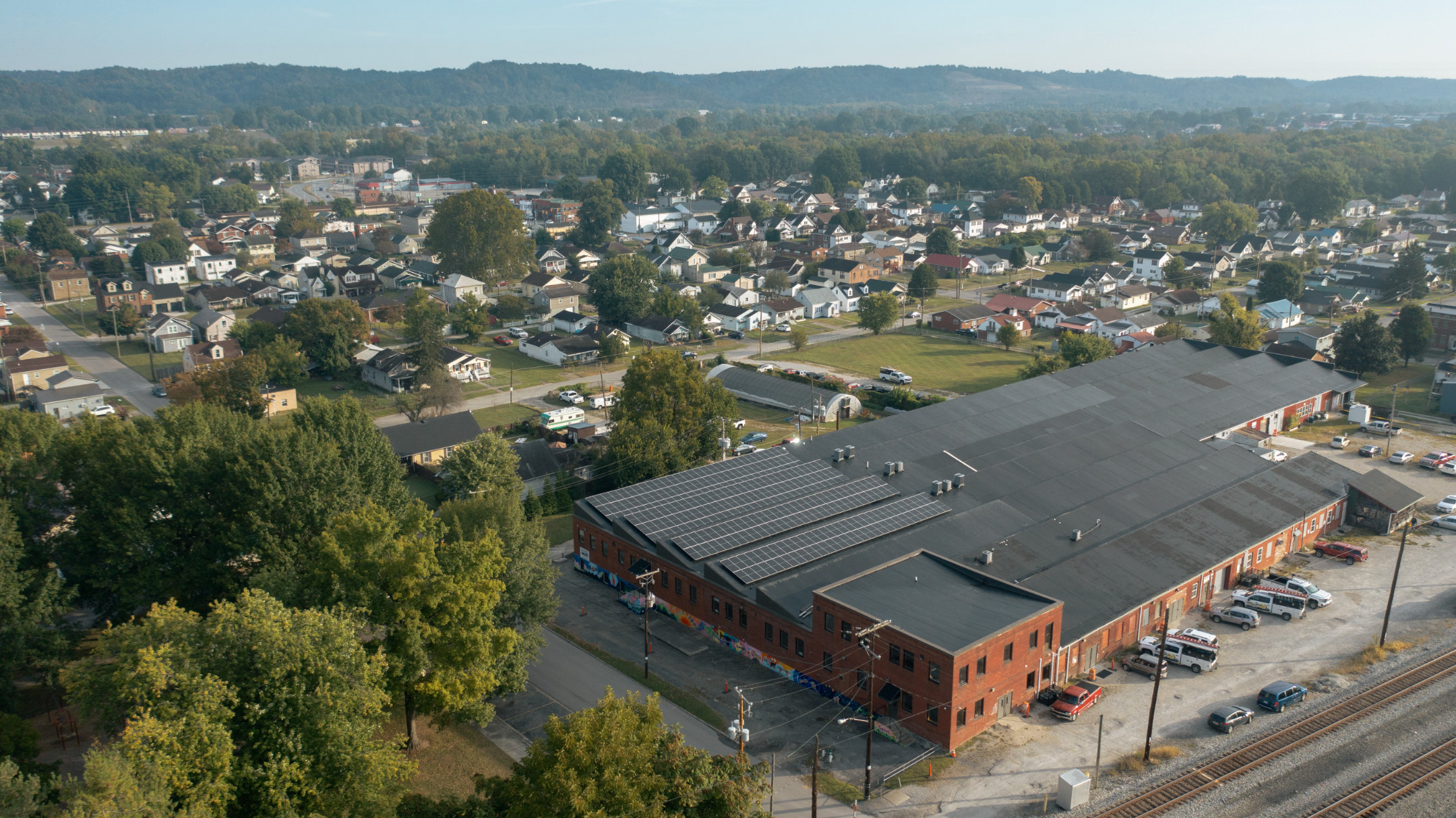
To date, the company has transformed more than 350,000 square feet of abandoned properties into multi-use community spaces. And its Huntington headquarters houses what was, at the time of installation, West Virginia’s largest rooftop solar installation, with 294 panels and another 600 planned.
Coalfield has received philanthropic grants from a range of resources, including the Autodesk Foundation, Rockefeller Foundation, and rock climber Alex Honnold. “Our big bet is that Appalachia can lead this charge for triple-bottom-line development—people, place, and prosperity,” Hannah says.
And there certainly is opportunity, with 800,000 acres of abandoned coal mines waiting to be reused. Hannah says Coalfield has already raised nearly $800 million in grants to support the Appalachian region, and the company has an ambitious plan to deploy the largest solar array in West Virginia—on former coal mine lands.
Unfortunately, 14 of Coalfield’s federal grants, worth $40 million, were impacted by federal funding changes. As a result, Hannah has been traveling to Washington, DC, and beyond to demonstrate the positive economic impacts already underway and reinforce that robust support is needed to maintain the momentum.
Coalfield uses Autodesk AutoCAD, through the Autodesk Technology Impact Program, to create project visualizations to show potential grantors, philanthropists, and the community what a better future could look like.
“One project is set to create 400 jobs and 250 megawatts of solar,” he says. “It would bring back to life two former coal mine sites to house the solar array and be a template for what to do with the 800,000 other acres of coal mine sites in Appalachia.”
For the people
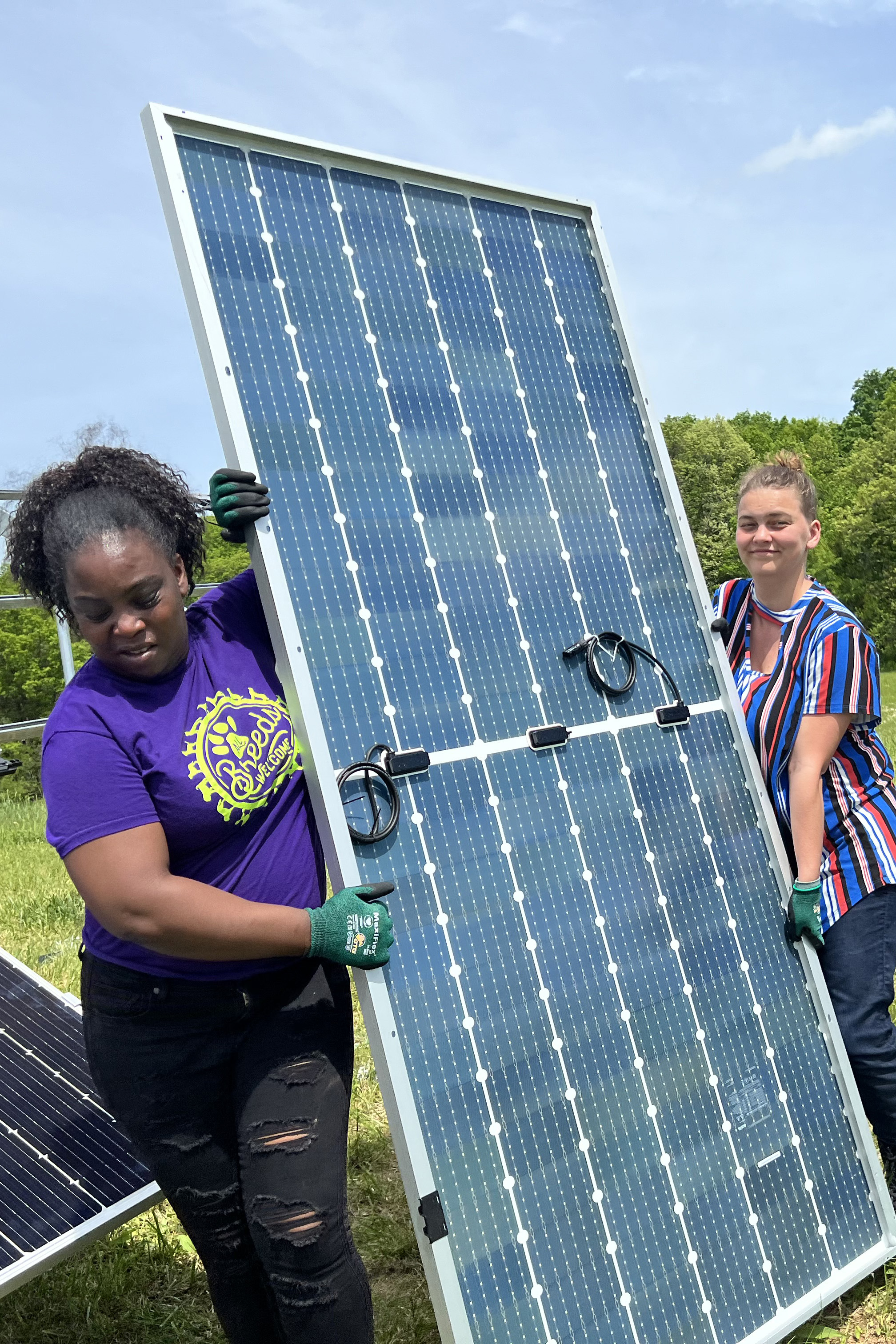
When workforce program participants accept a job at Coalfield, they enter a six-month program called WRAPS (Workforce Readiness and Professional Success) Training—breaking down urgent barriers keeping them from securing stable employment and starting them on a hands-on learning journey, earning industry-recognized certifications as well as digital and financial literacy skills. Once their six-months as a WRAPS Trainee end, they may enter the workforce with a local employer, supported by Coalfield’s Empowered Employers Program, or remain with Coalfield for up to three years for 33-6-3 Crew Membership. That means they get 33 hours per week of paid on-the-job training in sustainable sectors, six hours per week to work toward an associate degree, and three hours per week of further personal development.
Personal development includes ways to help employees overcome work and life barriers, such as getting their driver’s licenses, finding affordable housing, attaining health resources, and learning personal finance. Coalfield also educates employees on job hunting and interviewing.
That’s because one of Coalfield’s goals is to train its employees to branch out to other opportunities. “We are like an intensive incubator of people and places,” Hannah says. “We don’t want to just gather people, make them the best they can be, and only keep them to ourselves. We’re a stop along the journey.”
One example is Coalfield’s incubation of Appalachian solar startup Solar Holler. The companies are working together to train 100 new solar workers over an 18-month period.
Beyond solar, Coalfield has also been working with fellows from the Autodesk Foundation and Engineering for Change (E4C) to create stormwater infrastructure designs in AutoCAD for systems that will reduce flooding and erosion in the area.

The long game of community revitalization
Huntington, WV, is in the middle of abandoned coal mines, which correlates with lower life expectancies and economic prosperity. “The correlation between the abandoned coal mines and the dilapidation of the communities economically is very strong, which is a strong correlation with the joblessness and hopelessness in the region,” Hannah says.
But he has seen Huntington and surrounding areas come a long way in recent years. In fact, the City of Huntington won an award for “America’s Best Community” in 2017, which came with a $3M prize. “Huntington was once labeled one of the unhealthiest communities in America, and now that has done almost a complete 180 in our state,” Hannah says. “But just like they didn’t build Rome in a day, we can’t rebuild Appalachia in a day.”
Unfortunately, rebuilding for long-term community revitalization takes longer than some people have patience for. “If I was just renovating a building as a private commercial developer with the best-of-the-best tradesmen and women, I could do that,” Hannah says. “That’s not why I’m here. I’m here to take my time and train up a community to last and survive and thrive.”
The good news is, despite the coal-versus-solar conversations he’s heard, Hannah doesn’t see politics as a blocker in the local coal communities where Coalfield is deploying solar.
“We partner with the United Mine Workers of America to have sustainable training,” he says. “All these things shouldn’t get along together, but they do because we have a common goal to improve our communities. This can and should happen for everyone, and it just takes having a shared vision for what good looks like together.”
About the author

Kylee Gordon
Kylee Gordon is vice president of Content Strategy & Development at Archistar, a company that empowers cities and building professionals with trusted AI tools to enhance design and streamline permitting approvals. Based in Oakland, CA, Gordon is a writer, editor, musician, and a polyglot of storytelling—producing content about everything from music to aerospace. She’s currently most interested in how design and technology (including AI and generative design) can help people and the cities they live in thrive.