Green building design
Green building design
As more cities adopt sustainability goals, green building is shaping the skyline.
What is green building design?
The Porter School of Environmental Studies - West Façade.
Green building design considers the health of the natural environment and its inhabitants throughout the lifecycle of a building. It seeks opportunities to create positive impacts, while minimizing the negative.
Image courtesy of Geotectura / Axelrod-Grobman Architects / NCA / Assa Aharoni Consulting Engineers. Photographer: Joseph Cory

Top Three principles of green building design
A whole-system approach benefits occupants, communities, and the natural environment.
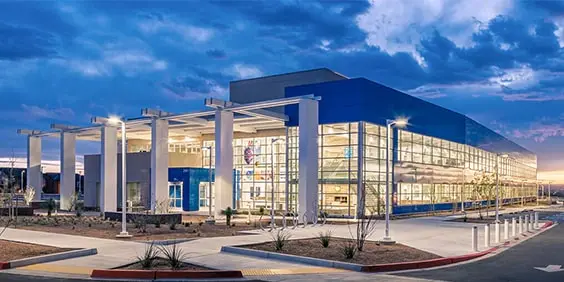
Energy Efficiency
Energy Efficiency
Architects and engineers can drive high performance building design through techniques like solar analysis, HVAC right-sizing, and passive energy-conservation measures.
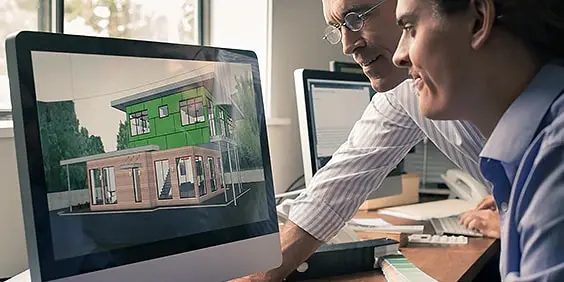
Materials Productivity
Materials Productivity
Choose healthy materials that are good for the people and planet, and design efficient structures that are made with minimal material waste.
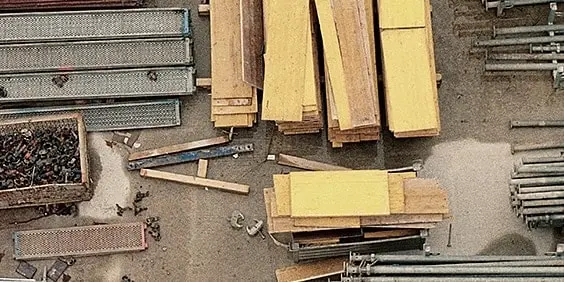
Reduction in embodied carbon
Reduction in embodied carbon
Building materials have a hidden climate impact resulting from resource extraction, manufacturing, and logistics. This should be minimized.
Container-Lower operating costs

Lower operating costs
Lower operating costs
Green buildings have lower operating costs because they use resources such as materials and energy more efficiently.

Reduce greenhouse gas emissions
Reduce greenhouse gas emissions
Buildings produce about one third of the world’s greenhouse gas emissions. Green building design can drastically reduce this.
Container-Increase property value

Increase property value
Increase property value
Owners are seeing a seven percent increase in asset value for new green buildings compared with traditional structures.

Improve occupant health and comfort
Improve occupant health and comfort
Green building design includes strategies to optimize temperature, humidity, and light, while minimizing pollutants, irritants, and noise.
Green building in action
A whole-system approach benefits occupants, communities, and the natural environment.
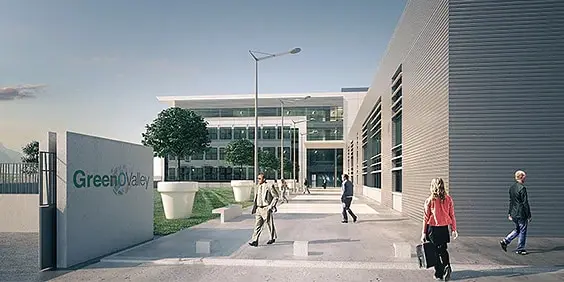
BIM helps Schneider Electric
BIM helps Schneider Electric
Schneider Electric uses BIM to create a new standard in efficient building operation and energy performance.
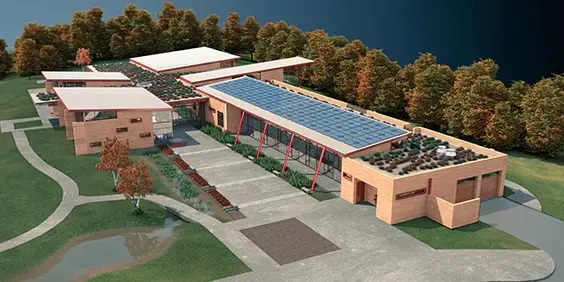
Green-building technology on the rise
Green-building technology on the rise
Three emerging trends in green-building technology are advancing the sustainability revolution in architecture.

Bamboo transcends the tropics for carbon-negative construction
Bamboo transcends the tropics for carbon-negative construction
Long ignored beyond the developing world, bamboo (a grass, not a tree) has the compressive strength of concrete and the tensile strength of steel.
Green building software to help you get started
Additional resources
LEED credentials
Learn the difference between LEED certification and LEED accreditation for professionals.
Using BIM to meet LEED
Discover how seven buildings around the world are using BIM to meet LEED.
Net-zero by 2030
Get on track for net zero buildings by 2030 with these five strategies.
Embodied carbon in construction (EC3)
Quantify, report, and reduce embodied carbon with the EC3 tool.
Sustainable in the sun
Find out how these New Mexico architects deliver high energy performance in a sunny, arid climate.