STRABAG optimises processes and conserves valuable resources in ACC projects
Automated workflows in ACC Connect: Efficiency through digitalisation

Brief summary of key points
When planning and implementing construction projects, it’s often the case that inadequate communication, incomplete or incorrect plans, and a lack of coordination will cause delays and push up costs. Nevertheless, these projects frequently still rely on manual document management and plan review—a time-consuming and error-prone process.
STRABAG has been using established tools for managing and reviewing plans and documents for years. Now the company has conducted a pilot project to test how it can go beyond these by using Autodesk Construction Cloud (ACC) and ACC Connect to digitalise and automate processes with a view to working more transparently and efficiently.
And it’s been a success: The company has optimised operations by adopting digital workflows and automated processes in the areas of document management, review procedures, and logging. This has led to a further reduction in errors and fewer delays and revisions. In this interview, STRABAG project participants share their experience with the introduction of ACC Connect.
Pilot project: A test run for more efficient document management
Marvin Jahn is a BIM Planning Coordinator at STRABAG. He advises anyone considering using ACC Connect and automated workflows to start with a pilot project: “For us, it made sense to start with a medium-sized construction project for a specialist property. In our case, there were special requirements for mechanical, electrical, plumbing, and protection systems, which increased the need for coordination in building services. That’s why structured plan management with clear review processes was important.”
Saed Alsayed Ahmad is a BIM Developer on the BIM Platforms team at STRABAG and is responsible for the development and support of digital solutions. He supported the pilot project and the automations in ACC projects using ACC Connect.
Before the introduction of ACC Connect, plans in ACC were often uploaded manually from other cloud services and then sorted by discipline into a specific subfolder for review—a time-consuming and error-prone process. Plans were assigned manually, which led to delays and the risk of different versions. There was also a lack of centralised control, which often made it difficult for those responsible to track the processing status.
These processes have been automated with ACC Connect: Plans are now automatically filed in the correct place by discipline and the correct review process is started. Opting for ACC has improved the overall management of files and plans in various ways:
More transparency for everyone involved: Everyone has access to current documents, which speeds up coordination processes.
Avoidance of duplicate and outdated data: Clear structures ensure that all changes remain easy to track.
Automatic filing and versioning: Plans are always saved and updated in the right place so that everyone involved is working with the latest version.
Optimised handovers between project phases: Relevant information is passed on systematically so that misunderstandings are reduced.
More data security: At the same time, folder authorisations can be displayed and reviewed at any time so that everyone sees only what they are supposed to see.
Added value on the construction site: Plan lists created with ACC Connect ensure up-to-date plans that can be called up at any time—with no need for manual synchronisation.
Faster and better reviews: The improved database and automated processes increase the quality and speed of plan reviews.
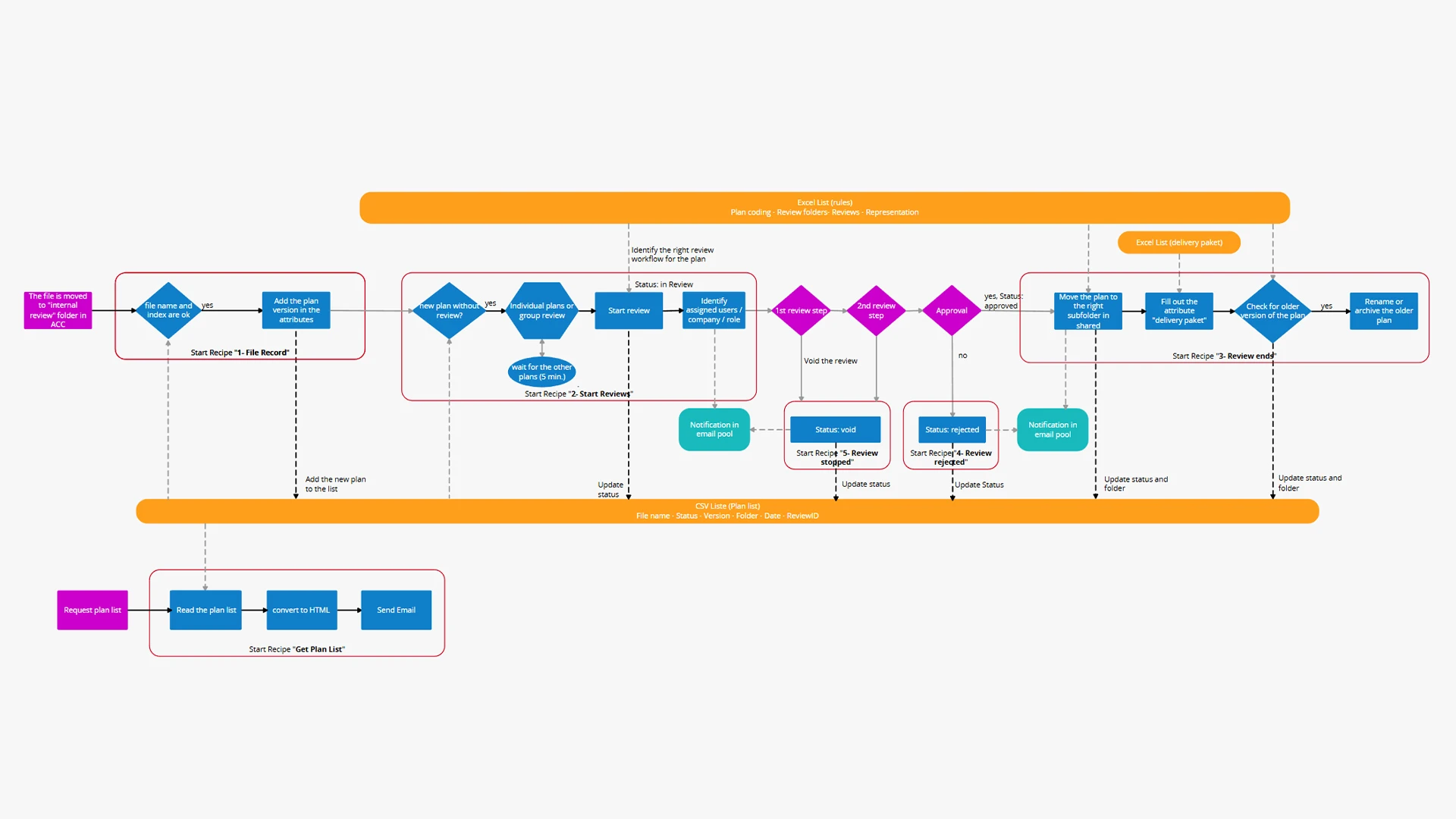
Automation has been implemented not only for document storage but also for predefined approval and review workflows.
Reviews and approvals: Automating complex processes
In the pilot project, Jahn was responsible for recording user requirements. For him, one thing is certain: “Automated review runs save a lot of time and help us to meet deadlines.”
To achieve this, the workflows had to be mapped precisely: Who does what and when, and how are interruptions in the process dealt with? Jahn recorded the process with all eventualities so that it could then be digitally mapped and optimally automated.
The review process was gradually optimised with a clear focus on the practical requirements, especially the needs on the construction site.
Instead of manually uploading, assigning, and placing plans in the appropriate review folder, as they were in the past, the plans are now automatically forwarded for review via predefined triggers so that the reviewer is notified immediately—without any manual effort.
ACC Connect has been customised and automated specifically where it is really needed.
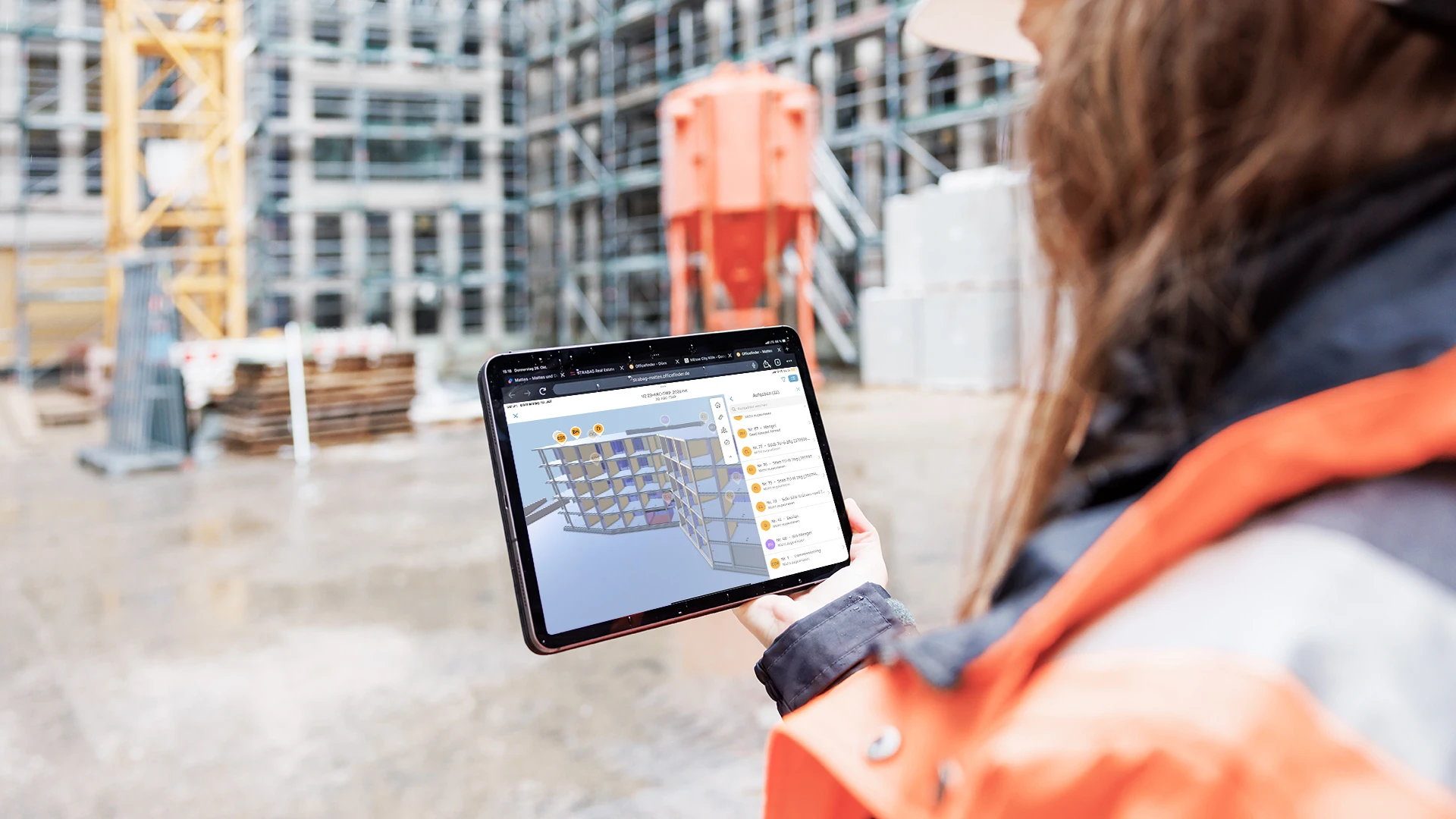
“ACC Connect helps us use ACC better.”
Automation and reporting: More time for important tasks
Justus Fernando is a BIM Manager in the Central Technology department at STRABAG. In addition to reviewing models, he is responsible for the enhancement of existing workflows. In his function as a power user, he further adapts existing workflows, adds additional loops, and develops them further on a project-specific basis. What he particularly likes about ACC Connect is the ability to run processes automatically outside of working hours: “That saves us both time and resources.” Project surveys report that the improvements are estimated to cut processing time by up to 10 percent.
With ACC Connect, STRABAG now automates recurring processes such as the archiving of project files, document transfer, and data migration. Adobe Sign processes also start automatically—reducing administrative effort and leaving more time for strategic tasks.
“The trend is towards automating standard processes. Sometimes this requires additional solutions, which we can develop with ACC Connect.”
Justus Fernando, BIM Manager, STRABAG
Cloud models are now also regularly published automatically. Fernando sees great potential for more comprehensive analysis, especially by linking with PowerBI for reviewing models. In the future, ACC Connect will be used to digitalise and automate additional processes, with a particular focus on the scalability of workflows. “Once a workflow has been created, it can also be used in similar projects,” Alsayed Ahmad explains. These workflow templates can be transferred to different construction projects with little adaptation effort, making the developed solutions scalable. STRABAG will use the knowledge gained to further optimise its processes in ACC projects and actively drive efficiency and quality in its construction projects. The aim is to increase efficiency across subsequent ACC projects through standardised and flexible workflows by using ACC Connect to improve existing processes and enable a sustainable, connected data structure for all project participants in the long term.
“With ACC Connect, we can use the ACC API in a simple way. This allows us to create or automate certain ACC workflows.”
Conclusion: Digitalisation is a success factor in the construction industry
The introduction of ACC and the associated use of ACC Connect at STRABAG show how much potential there is for using digital and individual workflows in the construction industry. STRABAG will use the knowledge gained to further expand automation processes in ACC projects and optimise the company-wide standard for digital workflows. The scalability of the solutions ensures that even more upcoming projects, from complex undertakings down to smaller orders, can benefit from more efficient processes, better data management, and greater transparency.
About STRABAG
STRABAG SE is a leading European technology group for construction services with headquarters in Vienna, Austria. The company covers all areas of the construction industry and the entire construction value chain. With approximately 86,000 employees, STRABAG generates an annual output volume of around 19 billion euros. The company is active in over 80 countries worldwide and is pursuing the goal of planning, building, and operating in a climate-neutral and resource-saving manner by 2040.
