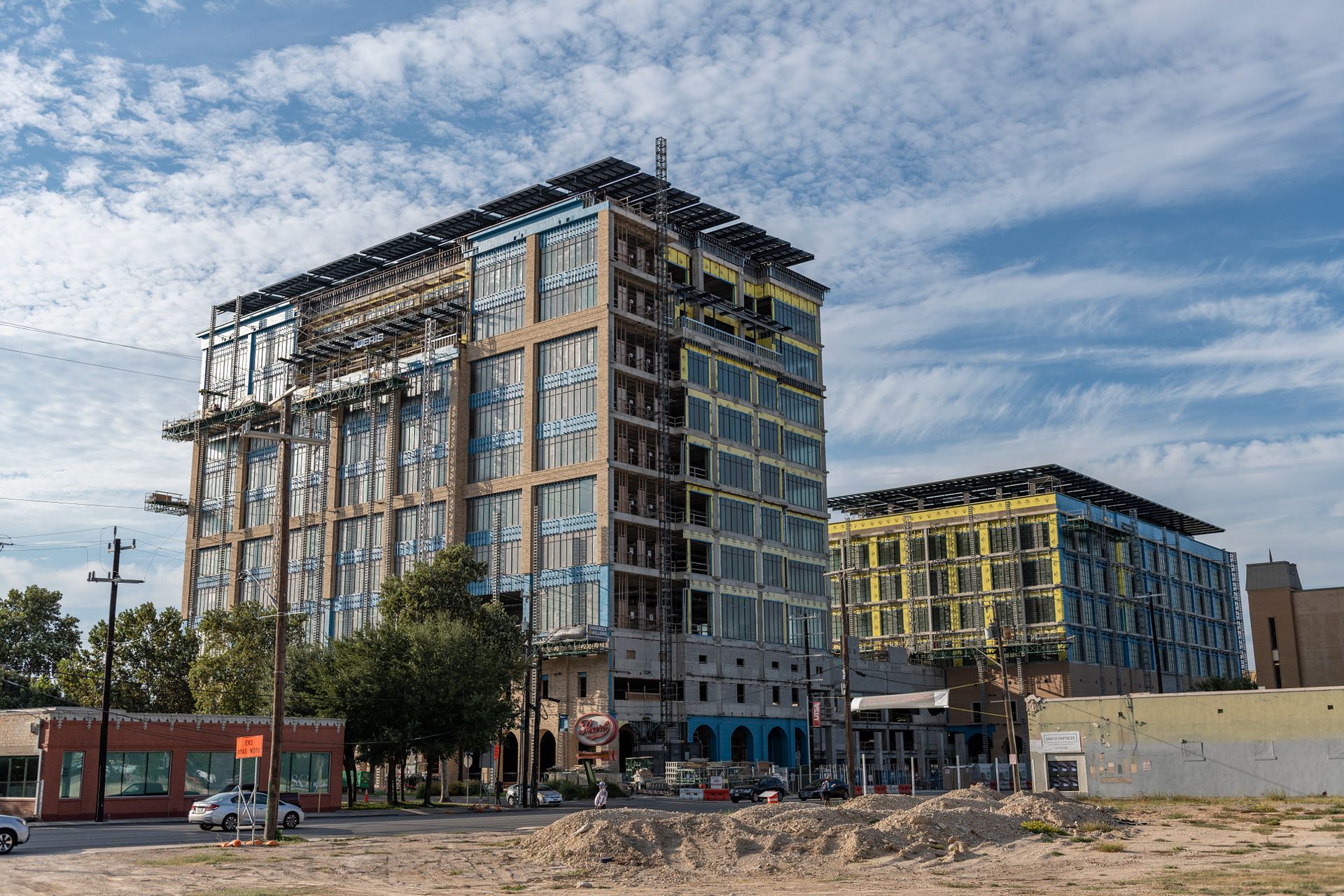
We use buildings daily; however, most people do not know how to construct them or the type of construction that influenced them. Different regulations govern different construction types, and it is essential to find out the category in which your project falls. A good understanding of your building’s construction type is necessary to effectively design services such as fire fighting. Analyzing the critical insights of your project from an architectural and engineering perspective helps us to question our conventional awareness in construction.
Table of contents:
Construction, also referred to as building construction, means any activities on a site requiring special skills, techniques, and companies involved in the assembly and erection of used structures. In totality, these activities are essential to construct buildings of various types and purposes, utilizing different methods and technologies.
The four main types of construction are: residential construction, commercial construction, industrial construction, and infrastructure construction.
It is the process of constructing a single or multi-family house for beauty, comfort, utility, and durability. A residential building should be a comfortable space where human beings can survive and thrive.
It is the process of designing, building, or renovating commercial structures that can be leased or sold as office spaces, storage shelters, or even warehouses.
It is constructing premises or structures that can be used for manufacturing, such as factories, power plants, warehouses, and processing plants.
This is the construction, renovation, and maintenance of public and private physical structures such as roads, bridges, railways, pipelines, electricity supply lines, water supply lines, tunnels, and dams to provide shelter.
Construction type refers to how a building is resistant to fire. This includes all the structural members and non-load-bearing components of the building. The choice of materials and design of a structure affect a building’s resistance to fire, earthquakes, and other related phenomena, thus affecting the construction type.
Structural materials are selected to meet the required fire resistance rating for each construction type. In the US, the National Fire Protection Association (NFPA) provides widely recognized standards for fire resistance ratings and building classifications.
There are five major construction types widely recognized in the construction industry, and each type is defined by the fire resistance ratings of its key building elements.
Understanding the construction type of a building is vital information for firefighters and the building’s users. When firefighters can easily identify a construction type, they can quickly plan their line of attack. For instance, knowing how different construction types resist fire allows emergency responders to anticipate how long structural elements will withstand fire, helping them plan their approach and improve safety outcomes. Furthermore, a firm understanding of how fire spreads helps make critical decisions on ventilation and water. Thus, knowledge on construction types can help save lives.
The construction type also affects a building’s resilience to unforeseen catastrophes like hurricanes and earthquakes. In the same way, construction workers are wary of accidents during construction; they should be aware of how their work affects the building’s future safety.
At first glance, most buildings look similar. However, the underlying building material primarily affects the durability of a building, making it essential to select the appropriate building material for each construction type. Construction projects are classified from Type 1 to 5, depending on how fire-resistant a structure is. Type A construction refers to protected, fire-resistant structures, while Type B construction pertains to unprotected, less fire-resistant buildings.
Some facilities are more vital and cheaper to construct, but they need to handle fire better. Type 1 buildings have the highest fire resistance, and type 5 structures have the poorest fire resistance. Without further ado, let us cover the different construction types.
Generally speaking, Type 1 buildings are high-rise residential and commercial spaces. These buildings are made mostly from concrete and steel, which are the primary structural materials used in Type 1 construction, and we classify them as the most robust during a fire. In order to meet fire safety standards, all major building components must be constructed from noncombustible materials.
Type 1 buildings can withstand high temperatures for a long time. These ratings apply to roof and floor assemblies, internal partitions, and bearing and support walls. Fire resistant coatings are often applied to structural materials in these buildings to enhance their fire resistance and ensure compliance with fire safety regulations. The strengths of these buildings lies in the fact that they are not vulnerable to collapse and are fire-resistant for up to four hours.
The weakness of these buildings is if they are made of steel, so they wear down over time due to corrosion. The roofs and windows of these buildings are also not easily penetrable. Some of these buildings have pressurized stairwells to curb the spread of fire.
Most modern “big box” stores and shopping malls qualify as Type 2 buildings. We make these buildings from lightweight concrete, metals, and masonry, which are primarily non-combustible. However, combustible materials might be present, such as foam and rubber.
Building codes may specify a maximum flame spread index for materials used in Type 2 construction to ensure fire safety. Generally, materials with a lower flame spread index are preferred in Type 2 buildings to comply with these regulations and reduce the risk of fire spread.
These buildings have sound fire suppression systems but are prone to collapse, mainly because of their types of roofs. In a fire, firefighters try to ventilate the building to mitigate flashovers which are sudden temperature increases.
These buildings burn for one to two hours, depending on the type of materials used in construction. The materials of these buildings are slow-burning, which ends up adding fuel to the fire. In a fire, firefighters ventilate these buildings using roll-up doors or skylights to a building’s exterior.
There are significant differences between type 1 and type 2 buildings. Type two buildings are susceptible to expansion, relaxation, and distortion of steel members resulting in an almost total collapse in case of fire. The interior partitions and interior walls of these buildings are typically constructed from non-combustible materials to meet fire safety requirements, with some limited approved combustible materials allowed. Examples of these types of construction are modern school buildings.
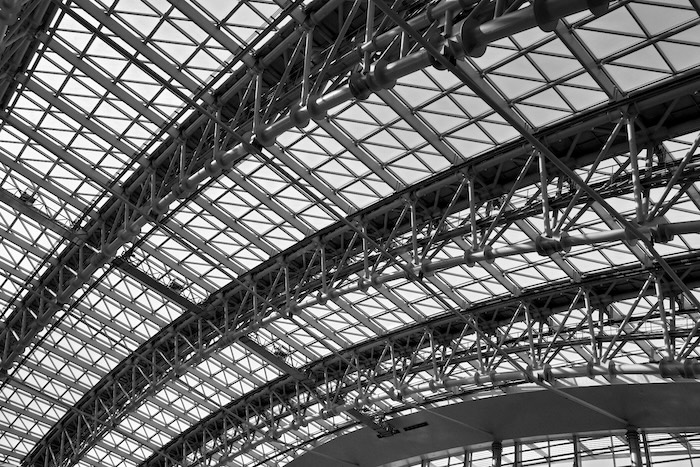
We also refer to these building structures as brick and joist structures. These structures have walls made from bricks or masonry, wooden roofs, and floor fire-protected fire protection.
In most cases, all or part of the interior elements, such as frames, floors, and ceilings, are made from combustible materials. All type three buildings have wooden roofs, but conventionally, older Type 3 buildings have framed roofs, while new buildings have lightweight roof systems.
The walls are either reinforced masonry walls or concrete. When firefighters approach a Type 3 building, they must determine whether it is old or new to make critical decisions on ventilation. Both new and old buildings fall in the ordinary construction type category. Some of these buildings are schools, residential and small commercial buildings.
An advantage of these buildings is that their combination of materials allows them to stay standing even if floors collapse. Their major weakness is that many connected attics or horizontal void spaces enable fire to spread rapidly.
Most of the buildings constructed before 1960 were heavy timber-type buildings. Firefighters easily recognize them as they have timber walls and roof spans. The timber members are solid or laminated and must fit dimensional requirements. Heavy timber construction is specifically designed to minimize concealed spaces, which helps prevent hidden fire spread and improves overall fire safety.
Examples of Type 4 buildings are old factories, churches, barns, and residential houses. Structural supports such as beams, arches, and columns require a minimum of eight inches for these construction types.
Sometimes these buildings may have non-combustible load-bearing walls. They also quickly drain water, allowing the firefighters’ water to quench the fire to seep out easily without increasing the overall building weight.
Most of the connections are metal joint connections that fail quickly during fires. In the case of factories, oil, goods, and materials can increase the severity of the fires. Large dimensional timber buildings hold up well during fires, but damage from weather and termites increases their risk of collapse.
Many new modern homes are Type 5 construction types. This is because they use combustible materials for the walls and roof. Unlike the large-dimension wood used in heavy timber-type buildings, we make these structures from lightweight or flammable manufactured wood like mass timber. Wood panels are commonly used for partitions and exterior walls in wood-framed buildings, but their use is subject to fire safety regulations.
This construction is easy to set up, inexpensive, and structurally sound. It, however, is not fire-resistant and collapses within minutes in the event of a fire. However, firefighters can deal with these buildings as they are well-ventilated from the wood frames.
This is a disadvantage as the fire spreads rapidly due to high ventilation. One way to prevent the collapse of these buildings is by using big timber members for the main structural elements. These structures have deficient fire-resistant properties.

The selection of building materials is a critical factor in determining a structure’s fire resistance, durability, and environmental impact.
In Type 1 construction, which offers the highest fire resistance, non-combustible materials such as steel and reinforced concrete are used for all major structural elements. These materials are designed to withstand high temperatures and provide robust fire protection, making them ideal for high-rise housing and large commercial buildings.
Type 2 construction also utilizes non-combustible materials, but may incorporate metal floors and roofs along with masonry or tilt-slab exterior walls.
Type 3 construction, or ordinary construction, is characterized by brick and joist structures, where non-combustible exterior walls are paired with interior structural elements made from combustible materials like wood. This combination is commonly used in small commercial buildings and apartment buildings.
Type 4 construction, or heavy timber construction, utilizes solid or laminated wood for structural components. The use of large, exposed wood offers both aesthetic appeal and improved fire performance compared to smaller wood sections, as heavy timber chars on the outside, slowing fire spread.
Type 5 construction, or wood-framed construction, allows for combustible materials throughout, making it prevalent in residential construction and some small commercial projects.
In nearly all building types, sustainable building practices are increasingly influencing material choices, with a focus on energy efficient materials, reduced environmental impact, and improved indoor air quality. In recent years, the construction industry is adopting even more materials like cross laminated timber and recycled content products to improve structural integrity and sustainability across all building types.
Several factors affect a building’s construction type. Below are aspects you need to consider when determining a construction type.
Most pertiently, the fire resistance rating of interior bearing walls is a key factor to determine the appropriate construction type for a building.
The purpose of a building affects construction aspects such as materials and the project scope. Huge commercial buildings undergo different construction methods compared to their smaller counterparts.
Some building classifications according to purpose are educational, institutional, commercial, industrial, and residential. The purpose of the building affects the choice of building materials which in turn affects the building type.
Examples of building materials are bricks, hollow concrete blocks, stones, and tiles. Buildings constructed for residential purposes are given special attention when installing electricity to avoid future damages that may result in loss of lives if not properly attended to. The same can be said for all the buildings, and infrastructure humans will house or use.
Generally speaking, more significant buildings use heavier construction types. They will have floor spaces with long spans and heavily supported roofing systems. Smaller buildings have limited spaces and are not fire-resistant.
The building size also affects the sprinkler thresholds and fire areas, and the law mandates for design and installation of fire protection systems for big buildings, thus affecting the building type.
Fire areas are areas enclosed by exterior assemblies and fire barriers. High occupancy buildings have these fire areas compared to smaller facilities.
As a building increases in size, it affects its capacity to bear loads. A construction type must be robust enough to handle excess loads. For instance, wood is terrible for supporting a superstructure with several floor levels.
Heavy loads cause deformations and stresses in a structure. For example, load-bearing masonry performs poorly in a collapse during a fire or earthquake. However, to build a fire and earthquake-resistant structure, one has to choose a higher construction type.
Buildings of a lower construction type are faster to erect. This is because the time necessary for design and construction is less. The labor needed is also less, and the construction materials can facilitate faster building.
For instance, to speed up construction, one can use pre-engineered methods and prefabricated construction types that are dropped at the construction site and quickly erected.
The cost of a project largely determines the construction type. This is because the price affects the choice of materials, the quality of labor, artistry, and project scope. Lower construction project types require less money compared to higher construction project types.
Environmental factors affect the choice of buildings that we can erect there. In coastal areas, buildings are elevated to shelter them from tidal surges. The choice of materials and design for buildings in earthquake-prone regions is also different compared to typical areas. A stiff structure easily collapses during fires and tremors.
Construction is any structure, be it small, simple, or large, that meets the required specifications and can perform the primary function of providing shelter.
These are tangible or visible costs that can be quantified and related to the physical construction project. These include labor and material costs and visible improvements such as concrete, framing, electrical, carpentry, roofing, landscaping, grading, and excavation.
Depending on the type of construction project, the steps of managing may well vary. In essence, the first step is to develop a well-scheduled project plan which is a game plan for your construction project. Following the project plan, execution and monitoring occur through the project turnover.