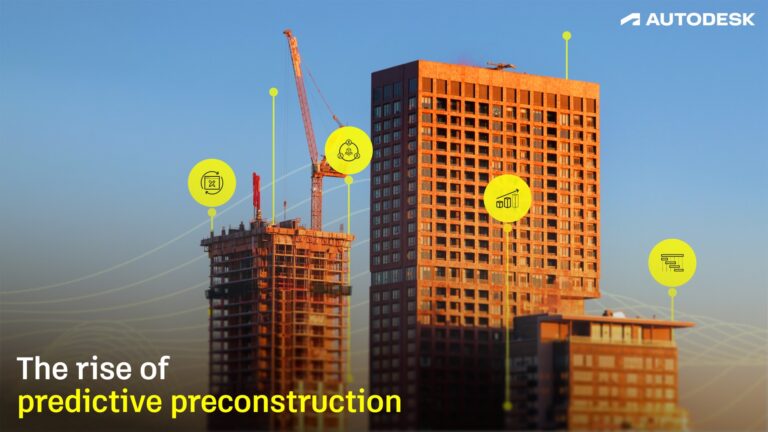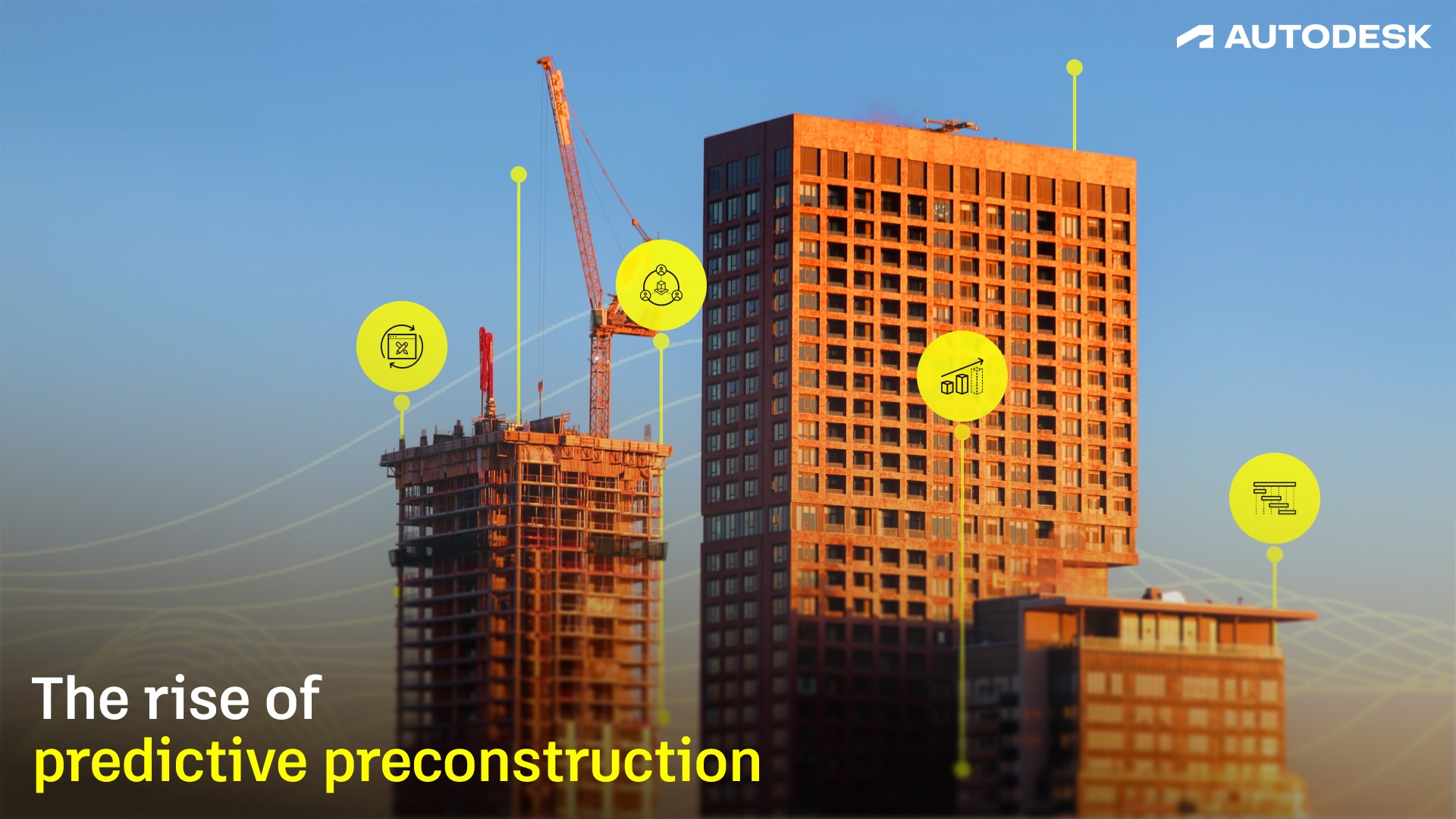
Exciting momentum is happening in the earliest project phases: preconstruction is becoming a lot more predictable.
Thanks to predictive analytics, teams can shift from being in “reactive” mode to a more proactive approach, anticipating risk and making smarter decisions earlier in the process.
The technology isn’t new, but it’s rapidly getting smarter with the growth of AI and data platforms. Specifically, predictive analytics solutions are enabling teams to better anticipate costs, schedules, and risks before construction begins, so they can get ahead of issues sooner rather than later.
Here’s how.
Predictive analytics can benefit multiple phases of the project lifecycle, but it’s particularly advantageous in preconstruction because this is where the biggest financial and strategic decisions are made.
Decisions made early in the project have an outsized impact on downstream outcomes such as cost certainty, margins, and delivery risk. So, the better decision-making teams have at this stage, the fewer surprises they face later in the project.
Unfortunately, many preconstruction teams are pressured to make those decisions with incomplete or fragmented data. For example, budgets may be based on early assumptions while bids arrive with limited context around risk or volatility.
Predictive analytics helps close this gap by learning from historical project performance instead of relying solely on assumptions or static benchmarks.
Traditional estimates often rely on static data or broad industry averages. Predictive analytics adds another layer by learning from real project outcomes. Instead of showing one number, estimates can include likelihood ranges that reflect uncertainty and historical patterns.
These models analyze thousands of data points from past projects to identify trends that estimators may not immediately see. The result is a clearer understanding of where costs may move, where risks tend to appear, and how similar projects performed once construction began.
Models can analyze:
The result? Teams produce estimates that are informed by probability, not just totals.
Predictive models introduce probability into early budgets, so teams can understand the range of possible outcomes instead of relying on a single estimate. Consider the following:
You become much more well-informed when evaluating early project budgets, which ultimately leads to more realistic contingency planning and fewer surprises as projects progress.
Greater transparency into project assumptions also improves alignment among design, estimating, and construction teams, enabling everyone to make decisions using the same data.
Machine learning models can recognize patterns from past projects, surfacing risk factors earlier. Risks like market volatility, supply chain disruptions, labor issues, or weather and location-based constraints are identified early in preconstruction, so teams have a heads up before they impact the project plan.
This puts them in a much better position to proactively manage risk. So, whether they need to adjust design decisions, reallocate contingency budgets, or plan mitigation strategies, teams can act earlier while options are still flexible.
Because it’s so early in the project, there can be a lot of uncertainty in the preconstruction phase. Should you bid on a project? Are subcontractor bids reasonable? Where are you most likely to reduce margin?
The answers to these questions can make or break a contractor’s profitability on a project. If you make the right calls, you protect margins and reduce risk exposure. Conversely, misjudging project risk can erode profitability.
The good news is that you now have tools that can provide a clearer picture of potential outcomes. Predictive analytics enables teams to analyze prior job profitability, bid accuracy, and risk patterns, so they gain clearer insight before committing to a project.
During the bid solicitation process, predictive analytics can help teams approach bids with more clarity. Instead of relying purely on assumptions or rough comparisons, planners can validate project assumptions against real outcomes from similar projects.
Teams can identify delivery risks, flag unrealistic schedules, and spot scope gaps before vendor contracts are signed. This creates a more informed vendor selection process where risks are visible earlier, and conversations with owners and partners are grounded in data.
The result is stronger bids and fewer downstream surprises. When expectations are aligned earlier, projects are less likely to run into disputes, rework, or margin erosion later on.
All your previous projects offer a wealth of lessons. But given the sheer volume of project data across systems—not to mention how busy everyone is—teams often struggle to systematically apply those lessons.
Predictive analytics changes this by turning completed projects into a continuously improving data asset. Instead of sitting in archives or spreadsheets, past project data can be analyzed and applied to future decisions. Over time, the system becomes smarter as more projects are completed.
The beauty of this is that the benefits extend beyond individual projects.
When you analyze patterns across dozens or hundreds of past jobs, you can plan better for future bids and set more accurate benchmarks based on real outcomes.
And let’s not forget the workforce transition happening across the industry. As construction pros retire, institutional knowledge can easily walk out the door. If you’re using predictive analytics to preserve learnings and apply them, those insights remain accessible to the next generation of project teams.
Ultimately, predictive preconstruction, when implemented well, opens up tremendous benefits for teams. These include:
On the flip side, relying on outdated tools and static estimates increases your risks of falling behind. This is particularly true as predictability moves beyond being a “nice to have” to becoming a true differentiator.
Predictive preconstruction is all about combating uncertainty and seeing risks sooner. Teams today already have access to the tools they need to start building more predictable projects. They have historical data and human expertise to turn past performance into smarter planning.
Predictive construction, aided by technologies like machine learning, helps teams turn that information into actionable insights, so they can reduce risk, improve confidence, and outperform competitors in an increasingly complex construction landscape.
Discover how you can reap all the benefits of predictive preconstruction with Autodesk. Check out the Preconstruction Bundle, which gives you the key precon tools you need to plan with confidence.