AI has been a hot topic in the AECO space for years, and we've heard plenty about its potential to transform how projects are designed and built. But as the technology continues to evolve, the conversation is shifting from what AI could do to what it's actually helping teams accomplish.
This is where things get interesting.
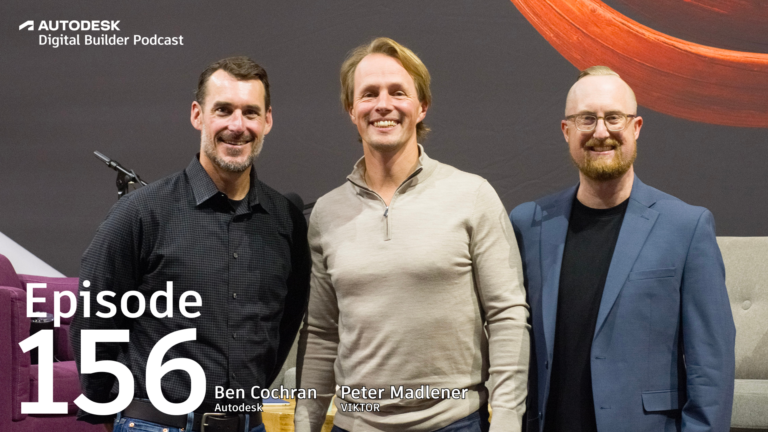
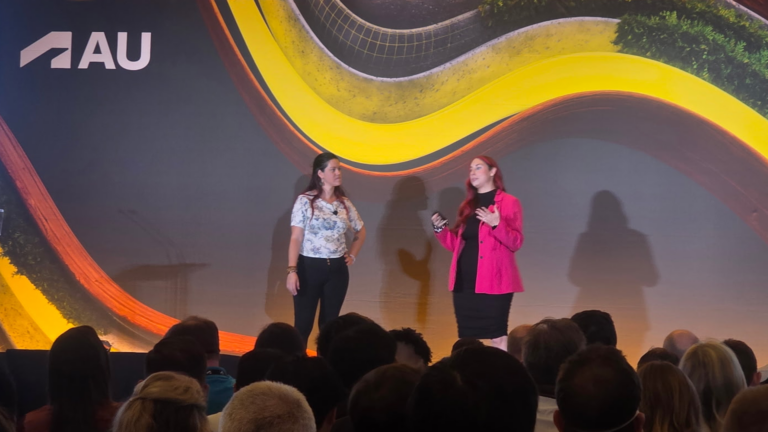
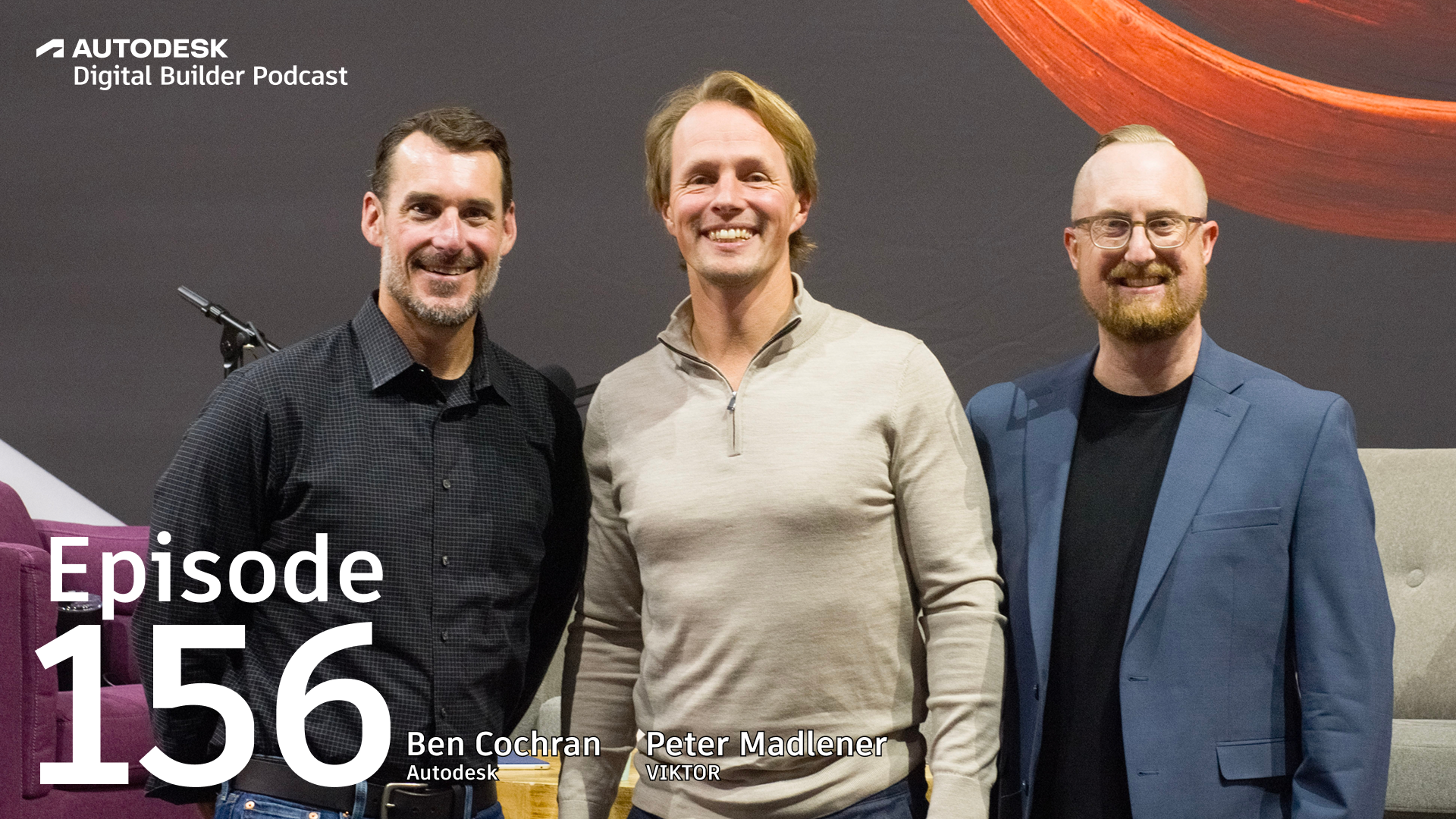
At Autodesk University 2026, I had the pleasure of sitting down with Ben Cochran, Autodesk's VP of Developer Enablement, and Peter Madlener, CEO of VIKTOR, to discuss how AI is moving beyond experimentation and into real-world applications.
We also dug into an important question: As AI takes on more of the work, what becomes more valuable about the people doing it?
There's a lot to unpack here, so let's get into it.
We discuss:
One of the biggest takeaways from AU this year is how much the AI conversation has matured. We're moving past the hype and getting into the specifics of how these tools can improve the way we work.
One of Ben's biggest observations at AU this year is that the questions at AU were much more specific and focused on the practical impact with AI. Leaders are thinking deeply about what toil can be removed and what can be made easier.
At the same time, they are considering what AI should not to. What’s the work that's so critical that we need “human judgement guiding the systems and the automations in place”
Peter sees another sign of progress: the growing focus on verification.
"It's not a conversation about 'What can we build?' It's more a conversation about ‘How can we verify what we are building?’"
This shows that companies are thinking beyond what's technically possible and focusing more on whether they can trust and implement what AI produces.
What does all this progress actually mean for the people designing and building our world?
For starters, AI is making powerful tools and automations accessible to more people, including those who don't have a background in programming.
Peter has seen this firsthand at VIKTOR. When the company first started building engineering applications eight years ago, only a small percentage of people within an organization could create and implement automations.
Thanks to the latest industry tools, that has grown significantly.
"We are not talking about a few percent, but now 70% of an organization can start implementing automation. That's all because of AI," Peter explains.
Moving from tools to outcomes
Ben, for his part, points to Autodesk Assistant as an example of where things are headed. He compared the shift to what's happening in software engineering, where AI has evolved from helping developers work faster to fundamentally changing how they build software.
"Instead of starting in a tool, you start with an outcome," he says.
Peter echoes that sentiment, noting that AI lets engineers and domain experts solve their own challenges rather than relying on someone else to build the tools they need.
Of course, that doesn't mean we should overhaul every existing workflow.
As Ben puts it, "There are some things that we should intentionally keep the same and some things that we should change."
The opportunity lies in knowing the difference. AI gives us a chance to rethink how we work, challenge processes we've followed for years, and find improvements that go well beyond incremental productivity gains.
The impact of AI goes beyond individual workflows. As more people gain access to APIs, automations, and AI-powered tools, we could see some pretty significant changes in how engineering teams operate.
Peter believes we're looking at a major shift in productivity.
In the past, engineering automations could deliver productivity gains of five to 10 times, but only a small percentage of employees had the skills to build and use them. Now, AI is opening those capabilities to a much larger group.
"We're talking about maybe 70 to 80% that can use those tools," he says.
Think about what that means for an organization. When more people can automate their own tasks and build solutions, the potential productivity gains extend far beyond a handful of technical specialists.
Lowering the barrier to building solutions
Ben sees a similar shift happening with Autodesk Platform Services (APS) and APIs.
Previously, building custom automations required months of development and specialized programming skills. Plus, there was often a disconnect between the people building the tools and those actually using them.
"The builder, they don't always have the software engineering skills, and the software engineers didn't always understand the problems that builders were faced with," Ben explains.
AI is helping bridge that gap by making automation more accessible and reducing the effort required to develop solutions.
The bigger opportunity, though, is what people can do with the time they get back.
The goal, remarks Ben, is to "spend more time making decisions, spend more time being creative, spend more time investing in building something better and less time tracking down data."
Moving from proof of concept to real business value
Of course, making it easier to build something doesn't automatically make it useful.
Peter points out that plenty of AI solutions still sit in the demo or proof-of-concept stage. To move beyond that, teams need business buy-in and confidence that the technology actually works.
"Do I trust what you build? So the verification part, that's the most important part," he says.
Ultimately, AI's real value comes when teams can put these capabilities to work on real projects and trust the results enough to act on them.
As AI takes on more technical tasks, what skills should construction and engineering professionals focus on developing?
According to Ben and Peter, knowing how to use AI tools is important, but it's only part of the equation. You also need to understand the bigger picture and how your work contributes to it.
Ben says systems thinking has always been valuable, but it's becoming something employers expect from the start.
"We want someone to understand how to be proficient using the tools. We want them to understand how to think in terms of systems."
Beyond that, professionals need to recognize how their decisions affect the business and its goals.
"If you're focused on a job or an element of the job, but out of the context of what the overall outcome is, I think you're holding back your ability to make quality decisions," he explains.
Peter, meanwhile, emphasizes the importance of deep industry knowledge.
At VIKTOR, his team looks for people who understand disciplines like civil and process engineering. That expertise helps them work with clients, understand their challenges, and build knowledge bases that support useful AI applications.
The takeaway? Technical skills still matter, but so does knowing your industry inside and out. Professionals who combine domain expertise with systems thinking and sound judgment will be better equipped to make the most of AI.
With AI evolving so quickly, it's easy to feel like you're constantly playing catch-up.
Ben's advice for staying ahead is simple: "Now is the time to dive into learning. I think it's more critical than ever before to get into learning and experimentation."
The more people experiment with different tools, the more they’ll appreciate what they can do.
Ben makes a great point about this: "When you start to use the tool, that changes your point of view and now your perspective."
In other words, you won't fully understand what's possible until you start trying things out.
Peter reiterates that systems thinking is just as important. Beyond learning individual tools, professionals should understand how different technologies and workflows fit together to solve engineering problems.
Looking ahead, he expects the industry to move toward combining verified tools to achieve better outcomes.
Digital Builder is hosted by me, Eric Thomas. Remember, new episodes of Digital Builder go live every week. Listen to the Digital Builder Podcast on:
or wherever you listen to podcasts.