Mental health in the workplace is a critical conversation everywhere. In construction, the topic feels heavier because we face disproportionately high rates of mental health challenges.
Industry data shows that 83% of construction workers have struggled with mental health issues. Additionally, the industry has the second-highest suicide rate among workers. These aren’t abstract statistics; they reflect the real human cost behind the projects we build every day.
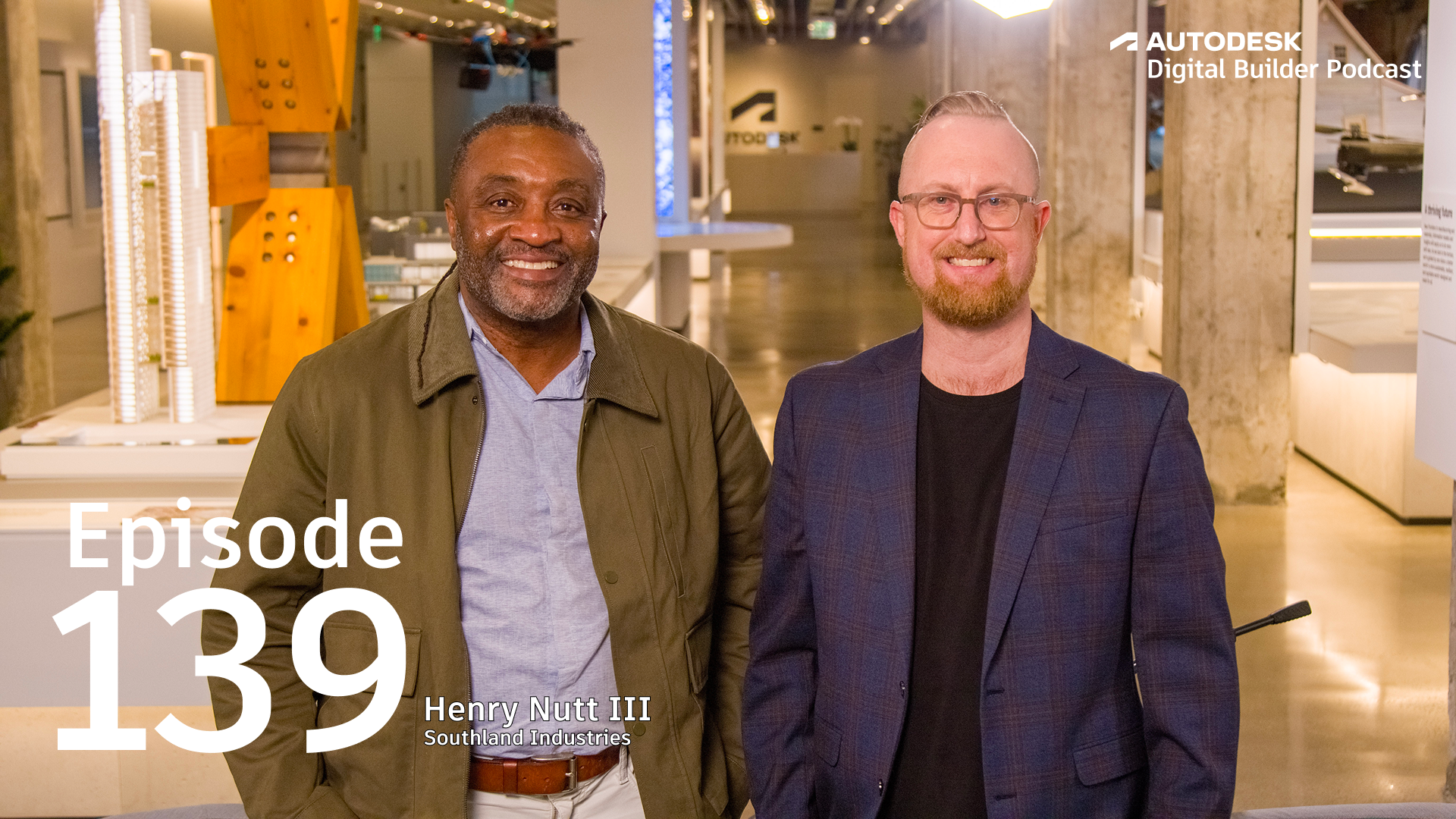
In this episode of Digital Builder, I sit down with Henry Nutt III, Preconstruction Executive at Southland Industries, to unpack what’s really going on—and more importantly, what leaders can do about it. Drawing on nearly four decades in the industry, Henry shares how empathy, vulnerability, and intentional leadership can reshape jobsite culture and, quite literally, save lives.
We discuss:
Henry’s leadership style was shaped early, and by a question he didn’t expect. He just started in his role of general superintendent (i.e., "the boss of everyone”) when he realized that stepping into leadership comes with assumptions, whether you’ve earned them or not.
A team member unexpectedly asked him, “When are you going to terminate me?”
It caught him off guard, but it also revealed the importance of really understanding your team and meeting them where they’re at.
"I used to manage projects, which I did for most of my career. But at that point, I was managing people, which was a very different type of role." He continues, "It taught me how to be that person who could regulate emotions.”
From there, Henry became intentional about how he showed up. “My objective was to get people to trust me by developing relationships built on respect.”
He focused on being approachable but firm. Holding high standards but staying fair. Over time, that approach built something stronger than authority: it built trust.
For a long time, construction has followed a simple formula: get the job done, no matter what. The problem is that mindset often comes at a cost.
As Henry puts it, “this industry has done a poor job of people management as a whole. We’ve had a model that just never worked. On one hand, you get the job done, but at the cost of really hurting people in the interim.”
Good builders don’t automatically become good leaders
One of the biggest gaps in construction leadership isn’t the lack of people, but the lack of training. We promote top performers and expect them to figure out leadership on the fly.
Leading people is a different skill set entirely, which is why organizations must be intentional with leadership training. When your leaders are better equipped to manage their teams, you see it in everything from performance to retention.
If you’re not developing people, you’re falling behind
Still on the topic of training, Henry also touched on the risk of not investing in people.
“I remember a quote that I saw on a social media platform years ago, and it's a CFO talking to a CEO and the CFO saying, ‘What if we train them and they leave?’ And the CEO looks back and says, ‘Well, what if we don't and they stay?’”
It’s a fair question, especially in an industry where turnover is a real concern. But Henry challenges that way of thinking.
“If you're not intentionally developing your people, then you might as well recognize that they're walking backward in how they're running the projects; it's all going to come back at impact. So that investment is critical,” he says.
Vulnerability and empathy aren’t always the first traits that come to mind when you think about construction pros, but they’re exactly what the industry needs more of.
Vulnerability builds trust, not weakness
Vulnerability can feel risky. As Henry puts it, “It can be very scary, and there’s a risk behind that. I’m going to share something that may make me seem weak.”
That fear is real, especially in an industry where people are used to having the answers. But Henry sees it differently. “As much as you’re willing to be vulnerable in a relationship is how strong that relationship is going to be.”
Sometimes, vulnerability is as simple as saying, “I don’t know.”
It sounds simple, but it’s quite rare in the industry. “When it comes to our job, we are so prideful and have this ego-driven mentality where we won't ever say what we don't know,” remarks Henry.
But he wants to flip this, because getting vulnerable about things we don’t know is the first step to growth.
That’s why he makes it clear to his teams that not knowing isn’t a failure. “If I know that you don’t understand this fully, let me help get you some training. It’s not a gotcha moment.”
Empathy changes how people show up
If vulnerability opens the door, empathy is what keeps it open.
Henry describes empathy as the ability to step into someone else’s experience, even if you don’t fully understand it. It’s not about having all the answers. It’s about recognizing that something is there.
He shares a story about a superintendent who once believed empathy had no place in construction. “He was like, ‘That word does not belong in construction. What is Henry talking about?”
But over time, that perspective shifted.
“He got to see me, and others really showcase what it meant to lead with empathy. He received empathy, understanding, and patience. He realized how powerful that was for him, and it literally has changed not only how he operates as a leader at Southland, but how he operates as a husband and a father.”
There’s no single fix for construction’s mental health challenges, but there are changes leaders can start making today.
Create space for people to say, “I’m not ok”
One of the biggest shifts in recent years is simple, but powerful. People are starting to say how they feel.
“We began to give ourselves the license to say, ‘I’m not okay today,’” observes Henry.
That wasn’t always the case. For years, the expectation was to push through, no matter what. But if leaders don’t create space for honesty, people will keep things to themselves.
That means:
Because if people feel like they’ll be judged or ignored, they won’t say anything at all.
You can’t policy your way into better mental health. Culture comes from what leaders do every day.
As Henry puts it, “It's important that we set that tone, not just in our words and in our bullet-pointed speeches, but in our actions and how we show up every day.”
That could look like:
When leaders go first, it gives everyone else permission to follow.
Construction has long been driven by productivity—i.e., faster timelines, tighter margins, and better outcomes.
And while all of that is important, we should never lose sight of the people doing the work.
“We’ve gotten into a place where we’re just machines… and sometimes we lose sight that it’s Jerry or it’s Sarah doing that work… Do we know their circumstances?”
“And it's not about knowing everyone's business for the sake of it. It's about understanding who the people are who serve us every day and do the job.”
Ultimately, having that genuine care about people doesn’t just pave the way to better mental health; it also elevates the construction industry and makes it more inviting to others.
As Henry points out, “We have a desperate need for people to come into construction. We want this sector to become a destination, so people say, ‘I want to go into construction. That's my path.’”
Digital Builder is hosted by me, Eric Thomas. Remember, new episodes of Digital Builder go live every week. Listen to the Digital Builder Podcast on:
or wherever you listen to podcasts.